
How to Choose Quality Zoo Netting: A Buyer's Guide | ZooMesh
Choose quality zoo netting: compare 304/316 grade, read mesh specs and avoid common procurement pitfalls with this factory-direct buyer's guide. Avoid costly
Alex
6/9/20267 min read
Choosing the right zoo netting is critical for animal safety, enclosure longevity, and regulatory compliance. This guide helps professional buyers select the correct stainless steel cable mesh specifications, differentiate between 304 and 316 steel grades, and avoid low-quality materials. From understanding proper tensioning and edge-fixing methods to ensuring factory-direct traceability for AZA/EAZA audits, this post provides the technical knowledge needed to make an informed, cost-effective purchasing decision.
Understanding Material Science: 304 vs. 316 Grade for Zoo Enclosures
Stainless steel wire rope has become the industry standard for modern animal containment because it offers an unmatched combination of high tensile strength, extreme durability, and nearly invisible aesthetics. Unlike traditional chain-link or rigid steel bars, cable mesh allows for an immersive, barrier-free viewing experience while maintaining the structural integrity required to contain powerful wildlife.
From a professional China stainless steel cable mesh factory with 10+ years export experience, we distinguish between two primary alloy grades based on the project's environment:
Grade 304 (Standard): This is the workhorse of the industry. It provides excellent strength and corrosion resistance for inland enclosures where the atmosphere is clean and relatively dry. It is a cost-effective choice for many landlocked zoos.
Grade 316/316L ("Marine-Grade"): When building near coastal regions or in high-humidity climates, 316 is non-negotiable. The addition of molybdenum to the alloy significantly boosts its resistance to chloride-induced corrosion—essential for preventing "tea staining" or pitting caused by salt air. The "L" stands for low carbon, which improves welding stability and long-term durability.
Real Factory Insights: Corrosion Prevention
Many buyers ask why their mesh looks great on arrival but shows wear after a year. The secret is in the post-production treatment. At the factory, we don't just weave raw wire; we perform pickling and passivation.
Pickling removes impurities and heat-tint from the surface, while passivation strengthens the chromium oxide layer that naturally protects the steel. Without these intensive chemical baths, even 316 grade stainless can become susceptible to surface rust in challenging environments. Learn more about sustainable enclosure materials.
Essential Technical Specifications for Safe Animal Containment
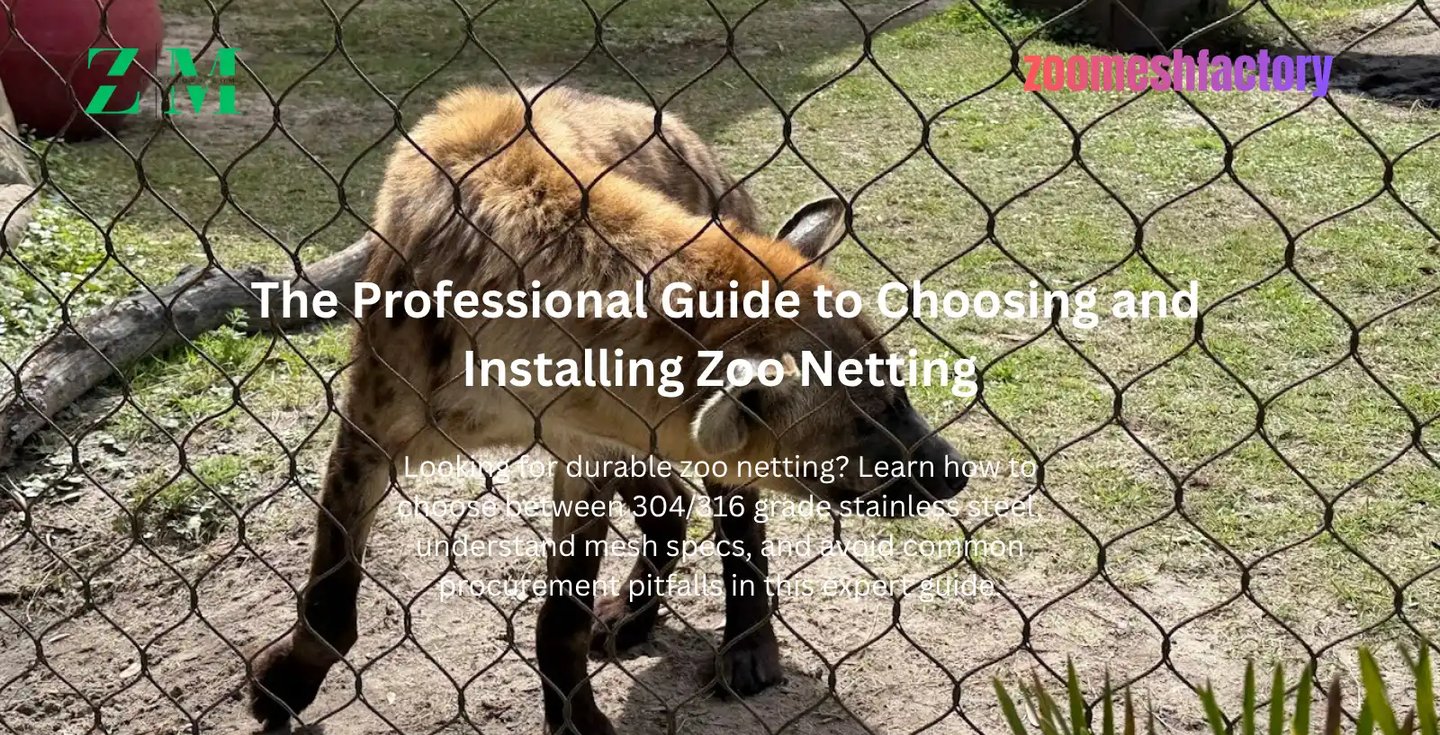
Selecting the right mesh isn't just about the material; it’s about the engineering geometry. Every enclosure requires a balance between animal safety, human security, and visual transparency.
The Diamond Aperture
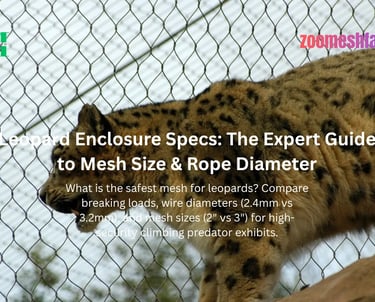
The "diamond aperture" is the primary measurement of the mesh opening. This choice is vital for preventing animal escape or injury. For instance, determining what mesh size for lion enclosure is a critical safety calculation—the gap must be small enough to prevent paws from getting stuck, but large enough to maintain a high-transparency "invisible" barrier. Smaller apertures (e.g., 20mm–40mm) are generally reserved for smaller mammals or birds, while larger predators require wider, robust apertures (80mm–100mm).
Rope Diameter and Load Bearing
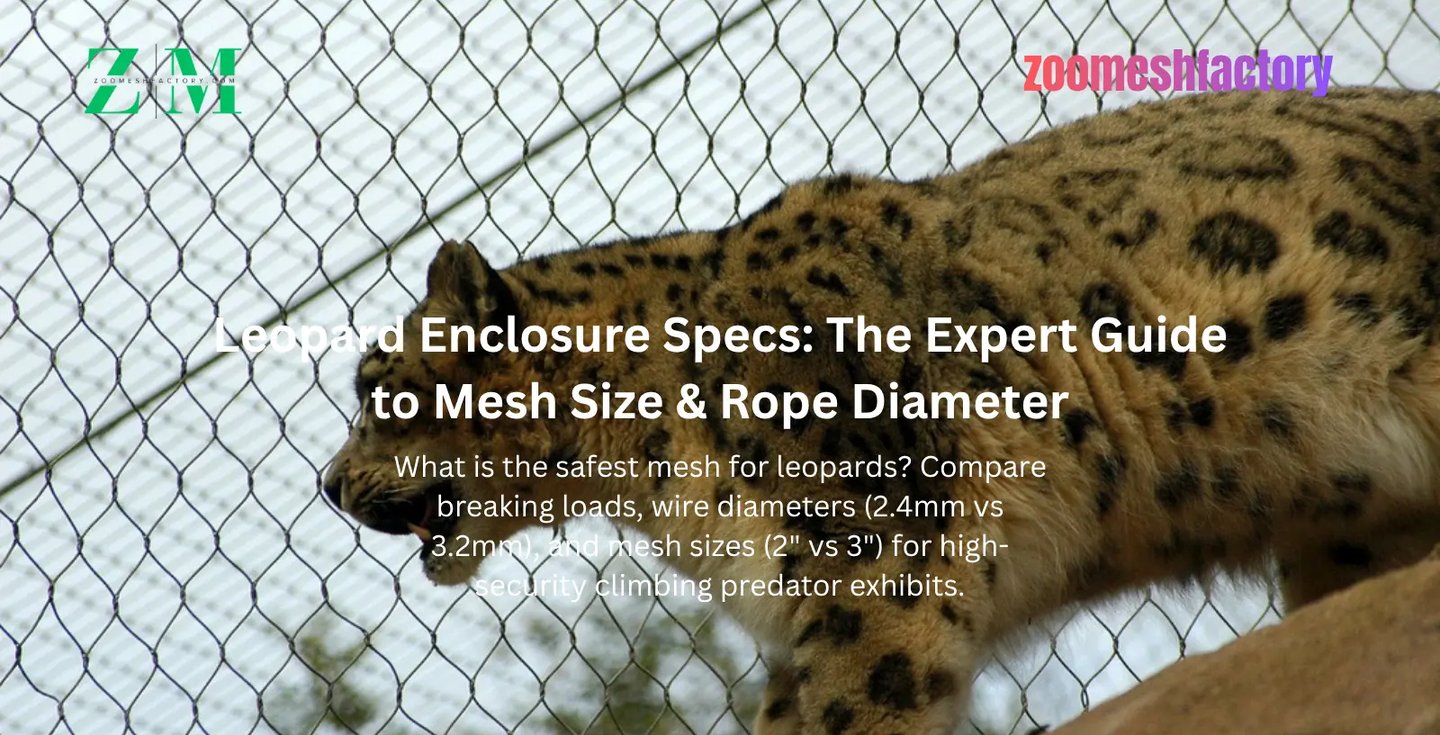
The cable diameter directly correlates to the breaking strength of the fence. When evaluating what rope diameter for tiger fence or other large apex predator enclosures, we always recommend higher-gauge cables (typically 2.5mm to 3.2mm). The objective is to ensure that even under the maximum force of an animal impact, the netting remains within its elastic limits and does not deform permanently.
Structural Design: Knotted vs. Ferrule
Ferrule-Connected: The cable strands are joined by a stainless steel sleeve (ferrule) pressed under high pressure. This is the industry gold standard for zoo netting, as it creates a smooth, snag-free finish that protects the animals' fur and paws.
Knotted Mesh: This style is hand-woven by looping the cable through itself. While it offers a unique, aesthetic organic look, ferrule-connected designs are generally preferred for heavy-duty containment because they provide more consistent tensile strength across the entire panel.
Follow-up Question: To help me further tailor this guide for your procurement process, are you currently planning a project for a specific species, or are you looking for general specifications for a multi-habitat facility?
For a complete breakdown of how to choose the right stainless steel grade, aperture size, and wire diameter for your specific bird species, see our full aviary wire mesh buyer’s guide
Factory-Direct Quality Control: What You Need to Know Before Buying
When you source high-performance zoo netting, you aren't just buying wire—you are investing in safety-critical infrastructure. As a professional China stainless steel cable mesh factory with 10+ years of export experience, we believe transparency is the most important part of the manufacturing process.
For zoos and sanctuaries housing primates, choosing the right containment system is critical—our complete guide to monkey enclosure mesh covers everything from grade selection to aperture sizing for different species.
Transparency Matters: MTRs
Not all stainless steel is created equal. Many suppliers purchase raw cable from secondary sources, which often leads to inconsistent carbon or chromium levels. We provide a Material Traceability Report (MTR) for every single batch we produce. This documentation verifies the chemical composition of the steel, giving procurement engineers and safety auditors the confidence that the materials meet international standards for strength and chemical resistance. Never install mesh without reviewing the corresponding MTR for your specific batch.
Polishing Standards
Surface finish dictates both the aesthetic quality and the lifespan of the mesh:
Mechanical Polishing: This process uses abrasive belts to buff the wire. It is highly cost-effective and provides a clean, bright finish sufficient for most general-purpose enclosures.
Electrolytic Polishing: This is an electrochemical process that removes a microscopic layer from the surface. It eliminates surface imperfections and creates a highly uniform, passive layer. While it costs more, it is the superior choice for high-moisture or coastal areas because it significantly improves the steel's resistance to surface oxidation.
Customization and Efficiency
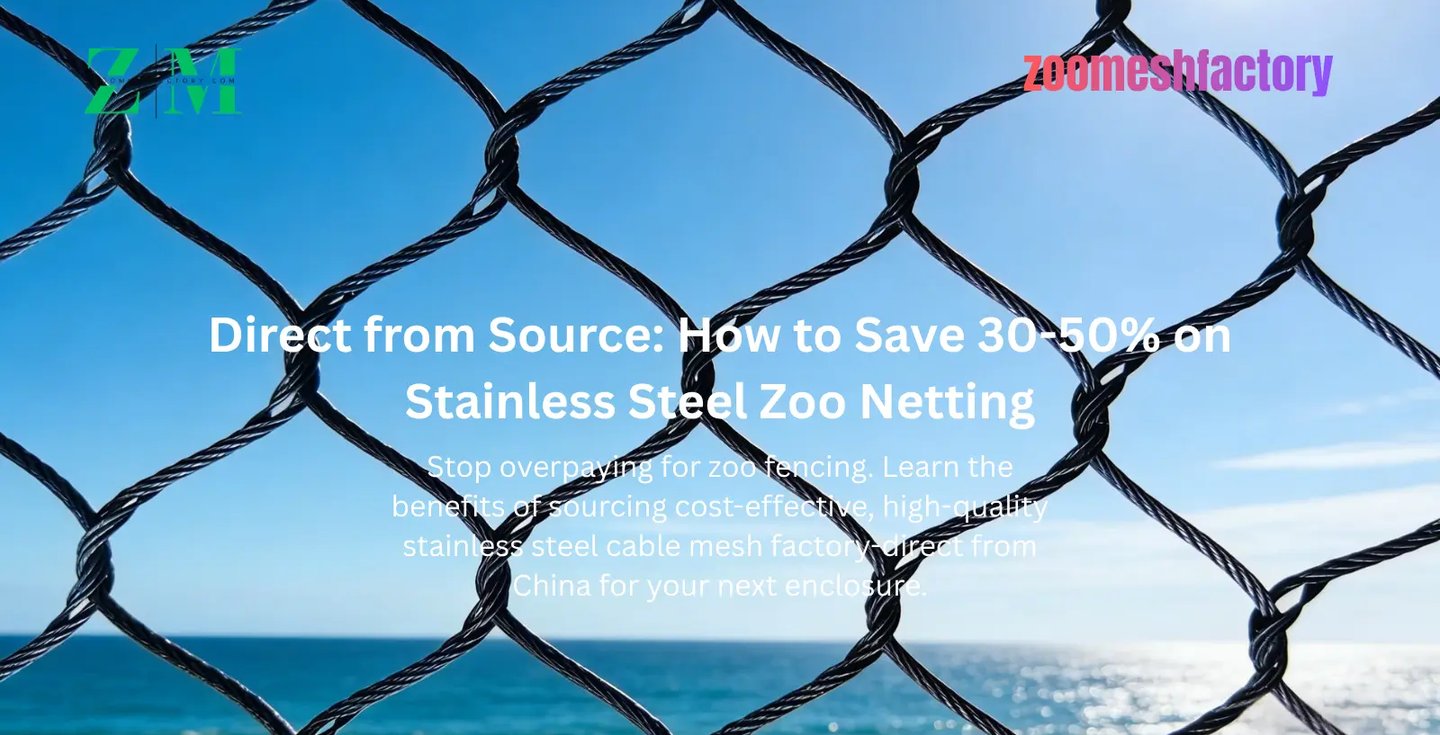
One of the biggest advantages of custom zoo netting rolls without middleman markup is the ability to order exact panel dimensions. Middlemen often sell standard, pre-cut sizes that lead to excessive waste and extra installation time. By working factory-direct, we produce your netting in the exact width and length required for your frame geometry, ensuring minimal scrap and significant cost savings.
Professional Installation Techniques: Tips from the Field
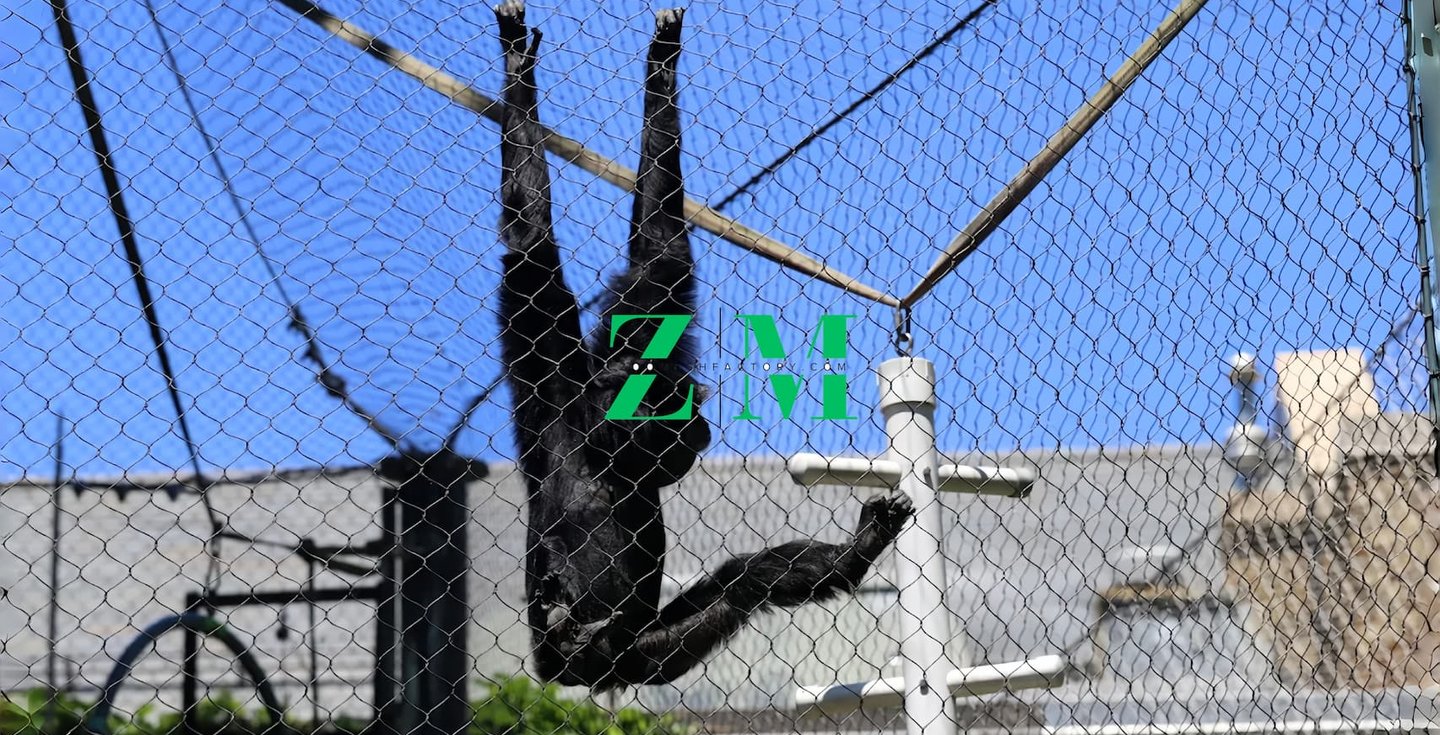
Even the highest-grade 316 stainless steel mesh will fail if it is improperly installed. Proper tensioning and edge finishing are the "make or break" factors for any animal containment system.
Edge Fixing Methods
The way you secure the mesh to the frame defines the enclosure's durability:
Sleeve/Ferrule Fixing: Using stainless steel sleeves to clamp the mesh to the perimeter frame. This is the most secure method for high-load enclosures and creates a clean, industrial look.
Buckle/Clamp Fixing: Ideal for retrofitting or modular designs. It allows for easier adjustments during the installation process.
Winding/Lacing: This involves lacing a stainless steel cable through the perimeter of the mesh and around the frame. It is the most flexible method, perfect for curved or irregular architectural structures.
Tensioning Your Mesh
Correct tensioning prevents "sagging" over time.
Step 1: Secure one side of the mesh panel to your frame using a tensioning rod.
Step 2: Use a come-along or heavy-duty pulling tool on the opposite side to reach the required tension.
Step 3: While keeping the mesh taut, lock the mesh into the perimeter frame starting from the center and working outward.
Pro Tip: Never over-tension. The goal is to keep the diamond aperture at a true 90-degree angle; over-stretching will cause the diamonds to deform, compromising the structural strength.
Handling and Safety
To ensure your installation remains professional:
Cutting: To cut zoo netting without fraying, always use high-quality, professional-grade hydraulic cable cutters. A clean, one-shot cut is essential. Avoid using angle grinders, as they generate heat that can damage the anti-corrosion properties of the stainless steel.
Splicing: When connecting two panels, always use high-strength ferrules rather than knots. Overlap the edges by at least two full diamond apertures to ensure that the splice is as strong as the base mesh.
Follow-up Question: Given your current installation needs, would you like a detailed technical diagram or checklist for our recommended edge-fixing methods to share with your onsite engineering team?
Logistics and Long-Term Value
Export Packing Standards
Protecting high-tensile mesh during international transit is just as critical as the manufacturing process itself. From a professional China stainless steel cable mesh factory with 10+ years export experience, we treat your cargo with extreme care to ensure it arrives "install-ready." Our standard export packaging involves wrapping each roll in a high-grade waterproof interior layer to prevent oxidation during sea transport, followed by secure strapping to fumigated, heat-treated wooden pallets. This prevents moisture buildup and mechanical damage, ensuring the mesh remains pristine from our warehouse to your zoo enclosure.
Maintenance
Stainless steel is remarkably low-maintenance, but "low" does not mean "zero." In wet, tropical, or coastal climates, periodic maintenance is recommended to maintain the "invisible" aesthetic. We suggest an annual rinse with clean, fresh water to wash away salt spray, dust, or animal waste deposits. This simple act prevents the buildup of contaminants that can lead to surface pitting over time. If using cleaning agents, avoid harsh chlorine-based chemicals; stick to mild, pH-neutral detergents.
The Bottom Line
When comparing the wholesale zoo netting price per square meter, buyers should always calculate the Total Cost of Ownership (TCO) rather than just the initial purchase price. A low-cost, inferior-grade mesh may save you money today but will cost significantly more in premature replacement, labor costs, and animal relocation downtime within five to seven years. Investing in high-quality 316-grade stainless steel wire rope mesh ensures a service life exceeding 30 years, offering far greater value and safety for your facility.
Supporting Data: Mesh Selection Reference
FAQ Section
1. What is the difference between 304 and 316 zoo mesh? The primary difference is chemical composition. Both contain 18% chromium, but Grade 316 includes 2–3% molybdenum. This addition significantly enhances resistance to chloride-induced pitting and "tea staining" in coastal or high-humidity environments, where 304 would eventually corrode.
2. How do I install zoo netting on curved frames? Custom-fabricated mesh is designed to match your frame's geometry. For curved structures, we recommend using a flexible winding/lacing method rather than rigid edge-fixing. This allows the mesh to tension evenly along the curve without deforming the diamond apertures. Always consult your factory-supplied dimension drawings before beginning.
3. What is the lifespan of 316L zoo netting? In standard environments, 316L stainless steel rope mesh provides a maintenance-free service life of 30+ years. Because it is inorganic and non-aging, it does not suffer from UV degradation or brittle failure like plastic or nylon netting, maintaining its original tensile strength for decades.
4. Is your netting certified for AZA/EAZA audits? Yes. Our products are manufactured to rigorous international standards suitable for AZA and EAZA accreditation requirements. We provide Material Traceability Reports (MTR) for every batch, confirming the chemical composition and mechanical strength properties required for safety and regulatory compliance.
5. What is the best black oxide finish for zoo netting? For an "invisible" aesthetic, we utilize a specialized black oxide process that creates a thin, uniform magnetite finish. This finish is non-reflective and highly durable, ensuring that the coating remains adhered to the wire even under mechanical stress, providing a clean, matte look that helps visitors focus on the animals, not the barrier.
Ready to Start Your Exhibit Design?
Join the hundreds of zoos and sanctuaries worldwide that trust ZooMesh Factory for their containment needs. Our engineers are ready to help you calculate the perfect mesh size for your species.
Contact
Hebei Zoo Mesh Co., Ltd
No. 188 Zhonghua South Street, Shijiazhuang City, Hebei Province, China
info@zoomeshfactory.com
© 2025. All rights reserved.
Quick Link
Product Catalogs
Don't leave without the specs! Save our factory-direct pricing and technical configurations for your next project meeting. Our 2026 Zoo Mesh Factory Direct Catalog is ready for download.