
Stainless Steel Wire Rope Netting: The Ultimate Engineering & Design Guide (2026)
A comprehensive technical guide to stainless steel wire rope netting. Explore breaking loads, 7x7 vs 7x19 construction, and architectural applications for zoos and bridges.
Hebei Zoo Mesh Co., Ltd
3/17/20269 min read
Stainless steel wire rope netting is a high-tensile, flexible containment solution designed for modern zoological habitats and architectural safety. Unlike rigid welded wire, this hand-woven mesh offers superior impact absorption, 90%+ transparency, and a maintenance-free lifespan of over 30 years. Engineered from AISI 304 or 316 grade stainless steel, it provides a "soft" barrier that ensures animal welfare by preventing beak and wing injuries while maintaining absolute predator-proof security.
1. Introduction: Beyond the Rigid Cage
For decades, the standard for zoological containment was defined by rigidity. Heavy galvanized bars, welded wire mesh, and thick chain-link fences were the industry benchmarks. While these materials provided security, they created a "fortress" aesthetic that restricted animal movement, blocked sightlines, and reinforced the psychological barrier of captivity for both the animals and the visitors.
Today, modern habitat design is moving beyond the rigid cage. The global shift toward Stainless Steel Wire Rope Netting represents an engineering revolution in animal welfare. By replacing inflexible steel grids with high-tensile, flexible cable systems, architects can now create expansive, free-form environments that mimic natural habitats.
The psychological impact of this transition is profound. For the animals, the "soft" nature of the mesh allows for natural climbing behaviors and prevents the "collision trauma" often associated with rigid fencing. For the visitor, the high transparency (often exceeding 90%) creates an "invisible barrier" effect. This immersion allows for a deeper emotional connection to the wildlife, as the physical distractions of a cage disappear, leaving only the unobstructed beauty of the species and its environment.
2. Key Takeaways: Why Professionals Choose Stainless Steel Wire Rope Netting
Unmatched Material Lifespan: Engineered from high-grade alloys, this netting offers a maintenance-free service life of 30 to 50+ years. We recommend AISI 304 for standard inland habitats and AISI 316 (Marine Grade) for coastal or high-humidity environments to prevent corrosion.
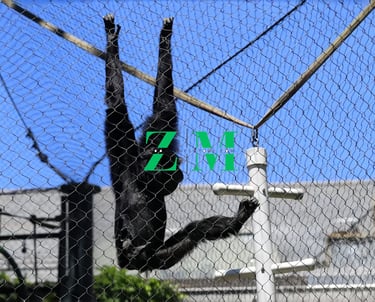
Superior Safety Engineering: Unlike welded mesh, our hand-woven interwoven knots eliminate sharp edges and "burrs." This makes the netting "beak-safe" for delicate aviaries and "paw-safe" for primates, significantly reducing the risk of self-inflicted animal injuries.
Advanced Dynamic Loading: The flexible diamond structure acts as a high-tensile spring. It is designed to absorb kinetic energy upon impact, protecting the animal from injury and reducing the structural stress on the mounting frames and cables.
Exceptional ROI: While the initial investment is higher than galvanized steel, wire rope netting is 40% cheaper over its lifecycle. Because it requires zero painting, no rust-treatment, and has a significantly lower replacement frequency, it maximizes long-term facility budgets.
High Transparency Ratio: With customized aperture sizes (ranging from 20mm to 120mm+), the mesh provides an unobstructed view for visitors while maintaining the structural integrity required for large predator containment.
33. Material Science: The Chemistry of Longevity
Understanding why Stainless Steel Wire Rope Netting outperforms traditional fencing requires a look at the molecular level. Not all stainless steel is created equal; the specific alloying elements determine how the mesh will react to oxygen, moisture, and environmental pollutants over several decades.
The Role of Chromium: The "Self-Healing" Shield
Both AISI 304 and AISI 316 grades contain a high percentage of Chromium (typically 18%). When chromium is exposed to oxygen, it forms an invisible, microscopic layer of chromium oxide on the surface of the wire. This is known as the "passive layer." Unlike rust on carbon steel—which flakes off and invites further decay—this passive layer is self-healing. If the wire rope is scratched by an animal’s claws or a maintenance tool, the layer reforms instantly, preventing deep-seated structural corrosion.
Molybdenum: The Difference Between 304 and 316
The critical distinction between the two grades lies in the addition of Molybdenum in SS316.
SS304 (Standard Grade): Highly durable and cost-effective, it is the industry standard for indoor exhibits and inland outdoor enclosures where the air is relatively clean.
SS316 (Marine Grade): Contains 2-3% Molybdenum. This specific element acts as a chemical "armor" against chlorides (salts) and industrial pollutants.
Preventing "Tea Staining" and Pitting
In coastal environments or high-humidity tropical houses, SS304 can succumb to "tea staining"—a brownish surface discoloration that, while not always structural, ruins the "invisible" aesthetic of the mesh. More dangerously, chlorides can cause pitting corrosion, where tiny holes tunnel into the core of the wire rope, compromising its breaking load.
Upgrading to SS316 is essential for:
Coastal Projects: Any facility within 5 miles of saltwater.
High-Traffic Tropical Houses: Areas with constant misting systems and high ammonia levels from animal waste.
Industrial Urban Areas: Environments with high sulfur or nitrogen dioxide levels.
By selecting the correct chemical composition at the procurement stage, you ensure that the mesh maintains its 10.20 kN tensile strength (for 3.2mm cable) for its entire 30+ year lifespan without the need for chemical coatings or paints.
4. The Engineering of Flexibility (Hand-Woven vs. Ferruled)
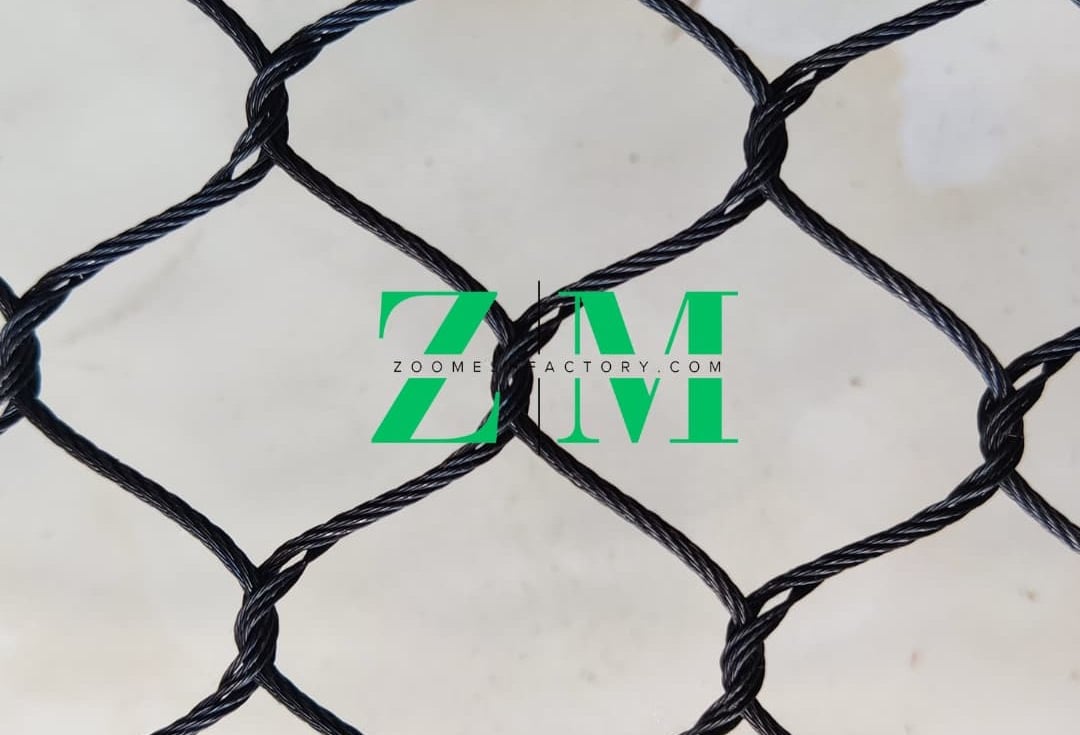
When selecting stainless steel wire rope netting, the construction method is just as critical as the material grade. While many industrial applications use "ferruled" mesh (where cables are joined by metal sleeves), ZooMesh Factory specializes in the hand-woven interwoven technique. This distinction is the difference between a standard fence and a high-performance zoological barrier.
For a complete procurement framework covering material selection, installation, and lifetime value, read our ultimate guide to aviary fencing.
The "Knotless" Advantage for Animal Welfare
In a ferruled system, the metal clips (ferrules) create thousands of rigid points and potential sharp edges. For birds with delicate plumage or primates with curious fingers, these ferrules can cause "snagging" or skin abrasions.
Our hand-woven mesh utilizes a continuous interweaving process. By physically looping the wire ropes together without external hardware, we create a "knotless" surface that is:
Beak and Paw Safe: No sharp protrusions to catch on feathers, wings, or skin.
Structurally Fluid: The mesh behaves more like a fabric than a fence. It can draped over complex rockwork or wrapped around curved steel "trees" without losing structural integrity.
Visually Clean: Without the bulk of metal ferrules, the netting maintains a higher transparency ratio, making the barrier nearly disappear against a natural backdrop.
Precision Customization: 20mm to 120mm Apertures
Security is not "one size fits all." A mesh that secures a Siberian Tiger is functionally useless for a walk-through finch aviary. At our factory, we customize the diamond aperture (the "opening" size) to match the specific biology of the resident species.
Small Apertures (20mm - 38mm): Ideal for small birds and rodents. These tight weaves prevent pest entry (like wild sparrows or rats) while ensuring the smallest residents cannot get their heads stuck in the mesh.
Medium Apertures (50mm - 76mm): The "sweet spot" for medium primates, large parrots, and lemurs. It provides excellent visibility while resisting the dexterity of primate hands.
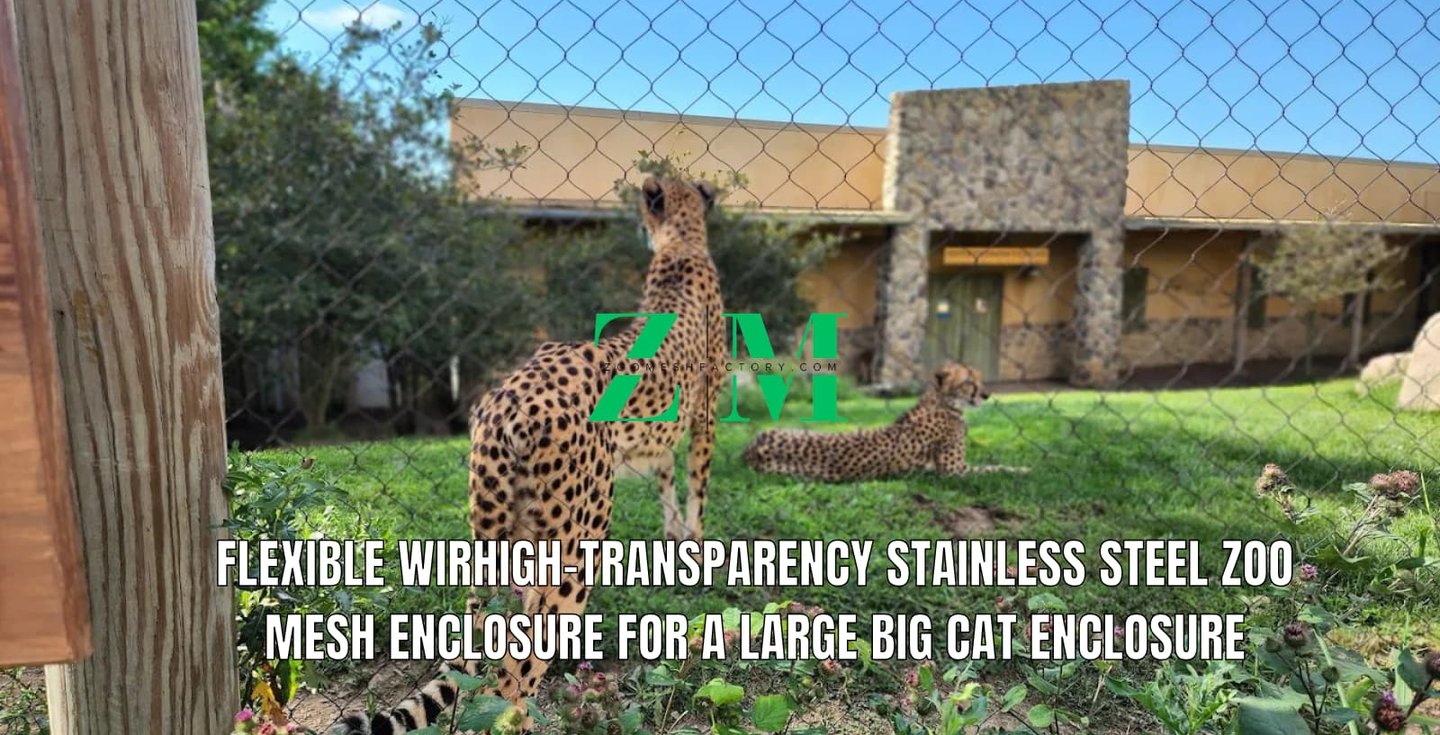
Large Apertures (90mm - 120mm+): Designed for big cats, bears, and ungulates. These larger openings utilize thicker wire diameters (up to 3.2mm) to provide massive breaking loads while maintaining an open, airy feel for large-scale habitats.
By manipulating the relationship between the wire diameter (1.2mm to 3.2mm) and the aperture size, we engineer a solution that balances maximum security with minimum visual impact.
5. Application Scenarios: Where Engineering Meets Design
The versatility of Stainless Steel Wire Rope Netting allows it to transition seamlessly between delicate aesthetic requirements and heavy-duty structural demands. By adjusting the wire diameter and aperture size, we tailor the mesh to the specific behavioral needs of the species.
Walk-Through Aviaries: Achieving "Near-Invisible" Transparency
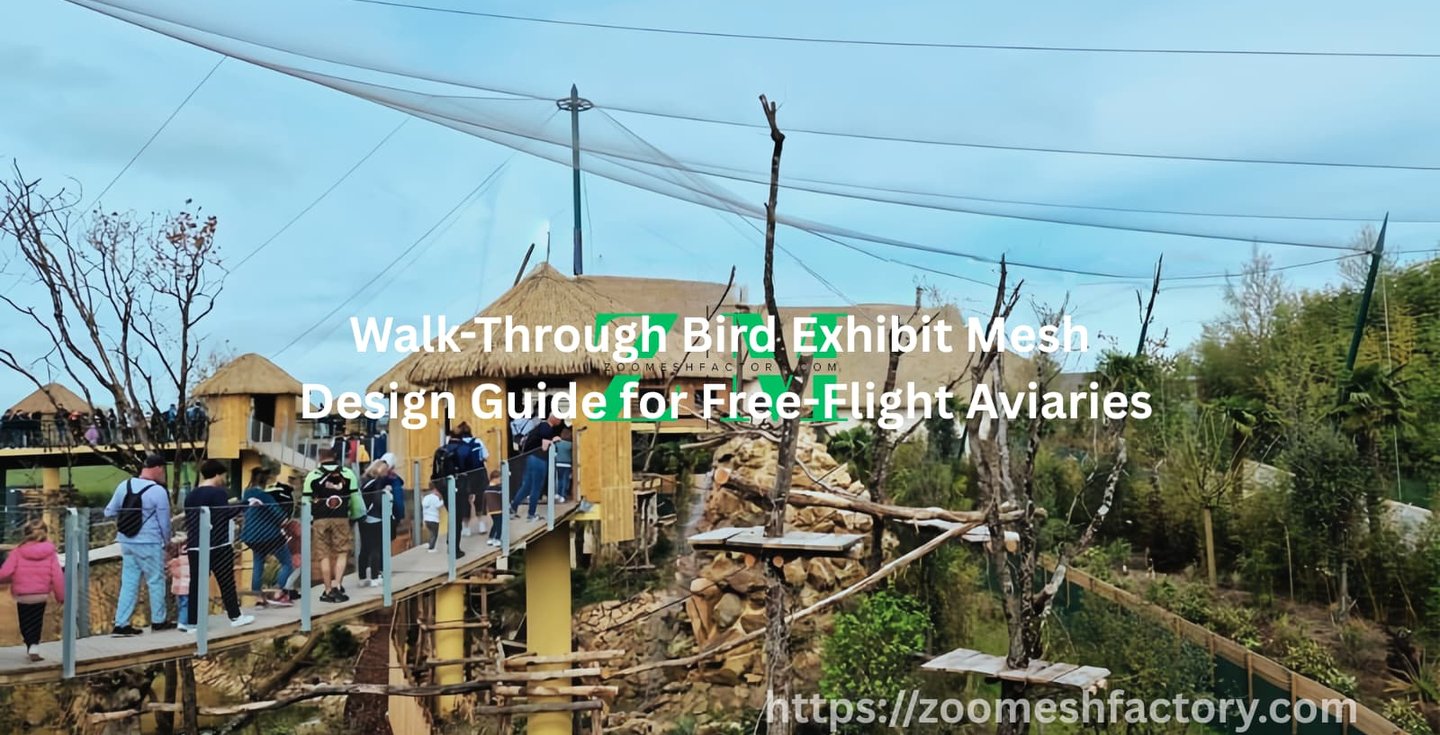
In modern aviary design, the goal is to eliminate the "caged" feeling for both the birds and the visitors. Using a 1.2mm or 1.5mm wire diameter with a 25mm to 38mm diamond opening, we achieve a transparency ratio exceeding 90%.
The Result: The mesh becomes nearly invisible against the sky or foliage, providing an immersive experience while ensuring that even the smallest finches cannot escape.
Safety First: The hand-woven, knotless construction ensures that birds can land on the mesh without damaging their primary feathers or getting their beaks caught in sharp welds.
Internal Link: [Professional Aviary Netting Solutions]
Predator Containment: Managing High-Impact Forces
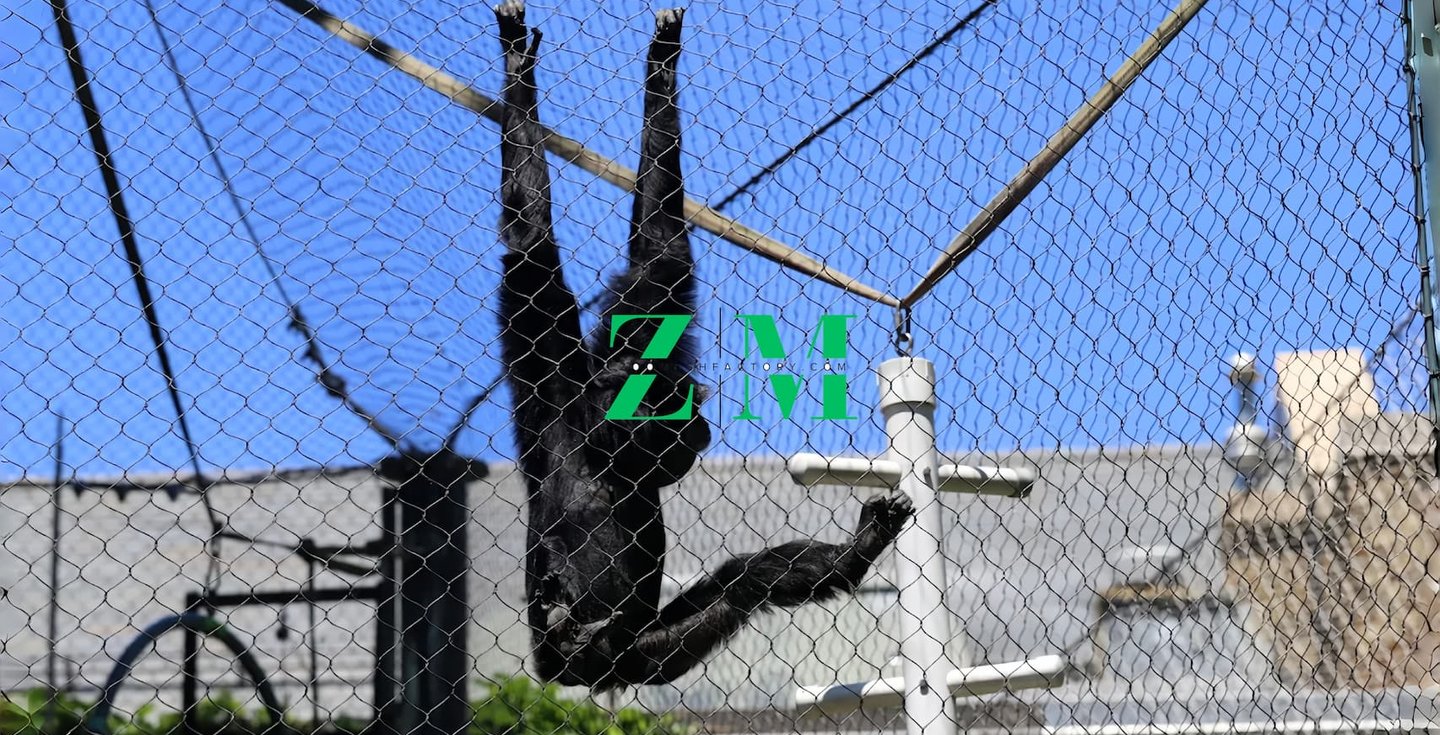
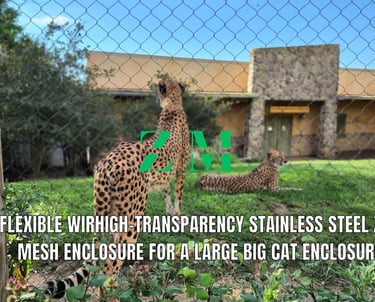
For big cats (lions, tigers, leopards) and powerful primates (chimpanzees, gorillas), the mesh must do more than just contain; it must absorb massive kinetic energy. Using a 3.2mm 7x7 or 7x19 construction cable, the netting provides a breaking load of up to 10.20 kN.
Dynamic Response: Unlike rigid bars that can snap or bend under a 500lb tiger's leap, the flexible wire rope netting "gives" slightly upon impact. This elasticity spreads the force across the entire panel and into the boundary cables, protecting the animal from blunt-force trauma and ensuring the enclosure remains unbreached.
Professional Aviary Netting Solutions
High-Security Animal Enclosure Mesh
6. Installation Strategy & ROI Analysis
A high-performance material is only as effective as its installation. To maximize the 30+ year lifespan of the product, the physical setup must follow strict engineering principles.
The Importance of Perimeter Tensioning
The "magic" of stainless steel wire rope netting lies in its tension. A professional installation requires a "drum-tight" finish.
Structural Stability: Proper tensioning via perimeter cables and turnbuckles ensures the diamond apertures remain uniform. This prevents "sagging" over time, which can create gaps or safety hazards.
Aesthetic Impact: A correctly tensioned mesh is flatter and more transparent. If the netting is loose, it catches the light more easily, becoming visible and distracting to the visitor.
Internal Link: [The Pro Guide to Tensioning Woven Wire Mesh]
Why Factory-Direct Sourcing Eliminates Risk
Procuring your mesh directly from ZooMesh Factory is not just a cost-saving measure; it is a quality-assurance strategy.
Material Purity: Middlemen often mix batches of SS304 and SS316 to increase margins. By sourcing direct, you receive certified metallurgical reports ensuring your mesh will not "tea stain" prematurely.
Custom Panel Sizing: We manufacture seamless panels up to 3000 sq. ft. Reducing the number of on-site joins and ferrules minimizes "weak spots" in the enclosure and lowers installation labor costs.
Lifecycle ROI: While the upfront cost of stainless steel is higher than galvanized chain-link, the zero-maintenance requirement means you save 40% over the first 15 years. No painting, no rust-treatment, and no replacement labor—just a permanent, high-security solution.
The Pro Guide to Tensioning Woven Wire Mesh
Technical Resource Center: Maintenance & Load Tables
7. FAQ: Technical Solutions for Professionals
To conclude our engineering review of Stainless Steel Wire Rope Netting, we have compiled the most frequent technical inquiries from zoo curators, landscape architects, and structural engineers.
Q: Can the netting be colored or coated to reduce glare? A: While the natural metallic finish of SS304/SS316 offers high transparency, we offer a Black Oxide treatment. Unlike traditional PVC coatings that can crack and peel (creating ingestion hazards for animals), Black Oxide is a chemical conversion process. It creates a matte black, non-reflective surface that further increases "invisibility" against dark backgrounds without compromising the wire's structural integrity.
Q: How do you handle the interface between the mesh and concrete or wood? A: We recommend a Boundary Cable System. The flexible netting is "laced" onto a 6mm or 8mm stainless steel perimeter cable using lacing wire. This boundary cable is then anchored into the primary structure using eye-bolts or specialized brackets. This ensures that the tension is distributed evenly and prevents the mesh from tearing at the contact points.
Q: What is the maximum panel size available from the factory? A: One of the primary advantages of our hand-woven process is the ability to create massive, seamless panels. We can produce individual sections up to 3,000 square feet (approx. 300 square meters). Larger areas are achieved by "seaming" panels together on-site using the same diameter wire rope, resulting in a joint that is as strong as the mesh itself and virtually invisible.
Q: Is the mesh resistant to UV radiation and extreme temperatures? A: Yes. Unlike nylon or polyester netting which degrades under UV exposure and becomes brittle in freezing temperatures, stainless steel wire rope is unaffected by solar radiation and remains structurally stable from -40°C to +400°C. This makes it the only viable long-term solution for outdoor exhibits in extreme climates.
Q: Does the mesh require periodic cleaning? A: In most outdoor environments, rainwater is sufficient to keep the mesh clean. However, in indoor tropical exhibits or high-pollution urban areas, a simple pressurized water rinse once a year helps maintain the "passive layer" of the steel and prevents the buildup of organic matter or minerals.
Final Summary for Project Planners
Choosing Stainless Steel Wire Rope Netting is an investment in the future of your facility. By prioritizing the "Soft Barrier" philosophy, you are choosing a material that respects animal physiology, enhances the visitor experience, and eliminates the recurring costs of traditional fence maintenance.
If you need full mechanical data, wire diameters and load tables for standard AISI 304 woven mesh, check our dedicated SS304 woven mesh specifications guide.
To decide whether SS304 or marine SS316 fits your zoo’s climate and budget, see our grade comparison article.
Learn about impact absorption, organic shape adaptability of flexible woven cable mesh in this technical resource.
Follow factory-approved four-corner tension workflow to avoid sag and frame deformation with our tensioning tutorial.
We compiled a complete 7-step installation workflow including frame prep and seamless panel lacing for hand-woven mesh.
Ready to Start Your Exhibit Design?
Join the hundreds of zoos and sanctuaries worldwide that trust ZooMesh Factory for their containment needs. Our engineers are ready to help you calculate the perfect mesh size for your species.
Contact
Hebei Zoo Mesh Co., Ltd
No. 188 Zhonghua South Street, Shijiazhuang City, Hebei Province, China
info@zoomeshfactory.com
© 2025. All rights reserved.
Quick Link
Product Catalogs
Don't leave without the specs! Save our factory-direct pricing and technical configurations for your next project meeting. Our 2026 Zoo Mesh Factory Direct Catalog is ready for download.