

Aviary Wire Mesh: Stainless Steel Cable Mesh for Birds
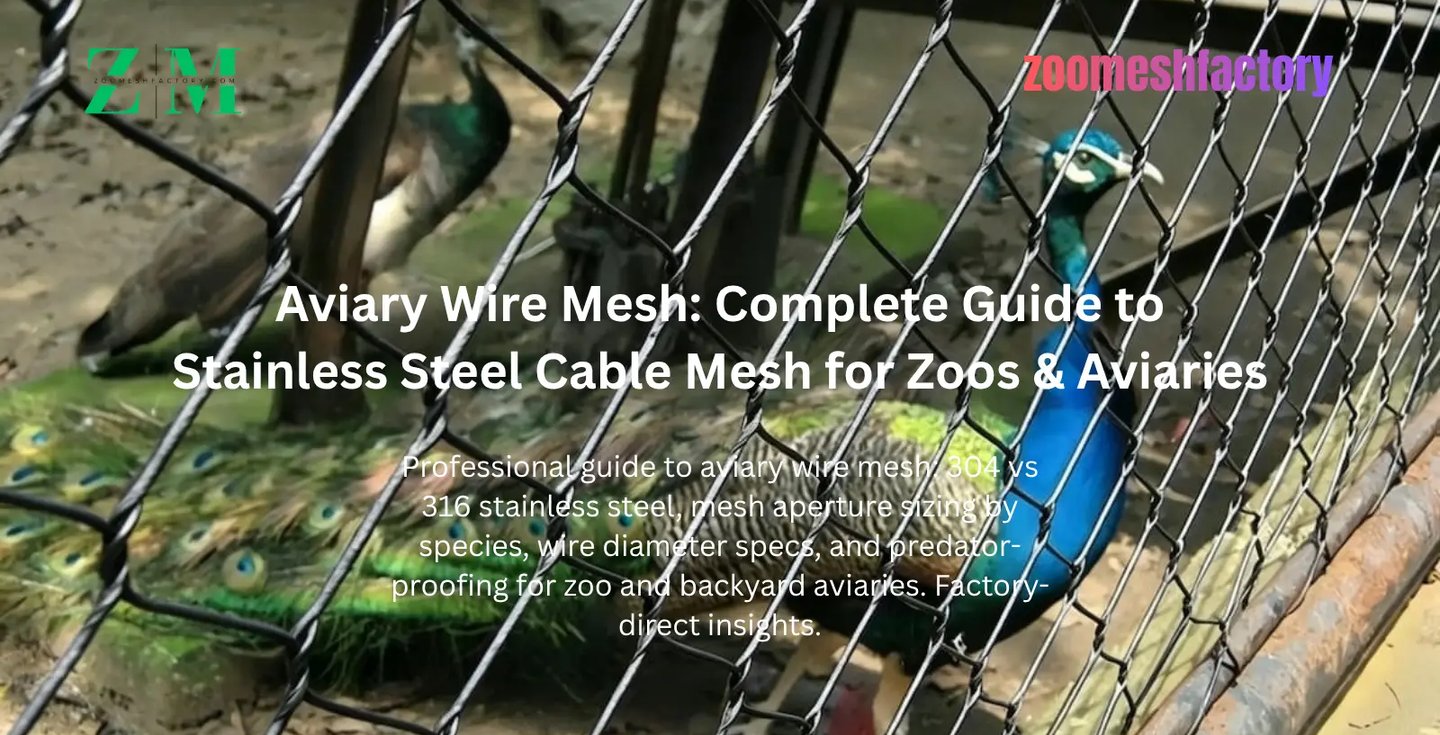
Aviary wire mesh guide: 304 vs 316 stainless steel cable mesh, aperture sizing by species and predator-proofing for zoo and home aviaries. Factory-direct
Alex
6/21/20266 min read
This guide helps aviary buyers, zoo operators, and wildlife park managers select the right aviary wire mesh for their specific bird species and environmental conditions. We cover stainless steel grade selection (304 vs. 316), mesh aperture sizing by species, wire diameter specifications, predator-proofing requirements, and the critical differences between hand-woven rope mesh and welded wire. Whether you’re designing a walk-through aviary, a backyard bird sanctuary, or a commercial zoo enclosure, this guide delivers factory-first insights to help you avoid costly mistakes and low-quality materials.
What Is Aviary Wire Mesh and Why Does Material Choice Matter?
Aviary wire mesh is the structural barrier that separates your birds from the outside world—and the outside world from your birds. But not all mesh is created equal. The wrong choice can mean escaped birds, predator breaches, toxic exposure, or a rusted eyesore that needs replacing within five years.
Modern aviary construction has moved decisively away from galvanized welded wire and plastic netting. Why? Galvanized mesh carries a hidden danger: zinc toxicity. Birds are naturally inclined to chew on enclosure materials, and when they ingest zinc scale from galvanized surfaces, it can cause heavy metal poisoning—often fatal.
Stainless steel cable mesh has become the industry standard for professional zoos, bird parks, and serious private aviculturists. Unlike rigid welded panels, hand-woven stainless steel rope mesh acts like a “metallic fabric”—strong enough to contain powerful birds yet flexible enough to wrap around organic, curved architectural shapes. It’s 100% non-toxic, contains no zinc, no lead, and no chemical coatings.
From a professional China stainless steel cable mesh factory with 20+ years export experience: We’ve supplied aviary mesh to zoos, wildlife parks, and private collectors across North America and Europe. The single biggest mistake we see? Buyers choosing based on price alone, only to discover their “bargain” mesh rusts within two seasons or uses substandard wire that birds can chew through. Quality stainless steel rope mesh should deliver a 30+ year service life—anything less is a false economy.
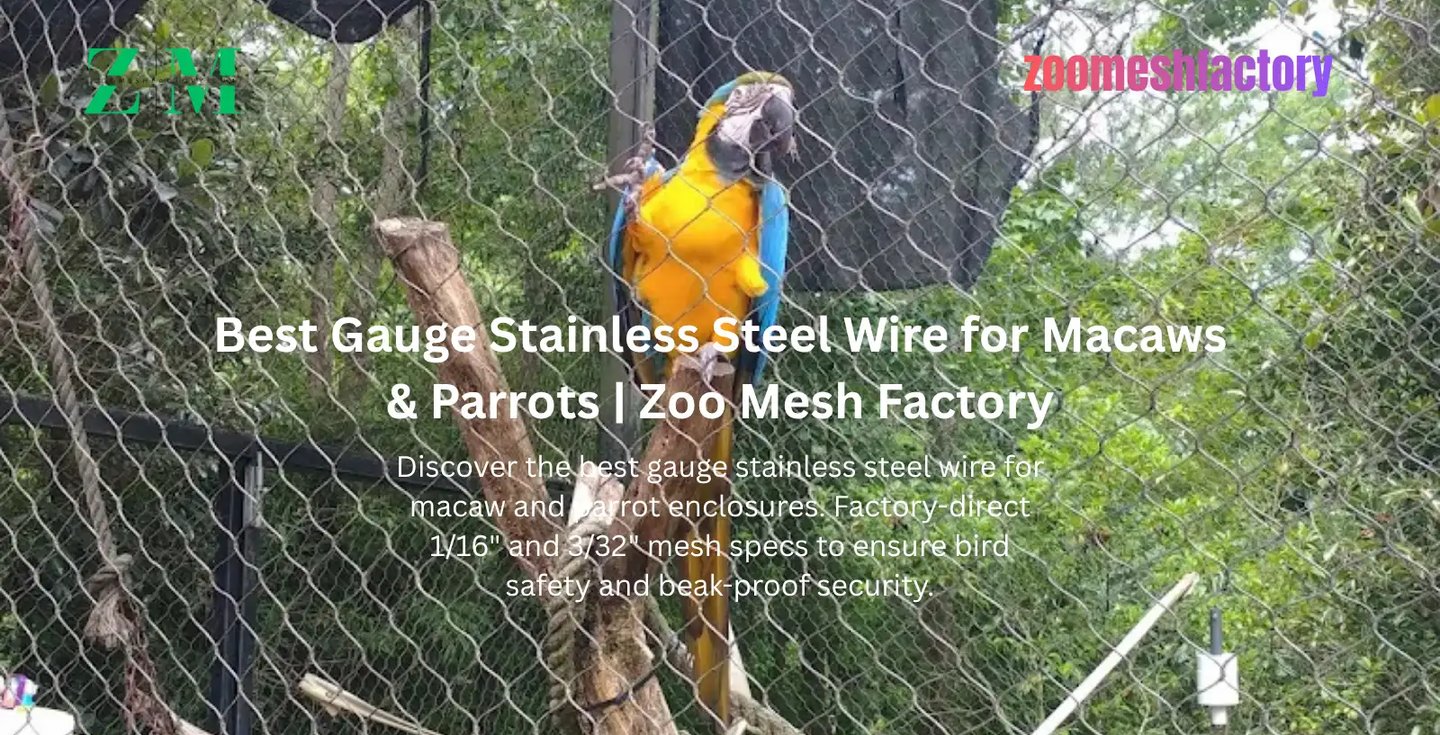
While this guide covers general aviary fencing and optical design, we supply heavy beak-proof mesh for large parrots; view our macaw & parrot aviary mesh specs.
Choosing the Right Stainless Steel Grade: 304 vs. 316
The grade of stainless steel you choose determines how your aviary wire mesh will perform over decades of exposure to weather, bird waste, and environmental stress.
SS 304 is the workhorse grade for aviary mesh. It offers strong corrosion resistance and high tensile strength at a practical price point. For inland aviaries, temperate climates, and indoor walk-through exhibits, 304 stainless steel provides all the durability you need.
SS 316 adds molybdenum to the alloy, significantly boosting resistance to chlorides and salt. This is the marine-grade stainless steel recommended for coastal installations, humid tropical environments, and any enclosure exposed to salt spray. The difference in upfront cost is modest compared to the cost of replacing a rusted-out enclosure.
From the factory floor: We recommend 316 stainless steel for any aviary within 10 miles of a coastline, or for exhibits housing high-value breeding pairs where absolute longevity is non-negotiable. For most inland zoo and private aviary projects, 304 stainless steel delivers outstanding performance at a more accessible price point.
Mesh Aperture and Wire Diameter: Getting the Specs Right
Selecting the correct mesh aperture (hole size) and wire diameter is the most critical technical decision you’ll make. Get this wrong, and you risk either bird escapes (aperture too large) or a visually obstructive “cage feel” (aperture too small).
Recommended Specifications by Bird Species:
Wire Diameter Explained
Wire diameter is measured in millimeters or gauge. For stainless steel rope mesh, common diameters range from 1.2mm to 3.2mm.
1.2mm – 1.6mm (approximately 16-18 gauge): Suitable for small to medium birds. Provides excellent transparency while maintaining adequate strength.
1.6mm – 2.0mm: The “sweet spot” for most parrot and macaw aviaries. Strong enough to resist chewing, thin enough to remain visually unobtrusive.
2.4mm – 3.2mm: Heavy-duty applications for large raptors, multi-species exhibits, or enclosures requiring maximum security.
Critical insight: Thicker wire isn’t always better. Overly thick wire reduces transparency, increases weight, and drives up cost without proportional safety gains. The 1.6mm (1/16″) diameter is the industry standard for professional aviary mesh precisely because it balances strength, visibility, and cost-effectiveness.
Predator-Proofing: Why Aviary Wire Mesh Must Be Chew-Resistant
Predators don’t just climb—they chew, dig, and test every weakness. Raccoons, rats, snakes, cats, and birds of prey are all capable of breaching inadequately specified aviary mesh.
Stainless steel rope mesh offers superior predator-proof protection because:
High tensile strength (approximately 100,000–110,000 PSI) resists chewing and clawing. Rodents and other pests cannot gnaw through stainless steel cable.
Knotless, hand-woven construction eliminates weak points. Unlike welded wire, which can break at the weld under stress, woven rope mesh distributes force across multiple cables.
No toxic coatings means birds can chew without risk of zinc or lead poisoning.
From the factory perspective: We’ve seen enclosures where raccoons pulled apart cheap galvanized mesh in a single night. The same predators cannot gain purchase on properly specified stainless steel rope mesh—the cables are too tough, too tightly woven, and too resilient.
For predator protection in outdoor aviaries, we recommend:
Aperture no larger than 2″ × 2″ to prevent predators from reaching through
Wire diameter of 1.6mm minimum for chew resistance
Installation with proper tensioning to prevent sagging that predators could exploit
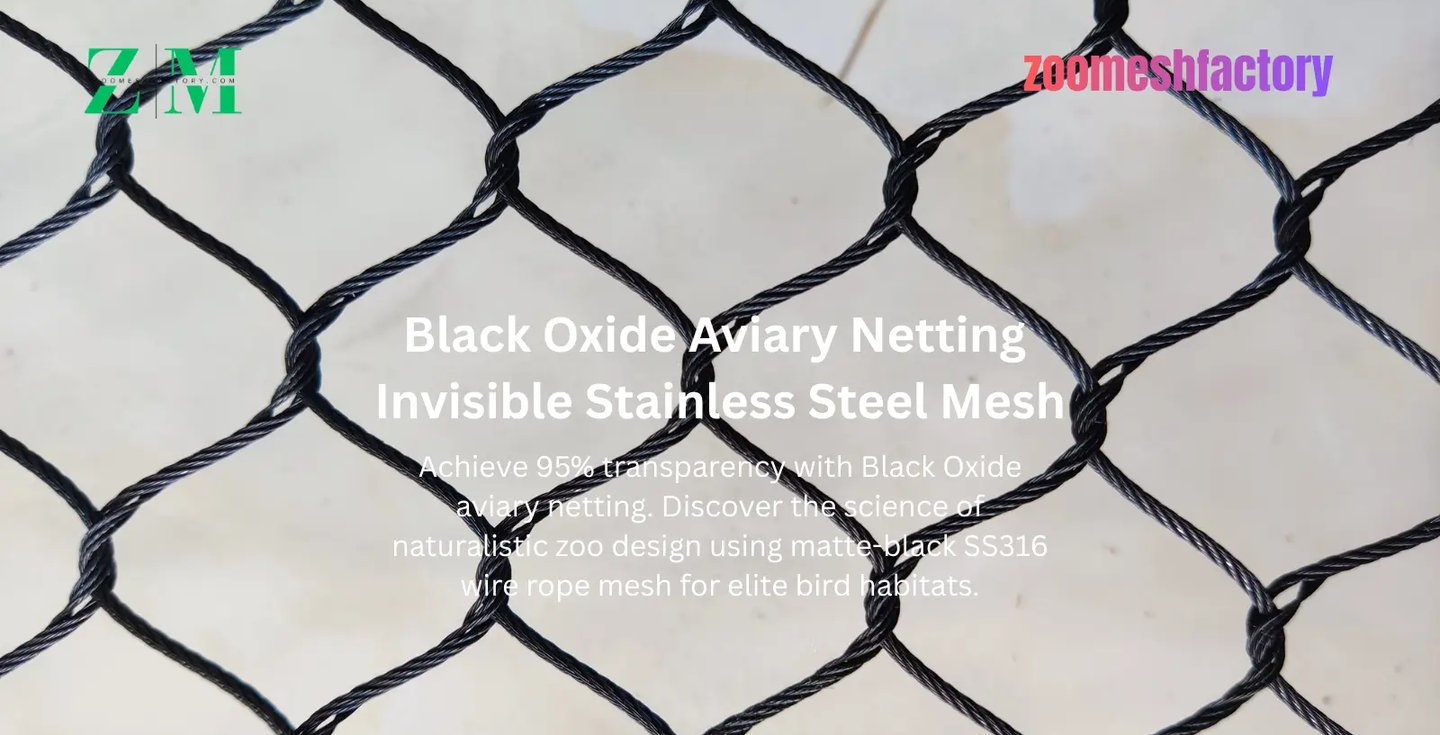
For low-reflection naturalistic exhibit finishes, explore our black oxide invisible aviary mesh range.
Installation Considerations: Walk-Through Aviaries and Curved Frames
The flexibility of stainless steel rope mesh makes it ideal for walk-through aviaries and structures with curved or irregular frames. Unlike rigid welded panels, rope mesh conforms to organic shapes without sacrificing strength.
Key installation advantages:
Seamless large panels up to 30′ × 60′ (9.14m × 18.29m) reduce seams and installation time
Hand-woven construction provides a smooth, fabric-like finish that protects bird feathers
Flexibility allows the mesh to wrap around posts, beams, and architectural features
From the installation team: The most common installation error is insufficient tension. Loose mesh can sag, creating gaps at the edges or allowing predators to push through. Proper tensioning—using turnbuckles or cable ties at regular intervals—ensures the mesh remains taut and secure for its entire service life.
Frequently Asked Questions
1. What is the best aviary wire mesh for parrots?
The best aviary wire mesh for parrots is stainless steel rope mesh with a 1.5″ × 1.5″ to 2″ × 2″ aperture and a wire diameter of at least 1.6mm. Stainless steel is essential because parrots are powerful chewers—galvanized mesh can cause zinc poisoning, and plastic netting is easily destroyed. Hand-woven rope mesh offers the strength to resist macaw beaks while remaining flexible and bird-safe.
2. What gauge aviary wire mesh for cockatiels?
For cockatiels and similar small parrots, a wire diameter of 1.2mm to 1.6mm (approximately 16-18 gauge) combined with a 1″ × 1″ mesh aperture provides optimal safety. This configuration prevents escape while allowing excellent visibility and airflow.
3. How to choose aviary wire mesh for outdoor zoo enclosures?
Choose based on three factors: species (aperture and wire diameter), environment (304 vs. 316 stainless steel), and predator pressure (strength and chew resistance). For zoo enclosures, always specify hand-woven stainless steel rope mesh over welded wire—it offers superior strength, flexibility, and longevity. For coastal zoos, specify 316 marine-grade stainless steel.
4. 304 vs 316 stainless steel aviary mesh: which is better?
316 stainless steel is better for coastal areas, high-humidity environments, and salt spray exposure. 304 stainless steel is excellent for inland aviaries and most temperate climates. Both are 100% rust-proof and bird-safe. Choose 316 if your aviary is within 10 miles of salt water; choose 304 for all other applications.
5. How much does stainless steel aviary mesh cost?
Stainless steel aviary mesh costs vary based on wire diameter, aperture size, grade (304 vs. 316), and roll dimensions. Professional-grade mesh typically represents a higher upfront investment than galvanized or plastic alternatives—but delivers a 30+ year service life with zero maintenance. For factory-direct pricing tailored to your specifications, request a quote from a professional manufacturer.
Key Takeaways
Material matters: Stainless steel rope mesh is the only bird-safe, rust-proof, predator-proof choice for professional aviaries. Galvanized mesh risks zinc toxicity.
Grade selection: Use 304 stainless steel for inland aviaries; 316 marine-grade for coastal or high-humidity environments.
Aperture sizing: Match mesh aperture to your bird species—1″ × 1″ for small birds, 1.5″ × 1.5″ for medium parrots, 2″ × 2″ for macaws and raptors.
Wire diameter: 1.6mm (1/16″) is the industry standard, balancing strength, visibility, and cost.
Predator protection: Stainless steel rope mesh resists chewing, clawing, and impact—unlike plastic or welded wire.
Longevity: Quality stainless steel aviary mesh delivers 30+ years of maintenance-free service.
Factory expertise: Work with a manufacturer that understands species-specific requirements and offers custom roll sizes to minimize seams and installation costs.
Ready to Start Your Exhibit Design?
Join the hundreds of zoos and sanctuaries worldwide that trust ZooMesh Factory for their containment needs. Our engineers are ready to help you calculate the perfect mesh size for your species.
Contact
Hebei Zoo Mesh Co., Ltd
No. 188 Zhonghua South Street, Shijiazhuang City, Hebei Province, China
info@zoomeshfactory.com
© 2025. All rights reserved.
Quick Link
Product Catalogs
Don't leave without the specs! Save our factory-direct pricing and technical configurations for your next project meeting. Our 2026 Zoo Mesh Factory Direct Catalog is ready for download.