
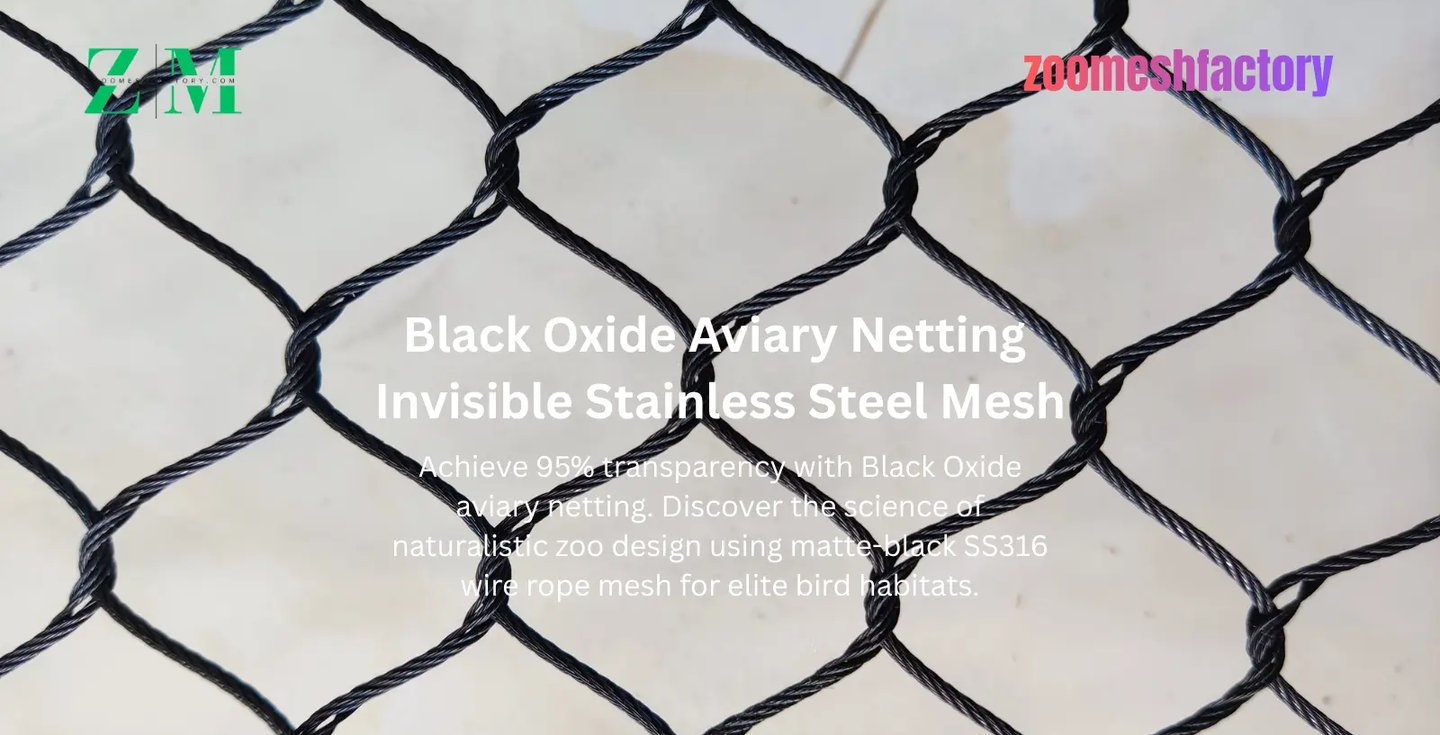
Black Oxide Aviary Netting | Invisible Stainless Steel Mesh
Achieve 95% transparency with Black Oxide aviary netting. Discover the science of naturalistic zoo design with matte-black SS316 wire rope mesh for elite
Hebei Zoo Mesh Co., Ltd
4/7/20269 min read
Key Takeaways: The "Ghost Mesh" Advantage
Vanishing Optics: Matte black finish eliminates glare, making the barrier virtually invisible to the human eye.
Zero Flaking: Unlike painted or PVC-coated mesh, Black Oxide is a chemical change to the steel itself—it cannot peel, chip, or be chewed off by birds.
Avian Safety: The smooth, hand-woven texture prevents feather damage and "wing-clipping" during flight impacts.
Photography Friendly: Allows smartphone and professional cameras to focus past the mesh on the first attempt.
I. Introduction: The Evolution of Immersion
In modern zoological design, the measure of a successful exhibit is no longer just how well it holds an animal, but how effectively it disappears. We are witnessing the "Death of the Green Cage." For decades, heavy-duty chain link and painted iron bars defined the zoo experience, creating a visual and psychological barrier that screamed "captivity."
Defining "Naturalistic Design"
Today’s leading facilities—from the Singapore Zoo to the Bronx Zoo—utilize Naturalistic Habitat Design. This philosophy dictates that every element of the enclosure must support the illusion of a wild, boundless landscape.
Psychology of the Visitor: When a guest sees a glinting silver fence, their brain registers a "barrier." When that barrier is replaced with Black Oxide Aviary Netting, the brain ignores the mesh and focuses entirely on the bird.
The Immersion Factor: In a walkthrough aviary, the goal is for the visitor to feel they have stepped into a rainforest or a scrubland. Invisibility is the key to creating that "aha!" moment of connection.
While this guide covers general aviary fencing and optical design, we supply heavy beak-proof mesh for large parrots; view our macaw & parrot aviary mesh specs.
II. What is Black Oxide? (The Technical Process)
A common misconception is that "black mesh" is simply painted or plastic-coated steel. In a professional zoo environment, those materials are a liability. Black Oxide Aviary Netting is an entirely different class of material.
Beyond Paint: The Chemistry of Conversion
Unlike a top-coat that sits on the surface of the metal, Black Oxide is a Chemical Conversion Coating. Through a specialized dipping process, the surface of the SS304 or SS316 stainless steel is transformed into magnetite (Fe3O4).
Molecular Integration: Because it is a chemical change to the steel itself, it cannot flake, peel, or chip. This is critical for psittacines (parrots and cockatoos) who use their beaks to climb and would quickly strip paint or PVC.
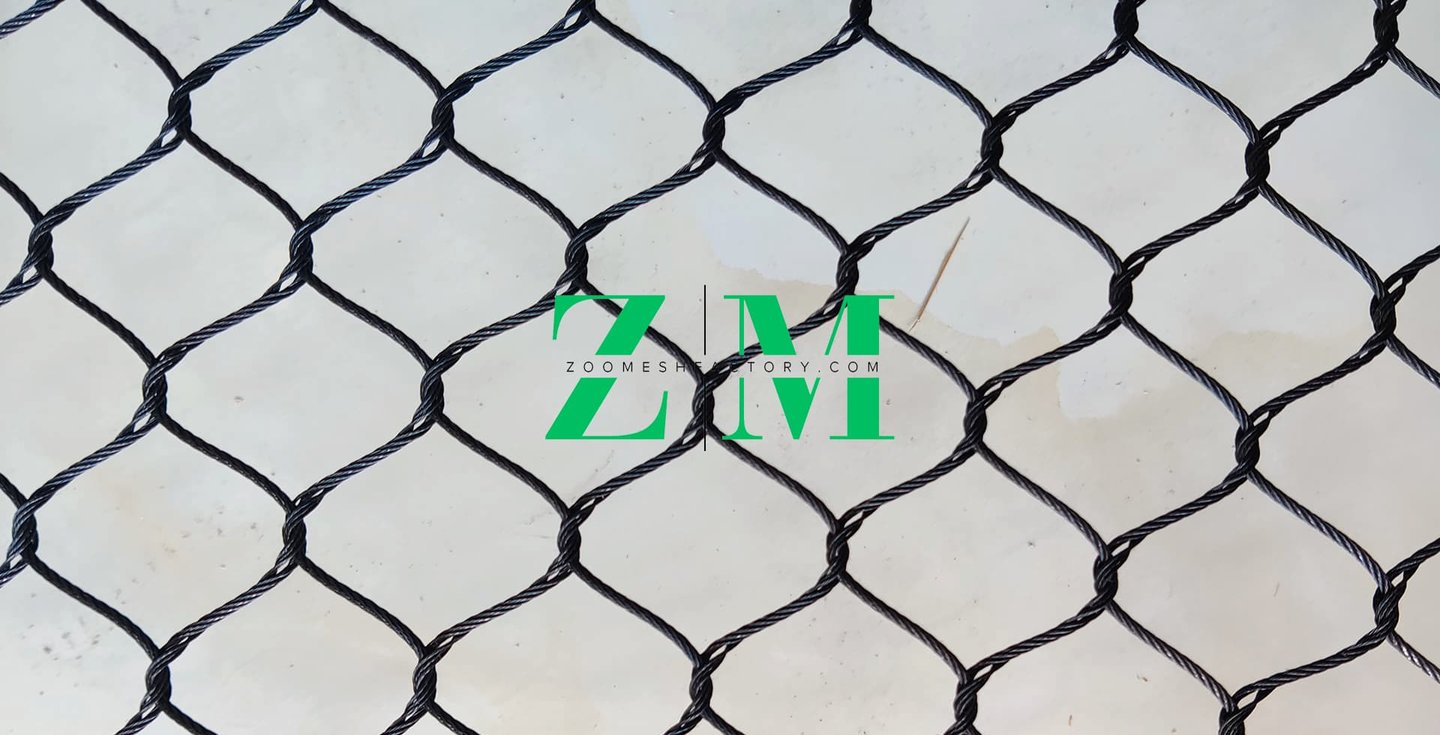
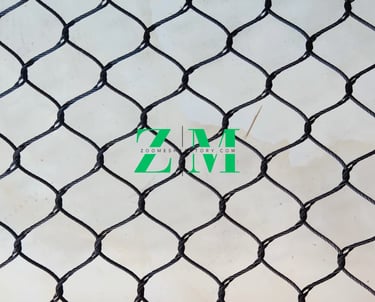
Matte Finish: Paint often has a "sheen" that reflects light. Black Oxide is naturally matte, absorbing light across the entire spectrum.
Durability vs. Aesthetics: The Secondary Shield
While the primary reason for choosing Black Oxide is its "ghost-like" appearance, the process offers a hidden engineering benefit:
Passive Layer Enhancement: The oxidation process adds a secondary passive layer to the stainless steel, further protecting it from moisture and atmospheric pollutants.
Dimensional Stability: Because the coating is only about 1 micron thick, it does not change the wire diameter (d) or the weight of the mesh, allowing for precise engineering calculations in large-span aviary roofs.
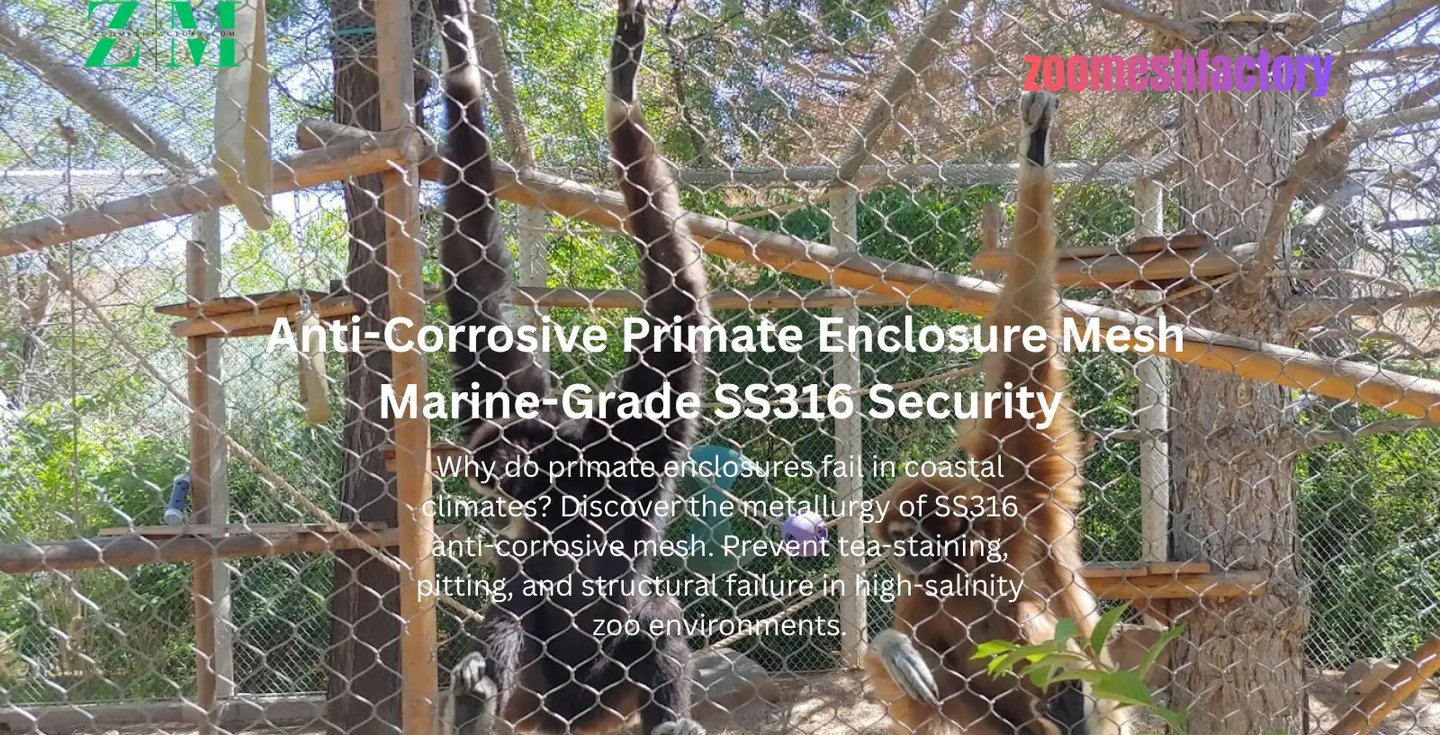
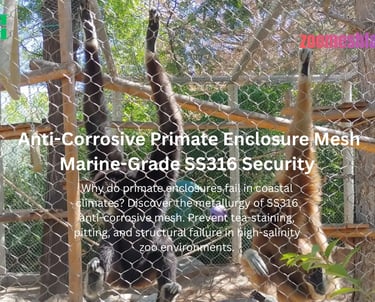
More: [Anti-Corrosive Primate Enclosure Mesh: The Marine-Grade Standard]
III. The Physics of Transparency
The term "Invisible Mesh" isn't just marketing—it is a result of optical engineering. When a guest looks into an aviary, their eyes are fighting against Visual Noise.
Light Scattering vs. Light Absorption
Traditional silver stainless steel mesh acts like a million tiny mirrors. Each strand reflects sunlight directly into the visitor’s pupils, creating a "haze" that flattens the depth of the habitat.
The Silver Barrier: Reflectivity causes the human eye to focus on the foreground (the mesh) rather than the background (the birds).
The Black Oxide Solution: By converting the surface to a matte black finish, the mesh absorbs light across the visible spectrum. Because there is no reflection, the brain "ignores" the foreground, allowing the eye to focus naturally on the movement and color of the birds behind the wire.
The 95% Open Area Rule
Transparency is a ratio of the wire diameter (d) to the aperture (L).
For a standard 1.2mm wire with a 25.4mm diamond, the "Open Area" is approximately 95%.
The Invisible Math: Because Black Oxide removes the glare from that remaining 5% of surface area, the perceived transparency feels closer to 99%. This allows for high-definition photography and clear behavioral observation even in harsh midday sun.
To dive deep into light absorption math and open-area transparency ratings for invisible zoo enclosures, read our full optical specs guide.
IV. Designing Walk-Through Aviaries
The walk-through aviary is the gold standard of modern immersion. However, it presents a unique safety challenge: preventing "Mesh-Panic" in birds while maintaining a lightweight, elegant structure.
Safety for Guests and Birds
In a walk-through environment, birds may occasionally fly toward the perimeter if startled.
Visual Cues: While we want the mesh to be invisible to guests, it must remain "detectable" to birds to prevent high-speed collisions. The matte black finish provides a soft contrast that birds can perceive even in flight, preventing the "window strike" effect common with glass.
Impact Absorption: Unlike rigid welded wire, our Flexible Wire Rope Netting acts as a safety net. If a bird strikes the mesh, the hand-woven diamonds flex to absorb the impact, significantly reducing the risk of broken wings or neck injuries.
Structural Elegance: The "Floating" Look
Large-span aviary roofs require materials that are strong but lightweight (kg/m2).
Light-Gauge Selection: By using 1.2mm or 1.6mm wire, architects can design massive, soaring "circus-tent" structures that require minimal internal support poles.
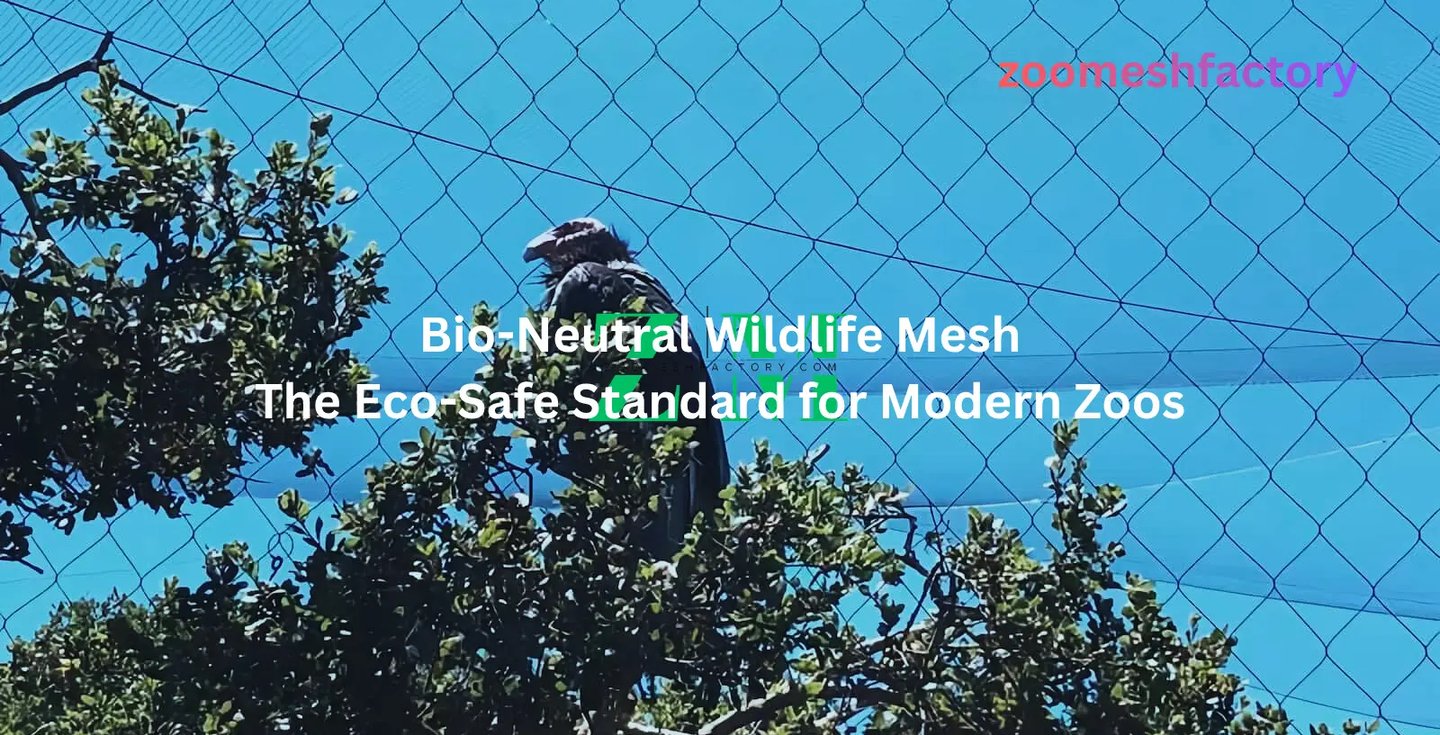
The Aesthetic Result: From a distance of 10 meters, a Black Oxide aviary roof appears to be nothing more than a faint shadow against the sky, preserving the "Open Air" feel of the zoo grounds.
More: [The Engineering Guide to Flexible Wire Rope Netting]
See our wire mesh specification guide to match cable diameter and grade to your aviary environment.
V. Species-Specific Specifications: The Right Gauge for the Right Beak
Not all birds interact with their environment in the same way. While a finch may never touch the mesh, a macaw will treat it as a climbing ladder and a chew toy. Black Oxide Aviary Netting must be tailored to the "destructive potential" of the inhabitant.
The "Peck-Proof" Hierarchy
Small Softbills (Finches, Budgies, Songbirds): * Recommendation: 1.2mm wire / 25.4mm (1") aperture.
The Goal: Maximum transparency (>96% open area). These birds are lightweight and have low impact force, allowing for the thinnest possible "invisible" wire.
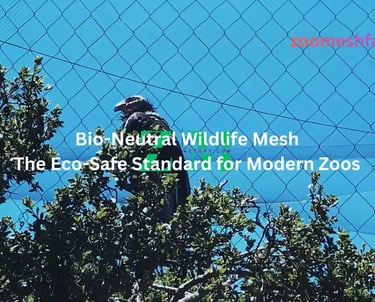
Large Raptors (Eagles, Owls, Falcons): * Recommendation: 2.0mm wire / 51mm (2") aperture.
The Goal: Impact absorption. Raptors are heavy-bodied and high-speed flyers. The 2.0mm 7x7 cable provides the tensile strength to stop a diving raptor without the wire "cutting" into the bird’s chest or wings.
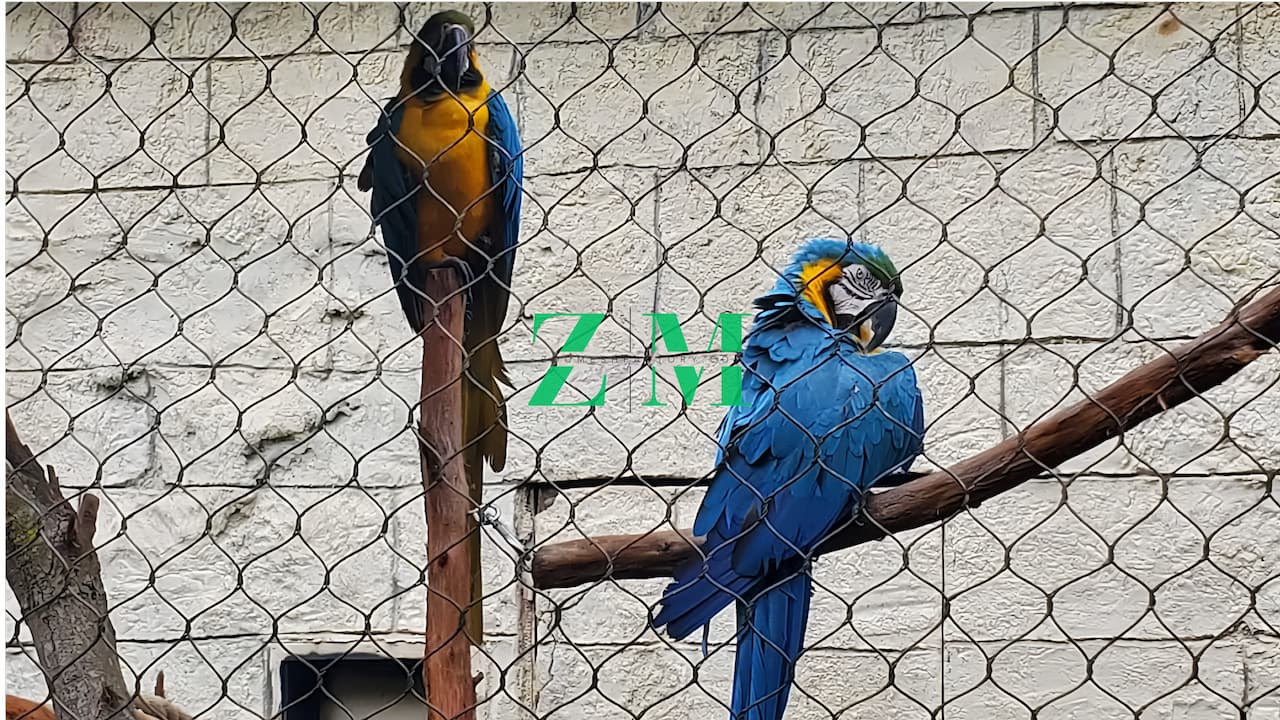
Psittacines (Macaws, Cockatoos, Parrots): * Recommendation: 2.0mm - 2.4mm wire / 38mm - 51mm aperture.
The Goal: Mechanical durability. Parrots have a "bolt-cutter" bite. While they cannot snap SS316 wire, they will peel PVC coating off in days. Black Oxide is integrated into the steel, meaning there is no coating for the parrot to strip, maintaining the exhibit's beauty for decades.
For a full breakdown of stainless vs galvanized aviary fencing lifespan and safety risks, check our complete fencing buyer’s guide.
VI. Photography and the Guest Experience: The "Instagram" Factor
In 2026, a zoo’s marketing isn't done by billboards; it’s done by visitors on social media. If a guest cannot take a clear photo of a rare bird because of a "shimmering" silver fence, your exhibit has failed its secondary mission: Public Engagement.
Why Instagram-Friendly Exhibits Drive Traffic
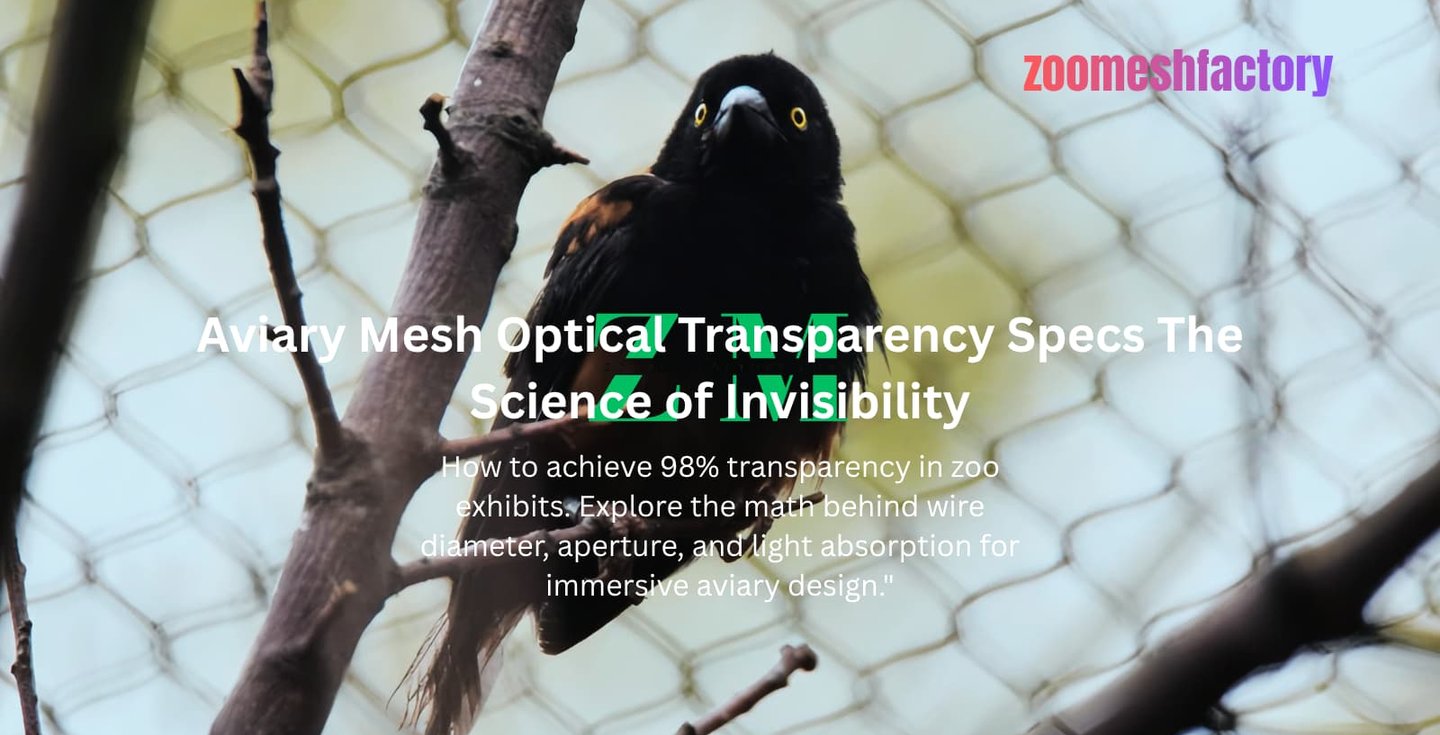
Modern smartphone cameras utilize "Phase Detection Autofocus" (PDAF). Silver mesh reflects light, confusing the camera’s sensor and causing it to focus on the wire instead of the animal.
The Black Oxide Advantage: Because the matte black surface reflects zero light, the camera sensor "sees through" the mesh. This allows guests to capture professional-grade, "National Geographic" style photos of birds in flight or nesting.
Social Proof: When guests post high-quality, barrier-free photos to Instagram or TikTok, they provide "Social Proof" that your zoo offers a premium, immersive experience.
Educational Storytelling
For educators, an invisible barrier is a teaching tool. It allows children to observe subtle behaviors—preening, feeding, or courtship displays—without the visual "noise" of a cage. This clarity fosters a deeper emotional connection between the guest and the species, which is the cornerstone of conservation fundraising.
VII. Installation: Maintaining the Black Aesthetic
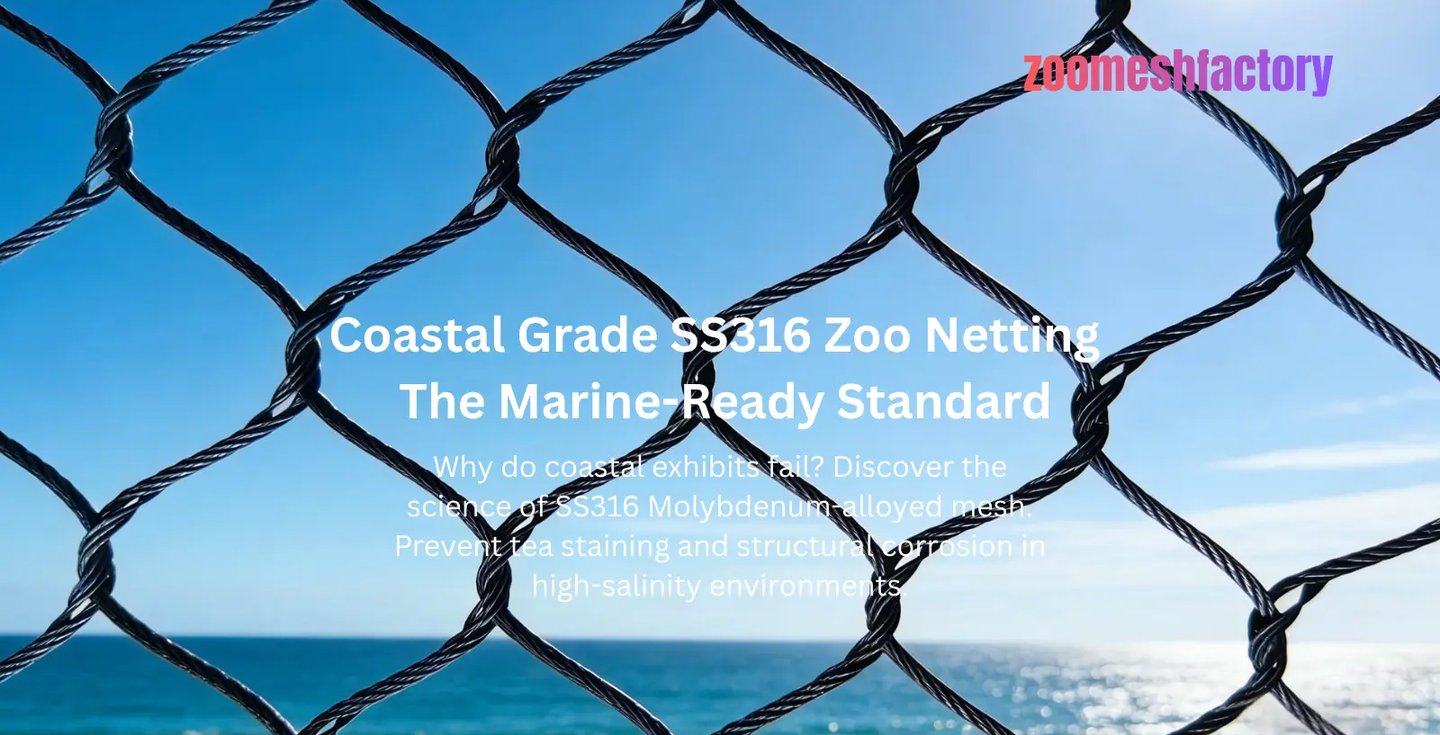
The secret to a truly "invisible" aviary lies in the details. If you install matte black mesh using silver galvanized bolts or bright stainless ferrules, the guest’s eye will immediately "lock" onto those points of light, breaking the illusion of a naturalistic habitat.
The "Black on Black" Hardware Rule
To achieve a seamless finish, every component of the assembly must match the mesh.
Black Oxide Ferrules: We ensure that every sleeve (ferrule) used to bind the 7x7 cable is treated with the same chemical conversion coating as the mesh itself.
Coated Lace Wire: When stitching mesh panels together on-site, using standard silver lace wire creates a visible "seam" that looks like a zipper. We provide Black Oxide Lacing Wire to ensure that the transition between panels is indistinguishable from the weave itself.
Powder-Coated Frames: For the structural posts and perimeter tubes, we recommend a high-durability "Raven Black" powder coat. This creates a unified dark silhouette that recedes into the background shadows.
Touch-Up Protocols: Handling On-Site Scratches
During high-tension installation, it is inevitable that some mechanical tools (like pliers or come-alongs) may create minor surface scratches.
The Advantage of Oxide: Unlike painted mesh, which requires bulky touch-up paint that can peel, Black Oxide can be touched up with a simple cold-blackening solution. This maintains the ultra-thin 1-micron profile of the coating and ensures the mesh looks factory-fresh upon opening day.
VIII. Conclusion: The Invisible Future
As we look toward the next decade of zoological excellence, the "Cage" is being replaced by the "Zone." Guests no longer want to look at an animal; they want to be with the animal. Black Oxide Aviary Netting is the primary tool that allows architects to satisfy this demand without compromising on the safety of the species or the public.
By investing in Black Oxide SS316, you are securing three critical pillars of modern zoo management:
Animal Welfare: A soft, flexible, and non-toxic flight space that prevents impact injuries.
Architectural Beauty: A "ghost-like" structure that enhances, rather than hides, your landscape design.
Revenue Growth: High-quality, photography-friendly exhibits that drive social media engagement and repeat visitors.
When the mesh is invisible, the conservation message becomes clear. Don't let a silver fence stand in the way of your guests' connection to nature.
Visit our homepage to explore all styles of zoo aviary mesh on offer.
Black Oxide Aviary Netting FAQ
Is Black Oxide aviary netting a type of paint or coating?
No, Black Oxide is not a paint or PVC coating. It is a chemical conversion coating that transforms the surface of the stainless steel into a matte black magnetite layer. Because it is a molecular change to the steel itself, it will not flake, peel, or chip, even if chewed by parrots or raptors.
Why is black mesh more invisible than silver stainless steel mesh?
Silver stainless steel reflects sunlight, creating visual 'glare' that acts as a wall to the human eye. Black Oxide absorbs light, eliminating reflections. This allows the eye to focus naturally on the birds behind the mesh, achieving up to 95% optical transparency in naturalistic habitats.
Is Black Oxide mesh safe for parrots and psittacines?
Yes, Black Oxide is bio-neutral and non-toxic. Unlike PVC-coated or galvanized wires, which can cause heavy metal poisoning if ingested, the Black Oxide finish is chemically stable and cannot be stripped off by a parrot's powerful beak, making it the safest choice for climbing birds.
Does the black finish reduce the lifespan of the stainless steel mesh?
Actually, Black Oxide can enhance the lifespan. The oxidation process adds a secondary passive layer to the SS304 or SS316 wire rope, providing an additional shield against atmospheric pollutants and moisture while maintaining the base metal's high-tensile strength.
Can I use standard silver hardware to install black aviary netting?
While you can use standard hardware, it is not recommended for naturalistic designs. To maintain the 'invisible' look, we provide matching Black Oxide ferrules and lacing wire. This ensures that seams and anchor points blend perfectly with the mesh for a seamless, immersive guest experience.
Ready to Start Your Exhibit Design?
Join the hundreds of zoos and sanctuaries worldwide that trust ZooMesh Factory for their containment needs. Our engineers are ready to help you calculate the perfect mesh size for your species.
Contact
Hebei Zoo Mesh Co., Ltd
No. 188 Zhonghua South Street, Shijiazhuang City, Hebei Province, China
info@zoomeshfactory.com
© 2025. All rights reserved.
Quick Link
Product Catalogs
Don't leave without the specs! Save our factory-direct pricing and technical configurations for your next project meeting. Our 2026 Zoo Mesh Factory Direct Catalog is ready for download.