
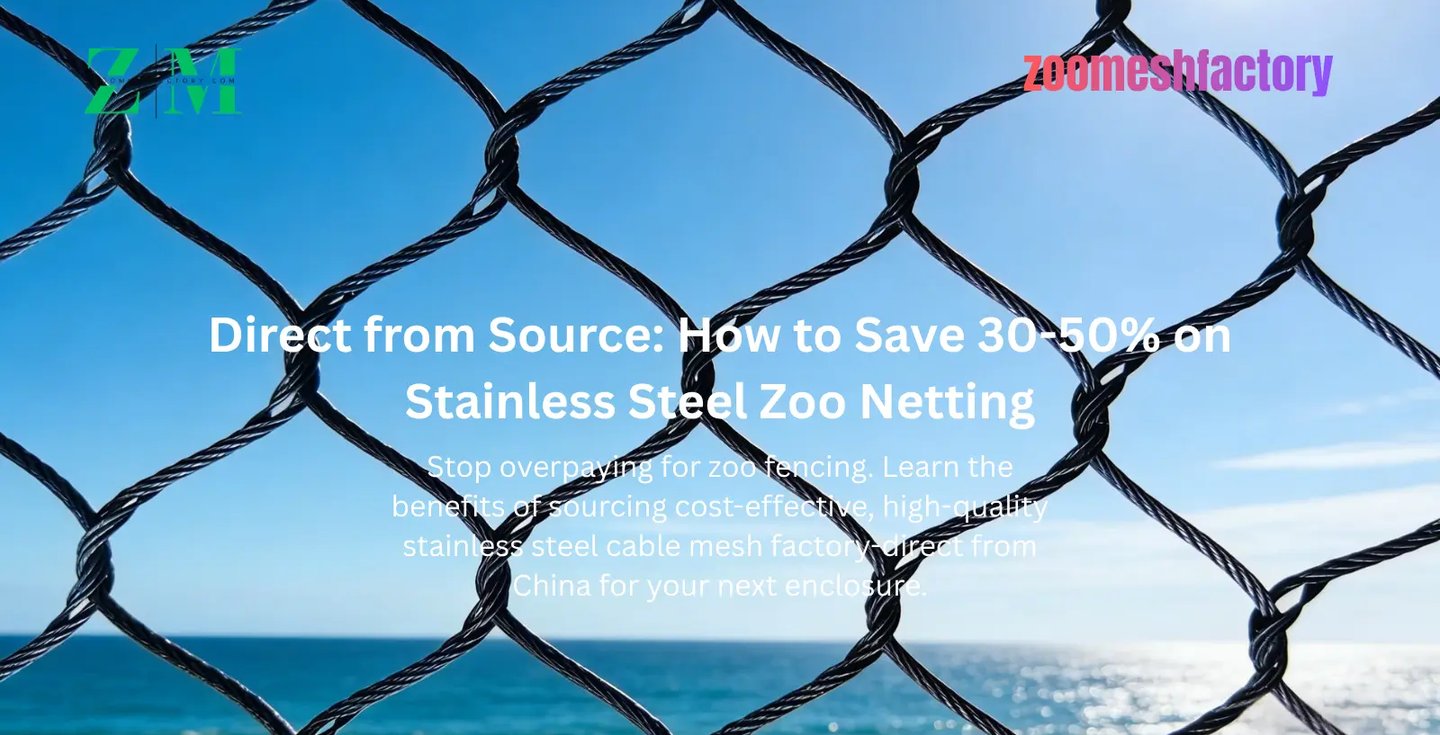
Direct from Source: How to Save 30-50% on Stainless Steel Zoo Netting
Stop overpaying for zoo fencing. Learn the benefits of sourcing cost-effective, high-quality stainless steel cable mesh factory-direct from China for your next enclosure.
Hebei Zoo Mesh Co., Ltd
6/1/20268 min read
Sourcing stainless steel zoo netting factory-direct from China can reduce project costs by 30% to 50% compared to local distributors. By cutting out the middleman, zoos and contractors gain direct access to custom-sized handwoven mesh, specialized SS316 grades, and bulk pricing. The key to successful procurement is choosing a manufacturer that provides ISO-certified quality control, transparent shipping logistics, and material test reports (MTRs) to ensure the safety of high-value animal assets.
Key Takeaways
Wholesale Advantage: Lower price per square meter without sacrificing material grade (SS304/SS316).
Customization: Factories can produce massive single-sheet panels, reducing on-site installation labor.
Quality Assurance: Zoo Mesh Factory provides full technical documentation for every batch.
Logistics: Modern sea and air freight make "factory-direct" as easy as buying locally, but at a fraction of the cost.
I. The Hidden Costs of Zoo Construction: Where Your Budget Disappears
In the world of high-spec zoo construction, the "sticker price" of materials is rarely the actual cost. When a zoo or architectural firm buys through a local distributor, they aren't just paying for stainless steel; they are subsidizing a massive, invisible supply chain.
Where the Money Goes: The Middleman Tax
When you buy from a domestic reseller, your budget is being diverted into three main buckets that have nothing to do with the quality of your fence:
Logistics & Double Handling: The mesh travels from the factory to a regional distributor, then to a local warehouse, and finally to your site. Each stop adds 10-15% in freight and handling fees.
Warehousing Overhead: You are paying for the distributor’s rent, insurance, and staff.
Marketing Markups: Western brands often source their mesh from the same high-end factories we operate, only to white-label it and add a 50-100% markup based on brand name alone.
Why the "Made in China" Stigma is Dead
In the 2026 architectural mesh industry, China has become the global hub for high-spec stainless steel weaving. The stigma of the past has been replaced by a reality of technological dominance. The world’s most iconic "invisible" enclosures—from London to Singapore—now use Chinese-manufactured SS316 cable mesh. Why? Because the precision required for handweaving massive 10-meter panels requires a scale of specialized labor and CNC-controlled wire drawing that is simply unavailable elsewhere. When you buy direct, you aren't "settling" for a cheaper product; you are accessing the primary source of the world's most advanced zoo infrastructure.
Stainless steel isn't just durable—it's the smartest long-term investment for primate habitats. Learn how to select the right monkey enclosure mesh that lasts 30+ years with zero maintenance.
Our ultimate zoo mesh guide combines procurement tips with species-specific mesh specs.
II. The Anatomy of Factory-Direct Savings
To understand why factory-direct is the superior financial move, you have to look at the "Anatomy of a Roll." By cutting out the intermediaries, we pass the structural savings of the manufacturing process directly to the zoo’s bottom line.
Raw Material vs. Manufacturing Labor
The cost of stainless steel cable mesh is driven by two factors: the spot price of Grade 316 Stainless Steel and the precision labor of hand-weaving.
Scale Efficiency: As a factory, we purchase raw 316-grade wire in massive bulk, shielding our clients from the price volatility seen in retail markets.
Labor Specialization: Handweaving is an art form. Our technicians have decades of experience in creating uniform diamond apertures. By buying direct, you pay for that expertise—not for a salesperson's commission.
How Custom Sizing Saves 15% in Material Waste
One of the biggest "silent killers" of a construction budget is on-site waste.
The Retail Problem: If you buy standard 2m x 20m rolls to cover a 3.5m high wall, you are forced to cut and discard 0.5m of expensive mesh for the entire length of the fence. You are essentially paying for material that ends up in the scrap bin.
The Factory Solution: We weave the mesh to your exact height and length. If your wall is 3.75 meters high, we weave it to exactly 3.75 meters. This eliminates "cutoff waste" and reduces on-site labor costs because your team doesn't have to spend days trimming and seaming panels together.
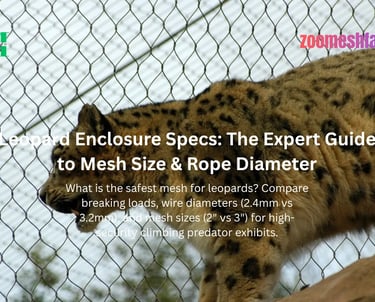
Financial Insight: On a large-scale project like a leopard habitat or a walk-through aviary, custom sizing alone can save a zoo upwards of $5,000–$15,000 just in avoided material waste.
Take Action: Stop paying for middleman markups. View our full range of factory-produced products and get a quote that reflects the true cost of quality.
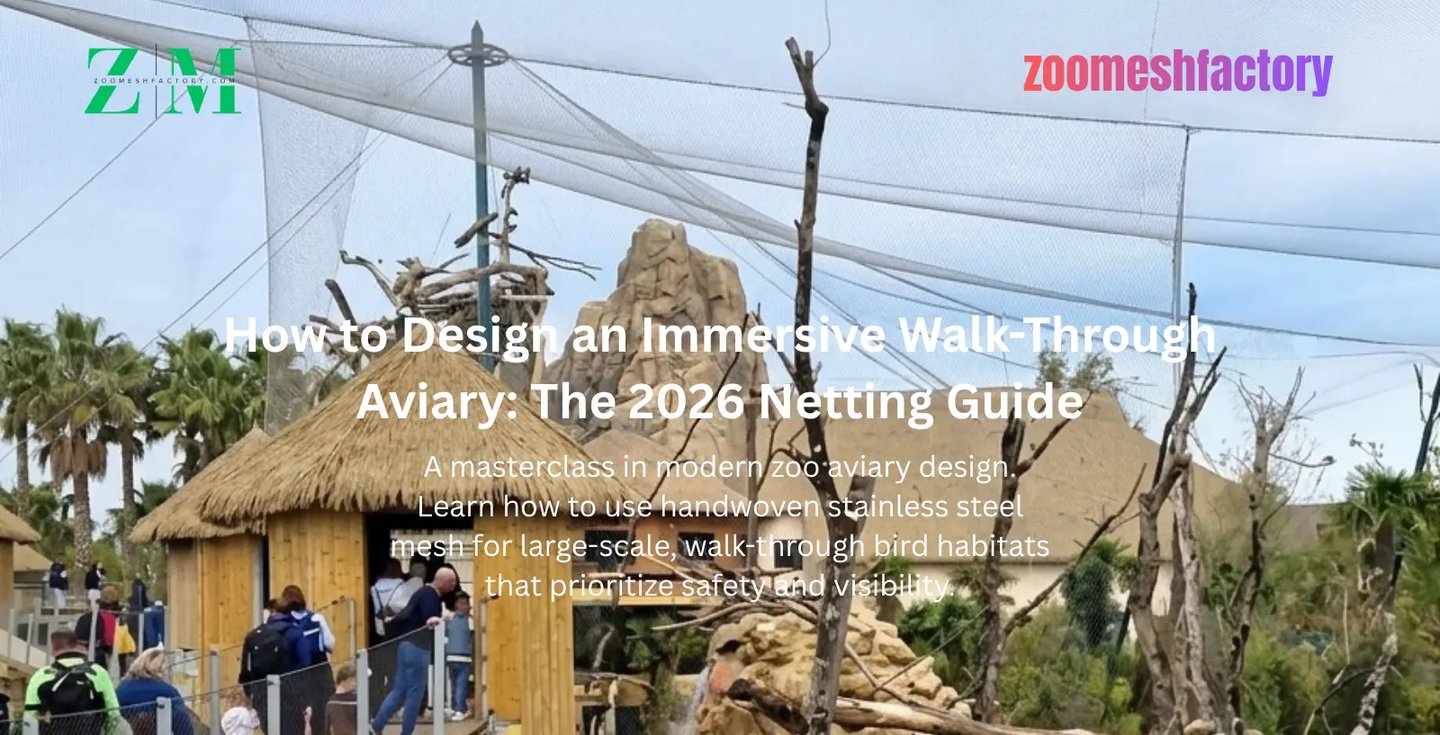
Our custom sizing reduces waste not just for standard fences, but for complex 3D structures like aviary domes. Read: Engineering Large-Scale Aviaries
III. Quality Control: What to Look For
In the stainless steel industry, the phrase "you get what you pay for" is only half true. The real danger isn't just paying too much; it’s paying for "Grade 316" and receiving a lower-quality alloy that will rust within two years. To protect your investment, you must move beyond the price tag and look at the technical data.
Why "Cheap" Isn’t Always "Cost-Effective"
A "cheap" mesh usually cuts corners in two invisible ways: alloy purity and wire construction.
The Alloy Trap: Lower-quality factories may reduce the nickel or molybdenum content. It looks like stainless steel on day one, but it lacks the chemical "backbone" to resist animal waste or salt air.
The Construction Flaw: True 7x19 or 7x7 cable construction requires precision tensioning. Poorly made cable has "loose strands," which reduce the breaking load and make the mesh susceptible to fraying when a predator interacts with it.
The Essential Testing Checklist
When sourcing factory-direct, you should always demand a Material Test Report (MTR). This is your "birth certificate" for the steel.
Chemical Composition: Does it have the required 2.0% molybdenum for SS316? The MTR will prove it.
Aperture Consistency: High-quality handwoven mesh should have a variance of less than 2mm. Inconsistent diamonds aren't just ugly; they create uneven tension across the panel.
Tensile Strength Testing: We perform "destructive testing" on sample batches to ensure the breaking load meets the safety requirements of your specific species.
Expert Tip: Don't just take a vendor's word for it. Ask for photos of the physical testing process. A transparent factory is a reliable factory.
Technical Resource: We take quality personally. Learn how we ensure safety for every animal enclosure through our multi-stage inspection process.
IV. Navigating the Logistics: It’s Easier Than You Think
One of the biggest misconceptions in zoo procurement is that buying from a local middleman is "faster and easier." In reality, with modern shipping and digital communication, the "factory-to-gate" process is incredibly streamlined.
Step-by-Step: From Quote to Zoo Gate
We’ve refined the international sourcing process into four simple phases:
The Technical Quote: You send us your architectural drawings or opening dimensions. We calculate the exact mesh area and provide a transparent, all-in quote (Material + Shipping).
Production & Weaving: Once the order is confirmed, our looms are set to your custom heights. We send you photo/video updates of your specific panels being hand-woven.
Door-to-Door Logistics: We handle the export documentation. Whether you choose Sea Freight (cost-effective) or Air Freight (urgent), we can arrange delivery directly to your zoo's construction site or the local port.
On-Site Installation: Your custom-sized rolls arrive, labeled by enclosure section, ready to be unrolled and tensioned.
Understanding Lead Times: Syncing with Construction
Timing is everything. To keep your project on track, follow the "12-Week Rule":
Weeks 1-2: Technical consultation and final sizing.
Weeks 3-6: Custom manufacturing and hand-weaving.
Weeks 7-12: Ocean transit and customs clearance.
If you are in the "ground-breaking" phase of your project, that is the perfect time to finalize your mesh order. By the time your steel support structures are erected, your custom mesh will be arriving at your gate.
Project Manager Insight: Buying direct allows you to talk directly to the people making your mesh. If your construction schedule shifts, we can often adjust production priorities—a flexibility you simply won't get from a third-party reseller.
For detailed guidance on selecting the right material and grade to ensure habitat safety and longevity, refer to our comprehensive zoo fencing guide.
V. Comparing Handwoven Mesh to Alternatives: The 20-Year ROI
When evaluating a zoo budget, the "Initial Purchase Price" is often a distraction from the "True Lifecycle Cost." Over a 20-year span, the materials that seem expensive on day one often become the most affordable assets in the zoo’s inventory.
Why "Buy Once" is a Procurement Strategy
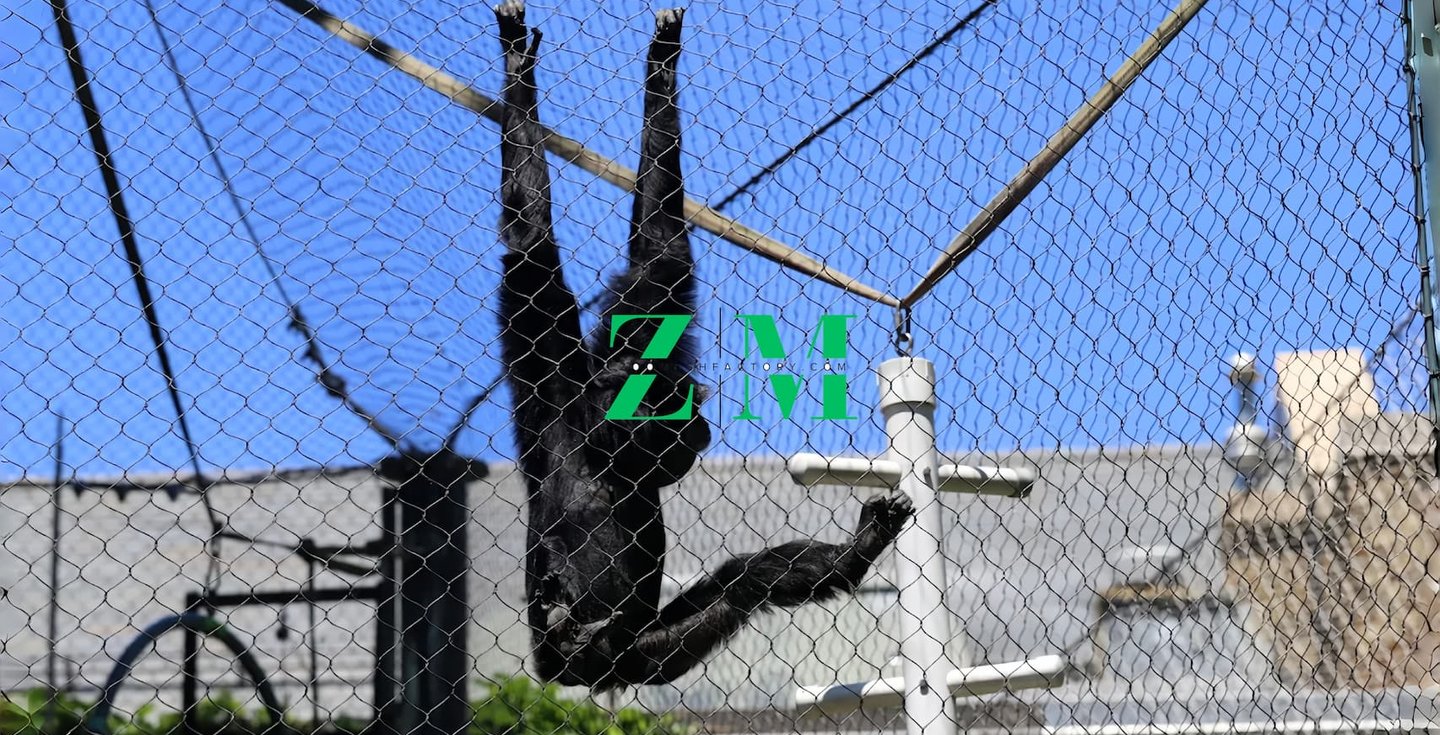
Choosing stainless steel cable mesh is a hedge against inflation and labor costs. If you install a synthetic net today, you aren't just paying for the net; you are committing to paying an installation crew to replace it four more times over the next two decades. With rising labor costs and the danger involved in working at height for large exhibits, the labor cost of replacement often exceeds the cost of the material itself.
By investing in SS316 cable mesh, you "lock in" your infrastructure costs today, ensuring that your enclosure remains safe and aesthetically perfect until 2056 and beyond.
Expert Resource: Planning a massive flight habitat? Learn how to budget for large-scale aviary netting projects to maximize your square-footage-to-dollar ratio.
VI. Case Study: The "Direct" Difference
To illustrate the financial impact of sourcing from Zoo Mesh Factory, let's look at a typical 500-square-meter project (roughly the size of a mid-sized leopard habitat with overhead containment).
The Scenario: The "Metropolitan Zoo" Predator Enclosure
Requirement: 500 sqm of 3.2mm (1/8") SS316 Black Oxide Mesh.
Option A: Purchasing through a Domestic Architectural Reseller.
Option B: Sourcing Factory-Direct from Zoo Mesh Factory.
The Cost Breakdown (Estimated 2026 Rates)
The Result: $22,375.00 in Direct Savings
By choosing the factory-direct model, the Metropolitan Zoo saved over $22,000—nearly 45% of their material budget. These funds were then diverted back into the habitat’s interior features (rockwork, heating, and landscaping), resulting in a more enriched environment for the animals and a more impressive exhibit for the guests.
The Value Beyond the Dollar
Beyond the $22k saving, the zoo received:
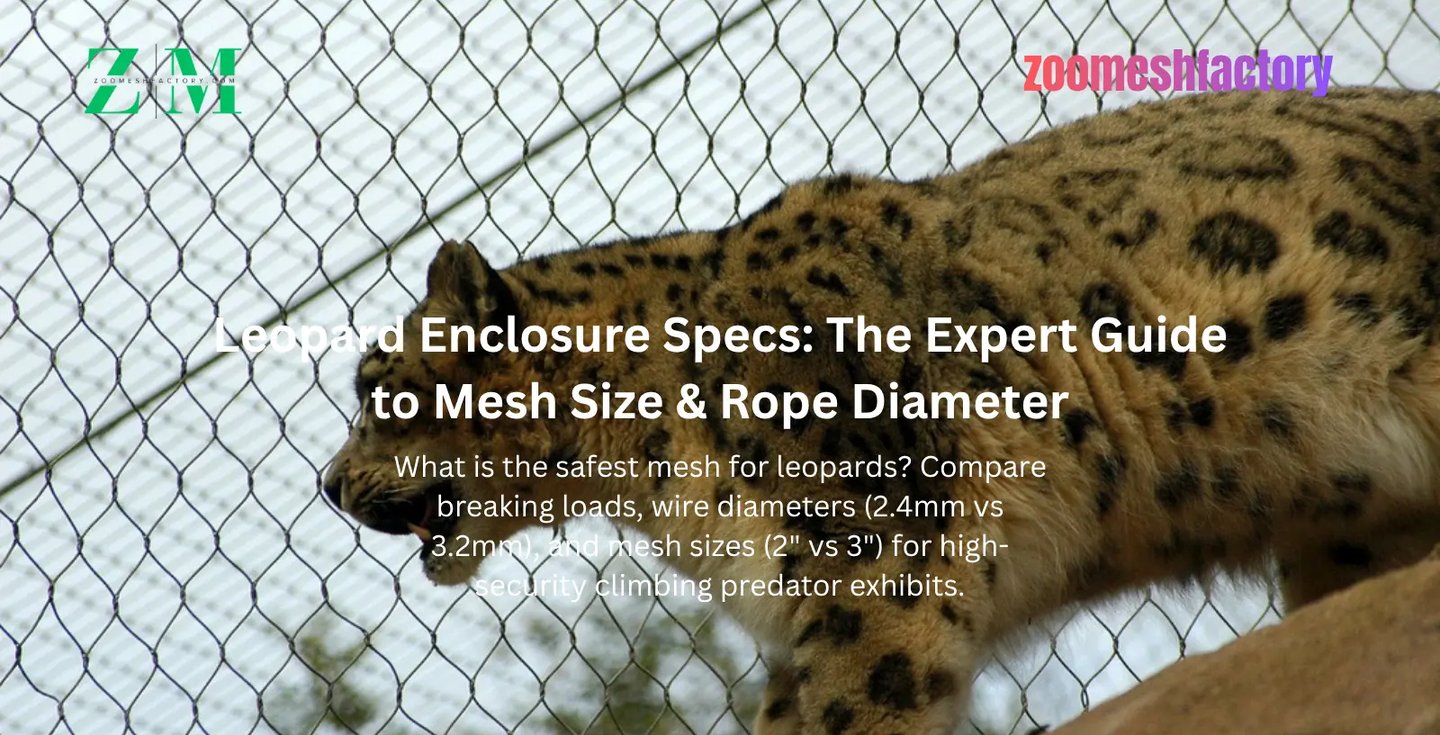
Direct Communication: The curator spoke directly with our factory engineers to ensure the mesh tension would handle the specific climbing habits of their resident Jaguar.
Reduced Risk: By ordering custom-sized 10-meter panels, they eliminated 60 linear meters of seams, removing the primary failure points from the enclosure's design.
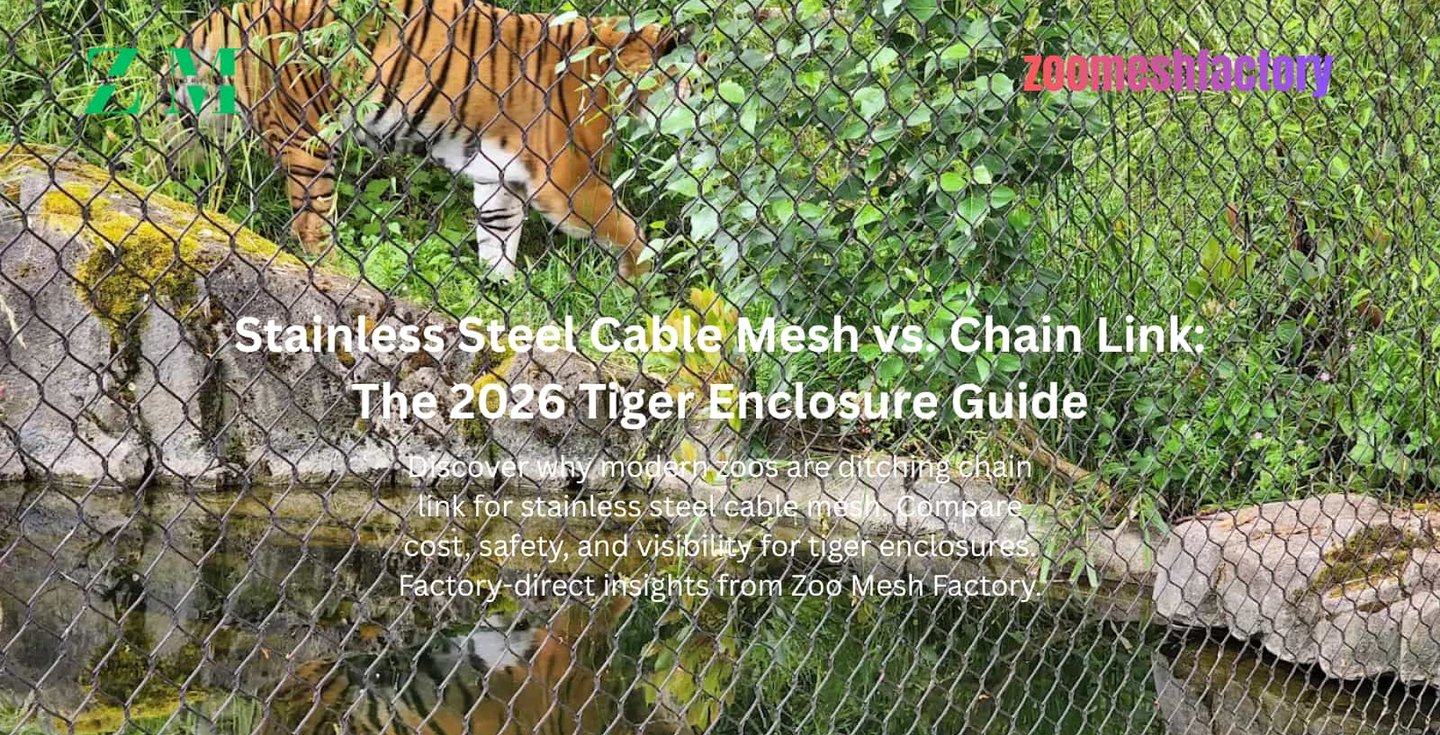
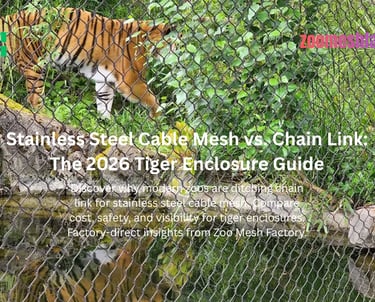
Financial efficiency never compromises safety. Revisit our Technical Standards for Tiger & Lion Enclosures
VII. Frequently Asked Questions (FAQ)
1. Is there a minimum order quantity (MOQ) for factory-direct zoo mesh?
At Zoo Mesh Factory, we work with both large-scale municipal zoos and smaller private sanctuaries. While our production efficiency is highest for orders over 50 square meters, we can accommodate custom orders for specific habitat repairs or small-bird aviaries. Contact us with your dimensions for a tailored quote.
2. How do you ensure the quality of the stainless steel from overseas?
Every batch of our stainless steel mesh is accompanied by a Material Test Report (MTR). This document certifies the chemical composition (ensuring it is true SS316 with 2% Molybdenum) and the tensile breaking strength. We also encourage third-party inspections and provide high-resolution video of your specific panels undergoing stress tests before they leave our floor.
3. Who handles the customs clearance and import duties?
We offer several shipping terms to meet your needs. Most clients prefer CIF (Cost, Insurance, and Freight) or DDU (Delivered Duty Unpaid). While we handle the international logistics and documentation, you will typically work with a local customs broker to pay the domestic taxes. We can often recommend a broker who is familiar with architectural materials to make the process seamless.
4. Can I get custom-shaped panels for irregular rockwork?
Yes. Because our mesh is hand-woven, we can produce irregular shapes, including triangles, trapezoids, and circular panels. By providing your CAD drawings to our factory engineers, we can weave the mesh to fit your landscape perfectly, which eliminates the need for difficult and wasteful on-site modifications.
5. What is the lead time for a custom zoo mesh order?
For most standard orders, the production time is 2–4 weeks, depending on the total square footage. Sea freight typically takes an additional 4–6 weeks to reach North America or Europe. For urgent repairs, we offer Air Freight options that can deliver your custom mesh to your gate in as little as 10–14 days..
Ready to Start Your Exhibit Design?
Join the hundreds of zoos and sanctuaries worldwide that trust ZooMesh Factory for their containment needs. Our engineers are ready to help you calculate the perfect mesh size for your species.
Contact
Hebei Zoo Mesh Co., Ltd
No. 188 Zhonghua South Street, Shijiazhuang City, Hebei Province, China
info@zoomeshfactory.com
© 2025. All rights reserved.
Quick Link
Product Catalogs
Don't leave without the specs! Save our factory-direct pricing and technical configurations for your next project meeting. Our 2026 Zoo Mesh Factory Direct Catalog is ready for download.