
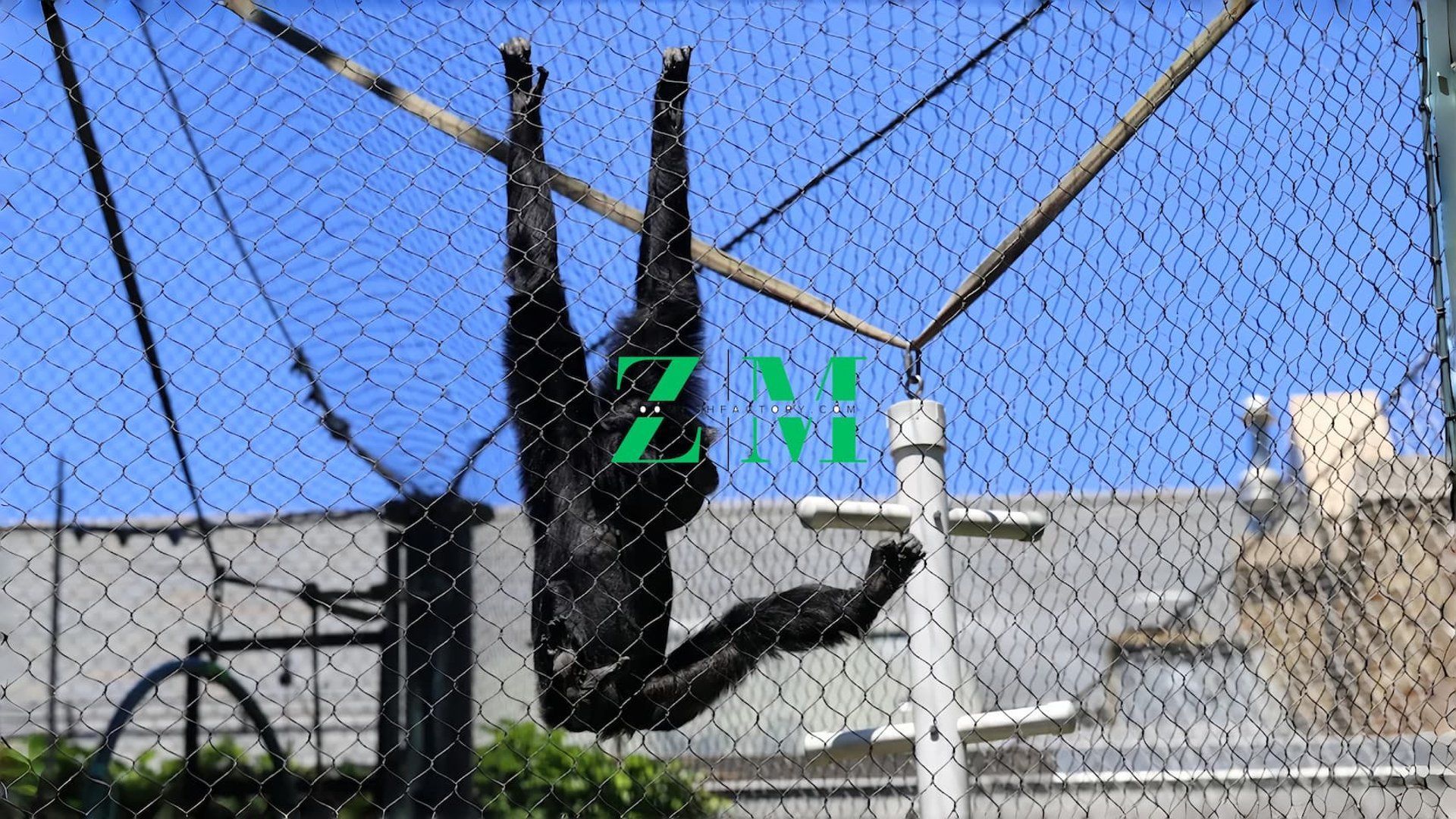
1. Engineered for Strength and Safety
In modern zoo design, the enclosure must provide absolute security without sacrificing the animal's psychological well-being. Our ZooMesh SS304 Hand-Woven Wire Rope Netting is engineered to withstand the extreme physical forces of large primates and predators while offering the flexibility required for naturalistic habitat design.
Unlike rigid chain-link or welded panels, our woven mesh acts as a dynamic barrier. Its unique diamond structure allows it to absorb kinetic energy from an animal's impact and distribute that force across the entire panel surface. This "spring-like" effect protects the structural integrity of your steel frames and, more importantly, prevents injury to the animal.
2. Why Professionals Prefer Woven Mesh for Large Animals
Climb-Resistant & Safe: The smooth, hand-finished surface of the 7 x 19 wire rope prevents the "snagging" of claws, teeth, or fur—a common injury risk with lower-quality chain-link fencing.
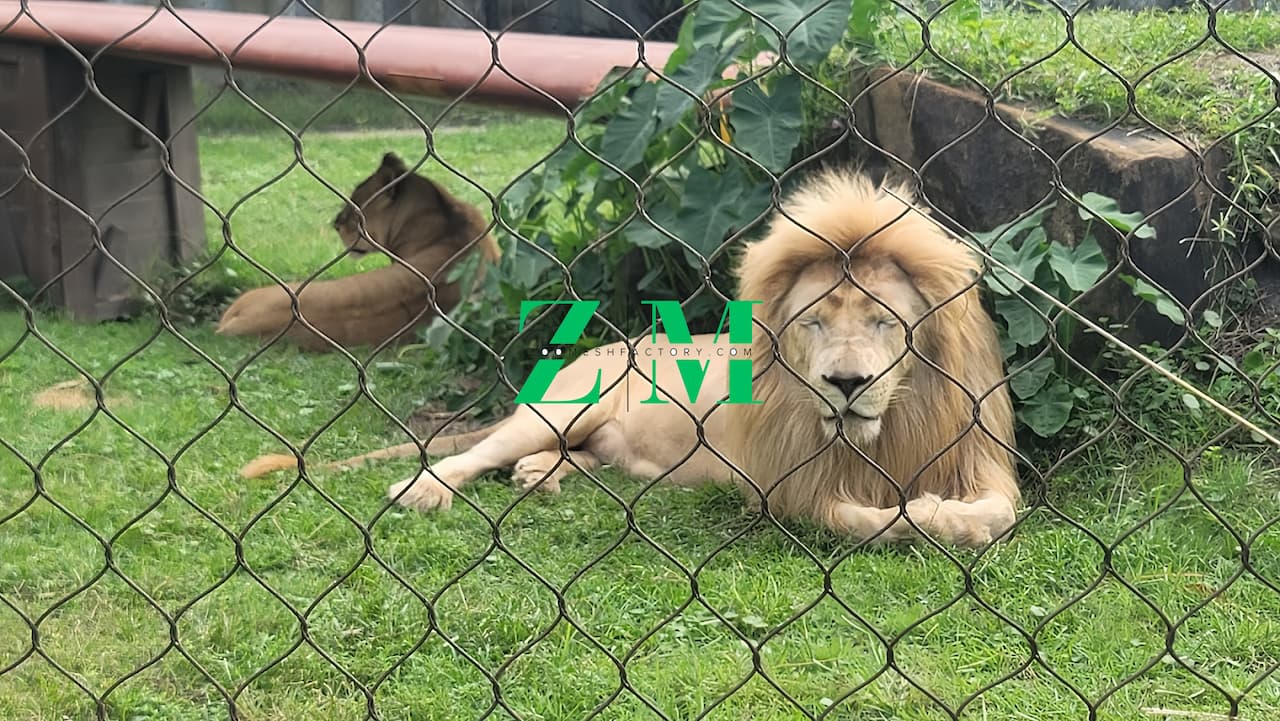
Extreme Impact Absorption: The "diamond" weave allows for calculated elasticity. When a 200kgs primate or big cat impacts the mesh, the structure flexes rather than snapping under tension.
Corrosion Resistance: SS304 provides a maintenance-free lifespan of decades, even in high-humidity rainforest exhibits or indoor habitats with frequent chemical cleaning.
Aesthetic Integration: Our mesh features high transparency. For a truly "invisible" look, we offer black oxide treatments that allow the mesh to blend into the shadows of the foliage.
3. Recommended Specs for High-Impact Enclosures
Safety is determined by the "Breaking Load" of the wire. We recommend these heavy-duty configurations for professional facilities:
4. Behavioral Enrichment and Mesh Safety
Modern zoo philosophy focuses on "Environmental Enrichment." Our SS304 mesh supports this by allowing animals to use the enclosure walls as an active part of their living space.
Safe Climbing: For primates like Orangutans and Gibbons, the mesh provides a tactile, grip-friendly surface that mimics the strength of natural vines.
Abrasive Resistance: Unlike plastic-coated wires, our bare stainless steel does not peel or flake when subjected to the constant scratching of big cat claws. This prevents the ingestion of toxic micro-plastics, meeting the highest veterinary standards.
Acoustic Neutrality: High-tension woven mesh does not "rattle" or vibrate like chain-link or welded panels. This reduces acoustic stress for sensitive species, creating a quieter, more naturalistic habitat.
5. The Economics of SS304 vs. Alternatives
When budgeting for a large-scale animal exhibit, the "Total Cost of Ownership" (TCO) is the most critical metric.
Vs. Galvanized Steel: While galvanized mesh has a lower initial purchase price, it typically fails within 5-7 years due to "white rust" and mechanical fatigue. The cost of animal relocation and re-installation makes galvanized mesh 3x more expensive over a 20-year period.
Vs. SS316 Marine Grade: SS316 is essential for coastal projects. However, for 90% of inland zoo projects, SS304 provides identical performance at a 15-20% lower cost. By choosing our SS304 woven mesh, project managers can reallocate those savings toward better landscaping or larger exhibit footprints.
6. Detailed Installation & Security Protocols
Security is only as strong as the weakest attachment point. At ZooMesh Factory, we recommend a "Redundant Bordering" protocol for all predator exhibits.
Secondary Stitching: Panels should be stitched to the perimeter cable using a 1.6mm or 2.0mm stainless steel wire, with a minimum of three wraps per diamond.
Point-Load Calculation: For heavy-impact animals, engineers must calculate the "deflection" of the mesh. Our hand-woven diamond structure allows for controlled deflection, which decelerates a lunging animal safely, reducing risk to the structural frame.
Maintenance Audits: We recommend a bi-annual tension check. Because SS304 has a low "creep" rate, adjustments are rarely needed, but inspecting the perimeter ferrules is a best practice for public safety compliance.
7. Global Logistics: Bulk Production for Zoo Projects
As a primary manufacturer, we are equipped to handle the logistics of major international zoo developments:
Large-Format Panels: We manufacture panels up to 20m x 10m to minimize on-site seams.
Certified Packaging: All orders are packed in ISPM-15 certified wooden crates to prevent damage during sea or air freight.
Fast Lead Times: With over 50 weavers on-site, we can fulfill bulk orders of 2000-5000m2 within 21 days.
FAQ: Professional Zoo Mesh & Animal Containment
Q: Can large predators like tigers or leopards bite through the SS304 mesh?
A: No. Our mesh uses high-tensile 7x19 stainless steel wire rope. Even at a 2.4mm to 3.2mm diameter, the multi-strand cable construction is impossible for big cats to bite through. Unlike single-strand wire, the rope structure absorbs the pressure of a bite without snapping.
Q: Will the mesh rust if used in a tropical or humid rainforest exhibit?
A: SS304 is highly resistant to corrosion in humid and freshwater environments. For inland tropical exhibits, it provides a maintenance-free lifespan of over 30 years. If your zoo is located within 5km of the ocean, we recommend upgrading to our SS316 Marine Grade mesh to handle high-salinity air.
Q: Is the mesh flexible enough for irregular rockwork and tunnels?
A: Yes. One of the primary advantages of hand-woven mesh over welded wire is its 3D flexibility. It can be wrapped around cylinders, stretched into spheres, or custom-cut to follow the irregular contours of natural rock and waterfall features without losing structural integrity.
Q: How do you prevent primates from climbing the mesh?
A: While primates can climb woven mesh, our diamond structure is designed to be "hand-friendly," meaning it won't cut or scrape their palms. To discourage climbing in specific areas, architects typically use a smaller mesh aperture 25mm x 25mm or install the mesh at a specific tension that makes vertical climbing more difficult.
Q: What is the maximum panel size you can manufacture?
A: As a factory, we can weave seamless panels up to 10m x 20m. However, for ease of shipping and installation, most clients prefer panels around 10m x 20m. Custom sizes are our specialty—just provide your CAD drawings for a precision fit.
Q: How does woven mesh compare to "ferruled" mesh for animal safety?
A: Hand-woven mesh (interwoven) is generally preferred for animal welfare. Ferruled mesh uses small metal clips (ferrules) to join the wires, which can sometimes have sharp edges or become loose over time. Hand-woven mesh is a "knotless" design, making it much smoother and safer for animals that rub against the enclosure.
Call to Action: Secure Your Exhibit Today
Safety is our Priority. Is it yours? Don't settle for "retail-grade" fencing. Get factory-direct pricing on engineered enclosure solutions that meet the highest international safety standards.
Ready to Start Your Exhibit Design?
Join the hundreds of zoos and sanctuaries worldwide that trust ZooMesh Factory for their containment needs. Our engineers are ready to help you calculate the perfect mesh size for your species.
Contact
Hebei Zoo Mesh Co., Ltd
No. 188 Zhonghua South Street, Shijiazhuang City, Hebei Province, China
info@zoomeshfactory.com
© 2025. All rights reserved.
Quick Link
Product Catalogs
Don't leave without the specs! Save our factory-direct pricing and technical configurations for your next project meeting. Our 2026 Zoo Mesh Factory Direct Catalog is ready for download.