
SS304 Woven Mesh Technical Specifications & Engineering Guide
You didn’t come this far to stop
1. Introduction to Hand-Woven Cable Technology
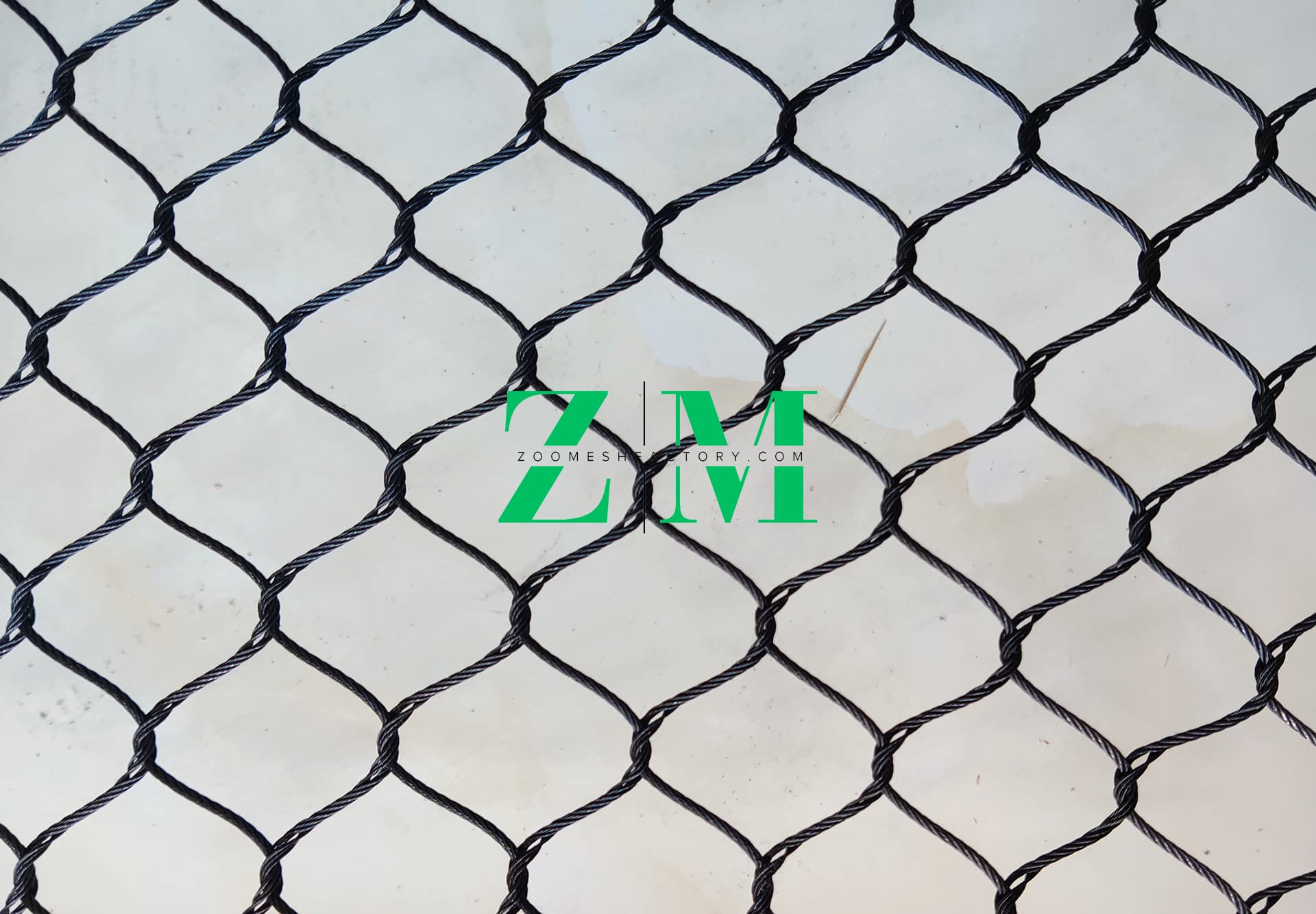
Stainless steel woven wire mesh is a sophisticated structural material that merges the high-tensile strength of AISI 304 grade steel with the flexibility of a hand-loomed textile. Unlike traditional rigid fencing or welded wire, our hand-woven SS304 cable mesh utilizes a seamless "interwoven" technique. This creates a diamond-patterned fabric that can absorb significant kinetic energy without permanent deformation, making it the premier choice for animal containment and public safety.
As a dedicated manufacturer, we focus on the SS304 alloy due to its exceptional performance-to-cost ratio for inland environments, offering 30+ years of service life without the high price premium of SS316.
For a full overview of woven cable mesh structure, alloy grades and habitat applications, read our complete stainless steel wire rope netting engineering guide.
2. Material Science: The SS304 Advantage
For zoo and architectural projects located away from high-salinity coastal spray, AISI 304 Stainless Steel is the global industry standard.
Chemical Composition: High Chromium (18%) and Nickel (8%) content provides a protective oxide layer that resists atmospheric corrosion.
Mechanical Strength: Offers a yield strength of approximately 210 MPa and a tensile strength of 520 MPa.
Thermal Resilience: Maintains structural integrity in temperatures ranging from -40°C to +400°C, ensuring safety in extreme climates
Stainless Steel Zoo Mesh
Or someone else will hire you to build theirs. Here is how you can take action – starting today.

3. Wire Rope Structures: 7 x 7 vs 7 x 19
The strength and flexibility of the mesh are determined by the construction of the individual wire ropes. We provide two primary configurations:
4. Primary Specification & Load-Bearing Table
The following data is essential for structural engineers and architects calculating the safety of an enclosure.
5. Installation Methodologies & Tensioning
Proper installation is critical to the longevity of the mesh. Because our product is flexible, it only achieves its full strength once correctly tensioned.
The Tube Frame Method: The mesh edges are wrapped around a structural pipe and secured with a "stitching" wire. This is best for smaller exhibit panels.
The Perimeter Cable Method: A heavy-duty border cable (up to 8.0 mm) is threaded through the mesh edges and tensioned with turnbuckles. This is the standard for Large-Scale Walk-through Aviaries.
The 90° Rule: For the best visual transparency and tension distribution, the mesh should be installed so the diamonds open at a 90 angle.
6. Dynamic Load Absorption & Safety
In zoo environments, "static load" is less important than "dynamic load" (the force of an animal jumping or hitting the mesh). Our woven mesh acts as a spring, distributing the force of an impact across a wide area of the netting rather than concentrating it on a single point.
For predator enclosures (Leopards, Jaguars, etc.), we recommend a Safety Factor (S) of 3.0. For lightweight bird netting, a Safety Factor of 1.5 is sufficient.
7. Global Logistics & Bulk Capacity
As a manufacturer, we optimize our SS304 woven mesh for international shipping:
Custom Roll Sizes: Panels can be manufactured up to 20m x 10m to minimize on-site joining.
Bulk Packaging: Mesh is tightly rolled and packed in ISPM-15 certified wooden crates.
Production Lead Time: With our current loom capacity, we can fulfill bulk orders of 2000 to 5000m2 within 14-21 days.
Frequently asked questions
Q: Can SS304 mesh be painted or coated?
A: While we recommend the natural stainless finish, it can be black oxide treated for even higher transparency (the "invisible" look).
Q: How do you prevent "cable fatigue" in primates exhibits?
A: By using the 7 x 19 structure, which is designed to withstand the constant bending and movement caused by climbing animals.
Q: Does the mesh stretch over time?
A: Once the initial pre-tension is set during installation, SS304 exhibits negligible creep.
Ready to Start Your Exhibit Design?
Join the hundreds of zoos and sanctuaries worldwide that trust ZooMesh Factory for their containment needs. Our engineers are ready to help you calculate the perfect mesh size for your species.
Contact
Hebei Zoo Mesh Co., Ltd
No. 188 Zhonghua South Street, Shijiazhuang City, Hebei Province, China
info@zoomeshfactory.com
© 2025. All rights reserved.
Quick Link
Product Catalogs
Don't leave without the specs! Save our factory-direct pricing and technical configurations for your next project meeting. Our 2026 Zoo Mesh Factory Direct Catalog is ready for download.