

Monkey Enclosure Mesh Buyers Guide: Compare Cost & Specs | ZooMesh
Monkey enclosure mesh buyers guide: compare grades, gauge and pricing, plus a checklist to avoid costly enclosure failures and escapes. Free spec consult.
Alex
6/28/20269 min read
Executive Summary: This guide helps zoo directors, exhibit designers, and procurement professionals select the right monkey enclosure mesh—covering stainless steel grades, aperture sizing, cable construction, and installation methods. We share real factory-floor experience from 30 years of handwoven stainless steel mesh manufacturing to help you avoid costly mistakes and choose a primate enclosure that lasts decades with zero maintenance.
🏆 Key Takeaways
Monkey enclosure mesh is a specialized high-tensile containment system using handwoven stainless steel wire rope—not ordinary welded wire or chain-link fencing. Learn more about our full range of zoo animal enclosure mesh solutions.
Grade selection is climate-driven: 304 stainless steel works for inland zoos; 316 "marine-grade" is mandatory for coastal or high-humidity environments.
Aperture size depends on species: 1" x 1" for small primates (marmosets, tamarins); 1.5" x 1.5" for medium monkeys; 2" x 2" for macaques, baboons, and gibbons.
Cable construction matters: Multi-strand wire rope offers superior flexibility and fatigue resistance for high-activity swinging zones.
Handwoven stainless steel mesh is chew-proof, bite-proof, and virtually indestructible—monkeys cannot chew through it, and there are no welds to break.
One-time investment, lifetime asset: stainless steel rope mesh outperforms all alternatives on total cost of ownership.
Sustainable choice: Stainless steel mesh is 100% recyclable and eliminates the need for frequent replacement. Explore sustainable zoo enclosure materials for eco-conscious habitat design.
1. What Is Monkey Enclosure Mesh?
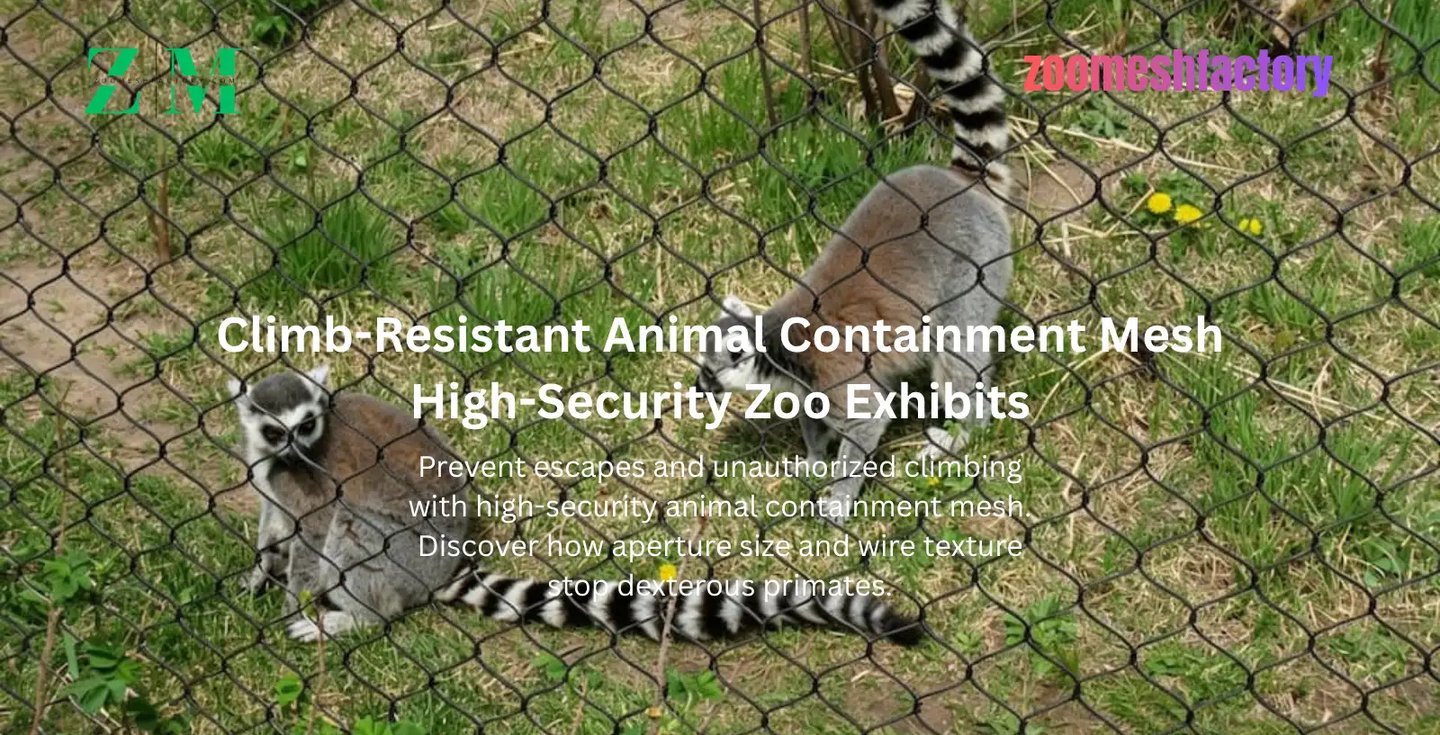
A monkey enclosure mesh is a high-tensile containment system specifically engineered to secure primates of all sizes—from tiny marmosets to large chimpanzees. Unlike traditional welded wire or chain-link fencing, the most effective material is handwoven stainless steel wire rope mesh.
In our factory, we've been manufacturing this mesh for over three decades. The handwoven construction creates a structure where load is distributed across multiple cables, offering high breaking strength while maintaining a slim, flexible profile. This isn't just fencing—it's a structural component of the habitat itself. For high-energy primate species, our impact-resistant primate mesh is specifically engineered to absorb the kinetic force of leaping animals.
Why Standard Fencing Fails for Primates
Primates are not like other zoo animals. They are intelligent problem-solvers with opposable thumbs. A monkey doesn't just lean against a fence—it climbs, swings, leaps, and deliberately tests every weak point.
Chain-link fencing has several fatal flaws for monkey enclosures:
Abrasive surfaces with sharp wire ends that cut primate hands during climbing
Visual obstruction that creates a "prison" feel for both animals and visitors
Rigid materials that break under repetitive impact from leaping primates
Loose wire ends that primates can pick, unwrap, and manipulate to create escape holes
Monkey barrier fencing solves all these problems. The smooth surface prevents injuries, the flexibility absorbs kinetic energy from leaps, and the hand-knotted construction has no welds to break and no loose edges to unwrap.
Modern zoo design increasingly favors invisible zoo barrier aesthetics—where the mesh disappears visually, creating an immersive experience for visitors while maintaining uncompromised security. Our invisible zoo barrier design guide explores this approach in depth.
2. Material Selection: 304 vs. 316 Stainless Steel
Choosing the right material grade is the foundation of your primate enclosure's lifespan. We frequently advise zoo clients on this decision—and we've seen too many facilities fail because they chose the wrong grade for their climate.
Grade 304 Stainless Steel
AISI 304 is a cost-effective, high-quality solution suitable for inland environments where humidity levels are moderate. It provides excellent strength and corrosion resistance for most primate habitats.
Best for: Zoos located away from coastlines, in regions with moderate moisture and no exposure to harsh chemicals or salt air.
Grade 316 Stainless Steel ("Marine Grade")
AISI 316 contains 2%–3% molybdenum, which drastically improves resistance to pitting and corrosion. If your zoo is near the coast or in an area with high salinity, 316 is non-negotiable.
Why this matters in the real world: Primate enclosures are subjected to concentrated ammonia from waste and aggressive acidic washdowns. Standard galvanized or powder-coated fences corrode rapidly in these conditions. Marine-grade stainless steel is mandatory to survive these corrosive environments.
Best for: Coastal zoos, tropical climates, outdoor exhibits exposed to rain and humidity, and facilities using chemical cleaning protocols.
For a deeper dive into the differences between 304 and 316—including chemical composition, PREN scores, and real-world lifespan data—see our full 304 vs 316 Stainless Steel for Monkey Enclosures Guide.
Choosing the wrong grade can lead to premature rust, which is not only unsightly but compromises the structural integrity of the enclosure.
3. Cable Construction: Why Strand Count Matters for Primate Safety
Beyond the steel grade, the wire rope structure determines how the mesh handles physical stress. This is one of the most overlooked factors in how to choose monkey enclosure mesh size and specification.
Multi-Strand Flexibility for High-Activity Zones
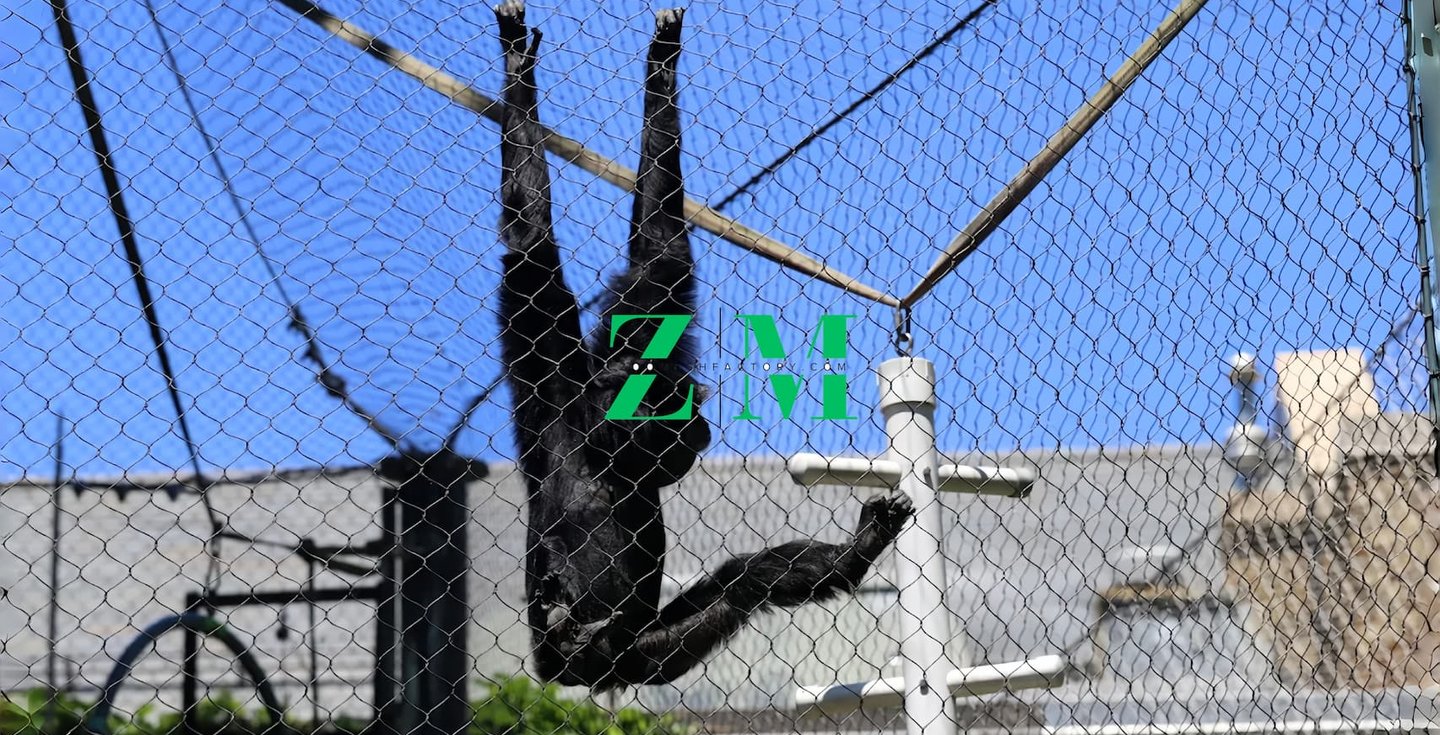
Primates that brachiate—swing from arm to arm—subject enclosure mesh to repetitive, dynamic loads. A rigid cable structure will eventually suffer from metal fatigue, where the metal becomes brittle and cracks under constant vibration.
The solution: Multi-strand wire rope construction. By using multiple smaller wires twisted together, the cable gains exceptional flexibility while maintaining high breaking strength. This flexibility serves two critical purposes:
Energy dissipation: When a primate leaps and hits the mesh, the flexible cable absorbs the impact, spreading the kinetic energy across the entire panel rather than concentrating it at a single point. This "spring effect" protects both the animal and the structural frame.
Fatigue resistance: Primates are famous for "rhythmical rocking"—grabbing a barrier and shaking it repeatedly. Flexible multi-strand cables withstand this constant vibration without losing their structural integrity, unlike rigid cables that work-harden and eventually crack.
Factory insight: For species like gibbons that brachiate constantly, we always recommend highly flexible cable construction. The flexibility absorbs the dynamic loads of swinging without compromising security.
Impact Resistance for Large Primates
Larger primates—especially gorillas and chimpanzees—generate impact loads that can be 5 to 10 times their body weight when leaping. A 200kg gorilla striking a barrier creates over a ton of force at the point of impact.
Rigid welded wire mesh simply cannot handle this. The welds snap, the wire deforms permanently, and the enclosure fails. Flexible stainless steel rope mesh, by contrast, deforms slightly on impact and instantly rebounds—distributing the force across the entire panel. This is why modern high-security primate enclosures exclusively use flexible wire rope mesh.
For detailed specifications on impact-resistant mesh for large primates, see our impact-resistant primate mesh guide.
4. Mesh Aperture Size: Matching Mesh to Monkey Species
What mesh aperture for macaque enclosure? The answer depends entirely on the species you're housing.
General Rule: Select the Largest Mesh Aperture That Still Provides Security
Why? Because aperture size is inversely related to price. The smaller the mesh aperture, the greater the difficulty of processing, the longer the processing steps, and the higher the cost.
Critical Safety Note: Adjacent Cages
A maximum mesh size of 1" × 1" (25.4mm × 25.4mm) is recommended where mesh separates adjacent cages. This prevents primates in neighboring enclosures from making contact, which can lead to injury or disease transmission.
Finger-Safe Design for Small Primates
For small species, the best mesh opening size for small primates is 1" × 1". This aperture is specifically sized to prevent small primates from reaching through or getting their limbs entangled—a critical safety feature for marmosets and tamarins.
Large Primates and Brachiation
Larger primates, especially those that exhibit brachiation, require an enclosure mesh that can absorb high-energy movement. The best flexible mesh for monkey climbing enclosure uses 2" × 2" aperture with 5/64" cable—providing the necessary safety margin for heavier animals without sacrificing visibility.
For a complete species-by-species breakdown of aperture requirements—from marmosets to macaques—see our detailed Monkey Enclosure Mesh Aperture Size Guide.
5. Why Handwoven Stainless Steel Mesh Is Superior
Durability and Strength
Primates are notorious for testing the limits of their enclosures. They pull, climb, and often attempt to chew through barriers. Stainless steel rope mesh is virtually indestructible.
How to prevent monkeys from chewing through enclosure mesh? The answer is stainless steel. Monkeys cannot chew through stainless steel wire rope. It will not fray, snap, or release dangerous metal shards if chewed.
Safety: Smooth Surface Prevents Injuries
The handwoven stainless steel cable net has a smooth texture that prevents hand injuries—unlike galvanized chain link with sharp "knuckles" or wire ends.
Visibility: The "Invisible" Barrier
Modern zoo design prioritizes "immersion"—creating habitats that feel natural for animals while providing clear views for visitors. Zoo mesh fencing made from thin stainless steel cable provides an unobstructed view while maintaining absolute security. For a deeper dive into this design philosophy, explore our invisible zoo barrier design guide.
Bite-Proof and Chew-Proof
Stainless steel is impervious to the strong jaws of macaques and baboons. Animal containment netting made from stainless steel contains no lead or zinc, protecting animals from "New Wire Disease" often caused by galvanized materials.
Zero Maintenance
One-time investment provides permanent use. Stainless steel wire rope mesh's comprehensive profits outperform competitive products greatly. Unlike galvanized fencing that requires regular replacement, stainless steel mesh lasts decades with virtually no maintenance.
Sustainable and Eco-Friendly
Stainless steel is 100% recyclable and contains no harmful coatings or chemicals. By choosing stainless steel mesh, zoos eliminate the environmental cost of repeatedly manufacturing and disposing of inferior fencing materials. Learn more about sustainable zoo enclosure materials and how stainless steel supports green building certifications.
6. Installation Methods
How to install wire rope mesh for monkey exhibit? There are two primary installation methods.
Frame Fixing
Monkey enclosure mesh can be fixed on stainless steel tube frames. This method involves securing the mesh to a rigid structural frame using specialized fittings.
Tensioned Installation
Alternatively, the mesh can be tensioned with stainless steel fittings. This method creates a "drum-tight" barrier that absorbs impact forces.
Three Primary Edge-Fixing Methods
Professional installation uses three primary edge-fixing methods to ensure the mesh stays taut and escape-proof. Each method is suited to different enclosure designs and structural requirements.
How to secure monkey cage mesh to steel frame? The key is using the correct stainless steel fittings and tensioning tools—and ensuring all attachment points are designed to withstand primate manipulation.
Ready to install? Our Monkey Enclosure Mesh Installation Guide walks you through measurement, anchoring, tensioning, and final inspection—with factory-tested tips from 30+ years of experience.
7. Customization and Procurement
Where Can I Purchase High-Security Mesh for Primate Habitats?
Where to buy heavy-duty mesh for monkey enclosures online? Look for manufacturers with:
Direct factory experience (not just resellers)
Customization capabilities for species-specific requirements
Global shipping experience
Technical support for installation
Customization Options
Best types of monkey enclosure mesh for durability and safety can be customized for:
Rope diameter: From 1.2mm to 3.2mm
Mesh aperture: From 20mm to 120mm
Panel size: Custom dimensions up to 30' × 60'
Finish: Natural stainless steel or black oxide
Black Oxide Finish
Best black oxide monkey enclosure mesh for zoos offers a matte, dark finish that:
Eliminates glare for both animals and visitors
Renders the barrier virtually invisible
Reduces eye strain in both primates and human viewers
Learn from Other Species Specifications
The same engineering principles that apply to monkey enclosures also inform other zoo habitats. For example, our leopard enclosure specs guide covers mesh sizing and cable diameter selection for big cats—many of the same load-bearing and durability considerations apply to primate enclosures.
❓ FAQ:
Q1: What size mesh is best for monkey enclosures?
Monkey enclosures typically use mesh apertures of 38mm × 38mm or 51mm × 51mm. For Old World primates, a maximum mesh size of 1" × 1" (25.4mm × 25.4mm) is recommended where mesh separates adjacent cages. The general rule is to choose openings small enough to prevent escapes but large enough for good air circulation.
Q2: Is stainless steel or welded wire mesh better for monkey cages?
Stainless steel wire rope mesh is superior for monkey enclosures due to its flexibility, corrosion resistance, and chew-proof properties. Welded wire mesh offers strength and rigidity but is considered less reliable for primary containment of Old World primates and may not provide the same impact absorption.
Q3: How is monkey enclosure mesh installed?
Monkey enclosure mesh can be fixed on stainless steel tube frames or tensioned with stainless steel fittings. Three primary edge-fixing methods are used to ensure the mesh stays taut and escape-proof.
Q4: What grade of stainless steel should I use for monkey mesh?
Available grades include 304, 304L, 316, and 316L stainless steel. Grade 316/316L offers superior corrosion resistance, making it ideal for outdoor environments and coastal locations. For inland zoos with moderate humidity, 304 is a cost-effective choice.
Q5: Can monkey enclosure mesh be customized for different primate species?
Yes. Rope diameter, opening size, and mesh aperture can all be customized according to specific project requirements. Different configurations are needed for swinging species like gibbons versus terrestrial macaques.
📞 Ready to Specify Your Monkey Enclosure Mesh?
Our factory has been manufacturing handwoven stainless steel rope mesh for over 30 years. We supply zoos, wildlife parks, and sanctuaries worldwide with customized primate enclosure solutions.
What we offer:
Direct factory pricing with fast global delivery
Custom sizing up to 30' × 60' panels
304 and 316 stainless steel grades
Multiple cable constructions for different species requirements
Natural and black oxide finishes
View our flagship stainless mesh solutions for full-size gorilla and gibbon exhibits.
Ready to Start Your Exhibit Design?
Join the hundreds of zoos and sanctuaries worldwide that trust ZooMesh Factory for their containment needs. Our engineers are ready to help you calculate the perfect mesh size for your species.
Contact
Hebei Zoo Mesh Co., Ltd
No. 188 Zhonghua South Street, Shijiazhuang City, Hebei Province, China
info@zoomeshfactory.com
© 2025. All rights reserved.
Quick Link
Product Catalogs
Don't leave without the specs! Save our factory-direct pricing and technical configurations for your next project meeting. Our 2026 Zoo Mesh Factory Direct Catalog is ready for download.