
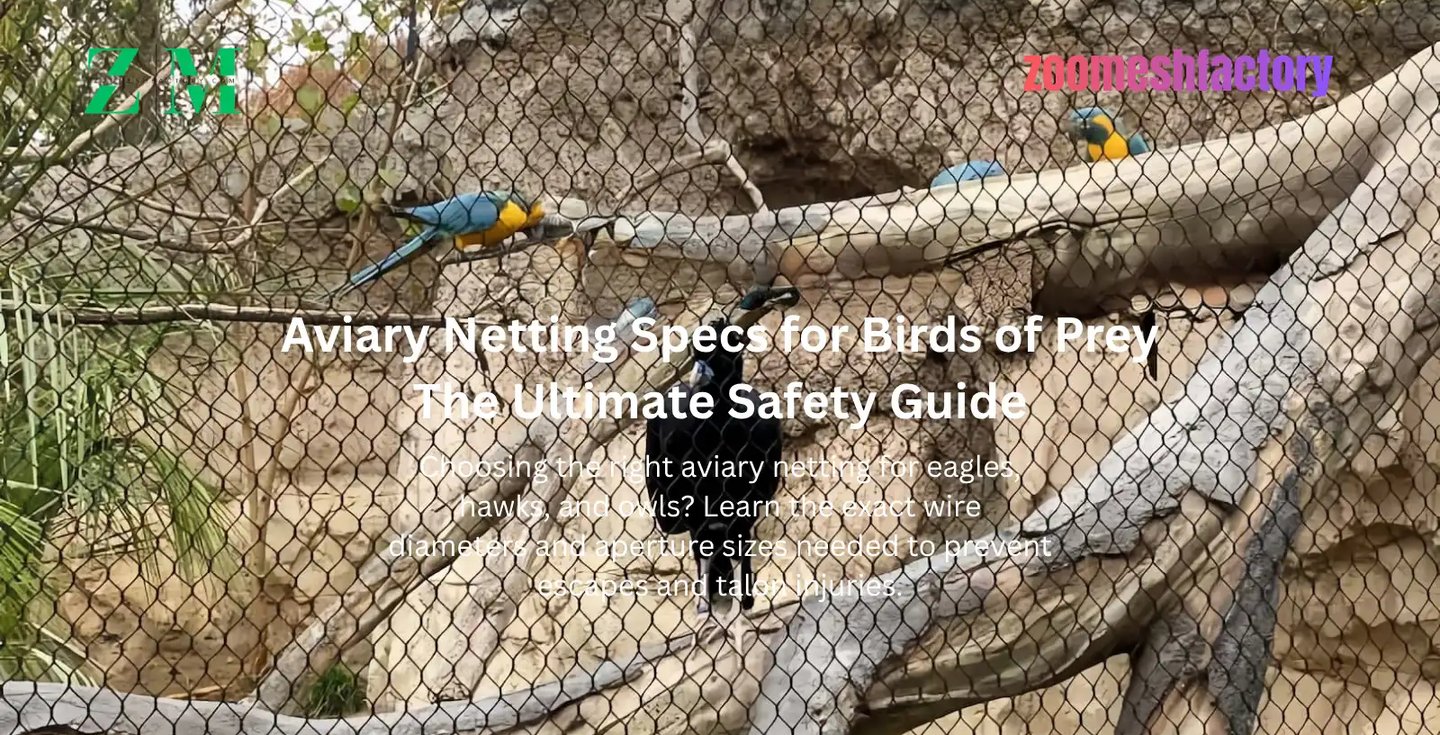
Aviary Netting Specs for Birds of Prey: The Ultimate Safety Guide
Choosing the right aviary netting for eagles, hawks, and owls? Learn the exact wire diameters and aperture sizes needed to prevent escapes and talon injuries.
Hebei Zoo Mesh Co., LTD
4/21/20269 min read
The Raptor Standard: For large birds of prey (Eagles, Vultures, Condors), the industry standard is 2.0mm to 3.0mm wire diameter with an aperture (opening) of 50mm to 100mm. For smaller raptors (Hawks, Owls, Falcons), a 1.5mm to 2.0mm wire is recommended. Hand-woven stainless steel cable mesh is the preferred material because it lacks the sharp weld points found in traditional wire, protecting the bird’s sensitive cere and feathers during flight impact.
I. Introduction: The Unique Challenges of Raptor Aviaries
Designing an enclosure for a songbird is a matter of aesthetics; designing an enclosure for an eagle, vulture, or falcon is a matter of engineering for power.
Most "standard" bird netting—the lightweight, plastic, or thin-gauge metal mesh used in commercial poultry or garden netting—is woefully inadequate for raptors. Birds of prey possess two lethal biological tools: crushing talon strength and a hooked beak designed to tear through tough tissue. Standard netting fails because it cannot withstand the sheer impact of a 10lb eagle in full flight or the localized stress of a bird perching and gripping the mesh.
Beyond the threat of escape, there is the "Piano Wire Effect." If your mesh diameter is too thin or your aperture too narrow, the aviary becomes a visual wall that confuses the bird’s depth perception. Conversely, if the material is too reflective, it turns into a blinding hazard. The goal is a "disappearing" enclosure that allows the raptor to see its environment clearly while providing a barrier so robust that the bird never feels inclined to test it.
In professional zookeeping, the priority is feather and cere health. A raptor’s cere (the fleshy base of the beak) and its primary flight feathers are highly sensitive. If your netting has sharp edges, welded burrs, or jagged cut-ends, a bird landing or climbing will eventually cause damage. This leads to chronic injury, infection, and, at worst, the inability for the bird to hunt or display naturally. When you design for raptors, you aren't just building a cage; you are building a flight-safe ecosystem.
While this guide focuses on raptors, we also manufacture ultra tough anti-chew mesh for large parrots; see full Macaw & Parrot Aviary Mesh specifications.
II. Material Selection: Why "Soft" Strength Matters
When curators choose a material for raptor enclosures, the debate usually comes down to three choices: plastic/nylon, welded wire, or hand-woven stainless steel. To anyone managing a high-value collection of birds of prey, the choice is clear.
Nylon: The Liability of UV Rot
Many aviaries start with nylon or high-density polyethylene netting because it is cheap and soft to the touch. However, in an outdoor setting, nylon is a ticking clock. UV radiation breaks down the polymers, turning the net brittle within 3–5 years. For a heavy raptor, that "soft" netting eventually becomes a snare that can trap talons or tear under sudden flight pressure. You don't want a "disposable" material for an animal that requires long-term environmental stability.
Stainless Steel: The Kinetic Absorber
This is where our hand-woven stainless steel cable mesh changes the game. Unlike rigid welded wire, which is static and unforgiving, our cable mesh is essentially "metallic fabric." It is flexible, meaning it absorbs the kinetic energy of a raptor’s flight impact rather than forcing the bird’s body to stop dead against a rigid wall.
The flexibility allows the mesh to "give" slightly, preventing feather damage and cere abrasion. Because it is woven from high-grade stainless steel cables, it offers the structural strength of a fortress with the tactile softness of a fabric.
Grade 304: Ideal for standard inland aviaries, providing excellent longevity and safety.
Grade 316: Our "Ocean-Grade" alloy, which includes Molybdenum for superior resistance to salt-air corrosion.
More: Explore our 316 Stainless Steel wire rope mesh for high-salinity coastal raptor centers where corrosion resistance is non-negotiable.
III. Breaking Down the Specs: Wire Diameter & Aperture
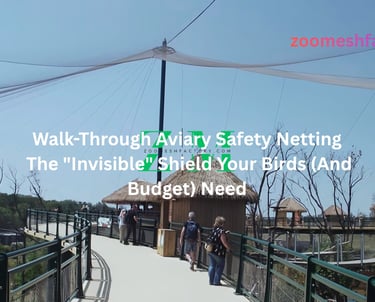
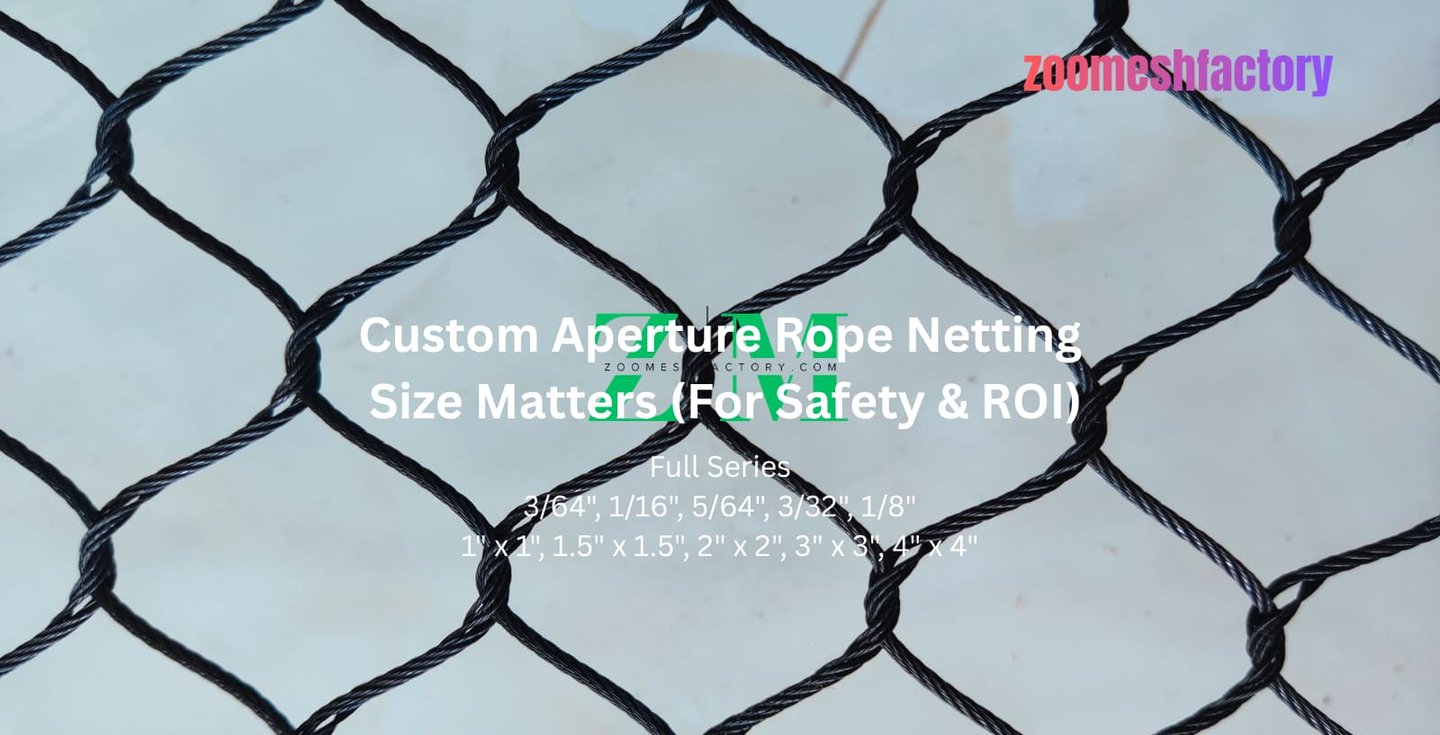
When you are spec-ing out an aviary, the balance between wire diameter and aperture (the size of the diamond opening) is where your exhibit’s success is decided. Too light, and you risk a breach; too heavy, and you ruin the visitor experience.
The "Small but Mighty" (Hawks & Falcons)
For smaller raptors like Kestrels, Peregrine Falcons, or Red-tailed Hawks, you do not need industrial-strength cable. A 1.2mm to 1.6mm wire diameter is the sweet spot. It provides enough tensile strength to keep the birds secure without creating a "heavy" visual barrier. At these diameters, the mesh remains incredibly lightweight, which is crucial for large-span flight aviaries where you want to minimize the structural load on the support frame.
The "Heavyweights" (Eagles & Vultures)
For species like Bald Eagles, Golden Eagles, or large Vultures, you are dealing with birds that can exert significant force through sheer wingspan and body mass. We recommend a 2.0mm to 3.2mm wire diameter. This gauge is specifically engineered to resist the "tug and pull" of a heavy raptor attempting to perch or scramble along the netting. It acts as an immovable yet flexible wall.
The Aperture Balancing Act
Aperture sizing is a matter of visibility versus safety:
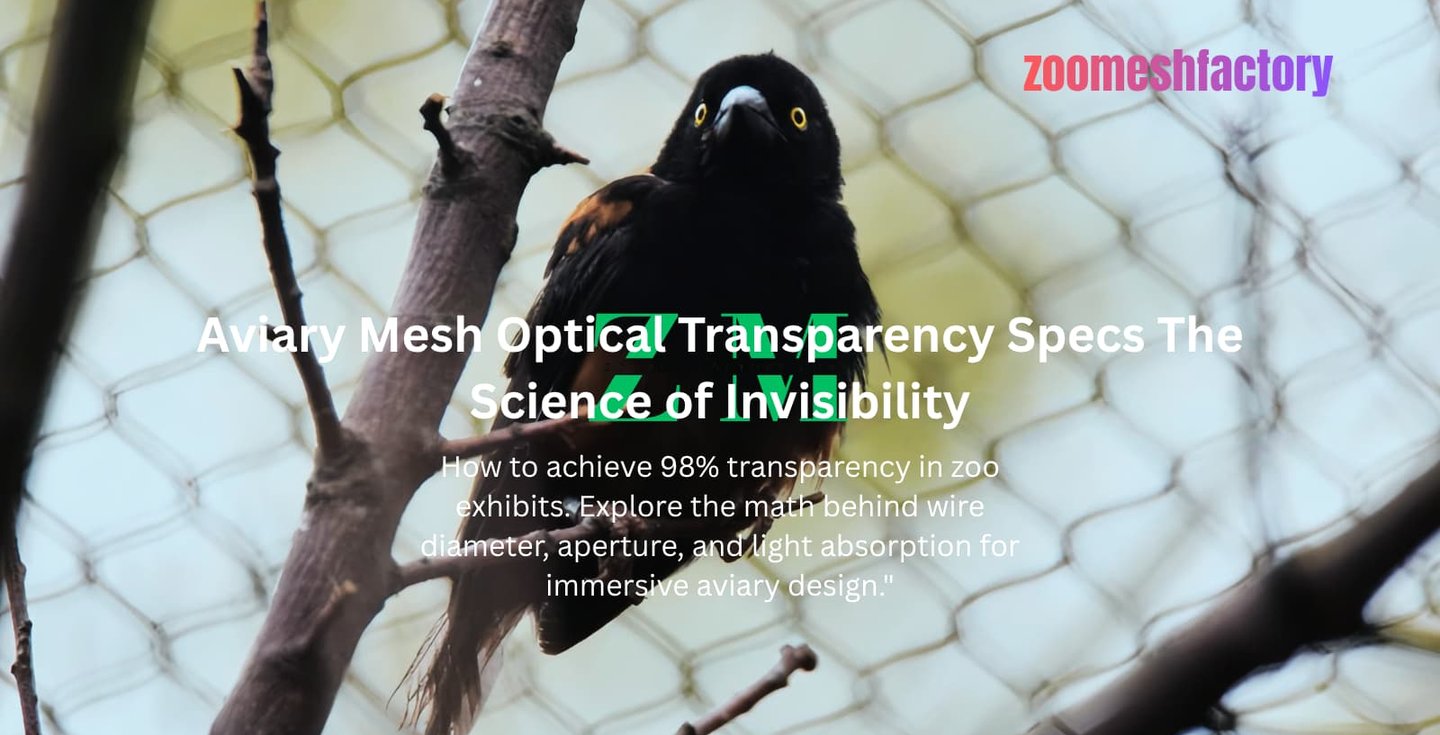
The "Too Small" Trap: If your aperture is under 40mm, the mesh can look like a solid wall from a distance, ruining the visitor’s view of the bird.
The "Too Large" Risk: If your aperture exceeds 100mm, you run a real safety risk. A bird could potentially get its head or a wing stuck in the opening, leading to panic, injury, or death.
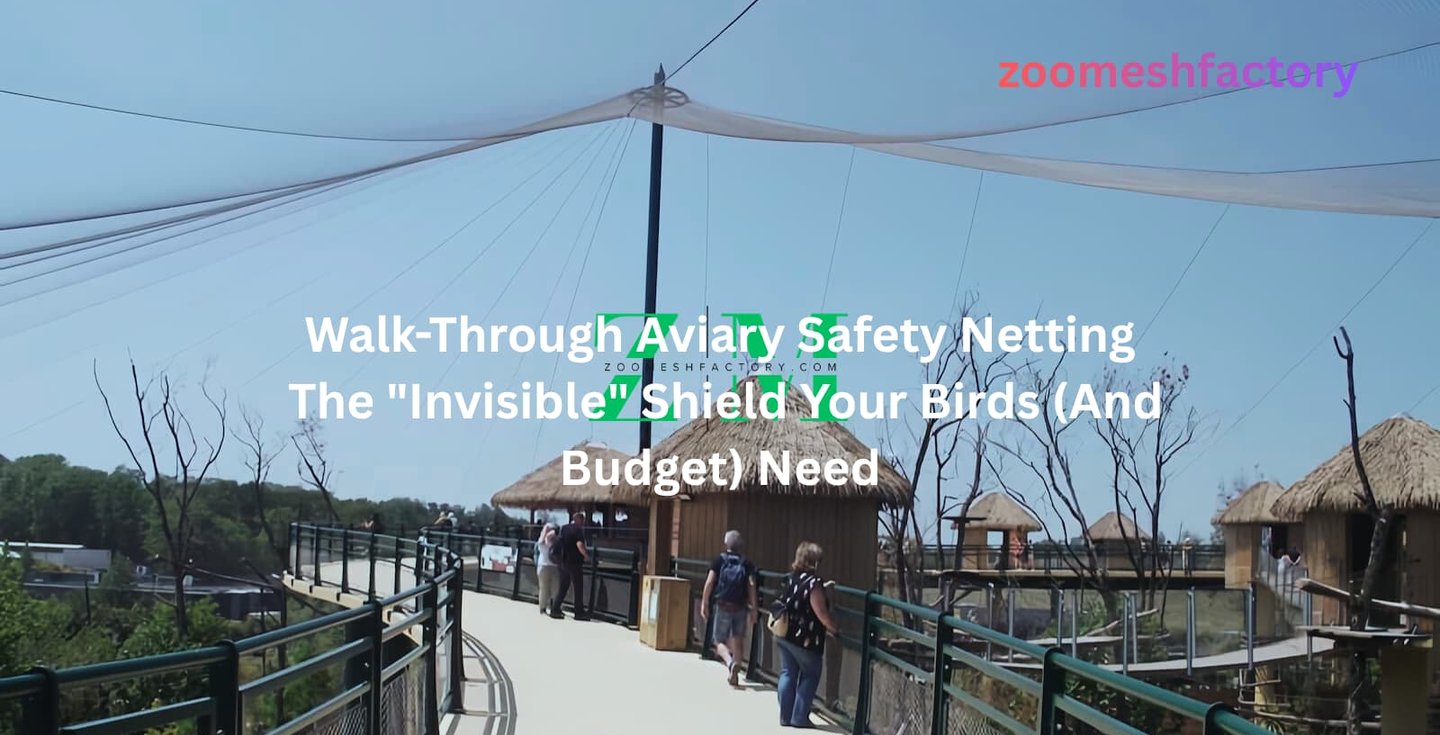
For most raptor aviaries, an aperture between 50mm and 80mm provides the perfect compromise: it is virtually invisible to the human eye while keeping the bird safely contained and preventing accidental entrapment.
To avoid talon snags and surface damage on eagle enclosures, check our climb-resistant animal containment mesh solutions.
IV. Safety First: Preventing "Talon Entrapment"
In the world of raptor management, "talon entrapment" is one of the most feared outcomes of poor enclosure design. When a bird of prey grips its enclosure wall, it uses its talons to "lock" onto the surface. If that surface has even the slightest imperfection, the result can be catastrophic.
The Danger of Welded Wire
Traditional welded wire mesh—the kind often found in hardware stores—is the enemy of raptor safety. At every junction where the wires cross, there is a tiny, razor-sharp weld point or "burr." These are notorious "snag points." If a raptor lands and tries to reposition, a single talon can get caught on these burrs. A panicked bird will struggle, leading to broken talons, sprained digits, or even a wing fracture as they thrash to get free.
The Hand-Woven Advantage: A Smooth Surface
This is why hand-woven stainless steel cable mesh is the gold standard for avian safety. Our mesh is constructed using a proprietary ferrule system that binds the cables together in a smooth, rounded knot.
There are no sharp protrusions. The entire surface is fluid and rounded, meaning even if a raptor grips the mesh with full force, there is no "hook" for their talon to snag on. It provides a natural, secure perching surface that mimics the organic texture of branches without the risk of splintering or sharp edges.
Choosing the right material isn't just about safety; it's about the bottom line. See how the long-term lifecycle savings of our mesh compare to cheaper, high-maintenance options in our stainless steel vs. galvanized zoo netting cost analysis.
V. Design Considerations for Large Flight Aviaries
Scaling an aviary to accommodate the massive wingspan of an eagle or a vulture introduces new engineering challenges. The most critical factor is tension management.
Mastering the Tension
Unlike a rigid cage, stainless steel cable mesh acts like a high-tension fabric. If the perimeter frame is not correctly tensioned, the "ceiling" of your aviary will sag over time due to the weight of the mesh, moisture accumulation, and potential debris like fallen leaves or snow.
To maintain a perfect flight path:
Perimeter Cables: We use high-tensile stainless steel border ropes to distribute the load evenly across the support structure.
Tensioning Tools: Always use professional-grade tensioners during installation to ensure the mesh panels remain taut.
Panel Orientation: Ensure the "diamond" pattern is oriented correctly to maximize the load-bearing capacity of the vertical cables.
The "Invisibility" Factor: Black Oxide Coating
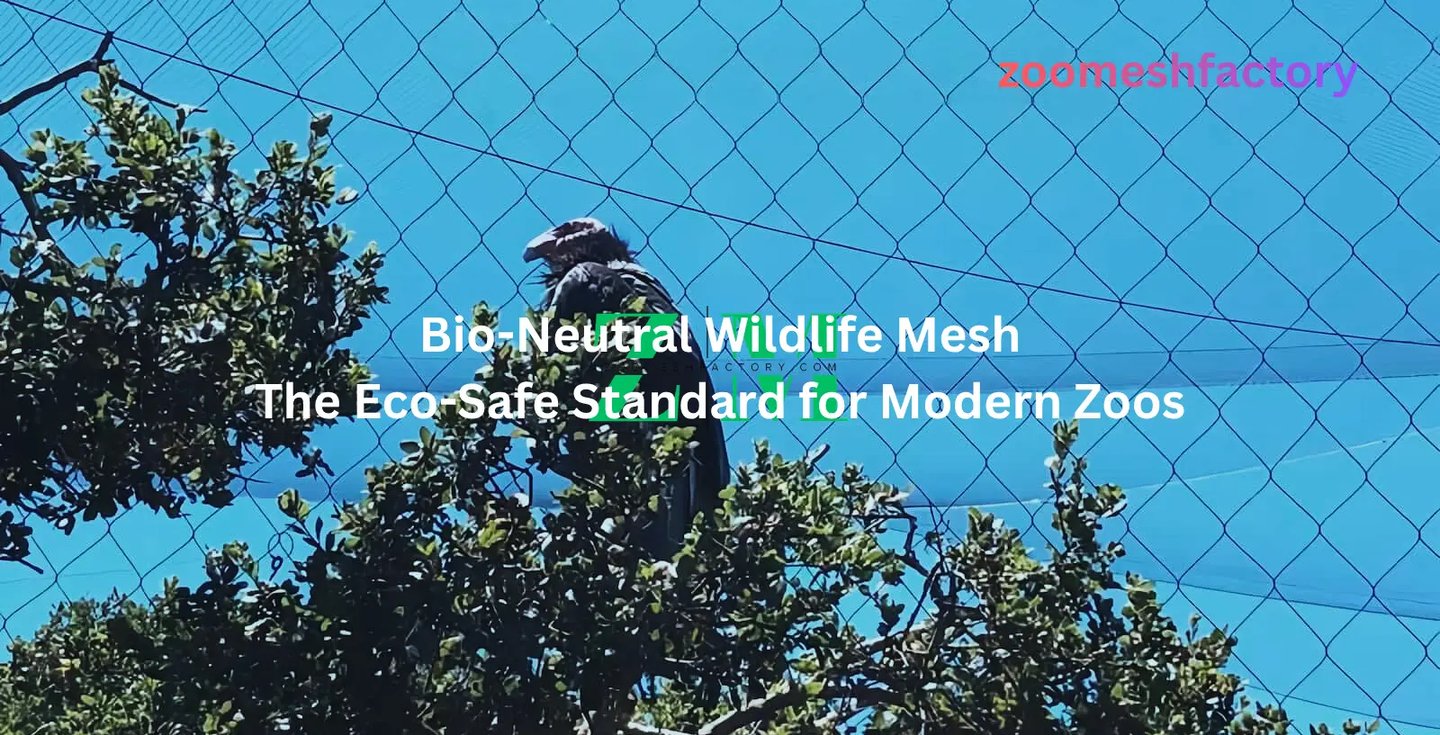
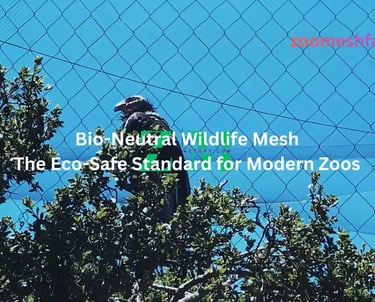
For raptors, depth perception is everything. A bright, shiny steel mesh can act like a mirror, causing birds to strike the mesh because they fail to perceive it as a barrier. Our Black Oxide finish is the industry secret for "disappearing" enclosures. The chemical darkening process eliminates glare and creates a matte finish that allows the visitor's eye to look past the mesh and directly at the birds, while simultaneously reducing confusion for the raptors.
Proper tensioning is an art form. See our technical walkthrough on how to install hand-woven cable mesh to ensure your aviary is safe and sag-free.
VI. Case Studies: Eagle Sanctuaries and Zoo Aviaries
The ultimate proof of our mesh isn't in a brochure—it's in the behavior of the animals. We have partnered with various raptor rehabilitation centers and zoos where the shift to high-grade cable mesh transformed the exhibit.
For full engineering details on heavy-duty 2.0mm mesh built exclusively for bald and golden eagle outdoor aviaries, read our dedicated eagle rope mesh guide.
Success Story: The Coastal Eagle Sanctuary
One of our major project partners, a coastal raptor rehabilitation center, struggled for years with the rapid corrosion of galvanized wire in the salt-rich air. They were losing $15,000 annually in repairs and bird health complications.
Upon switching to our 316-grade stainless steel mesh, they noted two immediate changes:
Zero Maintenance: Seven years later, the mesh remains structurally sound with no rust-spotting.
Behavioral Improvement: The facility reported that the eagles began perching closer to the enclosure walls. Because the mesh no longer had sharp weld points, the birds felt comfortable gripping the cables to lookout over the sanctuary, something they had avoided on their previous wire netting.
Why Success is Replicable
Every zoo curator wants an exhibit that is "safe for the bird and invisible to the visitor." Our case studies show that by following the spec guidelines—matching wire diameter to the species and ensuring professional-grade tensioning—you create an environment where raptors can display natural flight behaviors without the stress of "cage-fighting" their surroundings.
True sustainability in zoo design is about doing it right the first time. Learn more about the ecological benefits of high-grade materials in our guide: sustainable zoo enclosure materials.
Check our homepage to view all series of stainless steel zoo mesh for various animal habitats.
VII. FAQ: Common Questions from Raptor Aviary Curators
We often receive these questions from Zookeepers and Project Architects during the design phase. Here are the answers to the most common raptor-safety queries.
1. Can an eagle break through stainless steel mesh?
No. High-grade stainless steel cable mesh is designed with a breaking load far exceeding the physical power of even the largest birds of prey. When installed with proper tensioning, the mesh acts as a flexible yet impenetrable barrier. Unlike rigid chain-link which can be bent, the inter-woven nature of our cable mesh distributes the bird's force across the entire panel.
2. What is the best mesh size to keep out local predators?
To keep out local pests like rats, snakes, or invasive squirrels, we recommend a smaller aperture of 30mm to 40mm at the base level of the enclosure. You can seamlessly transition this to a larger aperture (60mm+) for the flight area above to maintain better visibility and airflow.
3. How do you calculate the load-bearing capacity for snow/ice?
Our cable mesh has an exceptionally high strength-to-weight ratio. For regions with heavy snowfall, we perform a structural analysis based on your local climate data. The cable mesh is flexible, which prevents the "ice-loading" cracks that often destroy rigid wire mesh in freezing temperatures.
4. Do I need to clean the stainless steel mesh?
One of the major benefits of our 316-grade stainless steel is its low-maintenance nature. Rain acts as a natural cleaner. For raptor aviaries, occasional high-pressure water rinsing is sufficient to keep the mesh clear of dust and debris, which preserves the bird's vision and keeps the enclosure looking brand new.
5. Can I get custom panel sizes to fit my aviary frame?
Yes. We specialize in custom-fabricating panels to your exact dimensions. This is a massive time-saver during installation because you don't have to cut and splice wire on-site. Simply provide your frame dimensions, and we will ship panels ready for tensioning.
More: "Need to understand the cost differences before ordering? Check out our guide on wholesale zoo netting price per square meter."
Ready to Start Your Exhibit Design?
Join the hundreds of zoos and sanctuaries worldwide that trust ZooMesh Factory for their containment needs. Our engineers are ready to help you calculate the perfect mesh size for your species.
Contact
Hebei Zoo Mesh Co., Ltd
No. 188 Zhonghua South Street, Shijiazhuang City, Hebei Province, China
info@zoomeshfactory.com
© 2025. All rights reserved.
Quick Link
Product Catalogs
Don't leave without the specs! Save our factory-direct pricing and technical configurations for your next project meeting. Our 2026 Zoo Mesh Factory Direct Catalog is ready for download.