

Walk-Through Bird Exhibit Mesh: Design Guide for Free-Flight Aviaries
Engineering walk-through bird exhibits? Learn how to select the right stainless steel mesh for safety, 95% transparency, and bird-friendly immersion.
Hebei Zoo Mesh Co., Ltd
3/14/202611 min read
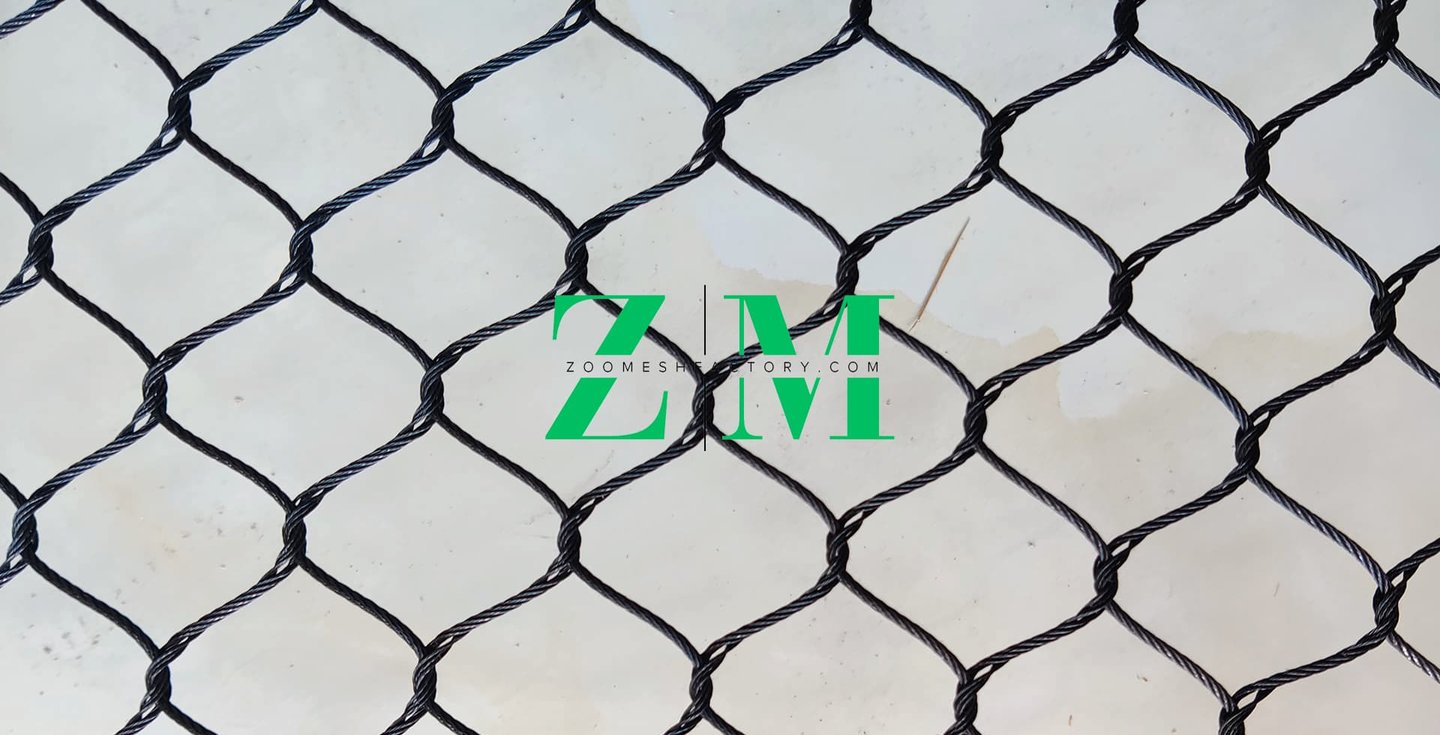
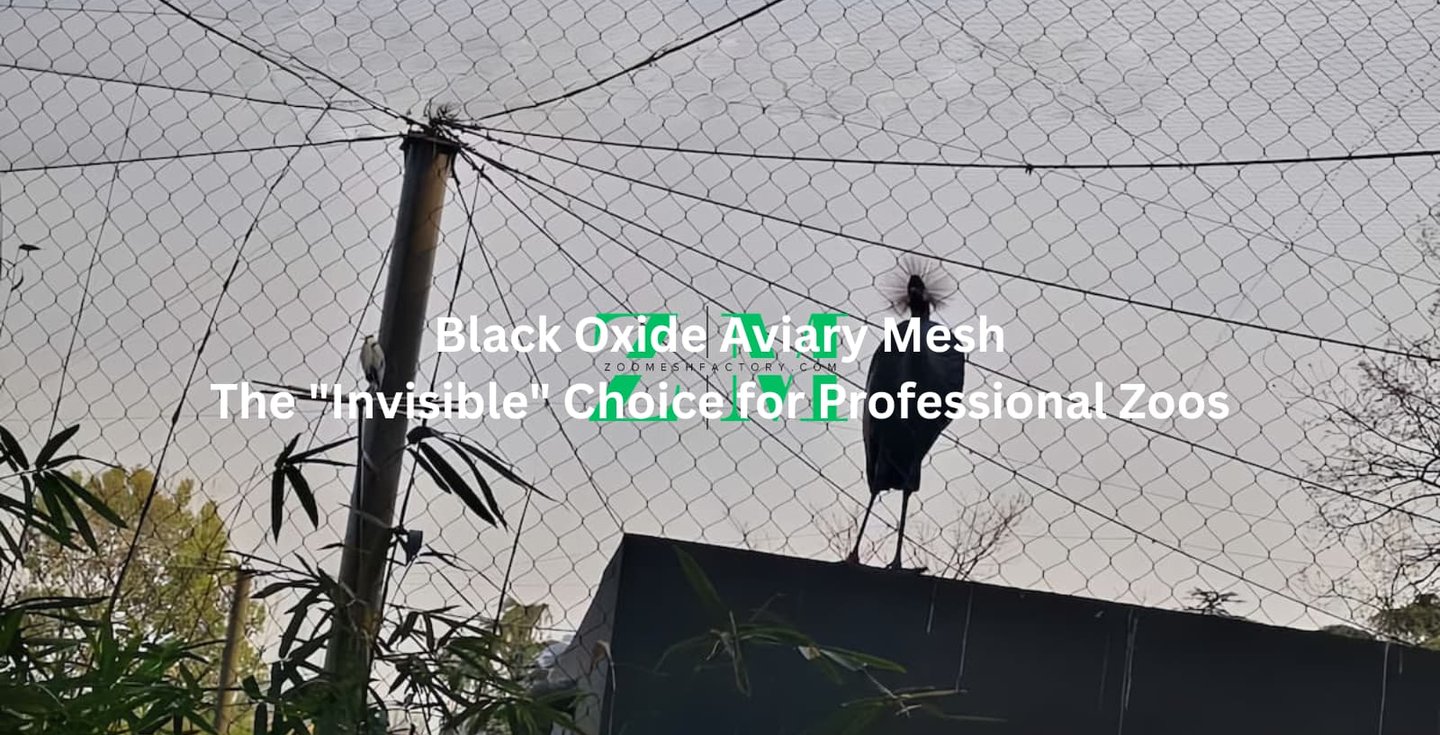
What is the best mesh for walk-through bird exhibits? The optimal mesh for walk-through bird exhibits is SS316 Stainless Steel Black Oxide Woven Wire Rope Mesh, typically in a 1.2mm wire diameter with a 25mm to 38mm aperture. This specific configuration provides the high-tensile strength required for large-span free-flight aviaries while achieving "optical invisibility" through a matte finish that absorbs 95% of ambient light. This allows for an immersive guest experience without the glare or "cage-effect" of traditional galvanized fencing, ensuring both avian safety and architectural elegance.
1. Introduction: The Era of Immersion
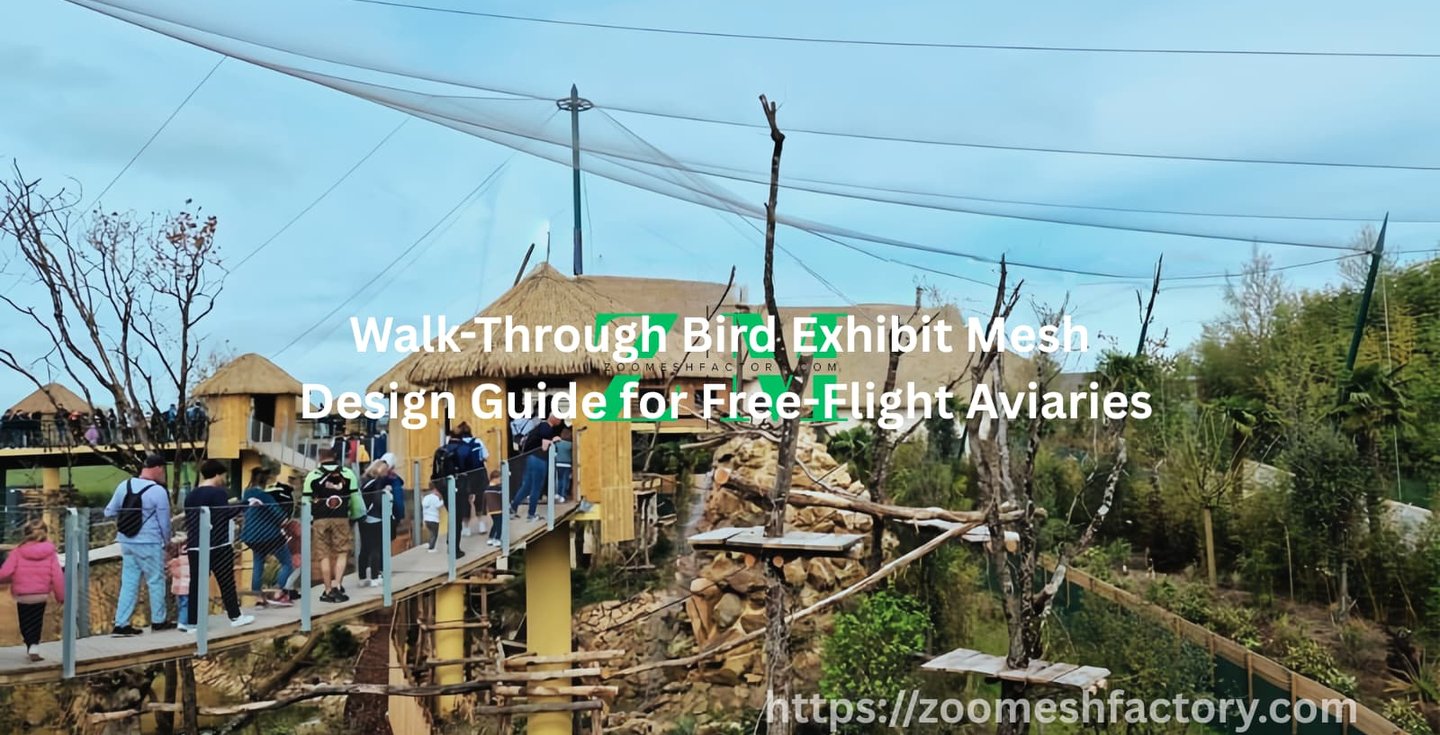
The landscape of zoological architecture has undergone a radical transformation. We have moved decisively away from the "cabinet of curiosities" model of the 20th century, where animals were viewed through heavy bars and rigid glass. Today, we have entered the Era of Immersion. Nowhere is this more evident than in the rise of the free-flight ecosystem—spaces where the boundary between guest and wildlife is not just blurred, but seemingly erased.
In a Walk-Through Bird Exhibit, the mesh barrier is paradoxically the most critical component of the design. While the flora, the water features, and the species selection create the atmosphere, the mesh provides the invisible envelope that makes the entire experience possible. It must perform a complex "triple-duty" of engineering:
Biological Security: Maintaining a permanent, fail-safe seal to prevent the escape of exotic species and the intrusion of local pests or predators.
Structural Integrity: Withstanding environmental loads, such as high winds, heavy snow, and the constant tension required for the large-span, organic shapes that define modern aviaries.
Psychological Transparency: Eliminating the "cage effect" to allow visitors to psychologically connect with the habitat.
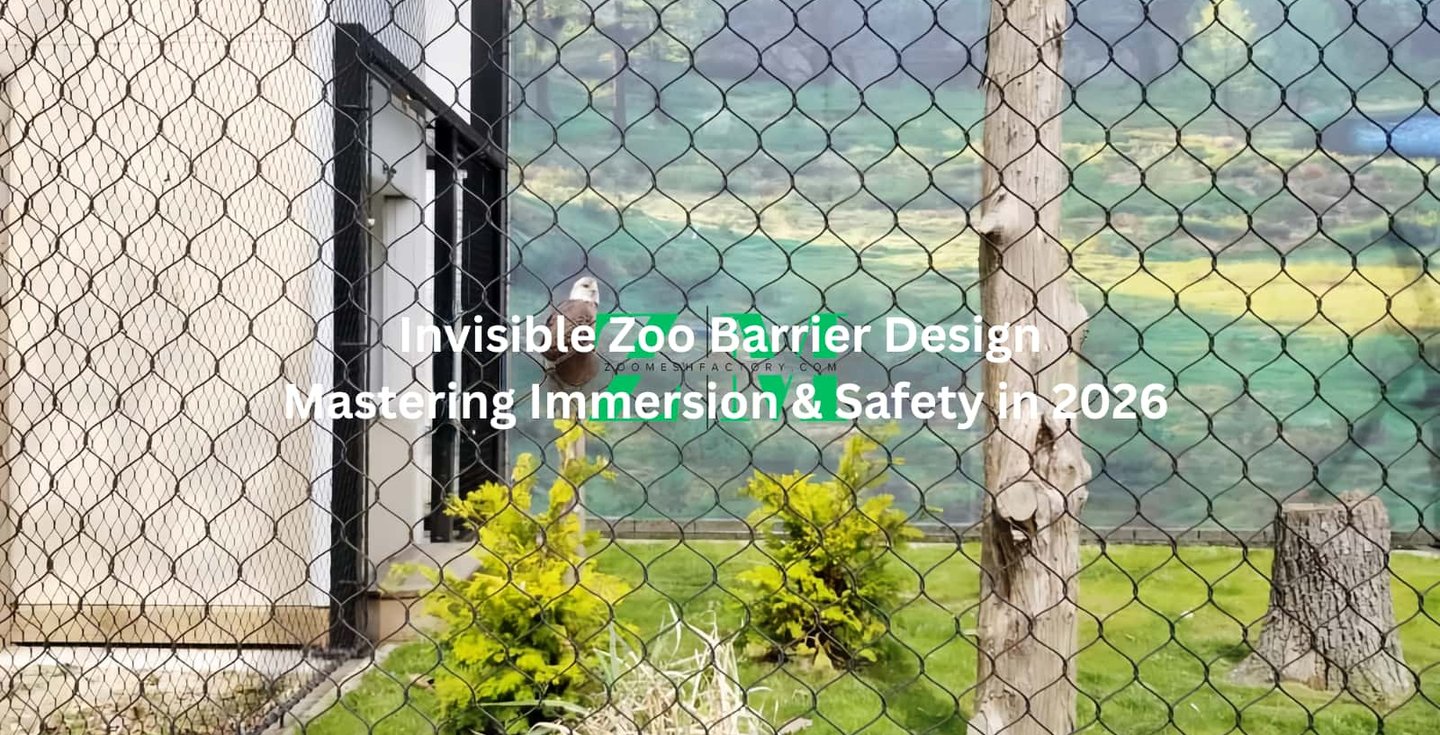
When a visitor enters an aviary and their eyes immediately "skip" over the barrier to focus on a bird in flight, the design has succeeded. This psychological impact cannot be overstated; by removing the visual reminder of captivity, we foster a deeper sense of conservation and empathy in the guest. To achieve this, architects must move beyond traditional fencing and embrace specialized walk-through bird exhibit mesh—a material where the physics of light absorption meets the rigors of industrial safety.
While this guide covers mixed-species free-flight habitats, we also supply heavy chew-proof mesh for macaw enclosures; view full macaw & parrot aviary mesh specs.
2. Key Takeaways
For architects, curators, and project managers on a tight schedule, these are the core principles of free-flight aviary engineering explored in this guide:
Material Selection: SS316 Marine-Grade Stainless Steel is the non-negotiable standard for walk-through exhibits due to high humidity, misting systems, and exposure to guano.
Optical Optimization: Black Oxide chemical conversion is superior to PVC coating for "invisibility," as it maintains the thin wire profile and absorbs, rather than reflects, ambient light.
Aperture Calibration: A 25mm to 38mm (1" to 1.5") diamond aperture is the "sweet spot" for most mixed-species walk-throughs, balancing human visibility with avian containment.
The 1.2mm Standard: For most free-flight applications, a 1.2mm (3/64") wire diameter provides the necessary 1.47 kN breaking load while remaining nearly invisible to the naked eye at distances greater than 2 meters.
Tactile Safety: Hand-woven knotted rope mesh is preferable for walk-through areas because it lacks the sharp edges of welded wire, protecting both inquisitive guests and low-flying birds.
Procurement Strategy: Sourcing Factory-Direct is the most effective way to ensure consistent tensile strength across large-scale projects while reducing middleman markups by up to 30%.
3. Material Science: Why SS316 is the Gold Standard
In the micro-climates of a walk-through bird exhibit, the environmental demands on building materials are relentless. Modern aviaries often employ high-pressure misting systems to maintain tropical humidity levels, creating a perpetual "salt-fog" effect—even in inland locations. This is why SS316 Marine-Grade Stainless Steel has moved from a premium option to a mandatory requirement.
Corrosion Resistance in Tropical "Mist" Environments
Unlike SS304, which is susceptible to "tea-staining" (pitting corrosion) when exposed to constant moisture and the acidic nature of avian guano, SS316 contains Molybdenum. This chemical addition provides superior resistance to chlorides and acidic environments. In a walk-through exhibit, where the mesh is often integrated with waterfalls and dense vegetation, SS316 ensures that the structural integrity of the "envelope" remains uncompromised for decades.
Longevity vs. Cost-Effectiveness in 2026
While the initial investment in SS316 is higher than galvanized or 304-grade alternatives, the Life Cycle Cost (LCC) is significantly lower. In 2026, zoo procurement strategy focuses on "Set and Forget" infrastructure. Replacing a mesh canopy over a live, planted habitat is a logistical nightmare that can cost five times the original installation price. By choosing SS316 factory-direct, you secure a 30-to-50-year lifespan, effectively neutralizing the long-term costs of maintenance and replacement.
Technical Insight: For a deeper look at how these materials handle structural tension over time, see our Engineering Guide to Flexible Wire Rope Netting.
4. Optics & The "Invisible" Effect
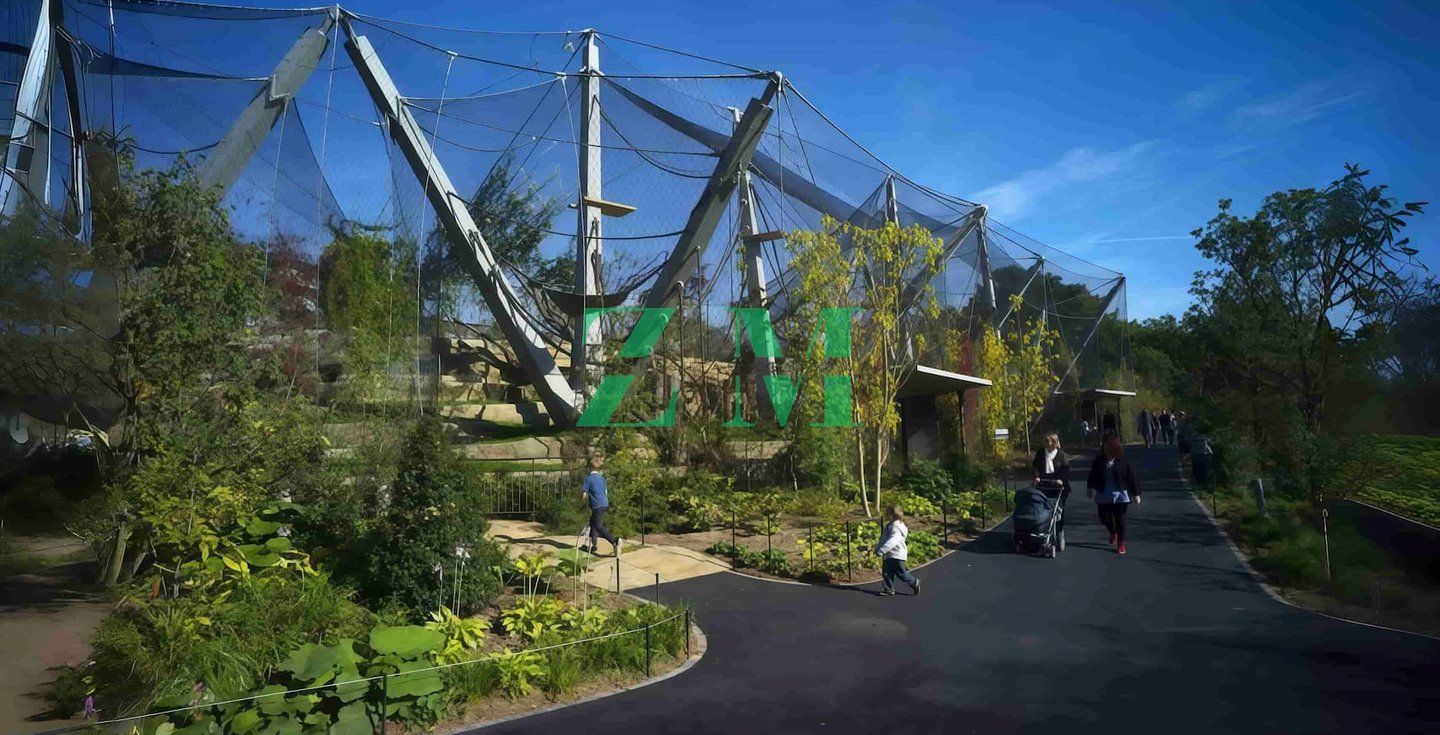
The primary goal of a walk-through exhibit is to remove the "mental barrier" for the guest. This is achieved through the Science of Optics. Traditional silver or galvanized mesh reflects light, creating a shimmering "wall" that alerts the human brain to the presence of a cage. To make the mesh "disappear," we must manipulate how light interacts with the wire surface.
For full science behind glare-free matte barriers, browse our invisible zoo barrier design guide.
The Physics of Light Absorption on Black Oxide Surfaces
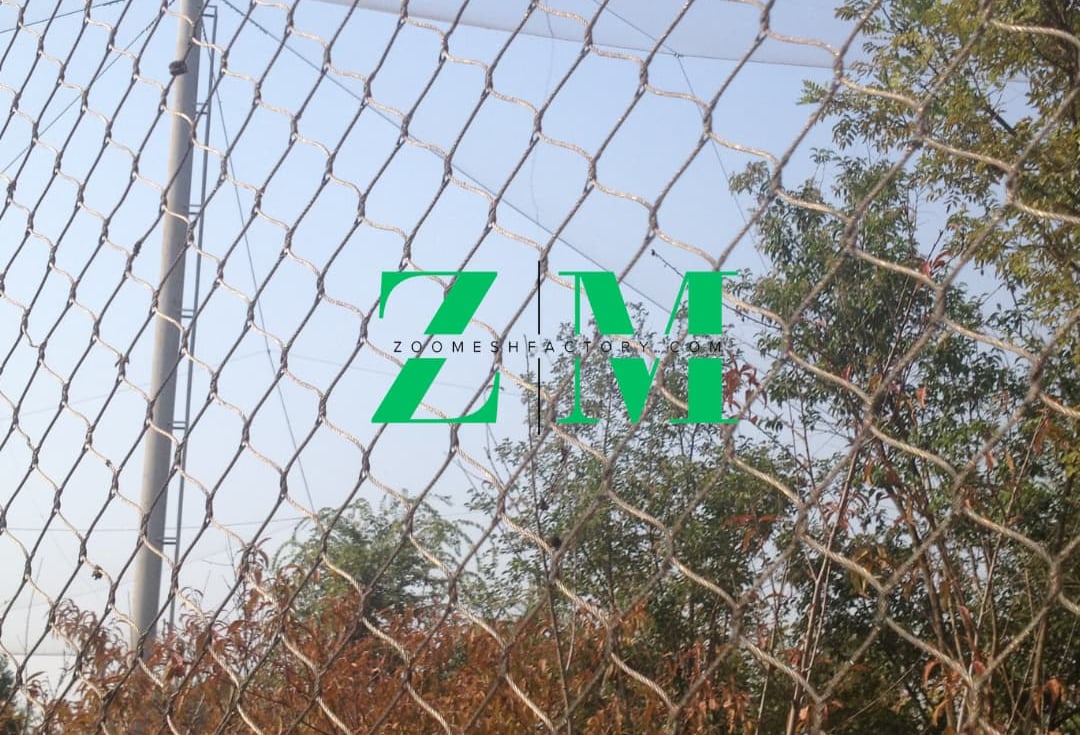
Our Black Oxide chemical conversion is not a paint or a coating; it is a molecular transformation of the steel surface. Because the finish is matte and microscopically porous, it absorbs up to 95% of ambient light rather than reflecting it back to the viewer. When the mesh is darker than the brightly lit habitat behind it, the human eye naturally focuses "through" the mesh. This is known as the Contre-Jour effect, and it is the secret to creating truly immersive free-flight experiences.
Eliminating "Glint" and Protecting Bird Navigation
Beyond guest aesthetics, light reflection—or "glint"—is a safety hazard for the inhabitants. At sunrise and sunset, high-gloss mesh can create blinding reflections that disorient birds, leading to high-speed collisions. A matte Black Oxide finish ensures a consistent visual field for the birds' UV-sensitive eyes, allowing them to perceive the boundary without being dazzled by it. This results in a calmer, safer population and a more natural flight pattern.
Design Tip: To see side-by-side comparisons of how various finishes impact visibility, explore our guide on Black Oxide Aviary Mesh: The "Invisible" Choice.
5. Technical Specs for Avian Species
Selecting the right mesh for a walk-through exhibit is a balancing act between the biological needs of the birds and the structural demands of the architecture. There is no "one-size-fits-all" solution; rather, the mesh must be calibrated to the specific species in the flight path.
Aperture Sizing: Preventing Escape vs. Maintaining View
The aperture (mesh opening) must be small enough to prevent the smallest inhabitant from escaping or getting their head stuck, but large enough to maximize transparency.
Small Birds (Finches/Softbills): Require a 25mm x 25mm (1" x 1") aperture. This prevents "wing-trapping" and ensures even the most delicate species remain secure.
Large Parrots & Waterfowl: Can utilize a 38mm to 51mm (1.5" to 2") aperture. The larger the opening, the more "invisible" the mesh becomes to the guest.
Wire Gauge: Balancing Weight and Breaking Load
In large-span aviaries, every gram of weight matters. A wire that is too thick adds unnecessary dead load to the support masts, while a wire that is too thin risks structural failure. For walk-through exhibits, we typically recommend a 1.2mm or 1.6mm wire diameter.
1.2mm Wire: Offers a breaking load of approximately 1.47 kN, providing a feather-light profile that is virtually undetectable to the eye.
1.6mm Wire: Increases the breaking load to 2.61 kN, recommended for exhibits featuring larger, more "beak-strong" birds like Macaws or Cockatoos.
Technical Data: For a full breakdown of tensile strengths and load ratings for every wire gauge, visit our Resource Center Technical Hub.
Check our real-world project references in the walk-through aviary mesh case study for large-span habitat builds.
6. Safety for Walk-Through Gate Systems
The transition point—where the guest moves from the "human world" into the "bird world"—is the most complex area of any walk-through exhibit. This is where engineering meets guest behavior.
Integrating Mesh with Double-Door Vestibules
To prevent birds from following guests out of the exhibit, "air-lock" or double-door vestibule systems are standard. The flexible wire rope mesh must be seamlessly integrated into these rigid frame structures. By using border cables and ferrules, the mesh can be tensioned directly to the vestibule frame, eliminating any gaps that small birds might exploit. This ensures a continuous, fail-safe barrier from the ground to the canopy.
Ensuring Mesh Tension at "High-Touch" Guest Zones
In a walk-through setting, guests are often within arm's reach of the mesh. Unlike a standard enclosure, these "high-touch" zones require higher tension to prevent sagging or "pocketing" if a guest leans against the barrier.
Impact Resistance: Hand-woven mesh is naturally elastic, allowing it to absorb guest contact without permanent deformation.
Tactile Comfort: Because our mesh is finished without sharp wire ends, it is safe for the inquisitive hands of children and the delicate wings of birds that may land near the pathways.
Safety Standards: Learn more about integrating mesh into high-traffic guest areas in our guide on Custom Animal Enclosure Fencing: Engineering Safety.
7. Installation & Long-Term Maintenance
The success of a walk-through exhibit is determined not just by the quality of the mesh, but by the precision of its installation. Once the "invisible envelope" is closed, it must remain perfectly tensioned and biologically secure for decades.
Managing "Sag" in Large-Span Aviary Roofs
In large-scale free-flight aviaries, the roof spans can be immense. Traditional rigid fencing cannot handle the shifting loads of wind and temperature fluctuations over these distances. Flexible wire rope mesh, however, acts as a structural fabric. To manage "sag," we utilize a primary and secondary cable network. The stainless steel mesh is laced onto structural perimeter cables, which are then tensioned using high-capacity turnbuckles. Because the mesh is hand-woven in a diamond pattern, it distributes load bi-axially. This allows for the creation of dramatic "tent" peaks and organic valleys that shed snow and debris while maintaining a crisp, taut appearance that doesn't interfere with the guest's upward view.
Cleaning Protocols for Bio-Security
In walk-through exhibits, "bio-load" is a constant factor. Dust, pollen, and avian guano can accumulate on the wire intersections, potentially harboring pathogens.
Low-Pressure Washing: Due to the chemical stability of SS316 Black Oxide, the mesh can be cleaned with low-pressure water systems and mild biodegradable detergents.
Self-Cleaning Geometry: The woven nature of the mesh allows rain to naturally wash away most debris.
Inspection: Maintenance teams should conduct quarterly "seam checks" at the lacing points to ensure that guest interaction or tree branch interference hasn't compromised the tension.
If you want a step-by-step blueprint for planning curved, large-scale free-flight habitats, read our full guide on how to design walk-through aviary netting.
8. Sustainability & Procurement
In 2026, "Green Building" is no longer optional in the zoological community. Institutions are looking for materials that offer a low environmental impact without sacrificing the 50-year safety requirement.
Reducing the Carbon Footprint of Zoo Construction
Stainless steel is one of the most sustainable materials in the world, with over 80% of new stainless steel being produced from recycled scrap. Furthermore, by using high-tensile mesh, architects can reduce the amount of heavy structural steel (masts and beams) required. Because the mesh provides its own structural "skin," the overall mass of the building is reduced, leading to a significant decrease in the carbon footprint of the project’s logistics and foundation work.
The Efficiency of Factory-Direct Procurement
The traditional supply chain for zoo mesh involves multiple layers—distributors, wholesalers, and local retailers—each adding cost and "logistics miles" to the product. By opting for a Factory-Direct model, zoo directors and contractors eliminate the middleman markup and ensure a direct chain of custody for material certifications.
When you buy directly from the source, you aren't just getting a lower price; you are getting a material that hasn't sat in a corrosive warehouse for months. You receive fresh, ISO-certified SS316 mesh, custom-cut to your aviary’s exact dimensions, reducing on-site waste and ensuring that every dollar of the budget goes toward the quality of the animal habitat.
Procurement Strategy: Ready to optimize your project budget? Follow our Zoo Mesh Factory Direct: Buying Guide to learn how to streamline your sourcing process.
Test Your Knowledge: The Aviary Engineering Quiz
Before you finalize your design, see if you’ve mastered the essentials of walk-through exhibit engineering:
1. Why is SS316 preferred over SS304 for modern free-flight aviaries?
A) It is lighter and easier to install.
B) It contains Molybdenum, making it resistant to the "mist" and acidic guano environments common in walk-throughs.
C) It is the only material that supports Black Oxide treatment.
Answer: B. SS316’s chemical composition prevents "tea-staining," ensuring the mesh remains invisible and structurally sound for decades.
2. Which aperture size is considered the "gold standard" for mixed-species aviaries containing small finches?
A) 51mm x 51mm (2")
B) 102mm x 102mm (4")
C) 25mm x 25mm (1")
Answer: C. A 25mm aperture prevents "wing-trapping" and escape for smaller avian species while maintaining high transparency.
3. What is the primary optical benefit of a chemical Black Oxide finish?
A) It makes the wire thicker and easier for birds to see.
B) It absorbs 95% of ambient light, allowing the human eye to focus "through" the mesh rather than on it.
C) It changes color depending on the time of day.
Answer: B. By minimizing light reflection, Black Oxide creates the "Invisible" effect essential for guest immersion.
Common Questions: Walk-Through Bird Exhibit Engineering
1. Is Black Oxide mesh safe for birds that chew on the wire? Yes. Unlike PVC-coated mesh which can peel or flake—leading to ingestion of microplastics—our Black Oxide finish is a chemical conversion of the steel itself. It does not flake or peel, making it perfectly safe for parrots and other psittacines that use their beaks to climb or explore the barrier.
2. How do you handle mesh "glare" for indoor walk-through exhibits with artificial lighting? Indoor exhibits often suffer from "point-source" glare from overhead LEDs. The matte nature of Black Oxide is particularly effective here, as it diffuses artificial light rather than reflecting it back into the guests' eyes. For maximum invisibility indoors, we recommend lighting the habitat behind the mesh more brightly than the guest walkway.
3. What is the maximum span possible for a walk-through mesh canopy? While the mesh is theoretically infinite in length, the structural span is limited only by the primary support cables. With a proper high-tensile SS316 cable skeleton, we have seen free-flight aviaries span over 50 meters (165 feet) between support masts. The mesh's hand-woven flexibility allows it to move with wind loads over these massive distances without tearing.
4. Does the 1.2mm mesh provide enough protection against local predators like raccoons or hawks? Yes. Despite its thin profile, the 1.2mm 7x7 cable construction has a breaking load of approximately 1.47 kN (over 150 kg per wire). This is more than sufficient to prevent local predators from tearing through the mesh. For areas with extreme predator pressure, we recommend a smaller 25mm aperture to prevent reaching or "grabbing" through the mesh.
5. How long does the "Invisible" effect last in outdoor environments? Because the Black Oxide is a molecular change to the stainless steel, it is UV-stable and weather-proof. Unlike paint, which fades, or zinc-galvanization, which dulls and turns gray, the deep charcoal/black finish of the mesh remains consistent for the life of the steel (30+ years), ensuring your exhibit looks as "invisible" in year 20 as it did on day one.
About the Author
The Engineering Team at Zoo Mesh Factory
With over two decades of specialization in high-tensile architectural wire rope, our engineering team sits at the intersection of structural safety and zoological innovation. We have pioneered the application of SS316 Black Oxide technology in free-flight environments, working alongside world-class curators and landscape architects to eliminate the visual barriers of captivity.
Our expertise spans the technical spectrum—from calculating the precise $kN$ breaking loads required for heavy predator containment to mastering the optical physics of "invisible" aviary design. At Zoo Mesh Factory, we don't just manufacture fencing; we engineer the envelopes that allow global conservation efforts to thrive in immersive, safe, and beautiful habitats.
Browse our full range of zoo mesh solutions by returning to the homepage.
Ready to Start Your Exhibit Design?
Join the hundreds of zoos and sanctuaries worldwide that trust ZooMesh Factory for their containment needs. Our engineers are ready to help you calculate the perfect mesh size for your species.
Contact
Hebei Zoo Mesh Co., Ltd
No. 188 Zhonghua South Street, Shijiazhuang City, Hebei Province, China
info@zoomeshfactory.com
© 2025. All rights reserved.
Quick Link
Product Catalogs
Don't leave without the specs! Save our factory-direct pricing and technical configurations for your next project meeting. Our 2026 Zoo Mesh Factory Direct Catalog is ready for download.