

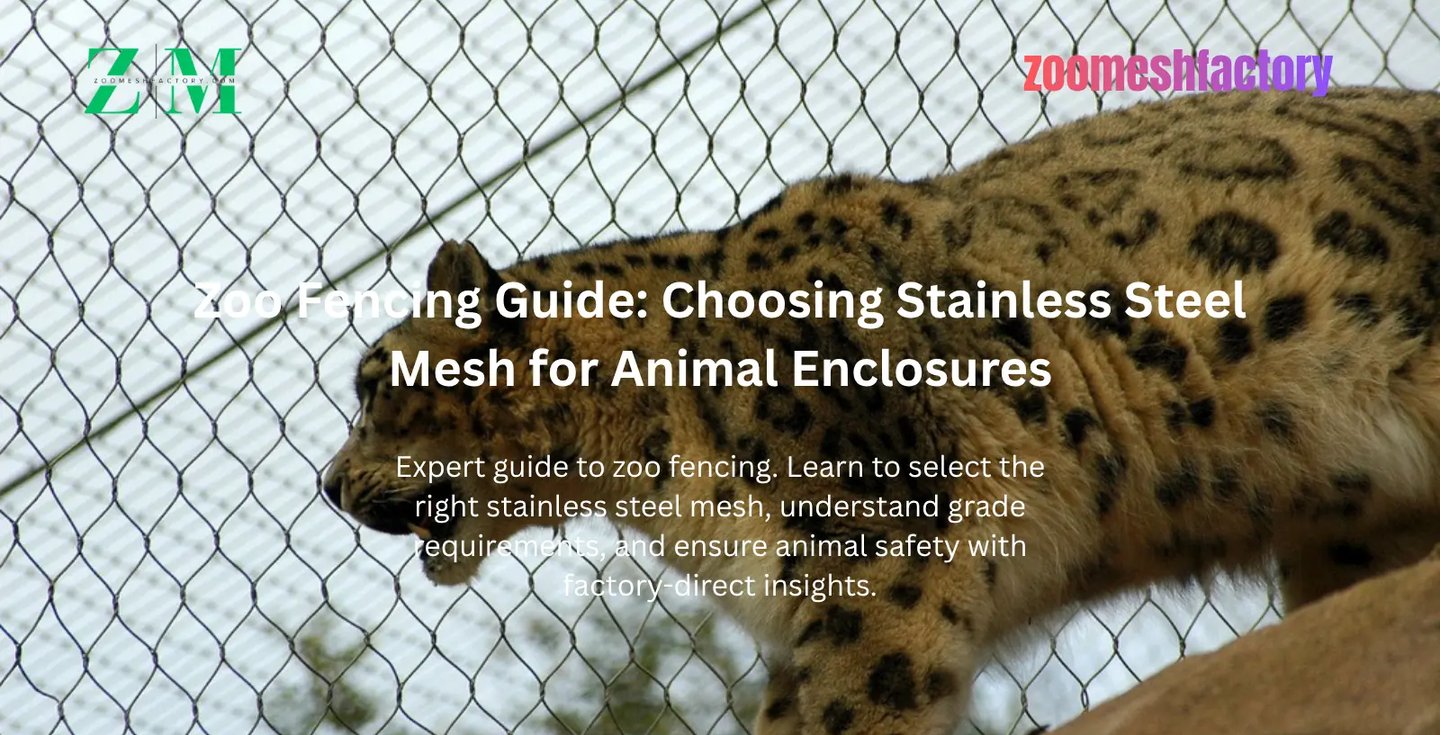
Zoo Fencing Guide: Choosing Stainless Steel Mesh for Animal Enclosures
Expert guide to zoo fencing. Learn to select the right stainless steel mesh, understand grade requirements, and ensure animal safety with factory-direct insights.
Alex
6/11/20263 min read
Executive Summary: Your Guide to Zoo Fencing Selection
Choosing the right zoo fencing is critical for animal safety, visitor experience, and structural longevity. This guide helps facility managers and architects select the correct stainless steel cable mesh, identify appropriate grades (AISI 304/316) for specific environments, and understand technical specifications to avoid low-quality materials. By focusing on material integrity and proper installation, you ensure long-term, cost-effective, and safe containment for your wildlife exhibits.
Understanding Zoo Fencing: The Stainless Steel Standard
When designing modern animal habitats, the focus has shifted from heavy, opaque bars to invisible, durable solutions. Zoo fencing made from high-quality stainless steel cable mesh has become the industry standard for balancing animal welfare with the need for clear visitor viewing.
From a professional China stainless steel cable mesh factory with 10+ years export experience, we have observed that the biggest mistake buyers make is prioritizing short-term cost over metallurgical suitability. Stainless steel is not a singular product; it is a family of alloys. For enclosure safety, understanding the difference between grades is vital.
While 304 stainless steel is excellent for inland, temperate climates, it may succumb to surface tea-staining in coastal or high-humidity zones. In those environments, 316-grade is the superior choice for sustainable zoo enclosure materials using stainless steel. Whether you are designing for birds, primates, or apex predators, the mesh must withstand environmental stressors while remaining invisible to the human eye.
Material Selection: Choosing the Right Grade and Finish
The durability of zoo fencing depends heavily on the wire diameter, aperture size, and the chemical composition of the steel. When selecting materials, you must account for the specific "wear and tear" of the species.
Grade Suitability Matrix
Beyond the grade, consider the finish. A black oxide finish is highly recommended for hand-woven stainless steel netting in zoo settings. It reduces glare and helps the mesh "disappear," allowing visitors to focus on the animals rather than the barrier.
For those planning specialized exhibits, choosing high-quality zoo netting requires vetting the manufacturer's quality control processes. Ensure your supplier provides tensile strength reports that meet your project's specific safety requirements.
If you need a complete all-in-one technical manual for stainless zoo mesh, check our ultimate zoo mesh guide.
Species-Specific Installation and Safety Standards
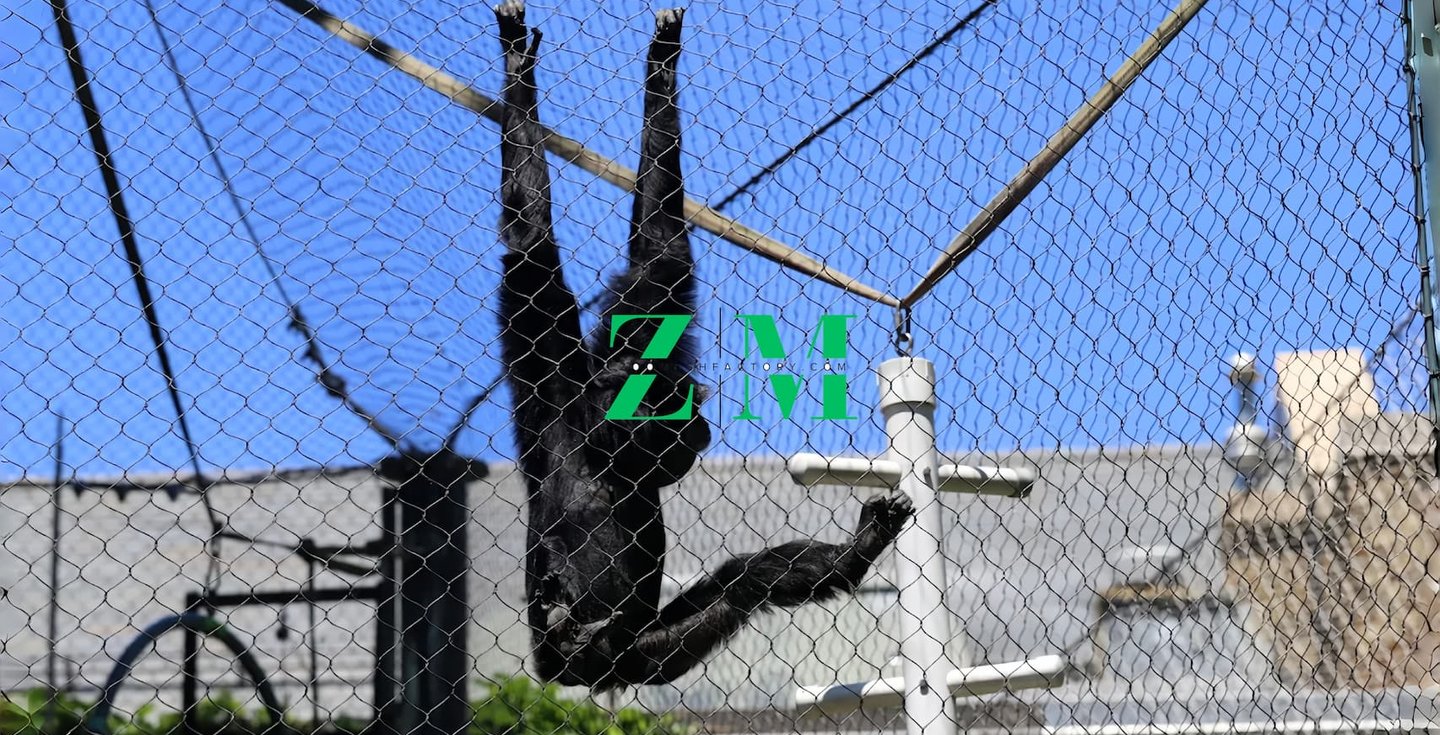
Installing zoo fencing is not a "one size fits all" process. Safety protocols change significantly depending on whether you are containing agile primates or heavy-set big cats.
Preventing Escape and Ensuring Welfare
Anti-Climb Design: For primates, ensure the aperture of the knotted wire rope mesh is small enough to prevent finger holds, or use vertical-oriented cabling to disrupt grip.
Dig-Proofing: For burrowing animals, bury the mesh at least 24 inches below grade and secure it to a concrete footer.
Predator Reinforcement: When designing for big cats, utilize larger cable diameters (3mm and above) and stricter ferrule connections to handle high impact forces.
From a professional China stainless steel cable mesh factory with 10+ years export experience, we often assist clients with specific hand-woven stainless steel rope mesh for eagle aviaries, where the mesh must be light enough to be unobtrusive but strong enough to prevent bird strikes.
Always cross-reference your design with 9 CFR 3.127 standards regarding containment gaps. Improper spacing is the most common cause of enclosure failure.
Key Takeaways
Material Matters: Use 316 stainless steel for coastal or humid environments to prevent long-term corrosion.
Finish is Function: Black oxide finishes aren't just for aesthetics; they provide the anti-glare properties necessary for immersive visitor experiences.
Installation Precision: Always adapt your post spacing and foundation depths based on the species' natural behavior (climbing, digging, or jumping).
Demand Documentation: Only work with manufacturers who provide certified test reports for tensile strength and material chemistry.
Frequently Asked Questions (FAQ)
1. How do I prevent zoo fence corrosion in coastal climates? Use AISI 316 grade stainless steel. It contains molybdenum, which significantly increases resistance to the chloride-heavy air found in coastal regions.
2. What is the difference between hand-woven and welded zoo mesh? Hand-woven mesh offers superior flexibility and is less likely to fatigue or crack under heavy animal impact compared to rigid welded mesh.
3. What is the lifespan of stainless steel zoo mesh? When properly specified and installed, high-quality 316 stainless steel mesh can last 25 to 30+ years, even in challenging environments.
4. How do I choose fencing for large predators like lions? Focus on high-tensile strength cable (typically 3mm diameter or thicker) and ensure the ferrule connection system is rated for high-impact loads.
5. How do I hide zoo fencing for a natural look? Opt for a black oxide finish. This significantly reduces the visibility of the cables, making the mesh look nearly invisible against a green or forest background.
Ready to Start Your Exhibit Design?
Join the hundreds of zoos and sanctuaries worldwide that trust ZooMesh Factory for their containment needs. Our engineers are ready to help you calculate the perfect mesh size for your species.
Contact
Hebei Zoo Mesh Co., Ltd
No. 188 Zhonghua South Street, Shijiazhuang City, Hebei Province, China
info@zoomeshfactory.com
© 2025. All rights reserved.
Quick Link
Product Catalogs
Don't leave without the specs! Save our factory-direct pricing and technical configurations for your next project meeting. Our 2026 Zoo Mesh Factory Direct Catalog is ready for download.