
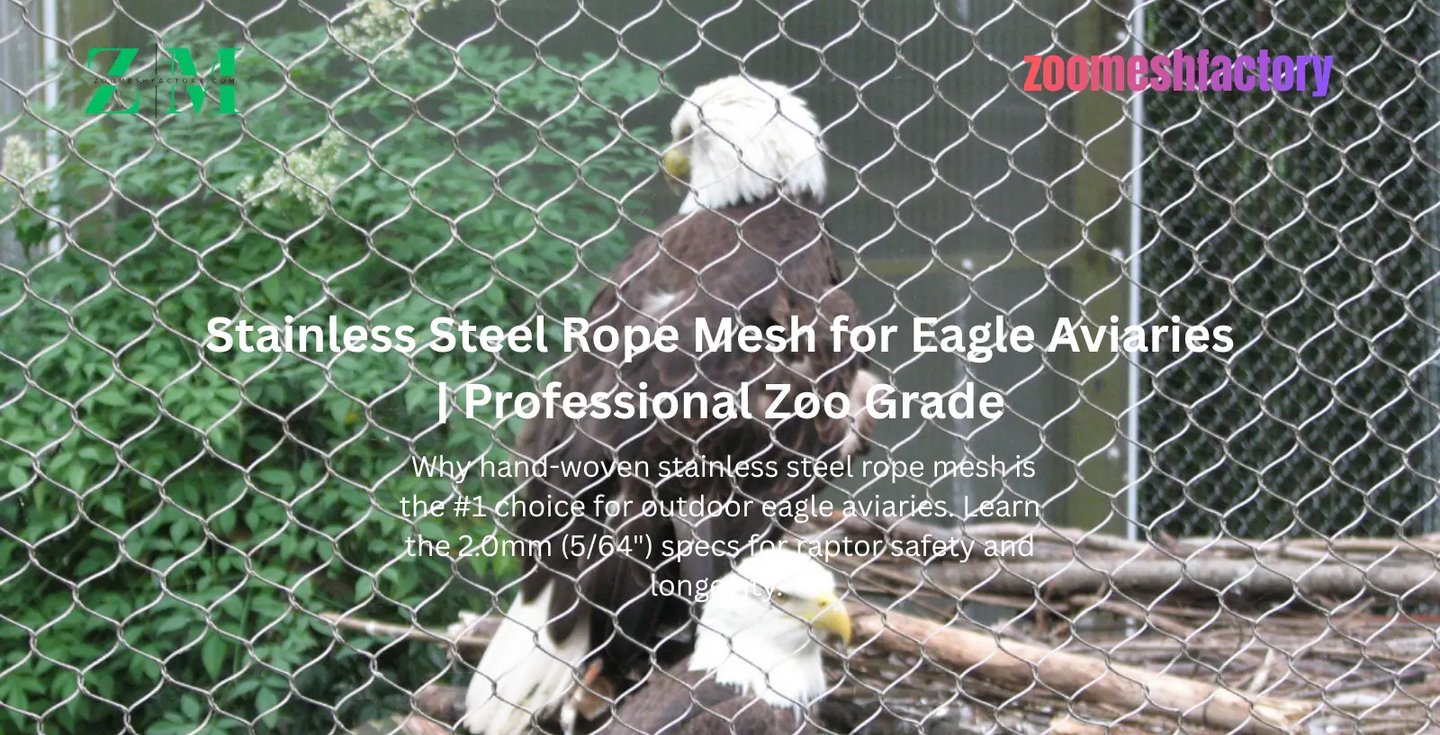
Stainless Steel Rope Mesh for Eagle Aviaries | Professional Zoo Grade
Why hand-woven stainless steel rope mesh is the #1 choice for outdoor eagle aviaries. Learn the 2.0mm (5/64") specs for raptor safety and longevity.
Hebei Zoo Mesh Co., Ltd
5/4/202610 min read
What is the best mesh for outdoor eagle aviaries?
The professional standard for eagle and raptor enclosures is 304 or 316 hand-woven stainless steel rope mesh with a 2" x 2" (50mm) opening and a 5/64" (2.0mm) wire diameter. This specific "zoo-grade" netting is preferred over welded wire because its flexible, hand-interlocked 7x7/7x19 cable structure absorbs the impact of heavy birds in flight, preventing wing injuries and feather damage. It offers a 30-year lifespan, is rust-proof in all weather, and provides high visibility for public exhibits.
I. Introduction: The Challenge of Housing the King of Birds
Designing an enclosure for an eagle is a massive engineering responsibility. You aren't just building a cage; you are constructing a high-performance flight zone for a creature that represents the "King of Birds." Unlike smaller aviary residents, eagles bring a set of physical demands that push traditional materials to their breaking point.
The Raptor Requirement: Mass times Velocity
An adult Bald Eagle or Golden Eagle can weigh up to 15 pounds and reach flight speeds of 30 to 50 miles per hour (and much faster during a dive). When a bird of that mass and speed strikes the perimeter of an enclosure, the force generated is immense. Rigid materials like welded wire don't just break under this stress—they can reflect that energy back into the bird, leading to catastrophic wing and keel injuries.
Why Plastic and Nylon Fail
Many facilities initially try to save costs using nylon or plastic "knotted" netting. However, the drawbacks are immediate:
UV Degradation: Outdoor eagle aviaries are exposed to 24/7 sunlight. Traditional plastics become brittle and snap within 2–3 years.
The Snag Factor: Raptor talons are designed to grip and pierce. In soft, knotted netting, an eagle can easily snag a talon, leading to "bumblefoot" or even self-amputation as they struggle to free themselves.
Maintenance Nightmares: Once an eagle realizes it can "pick" at the soft fibers, they will shred the netting out of boredom or nesting instinct.
The Solution: The Evolution of Stainless Steel
In the past two decades, modern zoo architecture has undergone a revolution. The industry has moved toward hand-woven stainless steel rope mesh. It is the only material that provides the tensile strength of steel with the flexible "give" of a textile, creating a safe, permanent, and virtually invisible sanctuary for large raptors.
If you need full wire diameter and aperture specs for all types of raptors including hawks and owls, view our complete birds of prey aviary netting specification guide.
II. The "Eagle Spec": 2" x 2" x 5/64" (2.0mm)
When we talk about the "Eagle Spec," we are referring to the precise technical configuration that has become the gold standard in international zoological design. At Zoomesh Factory, we have refined this spec through years of collaboration with raptor rehabilitation centers and world-class zoos.
Technical Breakdown: The 2.0mm "Goldilocks" Gauge
Why 2.0mm? In engineering, it’s all about the balance.
Too Thin: A 1.2mm or 1.6mm wire might hold a parrot, but it lacks the "breaking load" capacity to stop a full-speed eagle strike consistently over 30 years.
Too Thick: Moving to a 3.2mm cable adds unnecessary weight and "visual noise," making the mesh look like a heavy fence rather than an invisible barrier.
The Result: The 2.0mm (5/64") cable offers a breaking strength that far exceeds the force of any raptor, while remaining thin enough to "disappear" into the landscape.
Impact Dispersion: The "Giant Safety Net" Effect
Unlike welded wire, which is rigid and snaps at the joints under pressure, our hand-woven diamond weave is elastic. When an eagle flies into the mesh:
The interlocking cables slide slightly at the intersection points.
The "diamond" shape of the mesh elongates, absorbing the kinetic energy.
The mesh gently rebounds, pushing the bird back into the flight area. This "soft-catch" mechanism is what prevents the broken wings and "feather-fencing" injuries so common with cheaper, rigid wire options.
Strength-to-Weight Ratio: Designing Massive Spans
One of the greatest advantages of using our 2.0mm stainless steel cable mesh is its incredible strength-to-weight ratio. Because the cables are so strong, you don't need heavy, ugly steel beams every 10 feet. This allows architects to design massive, open-span outdoor aviaries that give eagles the room they need to soar, perform natural hunting behaviors, and remain physically fit—all while keeping the structural costs of the frame low.
To see how these heavy-duty specs compare to lighter parrot enclosures, visit our Animal Enclosure overview.
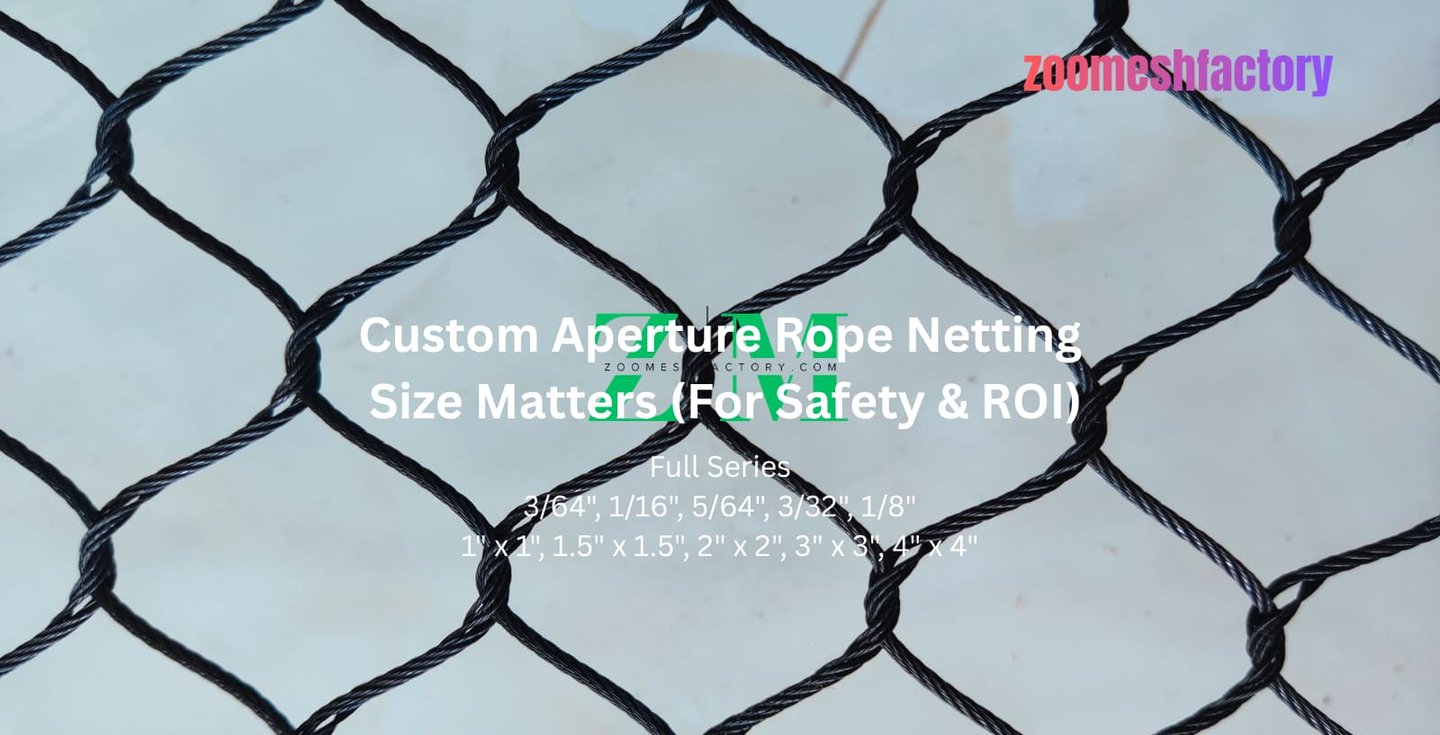
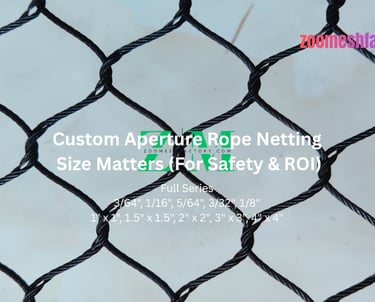
III. Hand-Woven vs. Ferruled Mesh: Why the Weave Wins
When sourcing stainless steel cable mesh, you’ll encounter two main types: Ferruled (joined by metal sleeves) and Hand-Woven (interlocked by hand). For eagle aviaries, the choice is clear. While ferruled mesh is great for stair railings, our Hand-Woven Zoomesh is the superior choice for animal welfare and structural longevity.
The Beauty of the Craft: Feather-Safe Surfaces
The "Hand-Woven" process involves skilled artisans physically interlacing the 7x7 or 7x19 stainless steel ropes.
Ferruled Mesh Dangers: Ferruled mesh uses sharp metal clips (sleeves) to join the cables. For an eagle with a massive wingspan, these clips act like tiny razors that can snag primary feathers or scrape delicate skin during a flight strike.
The Woven Advantage: Our hand-woven mesh is completely smooth at every intersection. There are no sharp burrs, no clips to fall off, and no rough edges. It creates a "soft-touch" environment that keeps an eagle’s plumage in pristine, flight-ready condition.
Flexibility: Handling Snow, Wind, and Gravity
Outdoor eagle aviaries are often massive, soaring structures located in mountain sanctuaries or coastal parks. These environments bring heavy snow loads and high-velocity winds.
Elasticity: Because hand-woven mesh is not rigid, it can "give" under the weight of heavy snow, preventing the mesh from tearing or the support poles from buckling.
Aerodynamics: The thin 2.0mm cables offer incredibly low wind resistance. Even during a storm, the wind passes straight through the mesh, reducing the "sail effect" that often destroys traditional solid-wire fences.
Visual Transparency: The "Invisible" Barrier
The ultimate goal of a public raptor exhibit is to remove the visual "prison" feel. Our hand-woven mesh uses high-tensile 304/316 cables that allow for a much higher Open Area (percentage of space vs. wire).
For photographers and visitors, the mesh virtually "disappears" when focused on the bird.
Unlike welded wire, which reflects light and creates a "glare" in photos, our mesh (especially in the black oxide finish) absorbs light, providing the most natural viewing experience possible.
IV. Durability in Extreme Environments (316 Grade)
An eagle aviary is a 30-year investment. If you are building near the ocean or in a humid climate, the chemistry of your steel is the difference between a lifetime of security and a rust-weakened disaster.
Weathering the Storm: The 316 "Coastal" Standard
If your raptor center is within 30 miles of the coast, salt-air corrosion is your greatest enemy. Standard galvanized wire will begin to show "white rust" in months and structural "red rust" within 2 years. At Zoomesh Factory, we recommend Type 316 Stainless Steel for all outdoor raptor exhibits. It is specifically designed to resist chloride corrosion. Even in the saltiest environments, 316 mesh maintains its high tensile strength and silver (or black) finish, ensuring that a 15lb eagle never finds a weak point in the perimeter.
Maintenance-Free: The "Set It and Forget It" Reality
In the world of zoo management, labor is the most expensive cost.
Galvanized/Nylon: Requires constant inspections, patch-work repairs, and eventual total replacement every 3-5 years.
Zoomesh Stainless Steel: Requires zero painting, zero rust-proofing, and zero chemical treatments.
When you choose our 2.0mm hand-woven mesh, you are choosing a "maintenance-free" legacy. You can spend your budget on animal care and conservation programs rather than expensive enclosure repairs. It truly is a "buy once, enjoy for decades" solution.
V. Safety for the Bird, Safety for the Public
In a professional raptor exhibit, the mesh is the only thing standing between a high-value apex predator and the visiting public. The safety requirements are twofold: the mesh must protect the eagle from self-injury, and it must provide an impenetrable barrier that ensures zero escape risk.
Talon Safety: Eradicating the Risk of "Bumblefoot"
Raptor health starts with their feet. Because eagles spend a significant amount of time perching or "clinging" to the enclosure walls, the texture of the mesh is a critical health factor.
The Danger of Rigid Joints: Welded wire mesh features hard, 90-degree intersections that are often covered in sharp zinc burrs or rough solder. When an eagle lands on these rigid points, it creates "pressure sores" on the bottom of the feet.
Preventing Infection: These sores can lead to Bumblefoot (Ulcerative Pododermatitis), a severe and often chronic inflammatory condition that is difficult to treat in large raptors.
The Zoomesh Solution: Our hand-woven cable mesh is naturally rounded and smooth. The flexible "diamond" weave allows the bird’s talons to wrap around the cable without hitting sharp edges or rigid resistance. By mimicking the slight "give" of a natural branch, our mesh promotes better foot health and reduces the veterinary costs associated with enclosure-related injuries.
Containment Security: Zero Escape Risk
Eagles are intelligent and opportunistic. If there is a weak link in the chain—a rusted weld, a loose ferrule, or a UV-weakened nylon cord—they will find it.
High-Tensile Integrity: The 7x7 and 7x19 stainless steel cable construction provides a breaking strength that can withstand not just the bird, but external falling branches or even minor structural shifts.
Tamper-Proof Design: Unlike knotted netting that can be chewed through or unraveled, the interlocked loops of hand-woven mesh are impossible for a bird to "untie." This gives curators peace of mind, knowing their high-value specimens are secure 24/7.
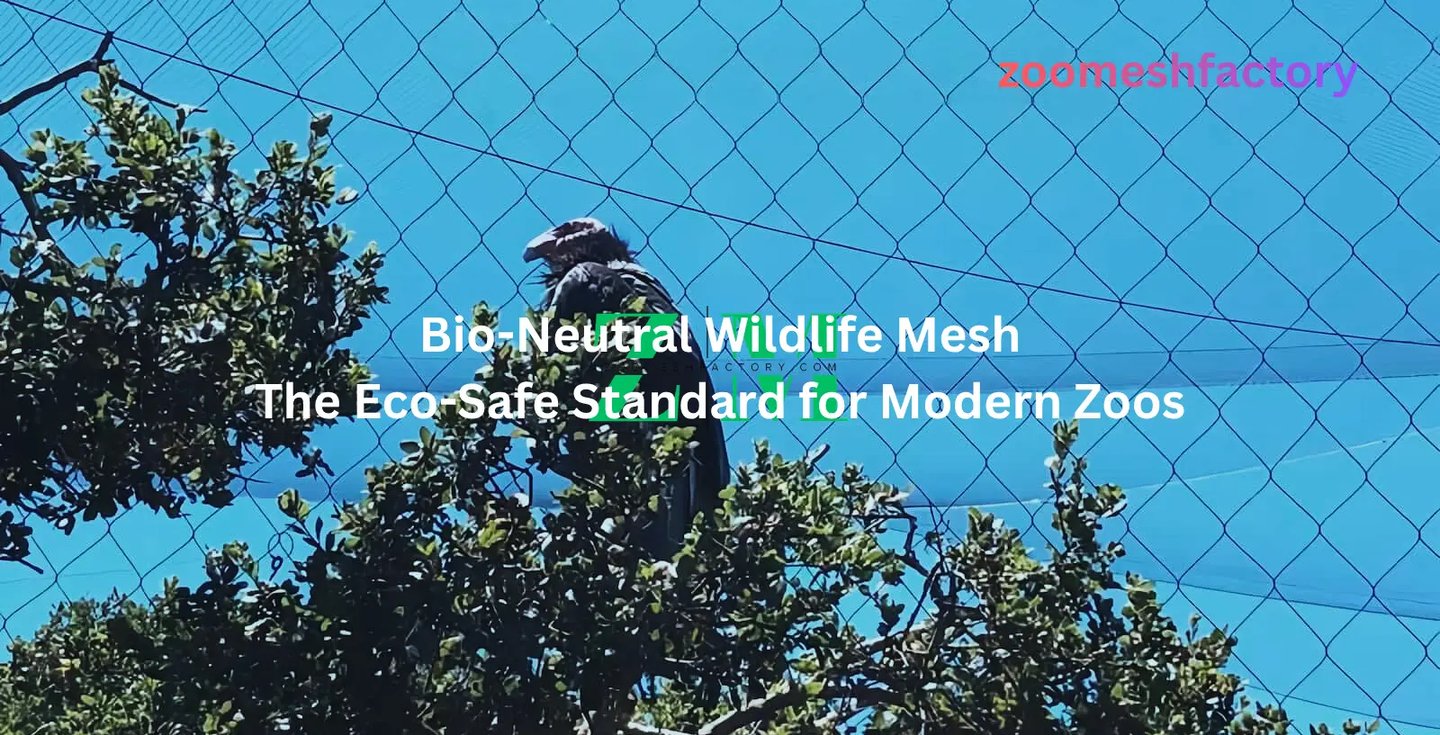
VI. Budgeting for Large Exhibits
When presenting an aviary project to a board of directors or a private donor, the conversation often starts with the "Price per Square Meter." However, looking at the initial sticker price in isolation is a fundamental budgeting error. To build a sustainable facility, you must look at the Total Cost of Ownership (TCO).
The Reality: Upfront Cost vs. 30-Year ROI
Large-scale eagle exhibits often require thousands of square meters of mesh. While galvanized wire or nylon might seem "budget-friendly" at 25% of the cost of stainless steel, the hidden expenses stack up quickly:
The "Price per Square Meter" Trap
If you replace a "cheap" mesh three times over fifteen years, you haven't saved money—you've paid for the enclosure four times (once for the original, three times for replacements), plus the exponential cost of specialized labor to install mesh at height.
By choosing zoo-grade stainless steel from the start, you lock in your costs. The mesh will likely outlast the very poles that hold it up. To plan your project budget accurately, see our latest breakdown on wholesale zoo netting price per square meter.
Coming up next: We explore how to adjust these specs for smaller raptors (Owls and Hawks) and share some real-world "Case Studies" of Zoomesh in action. Ready to finish the build?
VII. Engineering for Specialized Species
While the 2.0mm (5/64") cable is the gold standard for large eagles, raptor facilities often house a diverse range of species, each with unique physiological needs. Engineering an aviary for a Great Horned Owl requires a different approach than a Golden Eagle exhibit.
At Zoomesh Factory, we adapt the mesh aperture and wire gauge to ensure that smaller raptors receive the same "impact dispersion" benefits without sacrificing visibility.
Medium Raptors (Hawks, Falcons, Owls): For birds with less body mass but high maneuverability, we often recommend a 1.5mm (1/16") or 1.2mm (3/64") wire diameter. A smaller 1" x 1" (25mm) or 1.5" x 1.5" (38mm) mesh opening is ideal here. This prevents smaller species from reaching through the mesh or getting their heads caught during high-speed landings.
The Silent Flyer Factor: Owls, known for their silent flight and delicate feathers, benefit immensely from the "Hand-Woven" finish. The lack of sharp ferrules ensures their specialized "serrated" wing feathers—which allow for silent flight—remain undamaged.
Interlink: Looking for lighter specs for parrots or macaws? Check out our guide on the best gauge stainless steel wire for macaw and parrot enclosures.
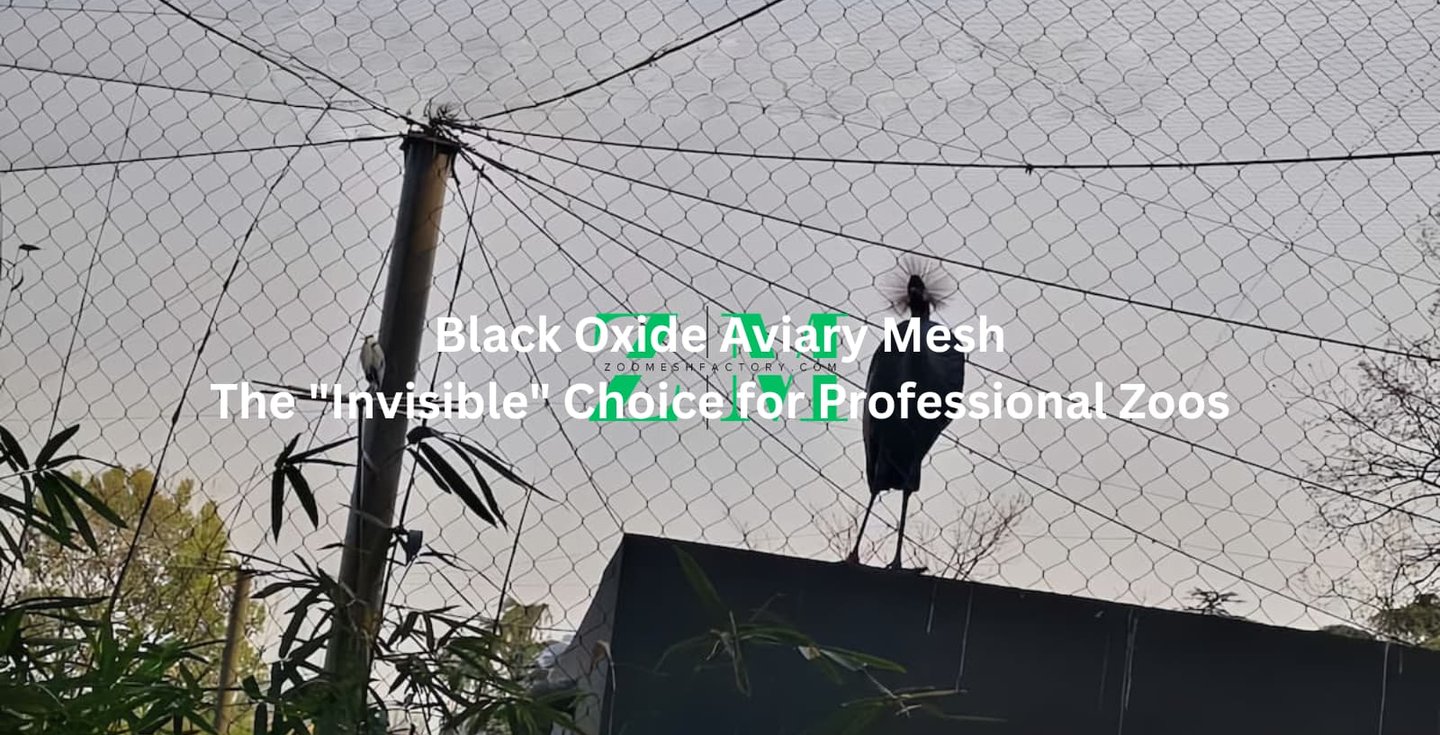
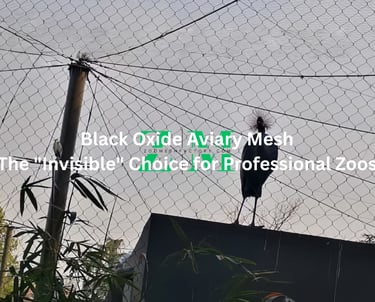
VIII. Case Studies: Zoomesh in Action
Our hand-woven stainless steel rope mesh isn't just a product; it’s a proven solution implemented in some of the most challenging environments on earth. Here is how Zoomesh has transformed professional raptor exhibits:
The Coastal Raptor Rehabilitation Center
A facility located less than a mile from the Pacific Ocean faced a crisis: their galvanized chain-link enclosures were rusting through every 24 months, creating escape risks and jagged edges. We supplied Type 316 Marine-Grade Mesh. Five years later, the mesh shows zero "pitting" or structural degradation, and the facility has reported a significant decrease in "feather-fencing" injuries among their recovering Bald Eagles.
The High-Altitude Mountain Sanctuary
An alpine eagle sanctuary struggled with heavy winter snow loads that frequently collapsed traditional nylon netting. By switching to our 2.0mm hand-woven cable mesh, the facility utilized the "spring-back" elasticity of the diamond weave. The mesh successfully shed heavy snow loads and withstood 70mph mountain winds without a single cable failure, keeping the resident Golden Eagles safe year-round.
Modern Urban Zoo Exhibits
A metropolitan zoo needed a high-visibility solution for their "invisible" eagle walkthrough. By utilizing our Black Oxide finish, they achieved 90% visual transparency. Visitors are now able to take professional-grade photographs without the "cage bars" effect, while the birds enjoy a massive, 40-foot high flight canopy supported by a lightweight cable-stayed system.
We also produce heavy anti-chew stainless mesh for macaw and large parrot habitats; view our core parrot aviary mesh specifications.
IX. Conclusion: The Legacy of Quality
In the professional world of avian conservation and zoological display, the enclosure you build today is the legacy you leave for the next generation of keepers and birds. Choosing the right mesh is not a "hardware decision"—it is a commitment to animal welfare, public safety, and financial responsibility.
Hand-woven stainless steel rope mesh for outdoor eagle aviaries represents the pinnacle of modern enclosure technology. By selecting the 2" x 2" x 5/64" (2.0mm) specification, you are ensuring:
Safety: Zero sharp edges and high impact absorption for your birds.
Longevity: A 30-year, rust-proof lifespan that eliminates the "replacement trap."
Aesthetics: A world-class, "invisible" viewing experience for your visitors.
At Zoomesh Factory, we don't just sell wire; we provide the engineering expertise required to bring your vision to life. From private sanctuaries to international zoological landmarks, our factory-direct pricing and zoo-grade quality ensure that your facility remains the gold standard in raptor care.
Don't compromise on the safety of your apex predators. Contact our engineering team today for custom specs, free samples, and a factory-direct quote that will protect your birds and your budget for decades to come.
Ready to Start Your Exhibit Design?
Join the hundreds of zoos and sanctuaries worldwide that trust ZooMesh Factory for their containment needs. Our engineers are ready to help you calculate the perfect mesh size for your species.
Contact
Hebei Zoo Mesh Co., Ltd
No. 188 Zhonghua South Street, Shijiazhuang City, Hebei Province, China
info@zoomeshfactory.com
© 2025. All rights reserved.
Quick Link
Product Catalogs
Don't leave without the specs! Save our factory-direct pricing and technical configurations for your next project meeting. Our 2026 Zoo Mesh Factory Direct Catalog is ready for download.