

Orangutan Enclosure Mesh Size | ZooMesh
Orangutan enclosure mesh size built for arboreal strength: aperture, rope diameter and panel rating that hold a heavy climber.
8/17/20268 min read
Executive Summary
Choosing the right orangutan enclosure mesh size is one of the most critical decisions in great ape habitat construction. Orangutans are the world’s largest arboreal mammals—heavy climbers with extraordinary strength, intelligence, and a notorious talent for manipulating and destroying enclosure barriers. The wrong mesh specification can lead to escape, injury, or costly premature failure.
The industry-standard specification for orangutan enclosures is 3.2mm (1/8″) stainless steel wire rope with a 76mm x 76mm (3″ x 3″) aperture—commonly designated as mesh #3276. This configuration provides the optimal balance of visibility, ventilation, structural integrity, and safety for these powerful primates. However, the right choice depends on multiple factors: the animal’s age and size, enclosure design, climate conditions, and regulatory requirements.
This comprehensive guide covers everything from aperture sizing and cable ratings to material grade selection, installation best practices, and long-term maintenance. Whether you’re building a new orangutan exhibit or upgrading an existing enclosure, you’ll find the technical specifications and practical buying advice you need.
Understanding Orangutan Behavior and Enclosure Demands
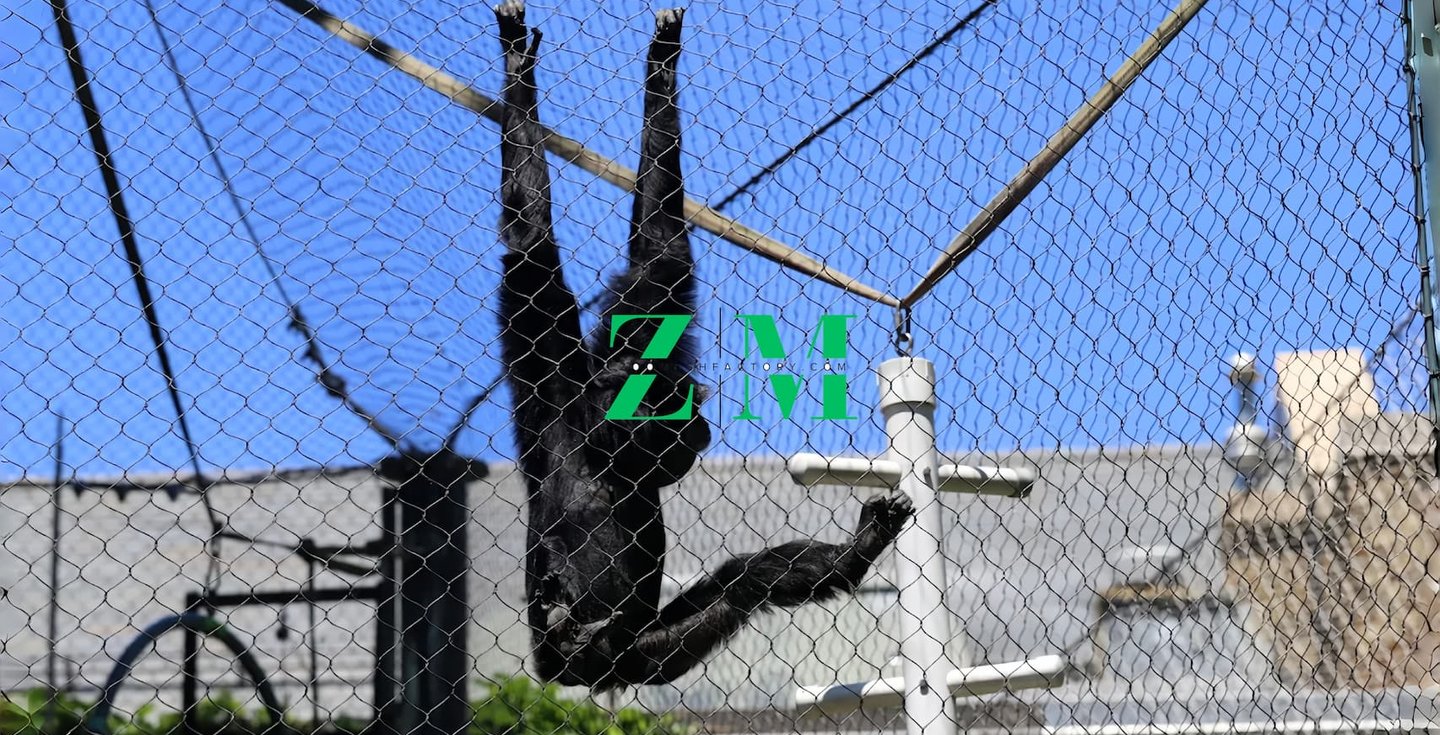
Orangutans (Pongo species) present unique challenges for enclosure design. As the only great apes native to Asia, they are highly arboreal, spending most of their lives in trees. Adult male orangutans can weigh up to 200 pounds or more and possess tremendous upper-body strength. They are known as “heavy climbers” who use their full body weight to test enclosure boundaries.
These primates are also exceptionally intelligent. Wild orangutans fashion tools, solve complex problems, and learn by observation. In captivity, this intelligence translates into persistent, creative escape attempts. They will pull, bite, shake, and systematically probe every inch of their enclosure for weaknesses. Any mesh that is too flexible, too weak, or improperly secured will be discovered and exploited.
Furthermore, orangutans have a natural curiosity and dexterity that makes finger and limb entrapment a serious concern. Mesh apertures must be small enough to prevent digits from passing through, yet large enough to provide adequate visibility and airflow. This balancing act is why professional zoo mesh specifications are so precisely defined.
The enclosure must also withstand environmental factors. Outdoor orangutan habitats are exposed to rain, UV radiation, temperature extremes, and humidity year-round. Mesh that corrodes, weakens, or discolors over time compromises both safety and aesthetics.


Standard Orangutan Enclosure Mesh Specifications
The Industry Standard: #3276 Mesh
The most widely specified orangutan enclosure mesh is #3276: 3.2mm (1/8″) rope diameter with a 76mm x 76mm (3″ x 3″) aperture. This specification has emerged as the industry benchmark through decades of zoo construction experience.
Why 76mm x 76mm? This aperture size is large enough to provide excellent visitor visibility and natural light penetration, yet small enough to prevent orangutan fingers and toes from passing through. It also prevents the animals from getting their hands around individual mesh strands for maximum leverage when pulling.
Why 3.2mm rope diameter? This cable thickness delivers the tensile strength required to withstand the pulling force and impact of an adult orangutan. Thinner cables may snap under sustained stress; thicker cables reduce flexibility and increase cost unnecessarily.
Alternative Specifications
While #3276 is the most common choice, several other specifications are frequently used in orangutan enclosures:
Rope Diameter Options
Orangutan enclosure mesh typically uses rope diameters ranging from 2.4mm to 4.0mm. The 3.2mm (1/8″) diameter is the most common for adult orangutans, providing an optimal strength-to-flexibility ratio. Thicker cables (4.0mm) may be specified for enclosures housing multiple large males or in high-impact zones.
Cable Construction and Flexibility
The internal construction of the wire rope influences its flexibility and fatigue resistance. For dynamic climbing zones where orangutans swing, hang, and repeatedly tension the mesh, a more flexible cable construction is recommended to accommodate constant movement without premature wear. Conversely, for static perimeter panels that remain under constant tension, a more rigid construction offers high breaking strength and dimensional stability.
When specifying your mesh, discuss the intended application with your supplier—they will recommend the appropriate cable lay and strand configuration based on the specific stress points in your enclosure design. Most professional zoo installations use a construction that balances flexibility for animal comfort with rigidity for structural integrity.
Material Grade Selection: 304 vs. 316 Stainless Steel
The grade of stainless steel determines the mesh’s corrosion resistance and lifespan.
Grade 304 Stainless Steel
Grade 304 is an excellent, cost-effective choice for inland environments where moisture levels are moderate and there is no exposure to salt air or harsh chemicals. It provides good corrosion resistance and a typical lifespan of 10–15 years in suitable conditions.
Grade 316 Stainless Steel
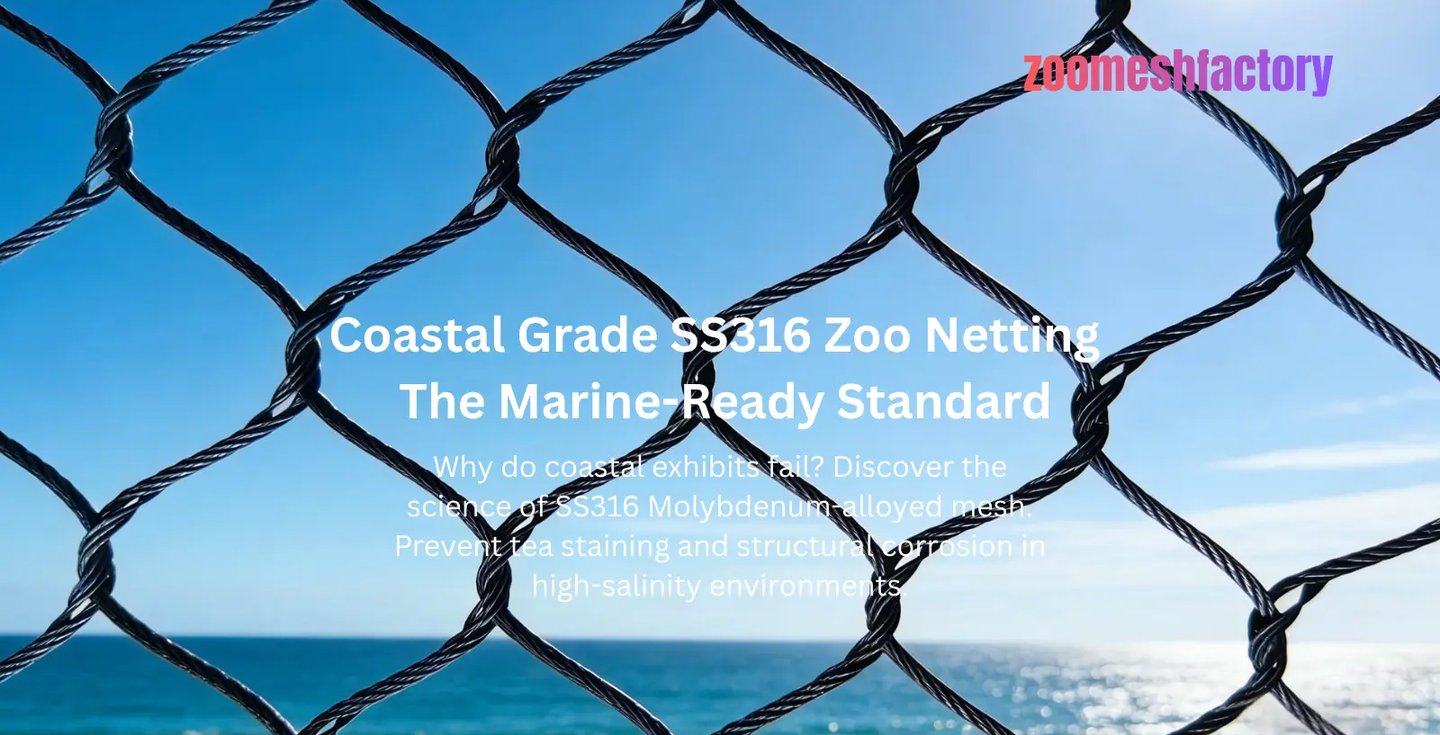
Grade 316 is mandatory for coastal facilities or regions with high salinity. The addition of 2–3% molybdenum provides superior resistance against chloride-induced corrosion—the primary cause of “tea staining” and rust in seaside zoos. Grade 316 offers excellent corrosion resistance and a typical lifespan of 15–30+ years.
Comparison Table: 304 vs. 316 Stainless Steel for Orangutan Mesh
Load Capacity and Breaking Strength
Orangutan enclosure mesh must withstand extraordinary forces. Adult males can generate tremendous pulling force, and the mesh must endure both static loads (the animal hanging or resting on it) and dynamic loads (swinging, jumping, and impact).
For 3.2mm stainless steel cable, typical breaking loads range from 7.38 kN (approximately 1,660 lbs) depending on the specific construction and material grade. This provides a substantial safety margin for orangutan enclosures.
When evaluating mesh options, always request the manufacturer’s certified breaking load data. Reputable suppliers will provide test results for their specific products.
Safety Requirements and Regulatory Compliance
Enclosure Dimensions
Regulatory standards specify minimum enclosure sizes for orangutans. Under Ohio Administrative Code 901:1-4-09, primary orangutan enclosures must be a minimum of 300 square feet with a roof and provide eight feet of usable climbing vertical height. Similar requirements exist in other jurisdictions.
Mesh Safety Standards
The Sanctuary Federation recommends a maximum mesh dimension of 2″ x 2″ (50.8mm x 50.8mm) for most Old World primate species, although larger mesh (up to 4″) may be acceptable depending on the specific circumstances. This guidance underscores the importance of species-specific risk assessment.
Construction Materials
Regulations typically require enclosure construction from steel bars, galvanized pipe, masonry block, or equivalent materials. Stainless steel wire rope mesh qualifies as an equivalent or superior material when properly specified and installed.
Why Galvanized Mesh Is Not Recommended
While galvanized mesh is cheaper, it presents serious problems for orangutan enclosures:
Zinc toxicity: Orangutans, like other primates, may chew on enclosure mesh. Galvanized coatings contain zinc, which can cause poisoning.
Corrosion: Galvanized surfaces will eventually rust and require replacement.
Durability: Galvanized mesh has a significantly shorter lifespan than stainless steel.
Stainless steel mesh is non-toxic, resistant to primate teeth and claws, and offers superior long-term durability.
Installation Steps for Orangutan Enclosure Mesh
Proper installation is as important as choosing the right specifications. Here are the essential steps:
1. Site Assessment and Planning
Evaluate the enclosure site, including soil conditions, existing structures, and environmental factors. Determine the panel sizes needed and the attachment points for the mesh.
2. Frame Construction
Build or verify the structural frame that will support the mesh. For orangutan enclosures, frames are typically constructed from heavy steel posts and beams capable of withstanding the dynamic loads created by the animals.
3. Mesh Panel Sizing
Measure and cut mesh panels to the required dimensions. Remember that stainless steel rope mesh can be folded and bent to suit various structural shapes.
4. Attachment and Tensioning
Secure the mesh to the frame using appropriate hardware—typically stainless steel clamps, turnbuckles, or custom fittings. The mesh should be tensioned evenly to prevent sagging while maintaining flexibility for the animals to climb.
5. Seam and Edge Finishing
All seams and edges must be finished to eliminate sharp points or gaps where orangutans could gain leverage or injure themselves.
6. Inspection and Testing
Before introducing animals, thoroughly inspect the entire enclosure. Test all attachment points and verify that the mesh is secure at every connection.
7. Ongoing Monitoring
Regularly inspect the mesh for signs of wear, damage, or animal manipulation. Orangutans are persistent and creative—what is secure today may be compromised tomorrow.
Maintenance Tips for Long-Term Performance
Stainless steel orangutan enclosure mesh requires minimal maintenance but benefits from regular attention:
Visual inspections: Conduct routine visual checks of the entire mesh surface, paying special attention to high-stress areas around attachment points and climbing structures.
Cleaning: Simple periodic cleaning with water and mild detergent maintains appearance and performance.
Hardware checks: Inspect all clamps, turnbuckles, and attachment hardware for signs of loosening or corrosion.
Damage assessment: Look for bent or broken cables, deformed apertures, or areas where the mesh has been pulled away from the frame.
Documentation: Keep detailed records of all inspections and maintenance activities for regulatory compliance and warranty purposes.
With proper care, high-quality stainless steel mesh will provide 30+ years of service in outdoor zoo environments.
Cost Considerations: Price Per Square Metre
The cost of orangutan enclosure mesh varies significantly based on specifications, quantity, and supplier. Typical pricing ranges from $10 to $38 per square metre for standard configurations, with higher prices for 316 grade, custom sizes, and black oxide finishes.
When evaluating cost, consider the total lifecycle cost rather than just the upfront price. Higher-quality mesh with better corrosion resistance may cost more initially but will last significantly longer and require less maintenance, resulting in lower total cost of ownership.
Buying Checklist: What to Ask Your Supplier
Before purchasing orangutan enclosure mesh, use this checklist to ensure you’re getting the right product:
□
Aperture size: Confirmed as appropriate for your orangutans (typically 76mm x 76mm)
□
Rope diameter: Verified as 3.2mm (1/8″) or as specified
□
Material grade: 304 or 316 stainless steel, appropriate for your climate
□
Cable flexibility: Suitable for the intended use (static panels vs. climbing zones)
□
Breaking load data: Certified test results provided
□
Surface finish: Natural steel or black oxide coating
□
Panel dimensions: Custom sizes as required for your enclosure
□
Warranty: Clear warranty terms and expected service life
□
Compliance: Meets relevant safety regulations and standards
□
Installation support: Technical guidance or installation services available
For detailed technical guidance on great ape enclosures, refer to our comprehensive resource on stainless steel wire rope mesh for great ape enclosures.
Black Oxide Treatment Option
Black oxide treatment is an increasingly popular option for orangutan enclosure mesh. This process forms a black coating on the surface of the stainless steel wire rope through oxidation.
Benefits of black oxide mesh:
Enhanced corrosion resistance
UV radiation protection
Reduced visual presence in natural environments, minimizing disturbance to animals
Improved visitor viewing experience
Luxurious, professional appearance
For more information on this treatment process, see our guide on black oxide mesh treatment.
Frequently Asked Questions
1. What is the standard orangutan enclosure mesh size?
The industry-standard specification is 76mm x 76mm (3″ x 3″) aperture with 3.2mm (1/8″) rope diameter, designated as mesh #3276. This provides the optimal balance of safety, visibility, and structural integrity for adult orangutans.
2. How do I choose between 304 and 316 stainless steel for my orangutan enclosure?
Choose Grade 304 for inland zoos with moderate moisture levels and no salt exposure. Choose Grade 316 for coastal facilities or regions with high salinity, as the molybdenum content provides superior corrosion resistance.
3. Can I use galvanized mesh for an orangutan enclosure?
No. Galvanized mesh is not recommended for orangutan enclosures due to zinc toxicity risks if the animals chew the mesh, plus inferior corrosion resistance and shorter lifespan compared to stainless steel.
4. How long does stainless steel orangutan enclosure mesh last?
High-quality stainless steel mesh provides 30+ years of service in outdoor zoo environments with minimal maintenance. Grade 316 offers the longest lifespan, particularly in challenging coastal conditions.
5. What cable construction is best for orangutan enclosures?
The optimal cable construction depends on the specific application—static perimeter panels benefit from a more rigid construction, while climbing and swinging zones require greater flexibility to accommodate dynamic loads. Consult your supplier for a recommendation tailored to your enclosure design.
Key Takeaways
Standard specification: 76mm x 76mm (3″ x 3″) aperture with 3.2mm (1/8″) rope diameter (#3276 mesh) is the industry standard for adult orangutan enclosures.
Material matters: Choose Grade 304 for inland locations, Grade 316 for coastal or high-salinity environments.
Flexibility requirements: Select cable construction that matches the stress points—rigid for static panels, flexible for active climbing areas.
Safety first: Never use galvanized mesh—zinc toxicity poses a serious health risk to orangutans.
Long-term value: Quality stainless steel mesh delivers 30+ years of service with minimal maintenance, making it cost-effective over the full lifecycle.
Professional installation: Proper tensioning and attachment are critical to enclosure safety and longevity.
Regular inspection: Orangutans are intelligent and persistent—routine checks are essential to identify and address wear or damage early.
For expert guidance on specifying the right mesh for your orangutan enclosure project, explore our detailed resources on stainless steel wire rope mesh for great ape enclosures.
External Reference
Jane Goodall Institute — authoritative husbandry and conservation guidance for orangutan.
Ready to Start Your Exhibit Design?
Join the hundreds of zoos and sanctuaries worldwide that trust ZooMesh Factory for their containment needs. Our engineers are ready to help you calculate the perfect mesh size for your species.
Contact
Hebei Zoo Mesh Co., Ltd
No. 188 Zhonghua South Street, Shijiazhuang City, Hebei Province, China
info@zoomeshfactory.com
© 2025. All rights reserved.
Quick Link
Product Catalogs
Don't leave without the specs! Save our factory-direct pricing and technical configurations for your next project meeting. Our 2026 Zoo Mesh Factory Direct Catalog is ready for download.