

Black Oxide Parrot Aviary Mesh Guide: 30-Year Bird-Safe Steel
Black oxide parrot aviary mesh outlasts galvanized wire by 25+ years, won't chip or poison birds, and offers near-invisible viewing for safe, long-life
Hebei Wineasy Trade Co., Ltd
7/20/20264 min read
Executive Summary
You already know that stainless steel is the gold standard for parrot aviaries. But black oxide takes it a step further: it’s not a paint or powder coat – it’s a chemical conversion that becomes part of the steel, eliminating glare, creating an “invisible” barrier, and providing extra corrosion resistance without any risk of chipping or peeling. When paired with the correct wire gauge (see our core gauge guide for species-specific recommendations), black oxide mesh delivers a bird-safe, zero-maintenance enclosure that outlasts galvanized wire by 25+ years.
What Is Black Oxide Parrot Aviary Mesh?
Definition – More Than Just a Color
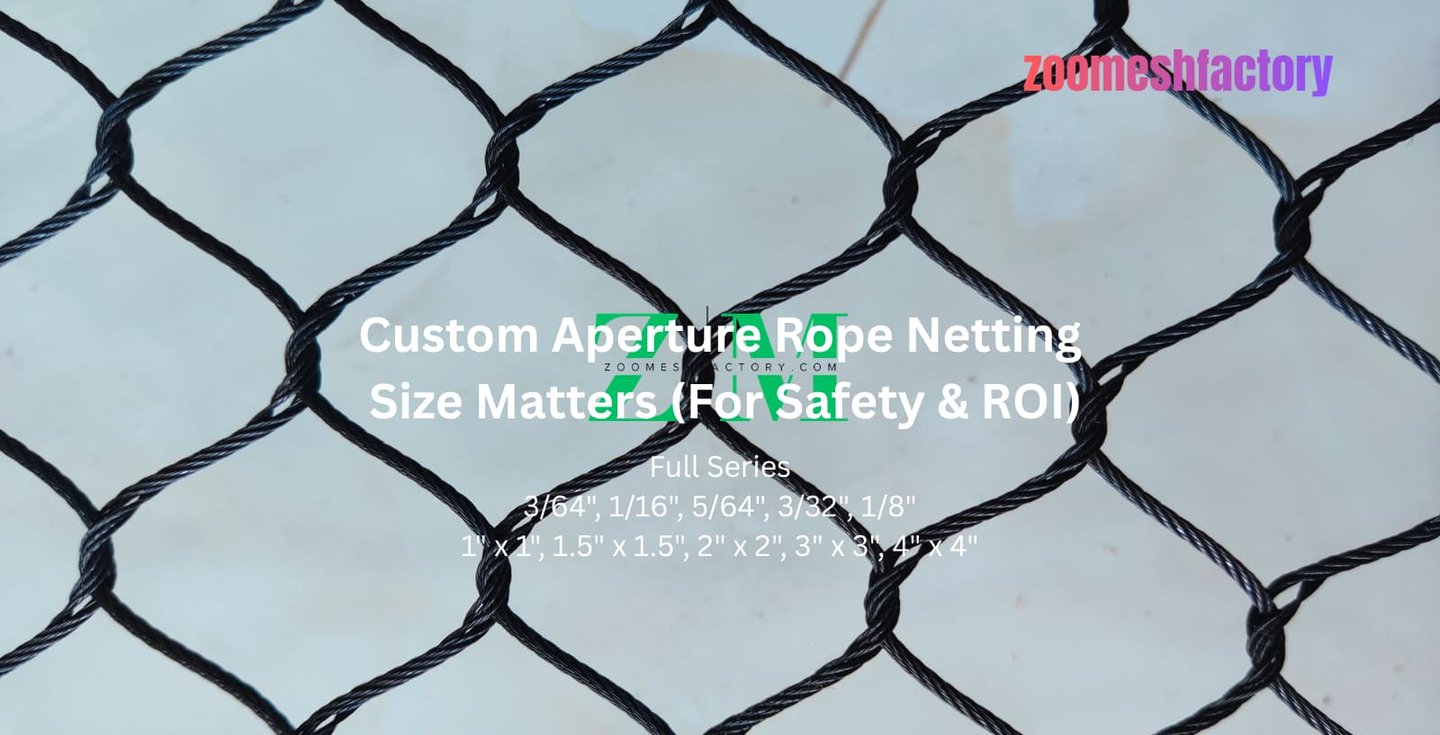
Black oxide is a chemical conversion coating applied to stainless steel wire rope mesh. It is not paint, powder coat, or any surface layer that can chip or peel. Instead, the process creates a uniform black iron-oxide layer that becomes integral to the steel itself. This finish not only gives the mesh a sleek, dark appearance but also enhances corrosion resistance and dramatically reduces light reflection.
How It Compares to Standard Stainless Finish
For the foundational information on wire diameters, tensile strengths, and species-specific gauge selection, start with our main stainless steel wire gauge guide for parrots – it’s the technical backbone that every aviary builder should read first. (➜ Core Page)
Why Choose Black Oxide Over Other Finishes?
The “Invisible” Aesthetic Advantage
The dark finish absorbs light rather than reflecting it. In a naturalistic aviary with trees and shaded areas, black oxide mesh virtually disappears, letting visitors focus entirely on the birds. This reduces stress for parrots, who don’t perceive a glaring barrier, and creates a more immersive experience.
Enhanced Corrosion Protection
While 304 and 316 stainless steel already resist rust, the black oxide layer adds an extra barrier against moisture and chemicals. This is especially valuable in humid or coastal climates – we cover that in detail in our coastal-grade SS316 anti-corrosion guide , which explains why the oxide finish pairs perfectly with marine-grade stainless.
No Chipping, No Peeling, No Toxins
Because it’s a conversion treatment, black oxide cannot flake off like paint or powder coating. It also contains no zinc, lead, or any heavy metal that could poison your birds. This makes it the safest finish for parrots that use their beaks on the mesh daily.
Black Oxide vs. Alternative Aviary Mesh Materials
Black Oxide Stainless Steel vs. Galvanized Wire: Galvanized wire relies on a thin zinc coating that eventually flakes off, exposing bare steel to rust. Stainless steel is corrosion-resistant throughout its entire structure.
Black Oxide Stainless Steel vs. Powder-Coated Mesh: Powder coating and paint can chip, creating rust points and potential ingestion hazards. Black oxide is a chemical conversion—it becomes part of the steel and will not chip or peel.
Black Oxide Stainless Steel vs. Plastic Netting: Plastic netting degrades under UV exposure within 3–5 years. Stainless steel offers unmatched strength and longevity for permanent aviary structures.
How to Select the Right Black Oxide Mesh for Your Parrots
Wire Diameter – Match the Gauge to the Beak
1.0–1.2mm – Small parrots (budgies, cockatiels)
1.6–2.0mm – Medium parrots (African Greys, Amazons)
2.4–3.0mm – Large macaws, cockatoos
For a complete species-by-species table with tensile strength recommendations, visit our core gauge selection guide – it’s the definitive resource used by zoos and sanctuaries.
Mesh Opening – Safety vs. Visibility
20–25mm – Small species, predator prevention
25–38mm – Most medium parrots
38–50mm – Large parrots (macaws, cockatoos)
Ferruled vs. Knotted Construction
Ferruled – Precise spacing, clean rectangular panels
Knotted – Extra flexibility for curved or complex shapes
Hand-woven mesh eliminates weak weld points, creating a safety-net effect that absorbs impact and protects birds.
304 vs. 316 – Which Grade with Black Oxide?
304 – Ideal for inland locations, cost-effective
316 – Contains molybdenum, essential within 10 miles of the coast
If you live near saltwater, the black oxide finish on 316 stainless is the ultimate combination. Our coastal anti-corrosion guide provides a full cost-benefit analysis and shows why SS316 pays for itself in under 10 years.
Installation Tips for Black Oxide Mesh
Planning for Large Walk-In Aviaries
For expansive enclosures, seamless rolls up to 30′ × 60′ minimize seams and weak points. Tensioning systems must account for the mesh’s flexibility. See our large walk-in parrot exhibit mesh guide for detailed framework and tensioning recommendations. (➜ Satellite 1)
Framework and Fastening
Use corrosion-resistant framing (aluminum or treated timber) and always use stainless steel fasteners to avoid galvanic corrosion. Secure edges with stainless clips or ties, and smooth all cut ends.
Maintenance – Virtually None
Occasional hosing with mild soap and water is all it takes. Never use abrasive cleaners or harsh chemicals that could damage the oxide layer.
Cost and ROI – The Black Oxide Advantage
Upfront vs. Long-Term
While black oxide stainless steel carries a higher initial cost than galvanized, the 30+ year lifespan eliminates replacement cycles. Over a decade, the total cost of ownership is often lower than buying galvanized mesh twice plus veterinary bills from zinc poisoning.
Sourcing and Quality
Always verify that your supplier uses genuine 304/316 stainless and applies a consistent black oxide conversion process. For detailed ROI tables and a 10-year comparison with galvanized, refer to our core gauge page , which includes life-cycle cost charts.
Key Takeaways
✅ Black oxide is a conversion coating – not paint – so it won’t chip, peel, or flake
✅ Stainless steel is 100% bird-safe – no zinc, no lead, no toxic coatings
✅ Choose gauge by species – see the detailed gauge table for exact specs (➜ Core)
✅ 304 for inland, 316 for coastal – black oxide enhances both
✅ 30+ year lifespan – one investment, zero replacement, total peace of mind
FAQ Section (5 PAA Questions)
Q1: What is black oxide parrot aviary mesh?
It’s stainless steel wire rope mesh treated with a chemical conversion process that creates a durable, non-reflective black surface. Unlike paint, it’s integral to the steel, so it won’t chip or peel.
Q2: How does black oxide compare to regular stainless steel?
It reduces glare, making the mesh nearly invisible, and adds an extra layer of corrosion resistance while maintaining all the bird-safe, non-toxic properties of stainless steel.
Q3: Is black oxide safe for parrots?
Absolutely – it contains no zinc, lead, or heavy metals. It’s chemically inert and will not release toxins, even if birds chew or climb on it.
Q4: Can I get black oxide on SS316 for coastal use?
Yes – and we highly recommend it. SS316 + black oxide is the ultimate protection against salt air. See our coastal-grade guide for details. (➜ Satellite 2)
Q5: Where can I find the right wire gauge for my parrot species?
Our core gauge selection guide has everything – from budgies to macaws – with wire diameter, opening size, and breaking load recommendations. (➜ Core Page)
Ready to Start Your Exhibit Design?
Join the hundreds of zoos and sanctuaries worldwide that trust ZooMesh Factory for their containment needs. Our engineers are ready to help you calculate the perfect mesh size for your species.
Contact
Hebei Zoo Mesh Co., Ltd
No. 188 Zhonghua South Street, Shijiazhuang City, Hebei Province, China
info@zoomeshfactory.com
© 2025. All rights reserved.
Quick Link
Product Catalogs
Don't leave without the specs! Save our factory-direct pricing and technical configurations for your next project meeting. Our 2026 Zoo Mesh Factory Direct Catalog is ready for download.