
3.2mm Heavy Cable Mesh for Tiger Impact Resistance | Zoo Safety Guide
Are your tiger enclosures truly safe? Discover how 3.2mm heavy cable mesh for tiger impact resistance meets ASTM standards to prevent escapes and ensure predator containment.
Hebei Wineasy Trade Co., Ltd
7/22/20267 min read
Key Takeaways
Impact Standards: 3.2mm diameter offers a superior strength-to-weight ratio, specifically designed to absorb the kinetic impact of a charging tiger.
Material Choice: 316 stainless steel is highly recommended over galvanized options for its superior resistance to acidic urine and high-humidity environments.
Safety Compliance: Ensure the mesh meets ASTM E2750 guidelines for high-security animal enclosures to satisfy US zoo regulatory requirements.
Durability: Properly tensioned and framed, this mesh significantly reduces long-term maintenance costs and mitigates escape risks.
Executive Summary
For zoo owners, architects, and facility managers, ensuring the safety of both animals and visitors is non-negotiable. Our deep-dive analysis focuses specifically on the pivotal role of material gauge in big cat containment. This article explores why the 3.2mm heavy cable mesh for tiger impact resistance is considered the gold standard in the industry, detailing its tensile strength, corrosion resistance, and installation nuances. We address critical procurement pain points, from ASTM certification to cost-per-square-foot analysis, providing a comprehensive resource for high-stakes enclosure design in the US and European markets.
The Critical Role of Material Strength in Tiger Enclosures
When designing habitats for apex predators, the margin for error is zero. In the world of zoo construction and safety, the choice of containment barrier often boils down to one critical specification: the gauge of the steel cable. The 3.2mm heavy cable mesh for tiger impact resistance has emerged as the industry standard because it strikes a precise balance between visibility and unyielding structural integrity.
Why 3.2mm Diameter is the Baseline for Big Cat Barriers
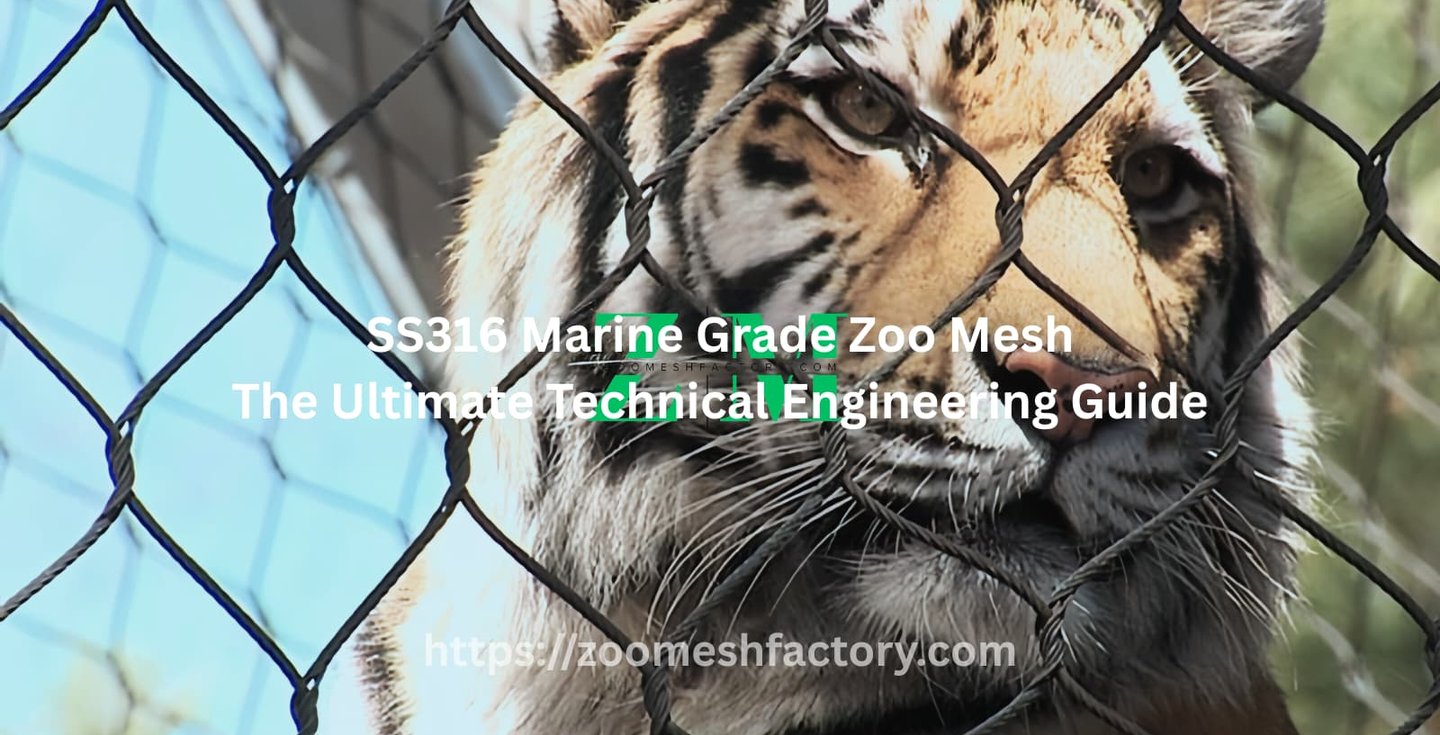
Tigers are not just heavy; they are explosive. A tiger charging at full speed can generate thousands of pounds of kinetic force. While lighter gauge meshes (like 1.5mm or 2.0mm) are sufficient for smaller animals or aviaries, they lack the mass and rigidity required to absorb the shock of a carnivore's impact. The 3.2mm diameter ensures that the mesh does not simply deflect and stretch, which could allow a predator to get its claws or teeth through the openings, or compromise the attachment points. This gauge provides a robust "wall" of steel that resists deformation, ensuring that the enclosure remains a permanent barrier regardless of repeated high-intensity attempts to breach it.
Understanding Impact Resistance vs. Static Load
A common procurement pain point is confusing tensile strength (static load) with impact resistance (dynamic load). An enclosure might hold a heavy weight hanging from it, but that does not guarantee it will survive a running leap. 3.2mm heavy cable mesh for tiger impact resistance is specifically manufactured to handle dynamic forces. The inherent flexibility of the wire rope construction allows it to absorb the shock of impact by distributing the force across multiple strands and connection points, rather than snapping under a point-load pressure.
Technical Specifications: What Makes an Impact-Resistant Mesh?
For European and American purchasers, understanding the "why" behind the wire is essential for securing budget approvals and ensuring safety audits are passed. The technical construction of this specific mesh is what sets it apart.
Material Composition (316 Stainless Steel vs. Galvanized)
One of the primary decisions in procurement is the material type. While both are available, 316 stainless steel is rapidly becoming the preferred choice for tiger enclosures. Why? The "tiger impact resistance" involves not just physical strength but chemical resistance. Tigers spray urine frequently, which contains high levels of uric acid. In humid climates, standard galvanized steel is vulnerable to pitting corrosion over time, degrading the strength of the wire. 316 stainless steel, which includes molybdenum, offers a superior defense against this type of chemical degradation and rust, ensuring the integrity of the heavy cable mesh remains intact for decades.
Breaking Strength and Tensile Ratings
How strong is 3.2mm cable mesh? On average, a 7x19 construction (7 strands of 19 wires) with a 3.2mm diameter offers a breaking load of approximately 1,100 kg per strand. When configured into a woven mesh, this translates to a high-security barrier capable of withstanding massive distributed forces. The weave pattern is also crucial; a dense weave prevents a tiger's paw from gaining purchase, reducing the risk of injury to the animal and preventing climbing-based escape attempts.
For a broader comparison of aperture sizes and rope diameters across different big cat species, refer to our complete big cat enclosure mesh specification guide.
3.2mm Heavy Cable Mesh for Tiger Impact Resistance: Installation Best Practices
Even the highest-quality mesh is only as good as its installation. For facility managers, "how to install heavy-duty animal barrier mesh" is a critical query, and the answer involves significant engineering.
Framing Requirements for High-Tension Mesh
The heavy cable mesh requires a robust frame. Typically, this consists of structural steel columns with reinforced concrete footings. The mesh must be pre-tensioned using turnbuckles or hydraulic tensioners to a specific "pre-load." This is not a case of simply screwing the mesh to a post; it must be stretched tight to eliminate sag. If the mesh is not properly tensioned, it acts like a "net," allowing the tiger to bounce against it, which can fatigue the attachment points over time. A tight 3.2mm heavy cable mesh behaves more like a solid wall, deflecting impact effectively.
Securing Connections and Overlaps
The "weak points" in any enclosure are the connections. When using heavy wire rope mesh, overlaps should be substantial—typically a minimum of 150mm to 200mm—to prevent the mesh from being pried apart. Custom clips and swaging tools are required to secure the overlaps and attach the mesh to the main structural frame. This is a specialized area of construction, and we recommend employing experienced zoo contractors for the installation to ensure compliance with safety regulations.
Procurement Guide: Key Considerations for Purchasers
If you are looking for the "best supplier of heavy duty wire mesh in the USA" or Europe, you need to look beyond the price per square foot. Here is what a savvy purchaser checks during the vetting process.
Certification and Compliance (ASTM/ASTM E2750)
Safety is a legal issue. Ensure the mesh manufacturer can provide documentation certifying that their 3.2mm heavy cable mesh for tiger impact resistance meets or exceeds the ASTM E2750 standard, which specifically applies to high-security enclosures for exotic animals. Compliance with European standards (EN 13451-1 for general structural safety and relevant zoo-specific guidelines) is equally important for European purchasers. This is a non-negotiable step in the procurement process.
Customization Options (Weave Density and Panel Sizes)
No two zoo habitats are the same. The best manufacturers offer customization. Whether you need massive panels to span a naturalistic canyon or specific apertures to prevent paw pinching, ensure the supplier can tailor the 3.2mm heavy cable mesh to your specific architectural drawings.
Cost Analysis: Initial Investment vs. Long-Term Durability
When evaluating the "cost of high-security zoo fencing mesh," it is vital to consider the Total Cost of Ownership (TCO). While a galvanized 3.2mm mesh might be cheaper upfront, the maintenance costs (re-coating, replacing corroded sections, and safety audits) can be significant. 316 stainless steel offers a higher initial investment but drastically reduces long-term costs, making it the most cost-effective solution over the 30-40 year lifespan of a zoo exhibit.
For wildlife parks needing a long-lasting barrier, our zoo mesh manufacturer performs through extreme weather without maintenance.
Maintenance and Longevity of Heavy-Duty Cable Mesh
Maintaining a heavy cable mesh system is simpler than other fencing types but requires diligence.
Inspection Schedules for Wear and Tear
A bi-annual inspection is recommended. Look for any signs of broken wires within the strand. While a single broken strand in a 3.2mm cable is not an immediate structural failure (due to the multiple strands), it indicates a point of wear that should be repaired promptly. For carnivore exhibits, monthly visual inspections are a best practice to ensure that no foreign objects are compromising the mesh integrity.
Preventing Corrosion in High-Humidity Climates
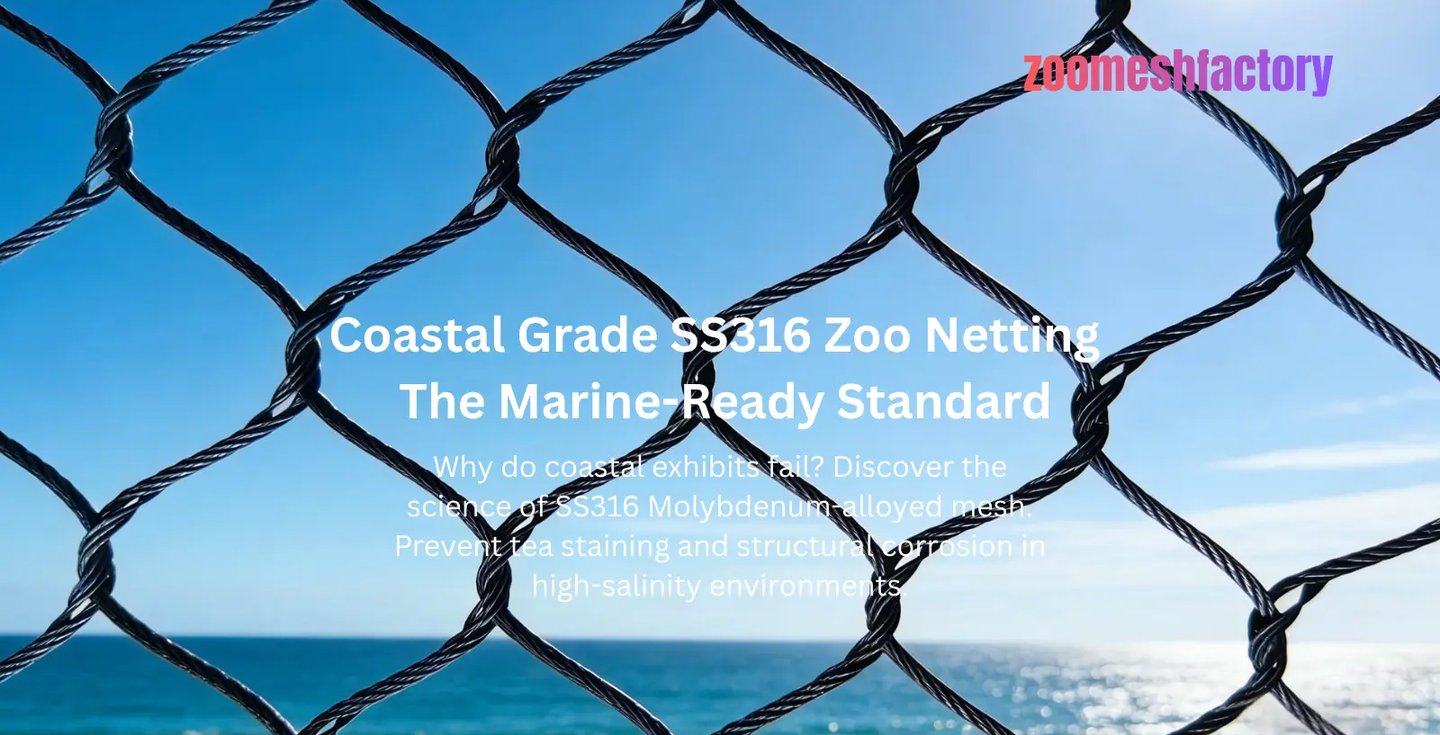
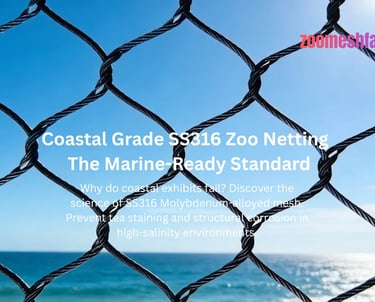
For zoos in coastal areas or regions with heavy rainfall, the question of "how to prevent cable mesh corrosion" is paramount. This is where the decision to use 316 stainless steel pays off. Regular cleaning with fresh water to remove salt residue and animal waste is advisable to keep the mesh looking professional and safe.
Summary
Selecting the appropriate 3.2mm heavy cable mesh for tiger impact resistance is a complex but necessary challenge for maintaining the highest standards of zoo safety. From the specialized tensile strength required to withstand dynamic impacts to the critical material choice between galvanized and stainless steel, every decision impacts the integrity of the enclosure. By focusing on certified materials, professional installation, and rigorous maintenance schedules, facility owners can ensure a secure, long-lasting, and visually stunning habitat that prioritizes the welfare of the animals and the safety of the public.
Frequently Asked Questions (FAQ)
Question 1: How much force can 3.2mm cable mesh actually withstand?
The exact force depends on the weave and frame, but a 3.2mm wire rope typically has a tensile strength of around 1.1 tons. However, impact resistance is dynamic; the mesh is designed to absorb kinetic energy through slight elastic deformation, dissipating up to 10,000 N of force without breaking, depending on the aperture size.
Question 2: Does heavy cable mesh require special tools for installation?
Yes. Installing 3.2mm steel cable mesh requires specialized swaging tools to crimp connections, hydraulic tensioners to set the pre-load, and heavy-duty cutting equipment. We strongly advise against DIY installation; professional zoo construction teams are necessary for safety compliance.
Question 3: Is stainless steel mesh worth the extra cost over galvanized?
Absolutely, for big cat enclosures. Stainless steel (316) offers superior resistance to the acidic urine of tigers and other carnivores. It maintains its aesthetic appeal and structural integrity for decades, whereas galvanized mesh may require replacement or extensive repair within 10-15 years due to corrosion.
Question 4: Can this mesh be used for aerial primate enclosures as well?
Yes, 3.2mm cable mesh is versatile. However, for primates, you generally want a smaller aperture to prevent them from getting their hands through the gaps. A 3.2mm diameter is often over-engineered for smaller primates but is excellent for howler monkeys or chimpanzees who appreciate a high strength-to-weight ratio.
Question 5: What is the lead time for custom-sized zoo mesh orders?
Custom orders for heavy cable mesh typically require 4-8 weeks, depending on the complexity of the weave and the volume of the order. It is recommended to plan ahead for renovation projects to ensure the mesh is delivered on schedule with all necessary certifications.
Ready to Start Your Exhibit Design?
Join the hundreds of zoos and sanctuaries worldwide that trust ZooMesh Factory for their containment needs. Our engineers are ready to help you calculate the perfect mesh size for your species.
Contact
Hebei Zoo Mesh Co., Ltd
No. 188 Zhonghua South Street, Shijiazhuang City, Hebei Province, China
info@zoomeshfactory.com
© 2025. All rights reserved.
Quick Link
Product Catalogs
Don't leave without the specs! Save our factory-direct pricing and technical configurations for your next project meeting. Our 2026 Zoo Mesh Factory Direct Catalog is ready for download.