
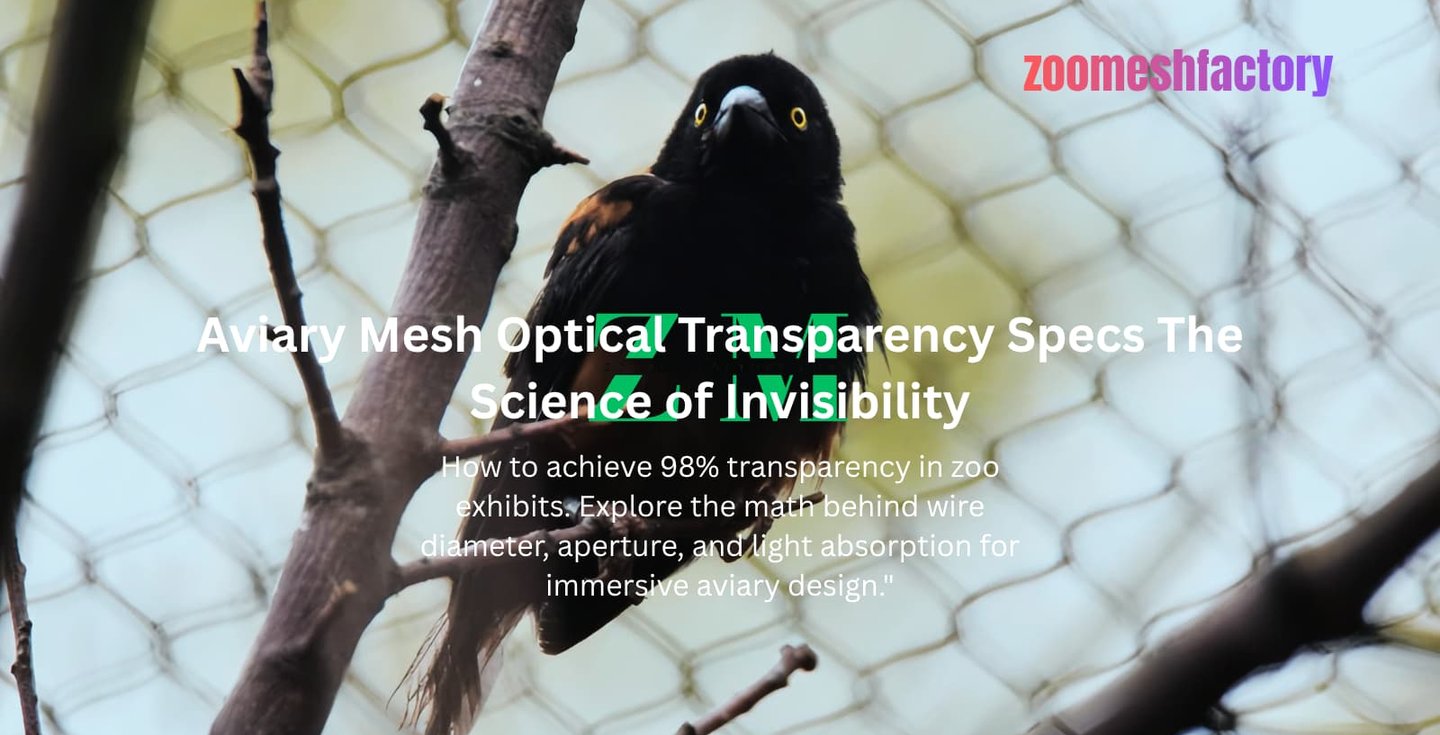
Aviary Mesh Optical Transparency Specs: The Science of Invisibility
How to achieve 98% transparency in zoo exhibits. Explore the math behind wire diameter, aperture, and light absorption for immersive aviary design.
Hebei Zoo Mesh Co., Ltd
3/27/20267 min read
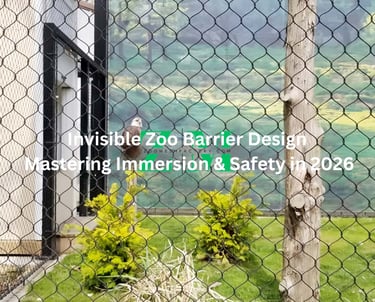
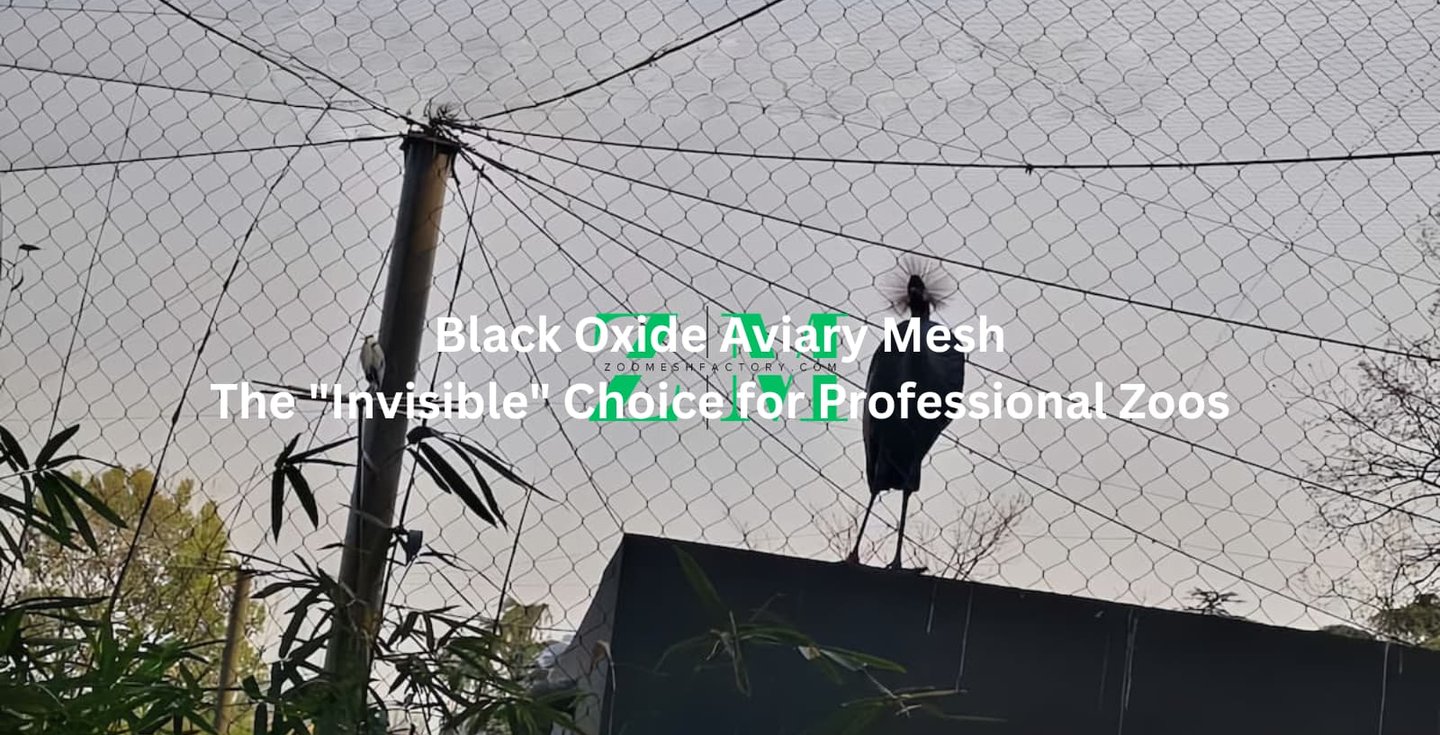
Aviary mesh optical transparency is defined by the "Open Area Percentage"—the ratio of void space to physical wire within a given square foot. To achieve maximum visitor immersion (95% to 98% transparency), engineers utilize high-tensile 304/316 stainless steel with a thin wire diameter (1.2mm to 1.5mm) paired with a wide custom aperture (50mm to 80mm). Beyond physical dimensions, optical transparency is enhanced by surface treatments like Black Oxide, which eliminates light glint and allows the human eye to naturally 'focus past' the barrier, creating a seamless visual connection between the visitor and the wildlife.
1. Introduction: The "Ghost Barrier" Philosophy
We’ve all had that heartbreaking moment at a world-class zoo. You walk up to a 10 million, multi-species walk-through aviary, ready to spot a rare Hyacinth Macaw, and instead, you’re greeted by the "Silver Wall."
The "Silver Wall" is what happens when an exhibit designer chooses standard, heavy-gauge galvanized fencing. From the visitor’s perspective, the lush tropical plants and exotic birds disappear behind a glaring, reflective grid that screams "Prison" rather than "Sanctuary." Instead of a conservation message, the visitor leaves with a headache and a camera roll full of blurry, out-of-focus metal squares.
This is the antithesis of the Ghost Barrier.
At ZooMesh Factory, we believe the best mesh is the one you forget is there. True optical transparency is a psychological necessity. If a visitor can’t see the animal clearly, they can’t connect with it emotionally. If they can’t connect, the conservation mission fails. Our philosophy is simple: use high-tensile engineering to minimize the physical footprint of the steel, allowing the animal’s story—not the fence—to take center stage.
If you want to learn about matte black oxide treatment that eliminates glare for naturalistic aviaries, view our decorative invisible mesh page.
While this guide covers general aviary fencing and optical design, we supply heavy beak-proof mesh for large parrots; view our macaw & parrot aviary mesh specs.
2. Key Takeaways Section
The 98% Threshold: By optimizing the ratio of void space to wire, our hand-woven mesh can achieve up to 98.2% Open Area. This is the gold standard for "Invisible" containment.
The D:A Ratio (Diameter to Aperture): Transparency is a math game. The thinner the Wire Diameter (D) and the wider the Aperture (A), the less visual "noise" the eye has to process. We specialize in ultra-thin 1.2mm cables that don't sacrifice tensile strength.
Light Absorption vs. Reflection: Standard stainless steel reflects light (glint), which alerts the human eye to a barrier. Our Black Oxide finish acts as a light sink, absorbing up to 90% of ambient glare and allowing the eye to naturally "focus past" the netting.
Aperture Consistency: Unlike welded wire that can warp and "ghost" (creating a shimmering effect as you walk), hand-woven rope mesh maintains a stable diamond geometry, ensuring a clear view from every viewing angle.
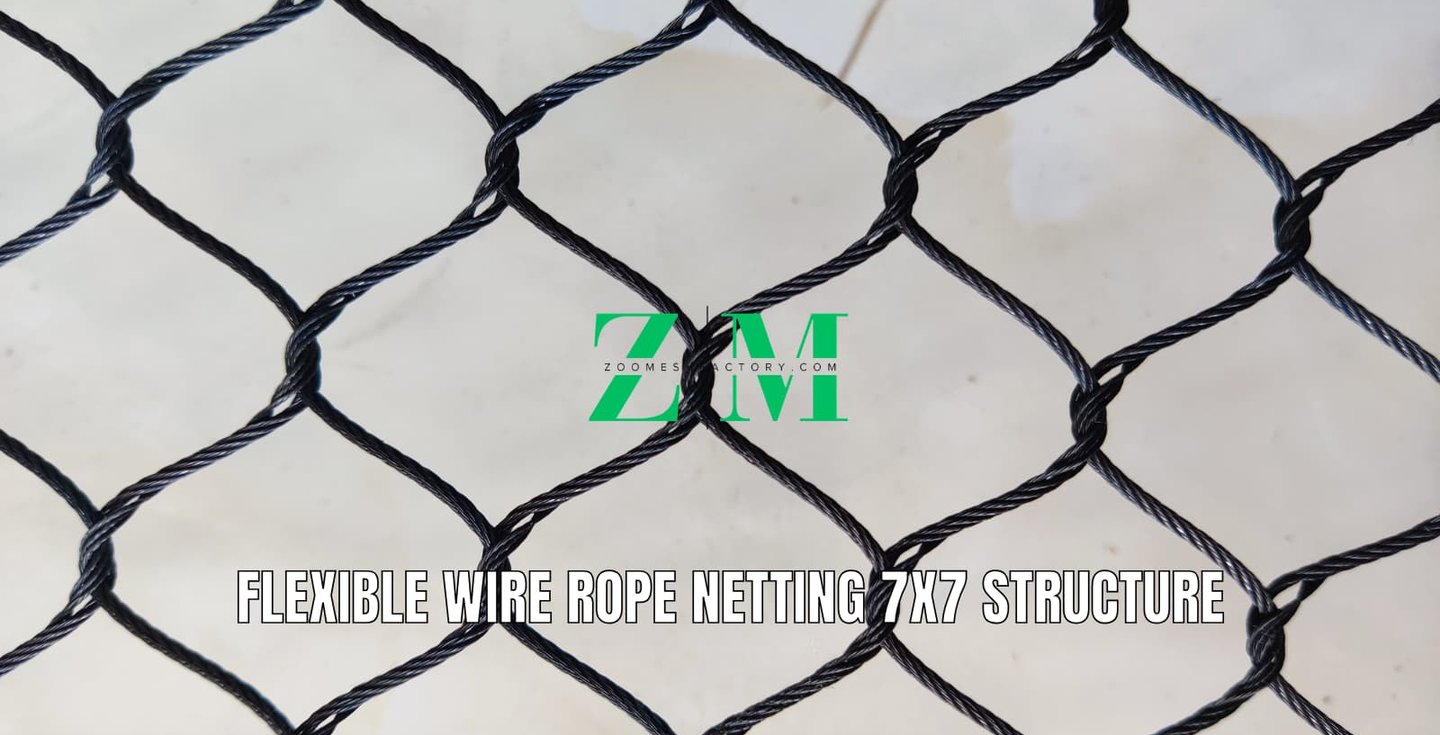
Balancing Tensile Safety: Achieving transparency is easy if you use fishing line—but keeping a Harpy Eagle inside requires high-tensile AISI 316 Stainless Steel. Our specs provide the "Soft Barrier" safety of a 7x7 cable while maintaining the optical clarity of a much lighter material.
3. The Math of Transparency: Calculating "Open Area %"
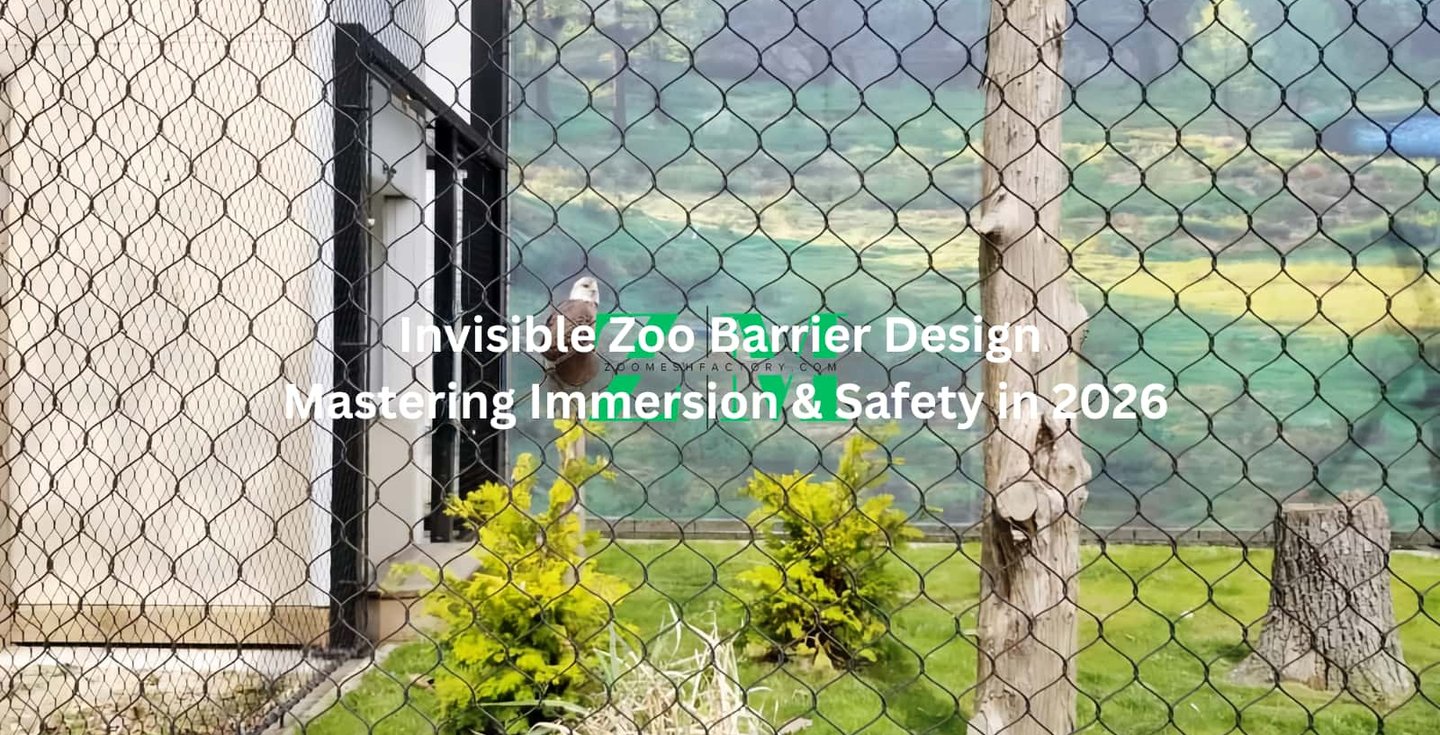
In the world of Aviary Mesh Optical Transparency Specs, "Open Area" is the only metric that matters. It represents the percentage of the enclosure surface that is completely unobstructed. The higher the percentage, the closer you get to a "Ghost Barrier."
The Formula for Invisibility
Calculating the open area of diamond-woven mesh involves the relationship between the wire diameter (d) and the mesh aperture (L). For our hand-woven rope mesh, the approximate open area (OA) can be calculated using:
Transparency Comparison Table
Let’s look at how small changes in diameter and aperture impact the visitor’s view. Notice how moving from a 25mm to a 50mm aperture nearly doubles the "visual clarity" while using the same wire.
The Pro Tip: Architects often over-specify wire thickness. By choosing a high-tensile 316-grade stainless steel, you can drop the diameter by 0.5mm, which can increase your transparency by up to 5%—the difference between seeing a "fence" and seeing a "forest."
4. The "Focal Length" Trick: How the Eye Works
Why does a 1.2mm black wire vanish while a 1.2mm silver wire stands out like a sore thumb? It’s not magic; it’s human biology.
The Science of Selective Focus
The human eye is naturally drawn to light and movement.
The Silver Reflection: When sunlight hits standard stainless steel or galvanized wire, it creates "specular reflection" (glint). This glint forces the eye to focus on the barrier.
The Black Absorption: Our Black Oxide finish is a matte, non-reflective surface. Because it doesn't bounce light back at the visitor, the brain treats the thin dark lines as "shadow noise" and ignores them.
Creating a Cinema Screen for Nature
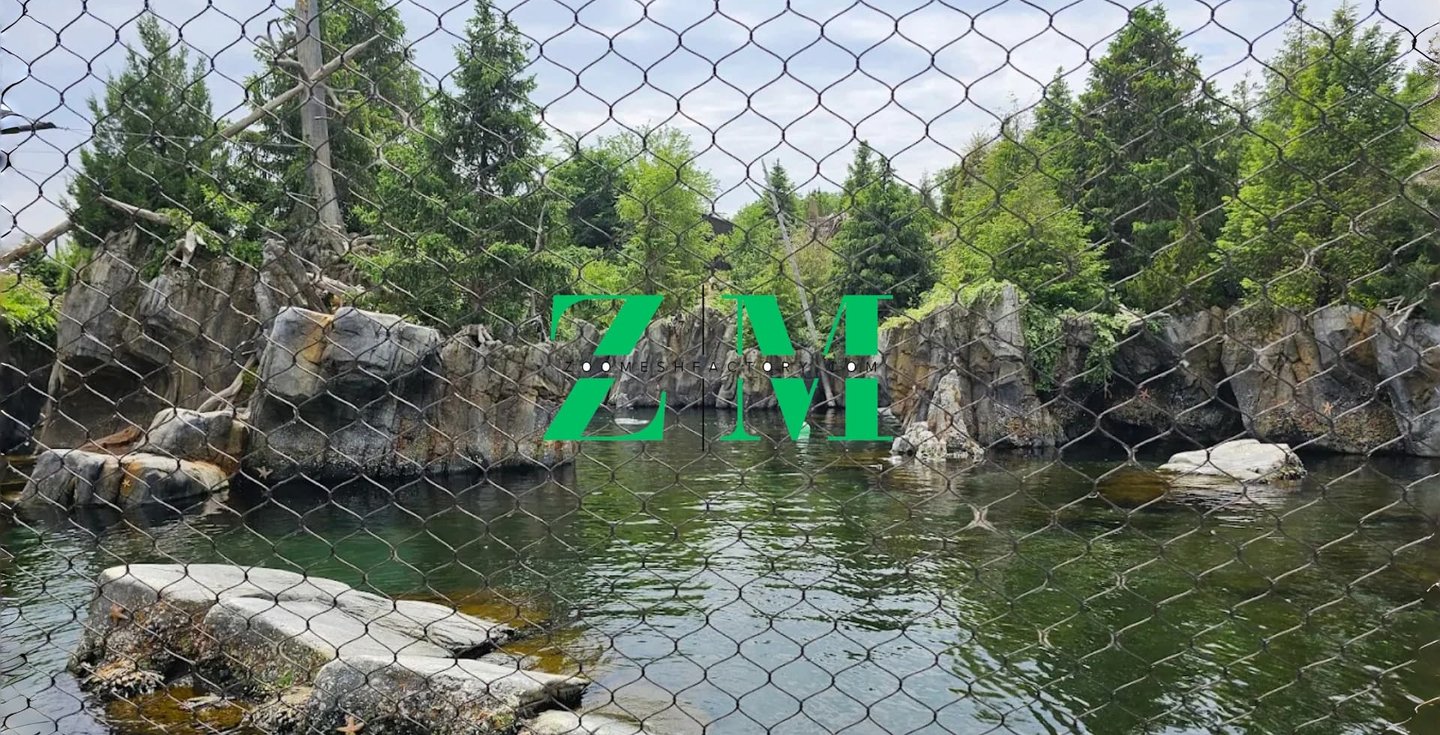
By utilizing a thin-gauge custom aperture, we take advantage of the eye’s Depth of Field. When a visitor stands 2–3 meters away from the mesh and looks at a bird 10 meters away, the thin black wires fall into the "blur zone" of their vision.
The "Grid Effect" Removal: Rigid welded wire creates a static grid that the brain constantly tries to map.
The Hand-Woven Advantage: The organic, diamond shape of our hand-woven mesh mimics the random patterns found in nature (like vines or branches), allowing the brain to "filter it out" much faster than a square grid.
5. Material Grade and Optical Longevity
I’ve seen it happen at a dozen zoos: they try to save 15% on the upfront cost by choosing PVC-coated or plastic-dipped mesh. On opening day, it looks "okay." But give it two years of UV exposure and bird droppings, and that plastic starts to "chalk."
The "Cloudy" Barrier Disaster
When plastic coatings degrade, they turn a milky, opaque white. Suddenly, your Aviary Mesh Optical Transparency Specs go from 95% to 60%. It’s like trying to look through a dirty window that you can’t ever wash.
UV Degradation: Unlike plastic, AISI 316 Stainless Steel is impervious to UV rays. It doesn't crack, peel, or turn "cloudy."
Chemical Stability: Our Black Oxide finish isn't a coat of paint; it’s a chemical transformation of the steel surface. This means it maintains its matte, light-absorbing properties for 30+ years without "off-gassing" or fading.
When you invest in high-grade stainless steel, you aren't just buying strength; you are buying Optical Permanent Clarity. Your exhibit will look as "invisible" in 2056 as it does the day you install it.
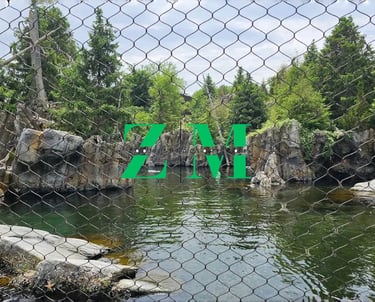
6. Custom Aperture: Tailoring the View for the Species
One of the biggest mistakes in aviary design is using the same "standard" mesh for every species. If you’re building a multi-million dollar Eagle enclosure, you shouldn't be using the same tight mesh required for a Finch.
Finding the "Optical Sweet Spot"
To maximize your ROI and visitor satisfaction, you must tailor the aperture to the specific species.
Large Raptors (Eagles, Vultures, Owls): These birds have a massive wingspan. You can safely increase the aperture to 80mm or even 100mm. This creates a "Cinema Screen" effect where the mesh practically vanishes, allowing for world-class photography.
Medium Aviary Birds (Parrots, Turacos): A 40mm to 50mm aperture provides the perfect balance. It’s tight enough to keep them from "probing" the mesh with their beaks but open enough to let 95% of natural light reach the forest floor.
Songbirds & Finches: Here, we use a 20mm to 25mm aperture. While the open area percentage is lower, the use of ultra-fine 1.2mm wire ensures that the "Grid Effect" is minimized.
Why "Over-Engineering" Kills the View
Many architects choose a thicker wire "just to be safe." But every 0.1mm of extra wire diameter is another 1% of light blocked. By using 7x7 strand construction, we provide higher break-strengths at thinner diameters, allowing you to "slim down" the barrier without risking a breach.
7. Factory Direct Engineering: From CAD to Clarity
In the old days of zoo construction, "transparency" was ruined by the installation process. You’d buy a massive roll of mesh, and the onsite crew would have to overlap it, seam it, and zip-tie it together. Every overlap is a double-layer of wire, and every seam is a visual scar that kills the "Ghost Barrier" effect.
The "Zero-Seam" Advantage
At ZooMesh Factory, we don't just ship rolls; we ship solutions. By working directly from your CAD drawings, we weave your Aviary Mesh Optical Transparency Specs into single, massive panels that fit your structural frame perfectly.
Precision Perimeter Weaving: No cutting, no overlapping, and no bulky field-seams.
Uniform Tension: Hand-woven mesh maintains a consistent diamond shape across the entire span, preventing the "waviness" that makes cheap mesh so visible.
LEED Documentation: We provide the exact Open Area Percentage certifications required for modern green-building standards, helping your project hit its light-transmission targets.
By cutting out the middleman, you aren't just saving 30% on the price—you're ensuring that the technical vision of the architect survives the construction phase.
8. FAQs
Q: What is the most transparent wire diameter for a walk-through aviary? A: For maximum transparency, a 1.2mm (3/64") wire diameter is the industry standard. When paired with a 50mm aperture, it provides over 95% open area, making it virtually invisible to the human eye while maintaining the tensile strength needed for medium-sized birds.
Q: Does Black Oxide affect the physical strength or specs of the mesh? A: No. Black Oxide is a chemical conversion process, not a coating. It does not add thickness to the wire or reduce its breaking strength. It simply changes the surface molecular structure to absorb light rather than reflect it, which is the key to high-transparency specs.
Q: How do you maintain transparency in high-humidity or coastal environments? A: In coastal areas, transparency can be ruined by "tea staining" (surface rust). We recommend SS316-grade mesh with a Black Oxide finish. The SS316 resists corrosion, while the black finish hides any environmental dust or debris that might otherwise make a silver mesh stand out.
Q: Can wide-aperture mesh handle high wind or snow loads without distorting? A: Yes. Because our mesh is a flexible 7x7 cable structure, it has a high "void-to-solid" ratio. This allows wind to pass through with minimal resistance (low wind-drag) and prevents snow from accumulating, ensuring your transparency specs and structural integrity remain intact year-round.
Ready to Start Your Exhibit Design?
Join the hundreds of zoos and sanctuaries worldwide that trust ZooMesh Factory for their containment needs. Our engineers are ready to help you calculate the perfect mesh size for your species.
Contact
Hebei Zoo Mesh Co., Ltd
No. 188 Zhonghua South Street, Shijiazhuang City, Hebei Province, China
info@zoomeshfactory.com
© 2025. All rights reserved.
Quick Link
Product Catalogs
Don't leave without the specs! Save our factory-direct pricing and technical configurations for your next project meeting. Our 2026 Zoo Mesh Factory Direct Catalog is ready for download.