

The Engineering Guide to Flexible Wire Rope Netting
Discover the versatility of flexible wire rope netting for zoo enclosures, green walls, and safety balustrades. Technical specs, 304/316 grades, and ROI analysis.
Shijiazhuang Zoo Mesh Co., Ltd
3/1/20268 min read
1. Introduction: The Evolution of Flexible Barriers
For decades, the standard for containment and safety was defined by rigidity. Whether it was the heavy iron bars of a zoological exhibit or the stiff, welded-wire panels of an industrial safety guard, the goal was to create an immovable wall. However, as modern engineering has shifted toward materials that work with kinetic forces rather than against them, a new standard has emerged: flexible wire rope netting.
Defining a High-Tensile Architectural Fabric
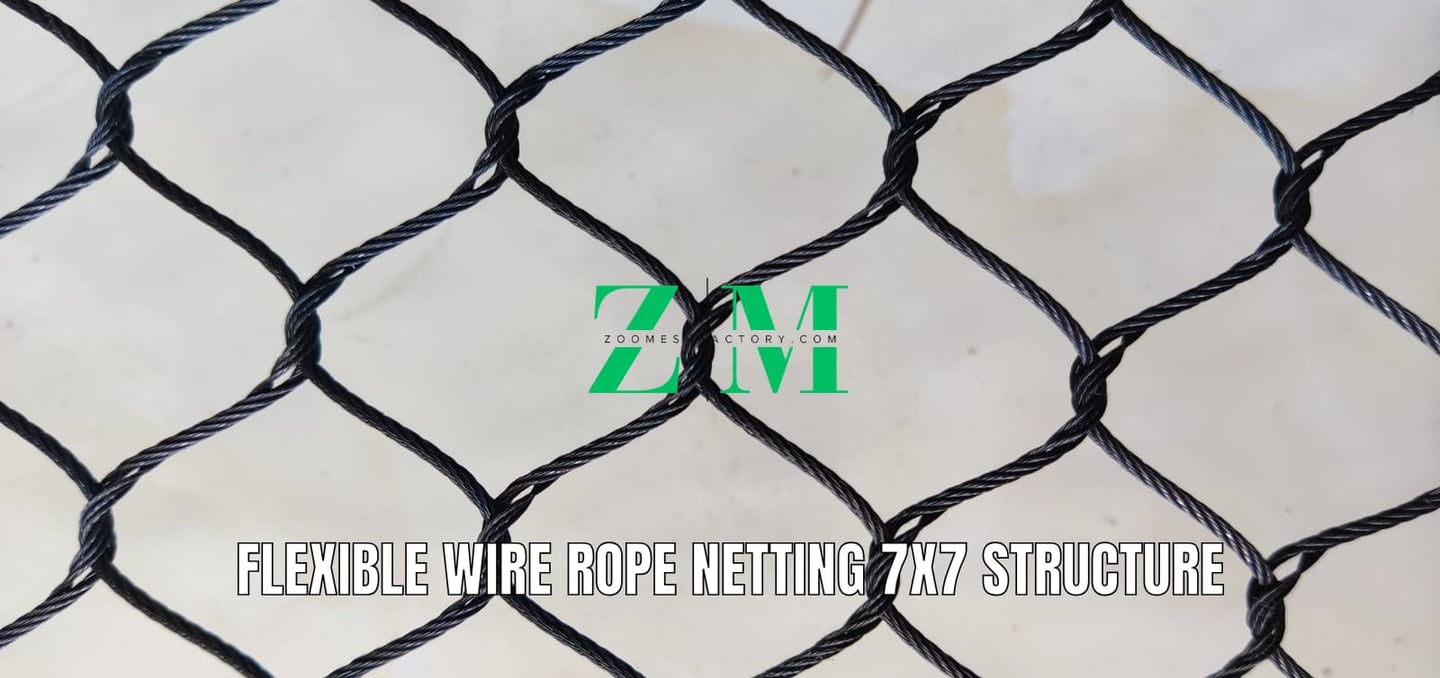
At its core, flexible wire rope netting is a high-tensile architectural fabric. Unlike traditional chain-link or chicken wire, which is made from single-strand wires twisted together, this netting is composed of individual AISI 304 or 316 stainless steel wire ropes.
These ropes—typically in 7 x 7 or 7 x 19 constructions—are hand-woven or joined with high-strength ferrules to create a diamond mesh. This construction allows the material to behave like a textile. It can be draped, stretched over complex 3D geometries, and folded, all while maintaining a breaking strength that rivals solid steel plate.
The Paradigm Shift: From Rigid to Compliant Systems
In modern infrastructure, the move toward "compliant" (flexible) systems is driven by three critical factors:
Kinetic Energy Dissipation: A rigid fence must absorb the entirety of an impact at a single point, often leading to structural failure of the posts or injury to the impacting object (or animal). Flexible wire rope netting distributes that energy across the entire mesh panel, acting like a "catcher's mitt."
Fatigue Resistance: Rigid systems are prone to stress fractures caused by wind vibration and thermal expansion. Because flexible netting is under active tension, it "breathes," significantly reducing the fatigue loads on the supporting pylons and frame.
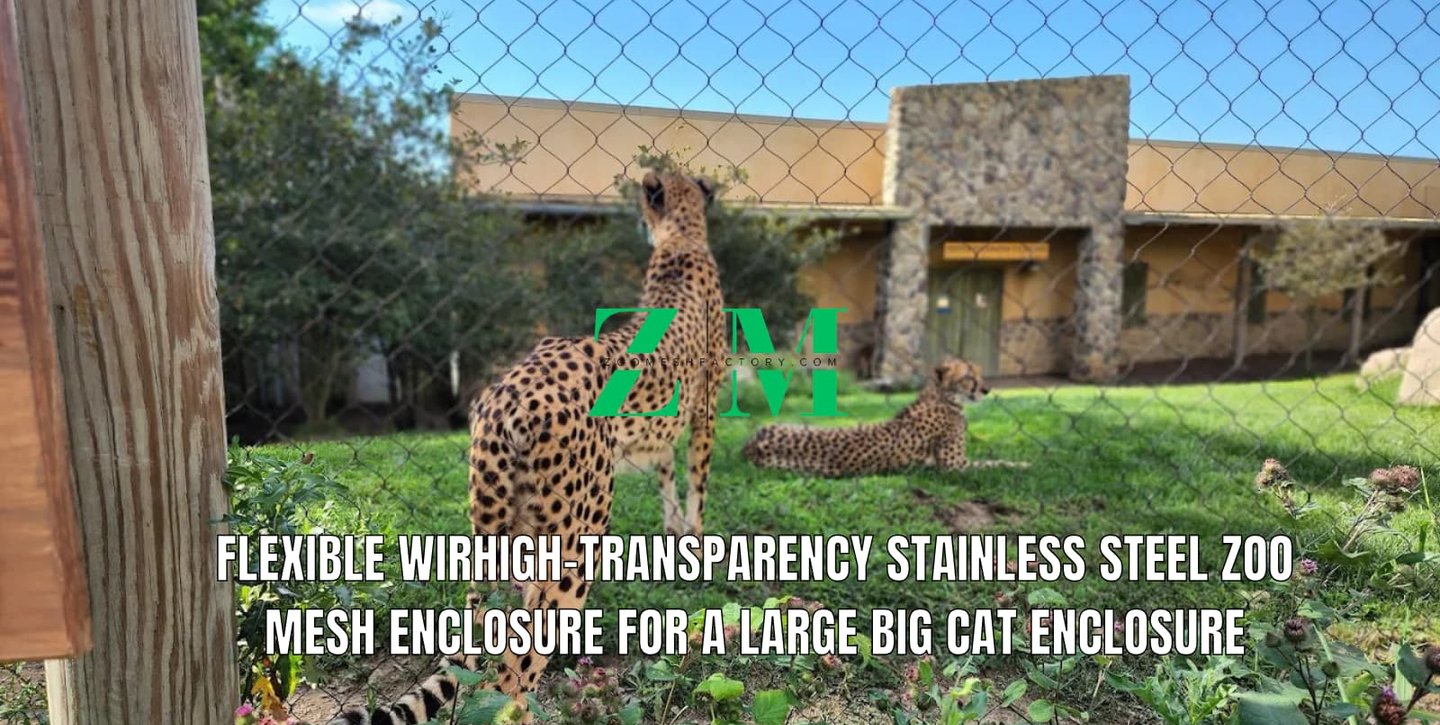
Visual Weightlessness: As urban centers and wildlife parks strive for "invisible" boundaries, the ultra-thin profile of flexible netting allows for up to 95% transparency. It provides the security of a steel wall with the visual footprint of a ghost.
Today, this "evolution of flexibility" is being applied far beyond the zoo. From green wall trellises that support thousands of pounds of vertical vegetation to bridge safety nets that must withstand extreme weather, flexible wire rope netting has become the preferred medium for architects who refuse to choose between safety and beauty.
Get complete alloy specs and installation overviews from our main stainless steel wire rope netting engineering manual.
Key Takeaways
What it is: A "structural fabric" made of interwoven stainless steel cables (7 x 7 or 7 x 19).
Why it’s better: It absorbs impact through elasticity, reducing injury and structural wear.
Sustainability: Made from marine-grade 304/316 steel, offering a 30+ year lifespan with 100% recyclability.
Design Freedom: Conforms to organic shapes, domes, and "tunnel" geometries that rigid fencing cannot achieve.
2. Material Science: AISI 304 vs. 316 Stainless Steel
When specifying flexible wire rope netting, the first engineering decision is not the mesh size, but the chemical composition of the steel. In the world of high-tensile architectural fabrics, two grades dominate: AISI 304 and AISI 316.
While they may look identical to the naked eye, their performance in the field is dictated by a single element: Molybdenum.
The Chemical Barrier
AISI 304 (The Standard): Contains approximately 18% chromium and 8% nickel. It offers excellent strength and cost-effectiveness for inland projects. However, in environments with high chloride levels (salt air), it can suffer from "tea staining"—a brown surface oxidation that affects aesthetics but not necessarily structural integrity.
AISI 316 (The Marine Grade): By adding 2% to 3% molybdenum, 316 stainless steel gains massive resistance to pitting and crevice corrosion. For coastal zoo enclosures or urban bridge projects where de-icing salts are used, 316 is the only viable long-term solution.
Longevity and Lifecycle Cost
Choosing the correct grade is the difference between a 15-year and a 50-year lifespan. Because flexible wire rope netting is often installed in hard-to-reach areas—such as high-altitude aviaries or skyscraper green walls—the cost of replacement far outweighs the initial 20% premium for 316-grade steel.
3. Technical Construction: Hand-Woven vs. Ferruled Netting
The "flexibility" in flexible wire rope netting is achieved through two distinct manufacturing styles. Each has a specific impact on the netting's behavior under load.
1. Hand-Woven (Interwoven) Mesh
In this method, the wire ropes are literally woven over and under one another.
Characteristics: It is the most "fluid" of all mesh types. Because there are no rigid connectors, the mesh can be pulled into a variety of angles (usually 60° or 90°) to fit the frame.
Benefit: Highest visual transparency. Without the bulk of metal sleeves, the eye focuses purely on the thin cables.
Best For: Bird aviaries and walk-through exhibits where "invisibility" is the priority.
2. Ferruled (Sleeved) Mesh
Here, the ropes are joined at the intersections by seamless stainless steel ferrules (sleeves).
Characteristics: The ferrules act as fixed pivot points. This creates a slightly stiffer fabric that is incredibly strong under localized impact.
Benefit: Enhanced aesthetic "patterning." The ferrules can be polished or finished in Black Oxide to create a high-end architectural look.
Best For: High-impact predator containment and fall protection barriers.
The Mechanics of Compliance
The genius of both constructions lies in load distribution. When an object strikes a rigid fence, the force is concentrated. When an object strikes flexible wire rope netting, the interwoven nature of the cables allows the force to travel diagonally across the entire panel. This "compliance" prevents the wire from snapping and protects the occupant from blunt-force trauma.
Engineering Specification Table
Use this table to determine the weight and strength requirements for your next project.
4. Applications Beyond the Zoo: A Multipurpose Solution
While flexible wire rope netting earned its reputation in the world's leading zoological parks, its unique mechanical properties—high strength combined with extreme lightness—have made it a favorite for modern urban infrastructure.
Architectural Green Walls
In sustainable "biophilic" design, flexible netting acts as a three-dimensional trellis for vertical gardens. Unlike rigid timber or heavy steel frames, stainless steel mesh can span hundreds of vertical feet on a skyscraper's facade. It provides a stable grip for climbing plants while remaining nearly invisible, ensuring the plants look like they are floating on the building.
Bridge Safety and Fall Protection
Public safety is perhaps the most critical application outside of animal containment. Flexible netting is frequently specified for:
Heli-deck Perimeter Nets: Absorbing the impact of personnel or equipment without the "spring-back" effect of rigid railings.
Anti-Suicide Barriers: Providing a secure, climb-resistant barrier on bridges that does not obstruct the scenic view for tourists.
Fall Arrest Systems: Used in construction and high-altitude maintenance as a permanent safety floor.
Interior Design and Balustrades
In modern lofts and commercial offices, the "textile" quality of the mesh is used for staircase balustrades. It meets building codes for safety (preventing objects or children from falling) while maintaining an open, airy aesthetic that traditional glass or wood cannot match.
5. Load Dynamics and Safety Engineering
Understanding why flexible wire rope netting is safer than rigid fencing requires a look at "Impact Physics." In engineering terms, we focus on the dissipation of kinetic energy.
The "Catcher’s Mitt" Effect
When a heavy object—be it a 250kgs tiger or a falling piece of equipment—strikes a rigid steel fence, the force is localized. This creates a high risk of the material snapping or the object sustaining a "blunt force" injury.
Flexible netting, however, utilizes its 7 x 7 or 7 x 19 rope structure to spread the load. When one "diamond" is struck, the tension is transferred to the four surrounding diamonds, and then to the sixteen beyond those. The entire panel participates in the catch.
Dynamic Breaking Loads
Engineers must calculate the Minimum Breaking Load (MBL) based on the anticipated species or safety risk. For example:
Static Load: The weight of the mesh and any accumulated snow or ice.
Dynamic Load: The peak force exerted by a moving body at maximum velocity.
Comparative Impact Table
This table demonstrates how flexible netting handles impact differently than traditional materials.
For specific animal safety data, see our Recommended Specs for High-Impact Enclosures.
6. Installation Protocols: Precision and Tension
The performance of any flexible wire rope netting system is 10% material and 90% installation. Unlike a chain-link fence that can hang loosely, stainless steel mesh must be "activated" through proper tensioning to achieve its structural potential.
The Role of the Boundary Cable
The netting is rarely attached directly to a rigid frame. Instead, it is laced onto a high-strength boundary cable (usually 6mm to 10mm in diameter). This cable acts as the primary load-bearer, transferring the tension from the mesh to the pylon or building structure.
Proper Mesh Orientation
Orientation is critical for both aesthetics and strength.
Vertical Diamond: Best for standard balustrades and climbing safety.
Horizontal Diamond: Preferred for large-span aviaries and long-distance enclosures to maximize the "invisible" effect against the horizon.
Tensioning Techniques
Using specialized tensioning tools, installers must pull the mesh until it reaches its design aperture (usually at a 90° angle). Over-tensioning can lead to pylon deformation, while under-tensioning causes the mesh to sag, reducing its impact resistance and visual appeal.
7. Maintenance and Long-Term ROI
For procurement officers and facility directors, the "Return on Investment" (ROI) of flexible wire rope netting is found in its lifespan. While the initial cost per square meter is higher than galvanized steel or nylon, the Total Cost of Ownership (TCO) is significantly lower.
Zero Maintenance Philosophy
Unlike coated steel, which requires repainting every 3–5 years to prevent rust, AISI 316 stainless steel is self-protecting. The chromium in the steel reacts with oxygen to form a microscopic, "self-healing" oxide layer. If the mesh is scratched, the layer simply reforms.
Cleaning: Usually handled by natural rainfall. In high-pollution urban areas, a simple freshwater rinse once a year is sufficient.
Inspection: Periodic checks of the connection points and ferrules are recommended, but the mesh itself is virtually indestructible.
Comparative Lifecycle Table
This table illustrates the financial logic of choosing high-tensile flexible netting over traditional alternatives.
Learn more about our manufacturing process at ZooMesh Factory Quality Standards.
8. Environmental Impact: A Sustainable Barrier
In the modern era of "Green Building" and sustainable zoo management, the choice of material is an ethical one. Flexible wire rope netting stands out as one of the most eco-friendly barrier solutions available in the global market.
100% Recyclability
Unlike polymer-based nettings or PVC-coated chain-link, which often end up in landfills, stainless steel is infinitely recyclable. At the end of its 50-year lifespan, the mesh can be melted down and repurposed without any loss in material quality.
Wildlife Safety: Preventing Bird Strikes
Large glass panels are a leading cause of bird mortality in urban areas and zoos. By replacing glass with ultra-thin aviary netting, architects create a physical barrier that birds can easily perceive and avoid, while visitors still enjoy 95%+ visual transparency.
Non-Toxic and "Zink-Free"
Traditional galvanized steel can leach zinc or lead into the soil over time through rainwater runoff. Stainless steel is chemically inert, meaning it will never contaminate the surrounding ecosystem or pose a heavy-metal poisoning risk to the animals in the enclosure.
9. Conclusion: Engineering the Future of Transparency
The evolution of flexible wire rope netting has fundamentally changed how we design for safety and containment. By moving away from the rigid "walls" of the past and embracing the "structural fabric" of the future, we create spaces that are safer for animals, more engaging for humans, and more durable for investors.
Whether you are designing a high-impact predator exhibit, a lush vertical garden, or a secure public walkway, the success of your project depends on three pillars:
Correct Material Grade: Specifying AISI 316 for longevity.
Structural Integrity: Selecting the right 7 x 7 or 7 x 19 rope construction.
Expert Manufacturing: Partnering with a factory that understands the nuances of hand-weaving and high-tensile tensioning.
At ZooMesh Factory, we don't just supply wire; we provide the engineering foundation for your vision. Our flexible wire rope netting is the "invisible" force that allows for world-class design without compromising on world-class safety.
Ready to Design Your Enclosure?
The team at ZooMesh Factory is ready to assist you with technical drawings, load-bearing calculations, and custom samples.
Request a Quote: [Contact Our Technical Sales Team]
Technical Data: Download the Full Specification Catalog
Ready to Start Your Exhibit Design?
Join the hundreds of zoos and sanctuaries worldwide that trust ZooMesh Factory for their containment needs. Our engineers are ready to help you calculate the perfect mesh size for your species.
Contact
Hebei Zoo Mesh Co., Ltd
No. 188 Zhonghua South Street, Shijiazhuang City, Hebei Province, China
info@zoomeshfactory.com
© 2025. All rights reserved.
Quick Link
Product Catalogs
Don't leave without the specs! Save our factory-direct pricing and technical configurations for your next project meeting. Our 2026 Zoo Mesh Factory Direct Catalog is ready for download.