
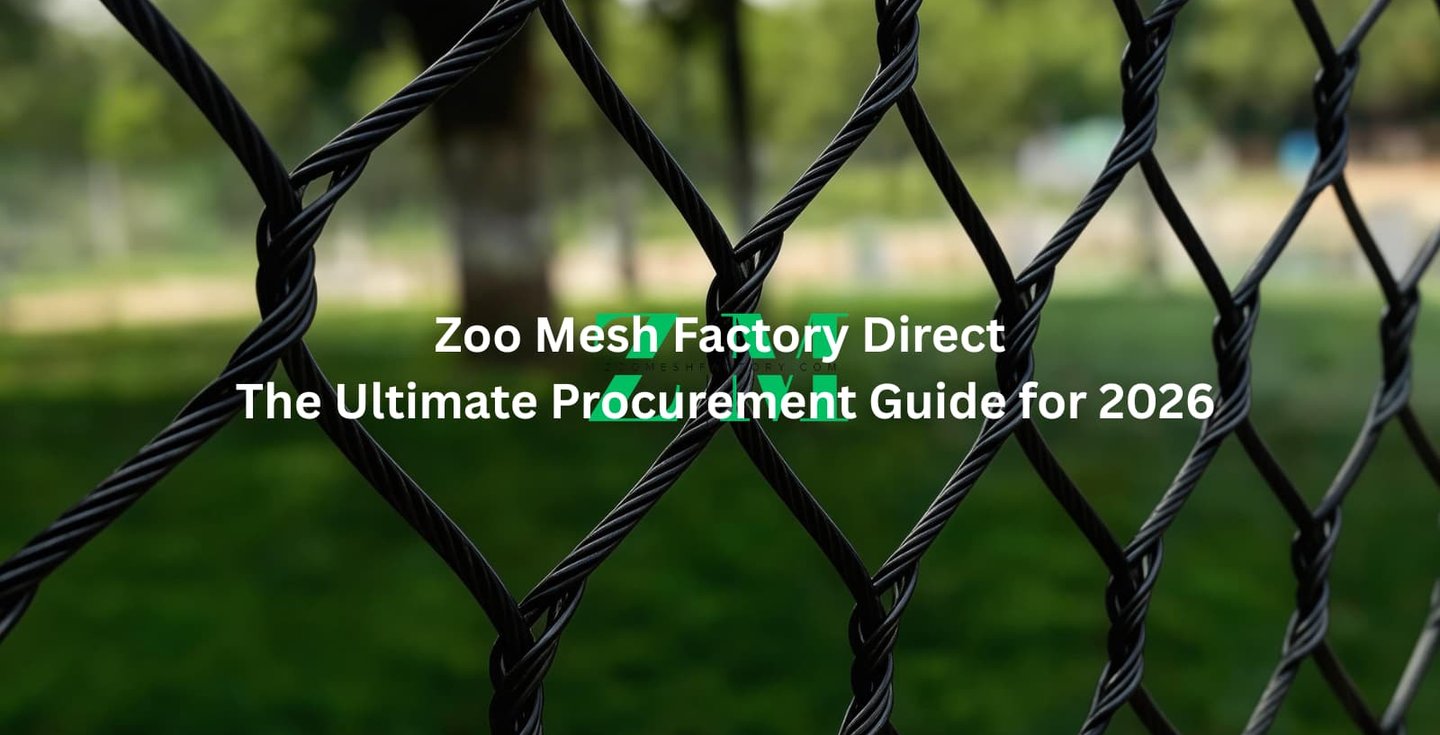
Zoo Mesh Factory Direct: The Ultimate Procurement Guide for 2026
Save 20-30% on exhibit construction by sourcing Zoo Mesh Factory Direct. Learn about custom weaving, global shipping logistics, and quality certification (SS304/SS316).
Shijiazhuang Zoo Mesh Co., Ltd
3/10/202615 min read
What are the benefits of buying Zoo Mesh Factory Direct? Sourcing Zoo Mesh Factory Direct allows procurement teams to eliminate middleman markups, reducing material costs by 20% to 35%. Direct-from-factory sourcing provides access to custom-sized panels (up to 10m x 20m), ensuring a seamless "invisible" finish for exhibits. Key advantages include verified AISI 304/316 material certifications, precision engineering of wire diameters (1.2mm to 3.2mm), and the ability to specify Black Oxide chemical finishes that are 100% bird-safe and UV-stable for 30+ years.
1. Introduction: The Economics of Zoo Infrastructure
As we move through 2026, the global zoological industry is facing a unique set of financial pressures. While the demand for immersive, "cage-free" guest experiences is at an all-time high, the rising costs of specialized construction materials and skilled labor have forced procurement officers to rethink their supply chains. Traditional exhibit builds have long relied on a "Distributor Model"—a layered system where mesh passes from the manufacturer through national importers, regional wholesalers, and finally local retailers before reaching the job site.
In today's fast-paced construction environment, this multi-tiered model is no longer sustainable. Every hand that touches the product adds a markup, often inflating the final price of stainless steel mesh by 20% to 35%. Beyond the financial burden, these intermediaries create a "communication lag," leading to unnecessary lead times and potential errors in technical specifications. When a project requires a specific mesh aperture or wire diameter to contain a high-value predator, a game of "telephone" between three different companies can be a recipe for disaster.
Defining Zoo Mesh Factory Direct goes far beyond finding a lower price point. It represents a shift toward a direct technical partnership. By sourcing directly from the factory, zoo architects and contractors gain a seat at the weaving table. You are no longer buying a generic SKU from a warehouse shelf; you are collaborating with the engineers who understand the molecular stress of SS316 stainless steel and the specific tensile requirements of your habitat. In 2026, the most successful exhibits are those that prioritize this direct link between design and fabrication.
2. Key Takeaways: Why Factory-Direct Wins
If you are managing a large-scale aviary project or a predator containment retrofit, understanding the "Manufacturer’s Edge" is vital. Here are the primary reasons why sourcing Zoo Mesh Factory Direct has become the preferred strategy for industry leaders:
Significant Cost Reduction: Eliminate 20–35% in middleman markups, allowing you to reallocate your budget toward animal enrichment or guest amenities.
Verified Material Integrity: Receive direct Mill Test Certificates (MTC) and chemical analysis reports at the source, ensuring your "316 mesh" is truly marine-grade.
Unlimited Panel Customization: Factories can weave seamless panels up to 10 x 20 meters or larger, a feat that is logistically impossible for distributors who only stock standard 2-meter rolls.
Direct Technical Consulting: Work directly with weaving experts to solve irregular geometry challenges, ensuring the mesh fits your rockwork and waterfalls perfectly.
Advanced Aesthetic Finishes: Gain access to specialized treatments like Black Oxide directly from the chemical tank, ensuring a more durable, UV-stable finish than on-site painting.
Streamlined Logistics: Direct-to-site shipping reduces the risk of "warehouse fatigue," where mesh is frequently unrolled and rerolled, which can lead to wire deformation or kinks.
3. Eliminating the Middleman: Where the Savings Come From
In traditional procurement, the price you pay for stainless steel wire rope mesh is rarely a reflection of the raw material cost alone. Instead, it is a "stacked" price, burdened by the overhead of every entity in the supply chain. When you transition to a Zoo Mesh Factory Direct model, you are stripping away these layers of "non-value-added" costs.
The Breakdown of Traditional Markups
To understand the financial shift, one must look at where the money goes in a typical distributor-led purchase:
The Importer (10–15%): These entities handle customs and bulk storage, adding a margin for risk and capital tie-up.
The Regional Wholesaler (10–15%): They break down bulk shipments into smaller quantities, adding costs for local warehousing and internal sales teams.
The Local Retailer or Contractor (5–10%): Often the final point of sale, these businesses add a final convenience fee.
By the time the mesh reaches your exhibit site, you are paying for three separate warehouses, three sets of shipping insurance, and three corporate profit margins. By going Factory Direct, those cumulative markups—often totaling 35% or more—stay in your project’s budget.
Logistics Efficiency: Direct-to-Site vs. Warehouse Hops
Every time a roll of high-tensile mesh is loaded onto a truck, unloaded into a warehouse, and moved by a forklift, the risk of structural compromise increases.
"Warehouse Fatigue": Frequent handling can lead to "kinks" in the wire rope or micro-abrasions on Black Oxide finishes.
Direct Logistics: Factory-direct shipping involves a single, professional packing event. The mesh is rolled onto heavy-duty cores, secured in reinforced wooden crates, and shipped straight to the zoo or construction site. This "single-touch" logistics chain ensures that the mesh arrives in the exact tensioned state it left the weaving loom.
Reducing On-Site Labor via Custom-Size Panels
The most overlooked "middleman" cost is the labor required to fix incorrectly sized materials. Distributors typically stock mesh in standard 2m x 10m or 3m x 20mrolls. If your exhibit wall is 5 meters high, your contractors must spend hundreds of man-hours "seaming" multiple small rolls together.
When you buy Zoo Mesh Factory Direct, we weave the panels to your specific CAD dimensions—for example, a single 5m x 30m seamless sheet.
No On-Site Seaming: You eliminate the labor cost of joining small panels together.
Zero Waste: You don't pay for the "drop-off" scraps that inevitably occur when cutting standard rolls to fit irregular geometry.
In short, the savings aren't just found in the invoice price; they are found in the hundreds of hours saved during the installation phase.
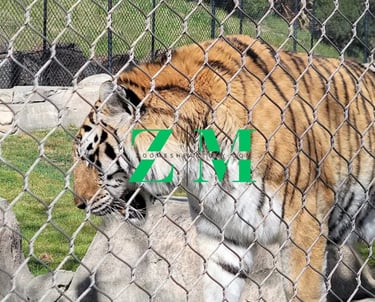
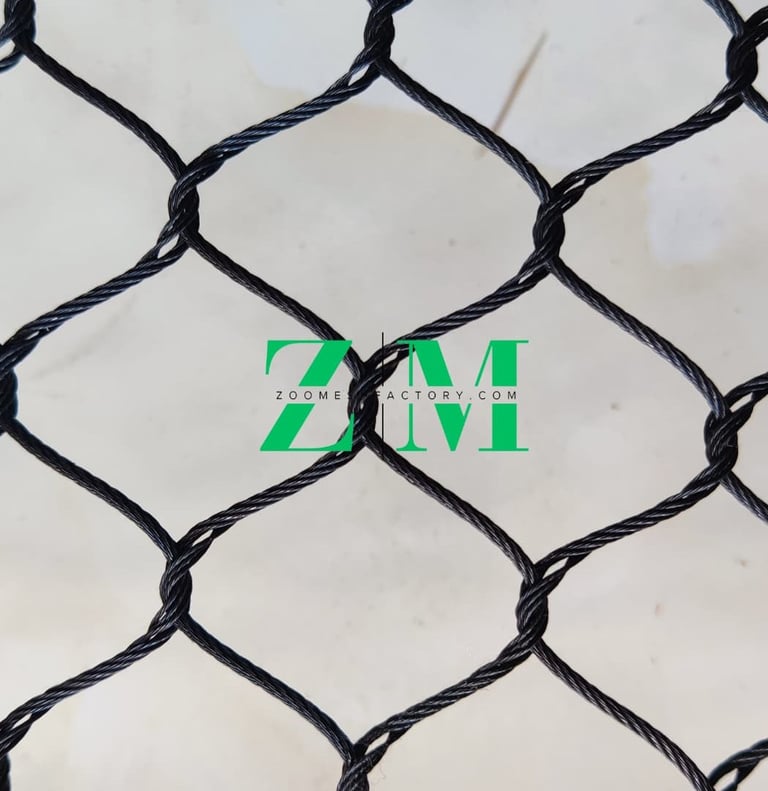
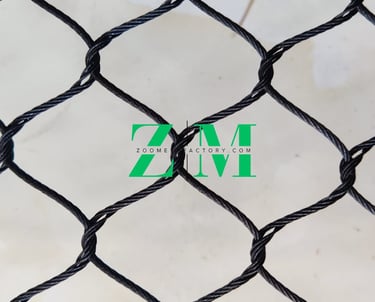
4. Quality Control & Transparency (The Manufacturer’s Edge)
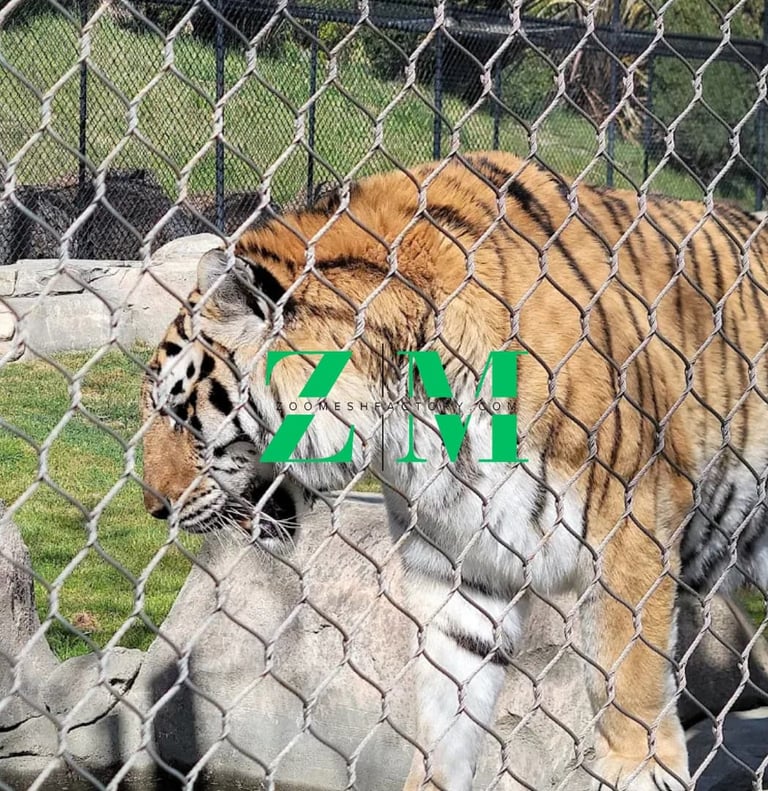
In the high-stakes world of zoological containment, the quality of your mesh isn't just an aesthetic choice—it is a life-safety requirement. When you buy through a third-party reseller, you are often separated from the technical data of the product. However, sourcing Zoo Mesh Factory Direct provides a level of transparency that is simply unattainable through middlemen. You gain a direct line of sight into the raw material’s origin and the precise methods used to fabricate each panel.
Why "Mill Test Certificates" (MTC) are Non-Negotiable
A Mill Test Certificate is the "birth certificate" of your stainless steel. It provides a chemical and physical analysis of the specific heat of steel used to create your wire rope.
The Danger of Untraceable Mesh: Middlemen often consolidate mesh from multiple sources to fill an order. This can result in "mixed batches" where some panels are lower quality than others.
Factory-Direct Assurance: When you order direct, you receive an MTC that matches your specific invoice. This document proves the tensile strength and breaking load have been lab-tested, ensuring the mesh will not fail under the explosive force of a pouncing large cat or the constant weight of climbing primates.
Understanding Chemical Composition: SS304 vs. SS316
Transparency at the factory level allows you to verify the alloy's chemical makeup. This is critical because, to the naked eye, SS304 and SS316 look identical, yet they perform very differently in the field.
SS304 (18% Chromium, 8% Nickel): The factory ensures the nickel content is sufficient to prevent atmospheric rusting in inland environments.
SS316 (16% Chromium, 10% Nickel, 2% Molybdenum): This is where factory direct sourcing is vital. Molybdenum is the expensive ingredient that prevents salt-air corrosion. A direct manufacturer provides the chemical assay proving that the Molybdenum is present, protecting your investment from "tea-staining" in coastal or high-humidity tropical houses.
Hand-Weaving vs. Machine-Made: Preventing Structural Defects
Many distributors sell machine-welded or machine-punched mesh because it is cheaper to mass-produce. However, for animal safety, hand-woven mesh is the gold standard.
Integrity of the Wire: Machine-made mesh often introduces "heat-affected zones" at weld points, which can become brittle and snap under tension.
The Craftsman’s Eye: At the factory level, hand-weaving allows for a continuous inspection of the wire rope. As craftsmen weave the custom animal enclosure fencing, they can identify and remove any wire with micro-frays or inconsistencies.
Smooth Transitions: Hand-weaving ensures that the ferrules or knots are perfectly uniform. This creates a smooth, snag-free surface that protects the delicate feathers of birds in an aviary or the sensitive pads of a primate’s hands.
By choosing the manufacturer's edge, you are choosing a product that has been scrutinized from the moment the raw wire arrived at the loom until the final crate was sealed.
For a deep dive into material grades, read our Comparison Guide on SS304 vs SS316 Stainless Steel.
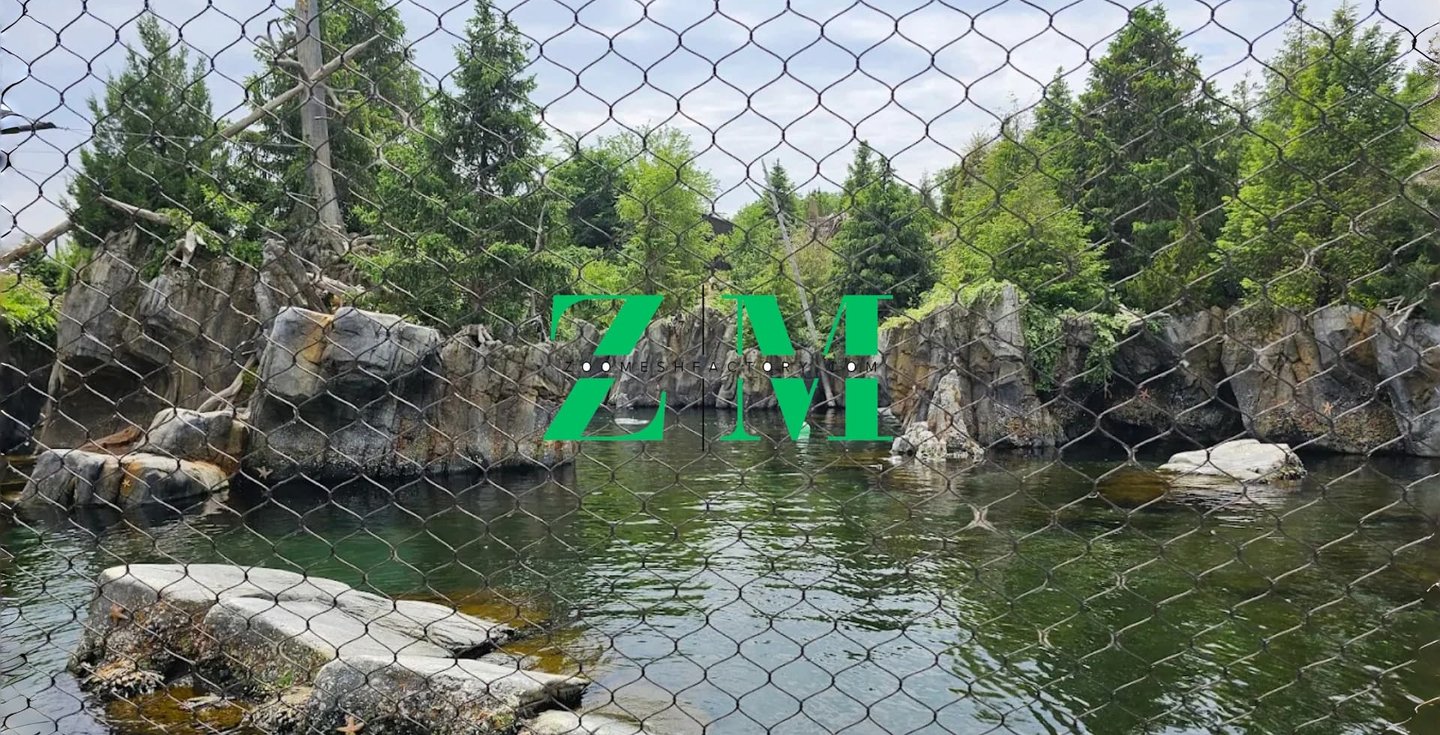
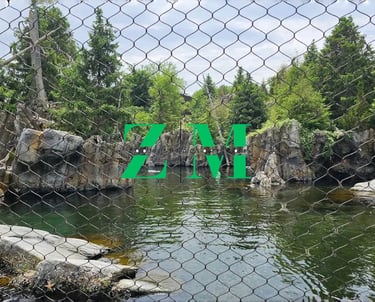
5. Customization at the Source: Bespoke Engineering
When you step away from the standardized catalog of a middleman, you enter the realm of bespoke engineering. Sourcing Zoo Mesh Factory Direct means you are no longer asking, "What do you have in stock?" Instead, you are asking, "What does my species need?" This direct-to-manufacturer relationship allows for a level of technical specificity that ensures the enclosure is as safe as it is visually stunning.
Choosing the Exact Aperture and Wire Diameter
In a distributor model, you are often forced to over-engineer (spending too much on heavy wire for a small bird) or under-engineer (using mesh that is too thin for a powerful primate) based on what is sitting in a local warehouse. At the factory level, every millimeter counts.
Species-Centric Apertures: We can weave custom apertures ranging from a tight 20mm for small aviaries to a massive 150mm for large ungulates. This precision ensures that a bird’s beak or a primate’s finger cannot become wedged in a diamond that is "just slightly" the wrong size.
Calibrated Wire Diameters: If your structural calculations require a 2.4mm wire to meet a specific breaking load, but a distributor only carries 2.0mm and 3.2mm, you are forced into a compromise. Factory-direct sourcing allows you to specify the exact gauge—from 1.2mm to 3.2mm—optimizing both the cost and the transparency of the barrier.
Factory-Applied Black Oxide: The Chemical Advantage
Perhaps the greatest advantage of customization at the source is the application of specialized finishes. While some contractors attempt to paint or powder-coat mesh on-site to reduce glare, these methods are prone to "delamination"—peeling and chipping that can be toxic if ingested by animals.
The Chemical Conversion Process: Black Oxide treatment performed at the factory is not a coating; it is a chemical conversion of the stainless steel surface. The mesh is submerged in a series of specialized tanks, turning the silver steel into a permanent, matte-charcoal finish.
UV Stability and "Invisible" Visibility: Because this finish is molecularly bonded to the SS304 or SS316 wire rope, it will never fade under intense 2026 UV levels.
Safe for "Hook-Bills": For parrots and primates that explore their environment with their mouths, a factory-direct Black Oxide finish is the only safe choice. There is no paint to flake off, ensuring the long-term health of your collection while providing visitors with the ultimate "invisible" viewing experience.
Learn more about why this finish is the gold standard in our Visual Guide to Black Oxide Aviary Mesh.
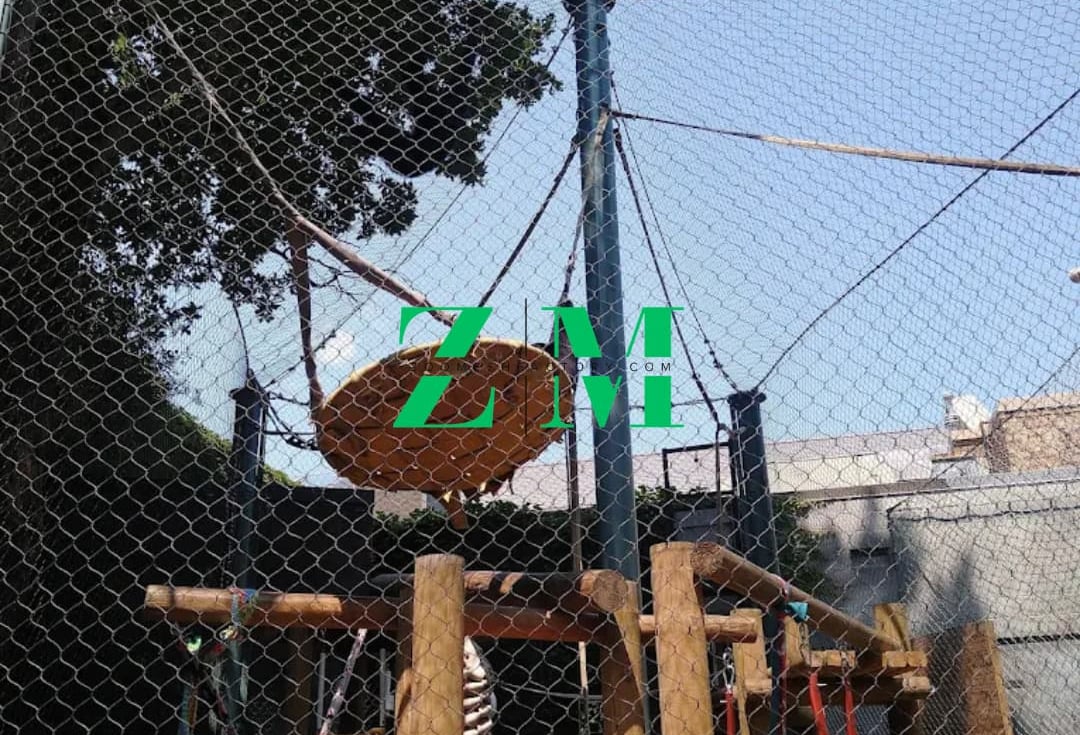
6. Shipping & Logistics: Navigating Global Procurement
Navigating the logistics of international shipping can often feel like the most daunting part of the procurement process. However, when sourcing Zoo Mesh Factory Direct, the logistics chain is actually simplified. Instead of a product sitting in multiple warehouses and being handled by various freight forwarders, your order moves in a straight line from the weaving loom to your construction site.
Understanding Lead Times: From Weaving to Arrival
A common misconception is that buying direct from the manufacturer takes significantly longer than buying from a local distributor. While a distributor might have a small quantity of "stock" sizes, they rarely have the volume required for a full exhibit.
The Custom Timeline: Once your CAD drawings are approved, the weaving process for a large-scale exhibit typically takes 2–3 weeks.
Transit Efficiency: In 2026, global shipping lanes have become highly optimized. Direct sea freight usually arrives within 4–6 weeks, while urgent "top-up" panels can be air-freighted in under 10 days.
Predictability: By cutting out the middleman, you eliminate the "hidden" delays of a distributor waiting to consolidate multiple small orders before they ship from the factory to their own warehouse.
Packaging for Protection: Preventing Wire Deformation
Stainless steel wire rope mesh is a precision-engineered product. If it is folded or compressed incorrectly during transit, it can develop "memory kinks" that make it nearly impossible to tension correctly on-site.
Factory Standard Crating: When you buy direct, the factory uses heavy-duty, moisture-proof wooden crates. The mesh is rolled onto specialized cylinders to maintain the integrity of the 7x7 or 7x19 rope structure.
Environmental Shielding: Direct shipments are often vacuum-sealed or wrapped in industrial-grade VCI (Vapor Corrosion Inhibitor) film. This ensures that even if the crate spends weeks on a humid ocean voyage, the SS304 or SS316 mesh arrives as pristine as the day it was woven.
Case Study: The 5-Acre Sanctuary Savings
To illustrate the power of direct procurement, consider a recent 2025 project for a major tropical bird sanctuary. The project required over 20,000 square meters of high-transparency mesh for a walk-through aviary.
The Challenge: A local distributor quoted the project at $110,000 with a 12-week lead time, as they had to order the material in 2-meter wide increments and seam it on-site.
The Factory Direct Solution: By ordering Zoo Mesh Factory Direct, the sanctuary was able to order 10-meter wide seamless panels.
The Result: > * Direct Material Savings: $15,000 (reduction in markup).
Labor Savings: An additional $8,000 saved because the large panels were installed in half the time required for seaming small rolls.
Total Impact: The sanctuary saved $23,000—funds that were immediately redirected toward a state-of-the-art veterinary clinic for the birds.
Planning a large installation? Check out our Pro Guide to Tensioning Wire Rope Mesh to ensure your direct shipment is handled correctly on-site.
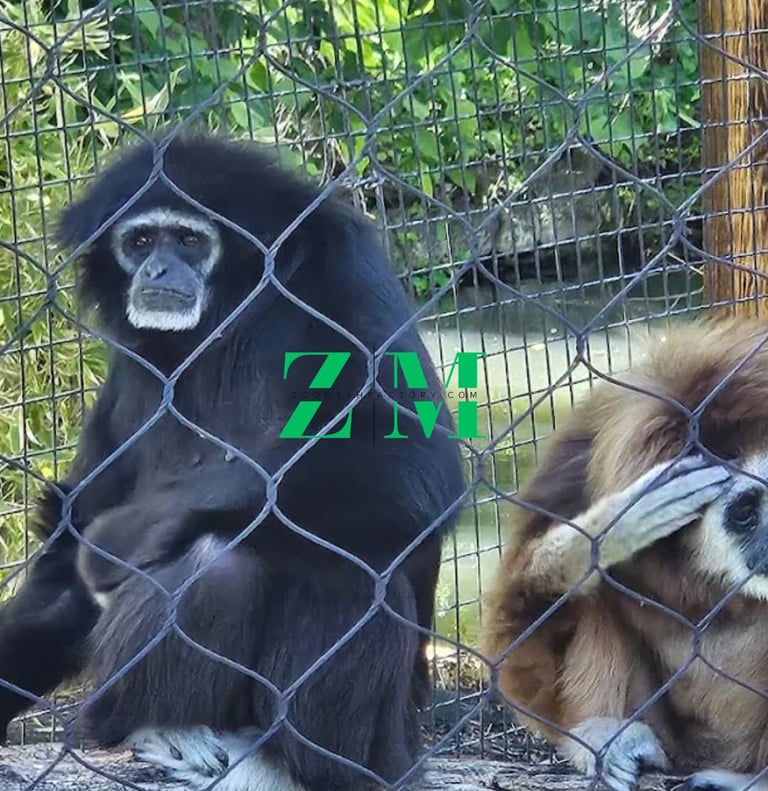
7. Sustainability in Manufacturing
In 2026, the global zoological community is not just focused on conservation within the exhibit, but also on the environmental footprint of the exhibit itself. Sourcing Zoo Mesh Factory Direct offers a more sustainable pathway for procurement, aligning your facility’s infrastructure with modern "Green Zoo" initiatives. When you remove three or four stops from the supply chain, you aren't just saving money—you are significantly reducing the carbon intensity of your project.
Reducing the Carbon Footprint via Consolidated Direct Shipping
The traditional distributor model is a logistical nightmare for carbon accounting. A roll of mesh might travel from the factory to an international port, then to a national importer’s hub, then to a regional wholesaler, and finally on a smaller delivery truck to your site.
The "Straight-Line" Logistics Advantage: Every "warehouse hop" involves secondary packaging, palletizing, and fuel-intensive short-haul trucking.
Emissions Reduction: By choosing Zoo Mesh Factory Direct, your order moves in a single, high-efficiency journey. Consolidated shipping—often via rail or sea freight—utilizes the most carbon-efficient modes of transport, cutting the logistics-based CO2 footprint of your mesh by an estimated 15% to 25%.
Zero-Waste Manufacturing: The Factory Lifecycle
Sustainability at the source is about more than just transport; it’s about how the AISI 304 or 316 stainless steel is handled during the weaving process.
Precision Weaving to Order: Unlike distributors who must cut standard rolls to fit your dimensions (creating "drop-off" waste that often ends up in a landfill), a direct manufacturer weaves your panel to the exact size required.
The Closed-Loop Recycle System: At the factory level, any wire off-cuts or ferrules that don't meet our strict quality standards aren't thrown away. Because we handle bulk quantities of high-grade stainless steel, we maintain a closed-loop recycling system where scrap is returned to the smelter to be reborn as new wire.
Non-Toxic Finishing: By applying Black Oxide treatments in a controlled factory environment, we ensure that chemical runoff is professionally neutralized and filtered—a level of environmental control that is impossible to maintain during on-site painting or coating at a construction site.
When you buy factory-direct, you are supporting a manufacturing process that respects the very natural world your zoo or sanctuary is working so hard to protect.
For more on how our materials withstand the elements sustainably, see our Technical Guide to SS304 vs SS316.
8. Technical Support: Direct Access to Engineers
One of the most significant—yet often undervalued—benefits of sourcing Zoo Mesh Factory Direct is the collapse of the barrier between the design team and the fabrication team. In a traditional retail or distributor setup, technical questions are filtered through sales representatives who may have never seen a weaving loom. When you work directly with the factory, you gain immediate access to the engineers who live and breathe high-tensile mesh.
Solving the "Gap Problem" with Irregular Geometry
Modern zoo exhibits rarely consist of simple, flat planes. They feature organic curves, rock outcroppings, and integrated waterfalls. These elements create "irregular geometry" that can be a nightmare for installers using standard rolls.
CAD-to-Loom Integration: When you provide your site drawings to our factory engineers, we don't just sell you a rectangle; we consult on the shaping of the mesh. We can calculate how the diamond apertures will deform over a curve, ensuring that the mesh remains tight and secure without creating "pockets" or gaps where an animal could get stuck.
Precision Enrichment Cutouts: If your design requires integrated "transfer tunnels" or specialized feeding ports, factory engineers can weave these reinforcements directly into the panel structure. This maintains the structural integrity of the entire wall, which is impossible to achieve by "cutting a hole" in a distributor’s stock mesh.
On-Demand Installation & Tensioning Support
The safety of a zoo enclosure is only as good as its tensioning. A loose mesh is a dangerous mesh. By bypassing the middleman, you get the manufacturer's official mesh tensioning guides and direct support for your on-site contractors.
Load-Specific Hardware Advice: Our engineers can recommend the exact gauge of boundary cables and the specific breaking load of turnbuckles needed to support our mesh. This ensures that the entire "containment system"—not just the fence—is perfectly balanced.
Real-Time Troubleshooting: Should an installation challenge arise, your project manager can speak directly with the factory technician who oversaw the weaving of your specific panels. This direct line of communication can save days of on-site "trial and error," keeping your project on schedule and under budget.
By choosing Zoo Mesh Factory Direct, you aren't just buying a material; you are hiring a technical department that stays with you from the first draft to the final bolt.
For a deep dive into the physics of a secure install, consult our Pro Guide to Tensioning Wire Rope Mesh.
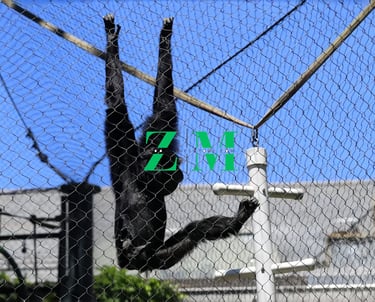
9. Procurement Checklist: What to Ask Your Manufacturer
Vetting a supplier is the most critical step in the Zoo Mesh Factory Direct process. Because you are bypassing the local middleman, you must ensure the manufacturer has the technical infrastructure to support a global project. Before signing a purchase agreement, use this checklist to verify their capabilities:
Can you provide a Mill Test Certificate (MTC) for this specific batch? Ensure the chemical composition (Chromium, Nickel, Molybdenum) matches your order for SS304 or SS316.
What is the maximum seamless panel size you can weave? To reduce labor, look for a factory that can produce panels large enough to cover entire exhibit walls without on-site seams.
Is your Black Oxide finish a chemical conversion or a coating? Always insist on chemical conversion for bird and primate safety to prevent peeling.
Do you offer 3D/CAD consulting for irregular geometry? Verify that their engineers can review your drawings to ensure the mesh fits organic rockwork or curved frames.
What is the estimated breaking load for this specific wire-to-aperture ratio? A professional factory should provide a breaking load table tailored to your project’s specs.
How is the mesh crated for international sea/air freight? Ensure they use reinforced wooden crates and core-rolling to prevent wire deformation during transit.
10. Conclusion: The Future of Zoo Procurement is Direct
The era of "one-size-fits-all" fencing is over. In 2026, the global standard for zoological excellence is defined by precision, transparency, and fiscal responsibility. Sourcing Zoo Mesh Factory Direct is the only way to achieve all three.
By eliminating the middleman, you regain control over your project’s budget, material quality, and environmental impact. You transition from being a "customer" of a local retailer to being a "partner" with a global manufacturer. This partnership ensures that every square meter of hand-woven stainless steel mesh installed in your facility is optimized for the safety of the animals, the immersion of the guests, and the longevity of the institution.
Whether you are building a five-acre free-flight aviary or a high-security big cat habitat, the path to a successful build begins at the source.
11. Frequently Asked Questions: Zoo Mesh Factory Direct
1. Is there a minimum order quantity (MOQ) when buying Zoo Mesh Factory Direct? While distributors often sell by the single roll, most factory-direct orders focus on project-based volumes. However, because we specialize in custom animal enclosure fencing, we can accommodate smaller, high-spec orders for specialized exhibits or research facilities. Contact our engineering team to discuss your specific square footage requirements.
2. How do I verify the grade of stainless steel if the factory is overseas? Transparency is key to the manufacturer’s edge. Every shipment of SS304 or SS316 mesh is accompanied by a Mill Test Certificate (MTC). This document provides a chemical assay of the steel, verifying the Chromium, Nickel, and Molybdenum content. For absolute certainty, many of our clients perform a simple "XRF Analyzer" spot test upon arrival to confirm the alloy matches the certificate.
3. Does the factory provide the boundary cables and mounting hardware? Yes. To ensure a "system-wide" warranty and structural compatibility, we recommend sourcing your boundary cables, turnbuckles, and lacing wire directly from the factory alongside your mesh. This ensures that the hardware grade (e.g., SS316) perfectly matches the mesh, preventing galvanic corrosion and ensuring uniform tension across the exhibit.
4. What happens if the mesh is damaged during international shipping? This is a primary concern for procurement officers, which is why we use "Export Grade" reinforced wooden crating. Unlike the soft-rolling used by local retailers, factory-direct mesh is rolled onto rigid cores to prevent wire deformation. In the rare event of transit damage, our direct insurance and "single-touch" logistics chain make the claims and replacement process significantly faster than going through a multi-tiered distributor.
5. Can the factory assist with the installation of the mesh? While we do not provide on-site labor, we provide the "Installation Blueprint." This includes detailed mesh tensioning guides, CAD-assisted panel maps, and direct video consultations with our engineers. We bridge the gap between fabrication and construction, ensuring your local contractors have the technical data they need for a perfect fit.
Ready to Start Your Exhibit Design?
Join the hundreds of zoos and sanctuaries worldwide that trust ZooMesh Factory for their containment needs. Our engineers are ready to help you calculate the perfect mesh size for your species.
Contact
Hebei Zoo Mesh Co., Ltd
No. 188 Zhonghua South Street, Shijiazhuang City, Hebei Province, China
info@zoomeshfactory.com
© 2025. All rights reserved.
Quick Link
Product Catalogs
Don't leave without the specs! Save our factory-direct pricing and technical configurations for your next project meeting. Our 2026 Zoo Mesh Factory Direct Catalog is ready for download.