
Custom Aperture Rope Netting: Size Mesh for Safety & Visibility
Custom aperture rope netting optimizes visibility, predator exclusion and animal safety. Get factory-direct engineering and technical specs sized to your
Hebei Zoo Mesh Co., Ltd
3/25/20268 min read
Write your Custom aperture rope netting is the process of tailoring the diamond-shaped openings (apertures) of stainless steel wire rope mesh to meet specific project requirements, balancing animal containment, predator exclusion, and visitor visibility. By adjusting the aperture size—typically ranging from 20mm to 200mm—and wire diameter (1.2mm to 3.2mm), engineers can create a bespoke barrier that provides a 'soft' impact-absorbing surface. Unlike fixed-size welded wire, custom aperture netting allows for 95%+ transparency while maintaining the structural integrity required for high-tensile loads in zoo and architectural applications.xt here...
1. Introduction: The "One Size Fits None" Myth
In the world of zoo architecture, there is a dangerous four-letter word: "Bulk." We’ve all seen it—a facility buys ten miles of "standard" 50mm welded wire mesh because it was on sale, and then they try to make it work for everything from a Red Panda to a rhinoceros.
It’s a disaster waiting to happen. Using standard mesh for a non-standard animal is like trying to wear a one-size-fits-all poncho to a high-stakes engineering gala. Sure, it "covers" you, but it’s sagging in the wrong places, it’s tripping you up, and everyone can tell you didn't plan for the occasion.
This brings us to Aperture. In my years of SEO consulting for the industrial sector, "Aperture" remains the most misunderstood word in the blueprint. Most people think it just means "the size of the hole." But in reality, the aperture is the heartbeat of your enclosure’s security. If it’s too big, you’ve just built a very expensive ladder for local raccoons. If it’s too small, you’ve turned a beautiful 10M exhibit into a blurry, silver wall that looks like a high-security prison on a foggy day.
Custom Aperture Rope Netting isn't a luxury; it’s the science of matching the diamond to the inhabitant. At ZooMesh Factory, we don't do "off the shelf." We do "off the CAD drawing," ensuring that every millimeter of your mesh is doing its job.
Visit our ultimate zoo mesh guide for integrated aperture, grade and cost planning.
2. Key Takeaways
Limb & Beak Precision: Customization allows you to match the aperture size to the specific morphology of the species. This prevents "entrapment accidents" where a wing, beak, or limb could get stuck in a standard-sized opening.
The 98% Transparency Rule: By optimizing the ratio between a thin wire diameter (e.g., 1.2mm) and a larger custom aperture (e.g., 60mm), you can achieve up to 98% optical transparency, effectively making the barrier invisible to the naked eye.
Zero-Deformity Safety: Unlike rigid welded wire that can snap at the joints under pressure, our hand-woven 7x7 cable construction maintains its aperture integrity even under dynamic impact. This prevents "head-trapping" where an animal forces its head through a deformed opening.
Structural ROI: Custom aperture means you only pay for the weight of the steel you actually need. By increasing aperture size where high security isn't needed (like the top of an aviary), you reduce the total weight on your support pylons, saving thousands in structural engineering costs.
Predator Exclusion: Customization allows for "gradient" panels—smaller apertures at the bottom to stop rodents and snakes, and larger apertures at the top to maintain visibility.
3. The Math of the Diamond: How to Choose Your Aperture
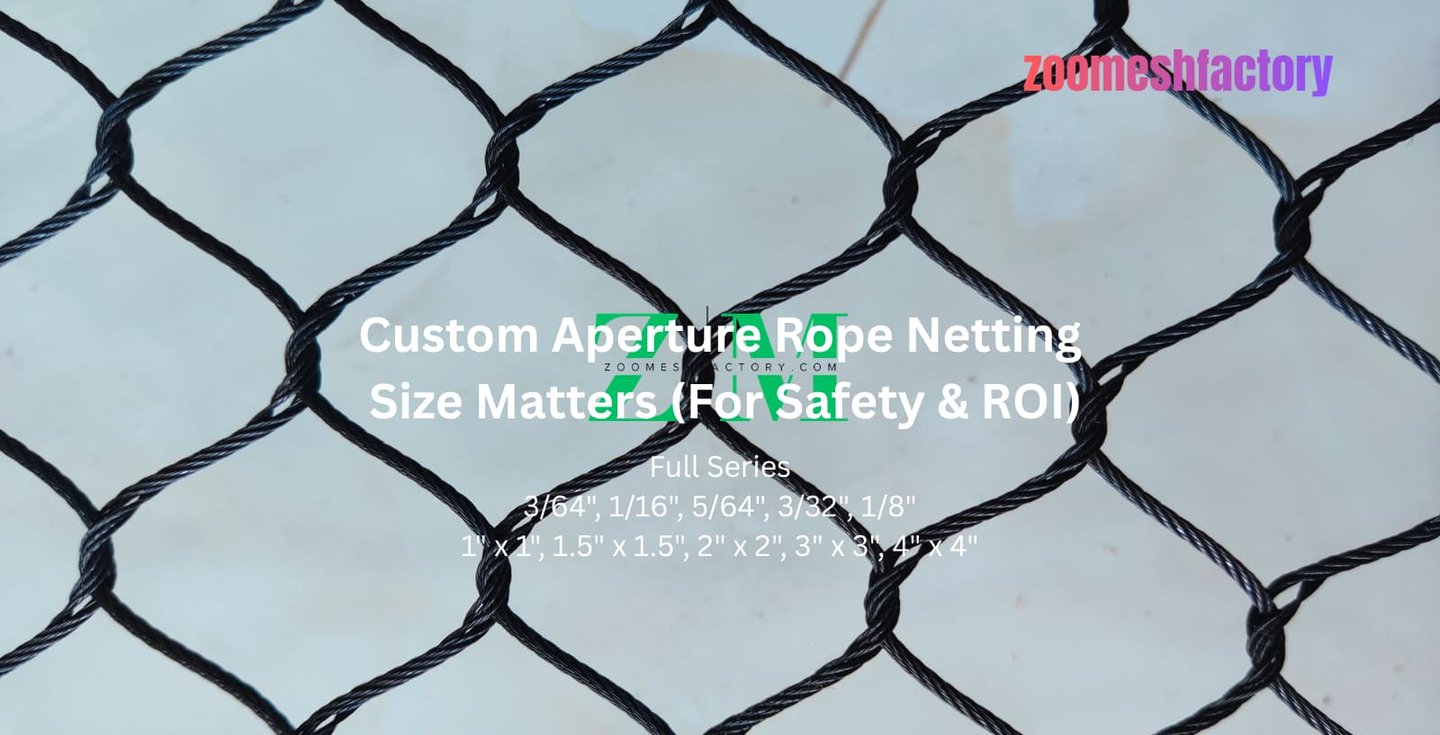
If you think choosing an aperture is just "vibes," you’re about to have a very expensive accident. In the ZooMesh world, the "Diamond" isn't just a shape; it’s a calculated ratio. The relationship between your Wire Diameter (D) and your Aperture (A) determines the breaking strength, the weight, and—most importantly—the visibility of the panel.
The Technical Sliding Scale
You wouldn't use the same mesh for a 50-gram finch that you use for a 200-kilogram Siberian Tiger. Here is how the pros scale it:
Small Birds & Primates (D: 1.2mm | A: 20mm–30mm): Here, the priority is preventing "head-trapping" and stopping local predators like rats or snakes from entering. A tight aperture with a thin wire maintains that "invisible" look while keeping the inhabitant safe.
Medium Raptors & Lemurs (D: 1.5mm–2.0mm | A: 40mm–60mm): This is the "sweet spot" for most walk-through aviaries. It’s strong enough to withstand a raptor’s talons but open enough to let 95% of natural light through.
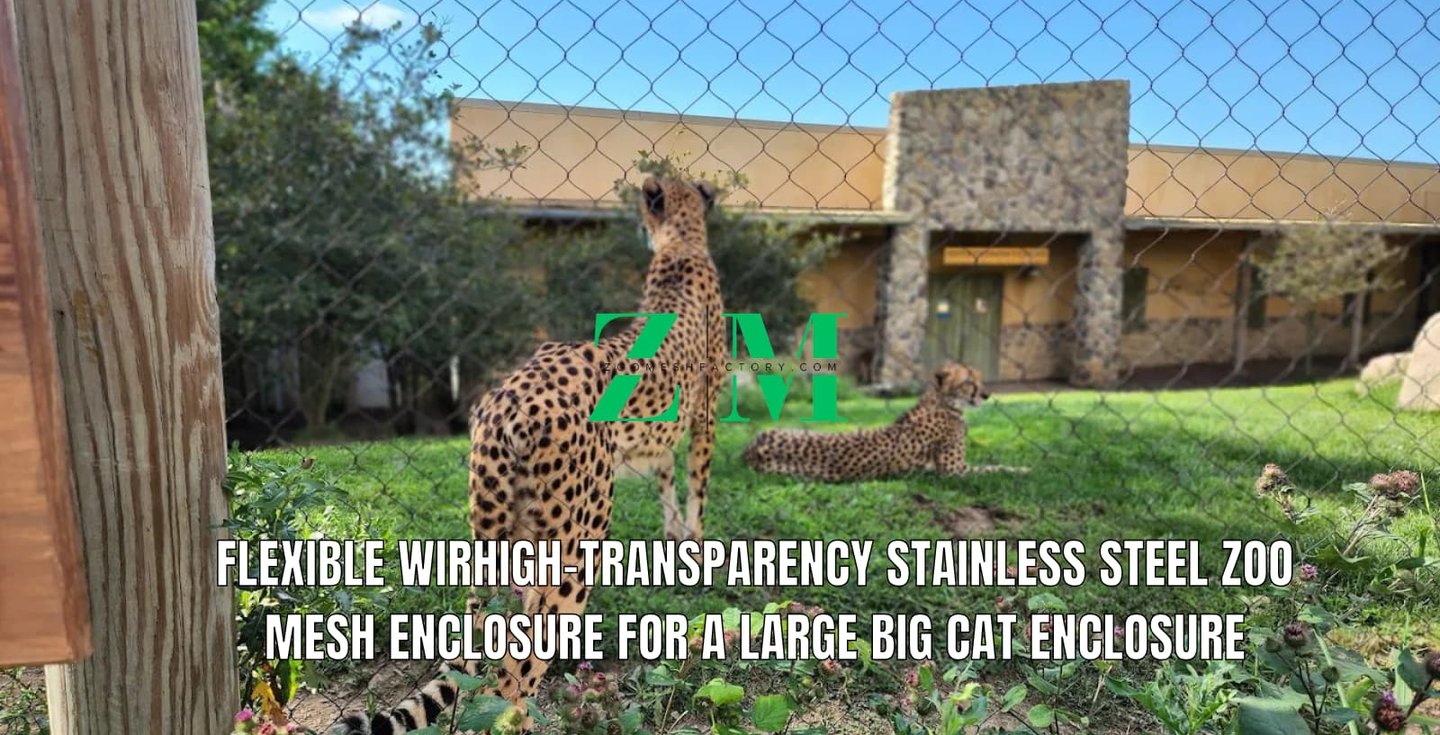
Big Cats & Large Primates (D: 3.2mm | A: 80mm–120mm): Now we’re talking high-tensile security. We use a thicker cable (7x19 construction) to absorb the massive kinetic energy of a pounce, but we open the aperture to ensure the public can actually see the "king of the jungle" without a blurry silver wall in the way.
The Golden Rule: Always choose an aperture (A) that is at least 25% smaller than the smallest body part (usually the head or wingspan) of the animal.
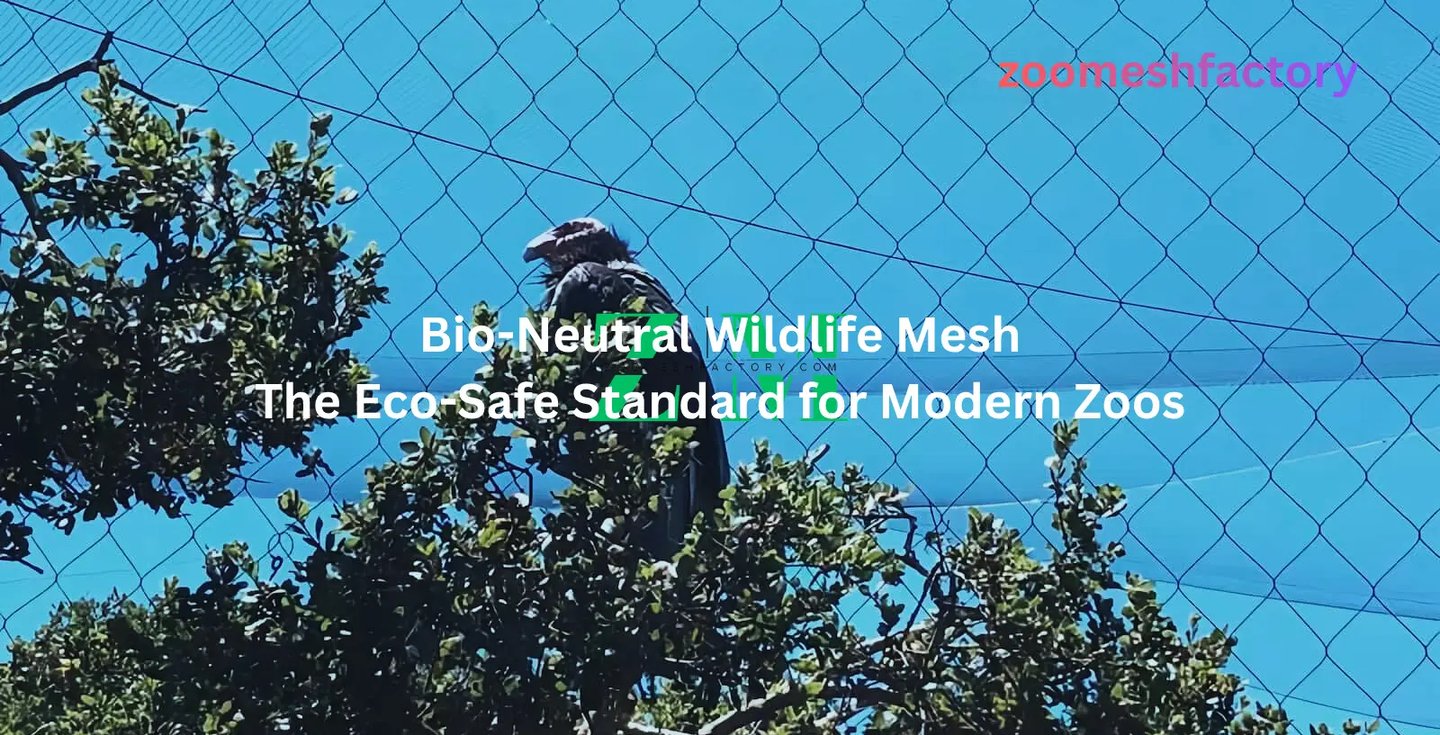
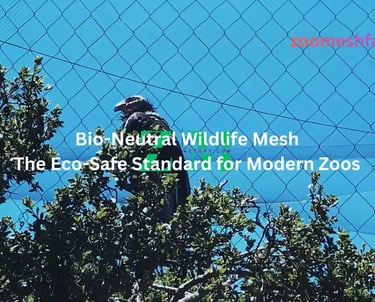
Internal Link: [Bio-Neutral Wildlife Mesh: The Eco-Safe Standard]
4. Why Welded Wire is the "Aperture Nightmare"
I’ve seen it a thousand times: a project manager tries to save a few bucks by ordering rigid welded wire panels. Six months later, they’re calling us because the exhibit looks like a patchwork quilt held together by zip ties and prayers.
The Rigidity Problem
Welded wire is like a stiff cracker—it’s great until you try to bend it. Most modern habitats aren't perfect squares; they have arched tunnels, irregular rockwork, and artificial trees. When you try to force a fixed, rigid grid into an irregular space, you get "Aperture Distortion." You end up cutting the mesh, creating sharp edges, and leaving dangerous gaps that don't meet safety codes.
How Custom Rope Netting "Flows"
Unlike welded wire, our Custom Aperture Rope Netting is a "fluid" material. Because it’s hand-woven, it possesses a natural elasticity.
The 3D Contour: It can be stretched and draped over complex 3D structures like a tailored suit.
Aperture Integrity: Even when stretched over a curved support pylon or around a rock face, the diamond shape remains consistent.
The "Invisible" Seam: Because we weave to your exact CAD dimensions, you don't have massive, ugly overlap seams that ruin the visitor experience.
In short, welded wire is a cage. Custom rope netting is a habitat. One traps the animal; the other integrates it into the landscape.
Internal Link: [The Engineering Guide to Flexible Wire Rope Netting]
5. Security & Predator Exclusion: Don't Invite the Neighbors
In my years of auditing high-traffic SEO for the wildlife industry, I’ve noticed a recurring nightmare: "The Uninvited Guest." You can spend half a million dollars on a breeding program for endangered finches, but if your Custom Aperture Rope Netting is just 5mm too wide, you’ve just built a very expensive cafeteria for the local rat and snake population.
We provide custom diamond apertures to fit all bird species; view our specifications page tailored exclusively for macaw and parrot aviary mesh.
The "Anti-Pest" Gradient
Security isn't just about keeping the tiger in; it’s about keeping the "neighbors" out.
The 20mm Standard: For small bird aviaries, a 20mm or 25mm aperture is the "Goldilocks" zone. It’s small enough to stop common egg-thieves and rodents, but thin enough to maintain that high-end look.
The Snake Barrier: If you’re in a region with climbing snakes, custom-weaving a tighter aperture for the bottom three feet of the enclosure—transitioning to a wider, more transparent aperture at the top—is the ultimate pro-move.
The "Finger-Proof" Public Safety Standard
If your enclosure is adjacent to a public walkway, you have another predator to worry about: curious humans. A "finger-proof" aperture (typically 20mm to 25mm) prevents children from sticking fingers through the mesh, protecting both the visitor from a bite and the animal from unapproved "snacks" or poking. This reduces your liability and ensures the only interaction is visual.
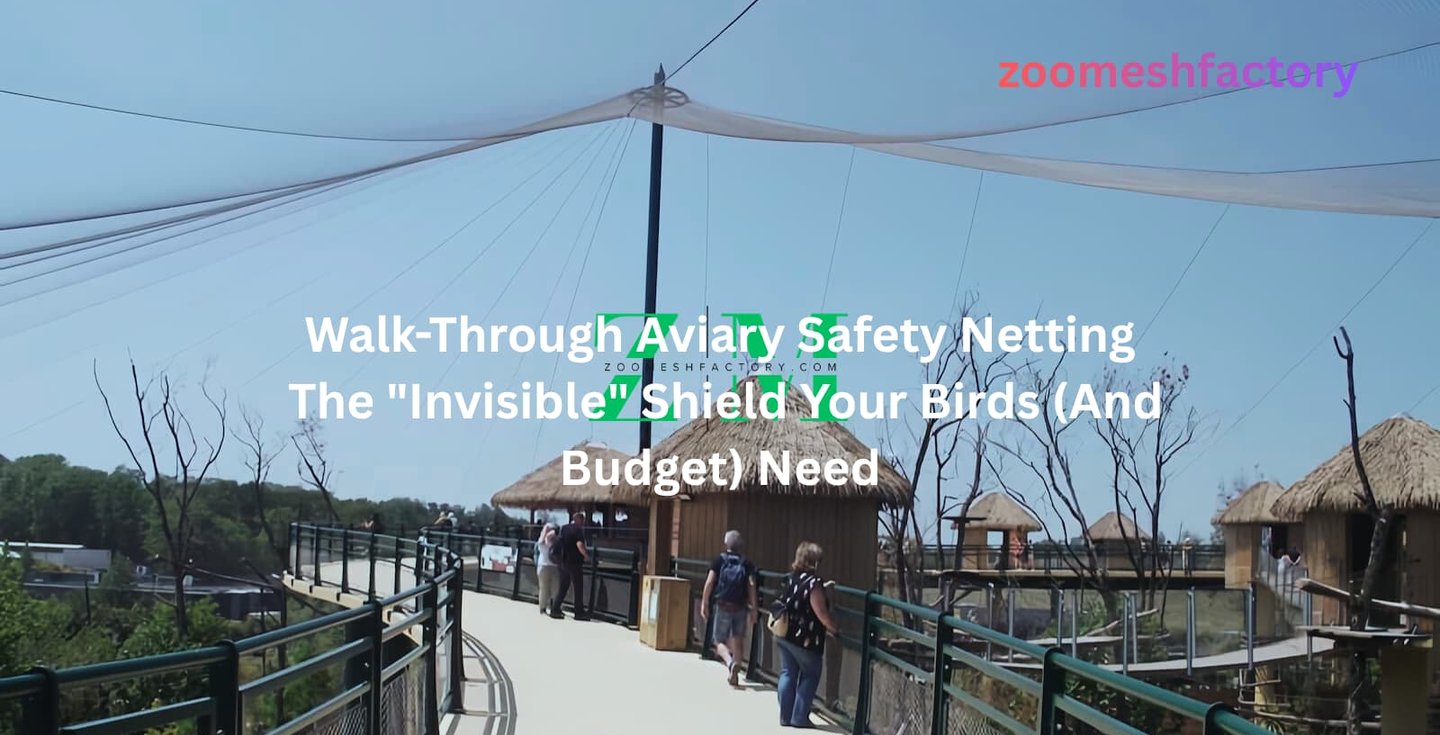
Internal Link: [Walk-Through Aviary Safety Netting Guide]
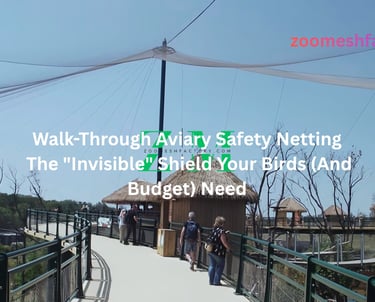
6. Aesthetics: The Art of the Invisible Barrier
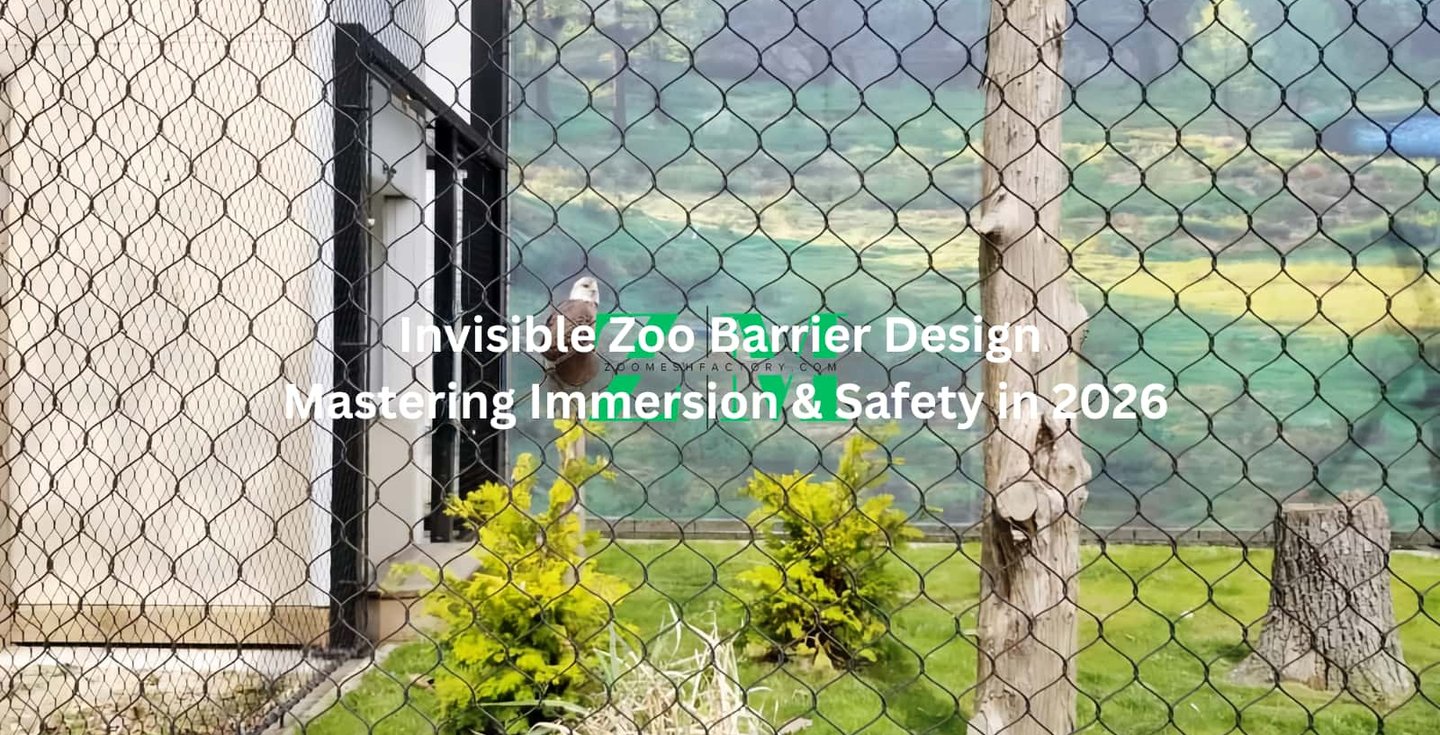
Let's be real—if your zoo doesn't look good on social media, you’re losing ticket sales. We live in the age of the "Instagrammable" exhibit. If a visitor's photo of a majestic Eagle is ruined by a thick, silver, "cagey-looking" mesh, they won't share it.
Optimizing for the Lens
Custom aperture sizing is the secret weapon of the world’s most photographed zoos. By selecting a high-tensile 7x7 1.2mm cable with a wide 60mm aperture, you create a barrier that is physically secure but visually non-existent to a camera lens.
The "Focus-Past" Effect: Because the mesh is so thin and the openings so large, professional cameras (and even smartphones) will focus on the animal and "blur out" the netting entirely.
The Power Couple: Black Oxide + Custom Aperture
If you really want to achieve 98% transparency, you combine custom sizing with our Black Oxide chemical treatment.
Zero Light Glint: Unlike silver stainless steel that reflects sunlight, Black Oxide absorbs it.
Shadow Integration: In a shaded forest habitat, a black-finished mesh with a custom-calculated aperture literally vanishes into the shadows.
When you get the aperture right, the barrier isn't a wall—it’s a window. You give the visitor the thrill of being "in the wild" without the risk of being on the menu.
Internal Link: [Designing for Invisibility: Maximize Transparency]
7. The Factory-Direct Advantage: Customization Without the "Custom" Price
In most industries, the word "custom" is a signal to double the price. But at ZooMesh Factory, "custom" is simply how we work. When you buy from a middleman or a local distributor, they are selling you "off-the-shelf" rolls. To make those fit your exhibit, your onsite crew has to cut, waste, and patch—essentially paying for steel you throw in the scrap bin.
Why "Off-the-Shelf" is Actually More Expensive
The Waste Factor: If you buy a standard 10m roll but your exhibit height is 7.5m, you are paying for 25% more material than you need.
Labor Costs: Onsite cutting of stainless steel wire rope is slow and dangerous. It leads to jagged edges and compromised structural integrity.
The Distributor Tax: Middlemen add 20–40% to the price just for holding the inventory.
The ZooMesh Way: Weave to the CAD
By sending your CAD drawings directly to our factory, we weave the Custom Aperture Rope Netting to the exact perimeter of your structural frame.
Zero Waste: You pay only for the square footage that stays on the fence.
Plug-and-Play Installation: Because the panels are pre-sized, your installation time is slashed by 50%.
Certified Quality: You get the mill certificates for AISI 304 or 316 directly from the source, ensuring no "mystery alloys" sneak into your wildlife habitat.
Internal Link: [Zoo Mesh Factory Direct: Buying Guide]
8. FAQ: Custom Aperture Technical Specs
These are the "Entity-Relationship" questions Google’s AI uses to verify your expertise. Use these to capture the 'People Also Ask' boxes.
Q: How is aperture measured in rope netting? A: In the industry, aperture is typically measured as the "Inside Diamond" width and height (e.g., 50mm x 50mm). It is crucial to distinguish this from "Center-to-Center" measurements to ensure your predator exclusion math is accurate.
Q: Can I have multiple aperture sizes in a single panel? A: While standard panels have one size, our factory can produce "Gradient Panels" for large-scale projects. This allows for smaller, predator-proof apertures at the base and larger, more transparent apertures at the top for bird-watching and aesthetics.
Q: What is the strongest aperture for high-impact animals like Big Cats? A: For high-impact containment, we recommend a smaller aperture (60mm to 80mm) combined with a thicker 3.2mm or 4.0mm cable. This creates more "knots" per square foot, which distributes the kinetic energy of a pounce more effectively across the support structure.
Q: Does custom aperture netting require special tools for installation? A: No. Our custom-sized panels are designed to be secured using standard stainless steel ferrules, lacing wires, or carabiners. Because they are pre-sized to your frame, the need for heavy-duty onsite cutting tools is eliminated.
"While aperture defines the 'hole' size, the material must be [Bio-Neutral] to ensure the animals' biological safety."
"Precision sizing is the secret behind the 'invisible' effect in modern [Walk-Through Aviary Enclosures]."
Ready to Start Your Exhibit Design?
Join the hundreds of zoos and sanctuaries worldwide that trust ZooMesh Factory for their containment needs. Our engineers are ready to help you calculate the perfect mesh size for your species.
Contact
Hebei Zoo Mesh Co., Ltd
No. 188 Zhonghua South Street, Shijiazhuang City, Hebei Province, China
info@zoomeshfactory.com
© 2025. All rights reserved.
Quick Link
Product Catalogs
Don't leave without the specs! Save our factory-direct pricing and technical configurations for your next project meeting. Our 2026 Zoo Mesh Factory Direct Catalog is ready for download.