

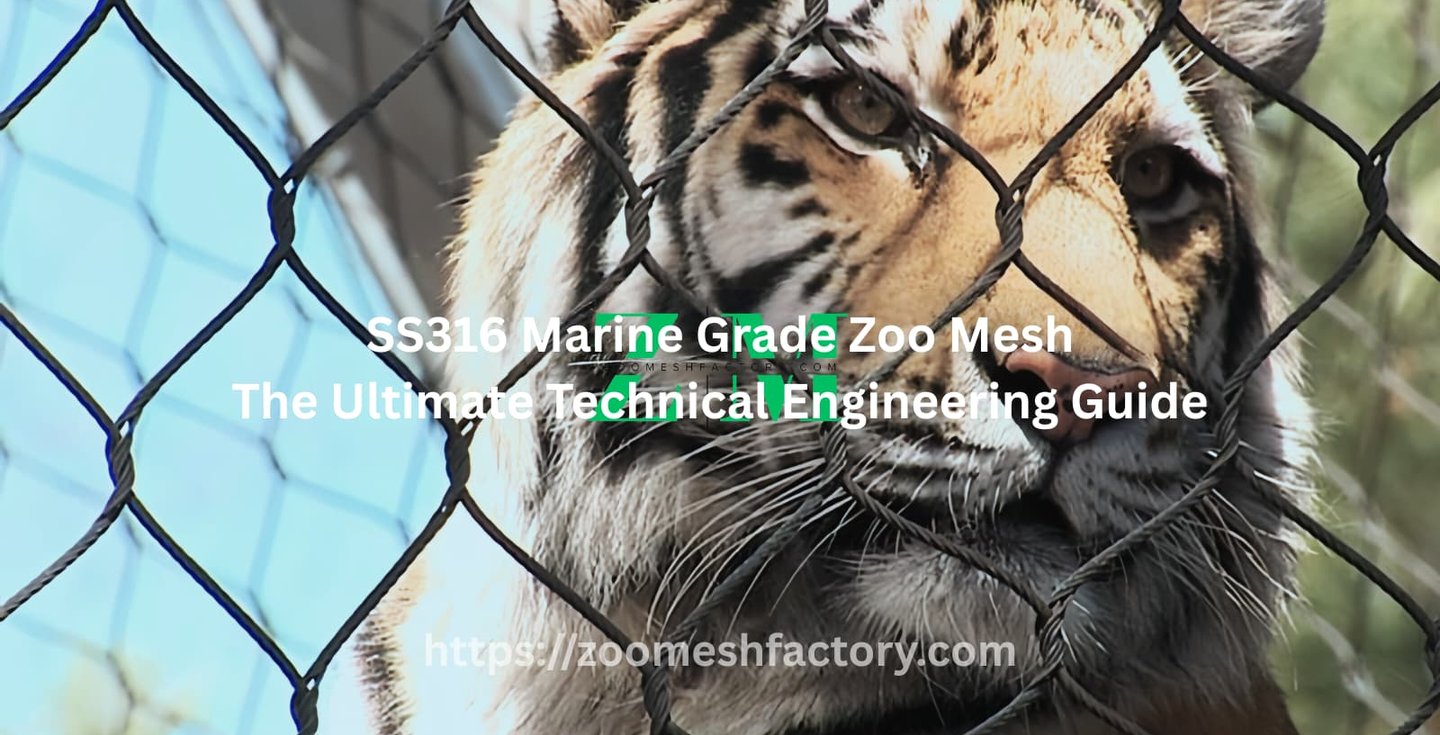
SS316 Marine Grade Zoo Mesh: The Ultimate Technical Engineering Guide
Why is SS316 the industry standard for zoological enclosures? Explore chemical composition, corrosion resistance, and kN load ratings for marine-grade mesh.
Hebei Zoo Mesh Co., Ltd
3/15/20269 min read
Why is SS316 Marine Grade Zoo Mesh required for animal enclosures? SS316 Marine Grade Zoo Mesh is required because it contains 2.0% to 3.0% Molybdenum, a chemical element that provides superior resistance to chloride-induced pitting and acidic corrosion from animal waste. Unlike standard SS304, SS316 maintains its structural integrity and "invisible" aesthetic in high-humidity, coastal, or chemically treated environments. For zoological applications, it typically features a 7x7 or 7x19 cable construction, offering a life expectancy of 30–50 years, making it the most cost-effective long-term solution for professional wildlife containment.Write your text here...
1. Introduction: The Cost of Corrosion
In the world of zoological infrastructure, the term "stainless steel" is often misunderstood as an absolute state of being. In reality, stainless steel is a spectrum of performance, and selecting the wrong grade can be a multi-million dollar mistake. For facilities located in coastal regions, high-humidity tropical zones, or those utilizing sophisticated misting and cleaning systems, the appearance of "tea staining"—a localized pitting corrosion—is a constant threat to structural integrity.
This is where SS316 Marine Grade Zoo Mesh becomes an engineering necessity rather than a premium upgrade. While standard SS304 mesh may suffice for indoor, climate-controlled environments, it lacks the chemical defenses required to withstand the aggressive chlorides found in salt air and the ammonia-rich environments of animal enclosures.
By the time rust becomes visible to the naked eye, the microscopic structural compromise has already begun. In 2026, zoo directors and structural engineers are prioritizing "resilient infrastructure," shifting their focus toward materials that offer a 30-to-50-year maintenance-free lifecycle. Understanding the material science behind SS316 is the first step in ensuring that your enclosure remains safe, "invisible," and structurally sound for the next half-century.
See the guide of The Gold Standard for Apex Predator Enclosures
2. Key Takeaways
For engineers, procurement officers, and project managers, here is the essential technical data regarding SS316 Marine Grade Mesh:
The Molybdenum Factor: SS316 contains 2.0% to 3.0% Molybdenum, which is the specific alloying element that prevents pitting and crevice corrosion in chloride-heavy environments.
Superior Longevity: When compared to galvanized or SS304 alternatives, SS316 offers a 300% increase in lifespan in coastal or high-humidity tropical habitats.
High Strength-to-Weight Ratio: Utilizing a 7x7 or 7x19 cable construction, SS316 mesh provides exceptional breaking loads (up to 10.20 kN for 3.2mm wire) while maintaining a lightweight profile.
Chemical Stability: SS316 is highly resistant to the acidic nature of animal waste and the harsh disinfectants required for modern bio-security protocols.
Lower Life-Cycle Cost (LCC): While the initial material cost is roughly 20-30% higher than SS304, the elimination of replacement labor and maintenance costs makes SS316 40% cheaper over a 25-year period.
Visual Consistency: Marine-grade mesh maintains its original finish longer, preventing the dulling and "greying" that can ruin the immersive experience of a modern exhibit.

3. The Chemistry of Durability: 304 vs. 316
To understand why SS316 Marine Grade Zoo Mesh is the industry benchmark, we must look at the alloy on a molecular level. While both 304 and 316 are austenitic stainless steels, their performance in "aggressive" environments is vastly different.
The Molybdenum Difference
The defining characteristic of SS316 is the addition of Molybdenum (typically 2-3%). While SS304 relies primarily on Chromium (18%) and Nickel (8%) for corrosion resistance, these elements alone are vulnerable to chloride ions. Molybdenum acts as a secondary line of defense, specifically targeting "pitting"—the localized, needle-like holes that can penetrate deep into a wire rope’s core.
Resistance to Chloride Stress Corrosion Cracking (CSCC)
In zoo environments, mesh is often under high tension. When high tension meets a corrosive environment (like a coastal aviary or a chlorinated water feature), SS304 can suffer from Stress Corrosion Cracking. This is a sudden, catastrophic failure that occurs without significant visible rust. SS316’s chemical makeup is specifically engineered to resist this phenomenon, ensuring that the mesh remains "springy" and structural even under heavy environmental stress.
Technical Note: To understand how these chemical properties translate to real-world tensioning and cable layout, see our [Technical Comparison: SS304 vs. SS316 Stainless Steel Mesh].
4. Marine Grade Mesh in Tropical & Coastal Habitats
Geography plays a massive role in material selection. For any facility within 15 kilometers (10 miles) of a coastline, the air is saturated with salt particles. However, even for inland zoos, "micro-marine" environments are common.
Salt Air vs. Cleaning Chemistry
It isn't just the ocean that threatens a mesh enclosure. High-pressure misting systems, used to keep primates and tropical birds cool, often use recycled or treated water that contains trace minerals and chlorides. Over time, as this water evaporates off the mesh, the concentration of these minerals increases. SS316 Marine Grade mesh is designed to handle this "evaporative salt cycle" without the surface dulling or tea-staining seen in lower grades.
Longevity in Primate and Aquatic Exhibits
In primate exhibits, bio-load (animal waste) creates an acidic environment that can "etch" the surface of standard steel. In aquatic exhibits (such as penguin or otter enclosures), the constant cycle of wet and dry—combined with salt-water pools—creates the ultimate test of metallurgy.
By utilizing SS316, facility managers eliminate the need for harsh chemical scrub-downs, which can be stressful for the animals. Instead, a simple fresh-water rinse is usually enough to maintain the "Invisible" aesthetic for which our Black Oxide treatment is famous.
Visual Insight: Learn how we combine marine-grade durability with optical transparency in our guide on [Black Oxide Aviary Mesh: The "Invisible" Choice].
5. Tensile Strength & Structural Engineering
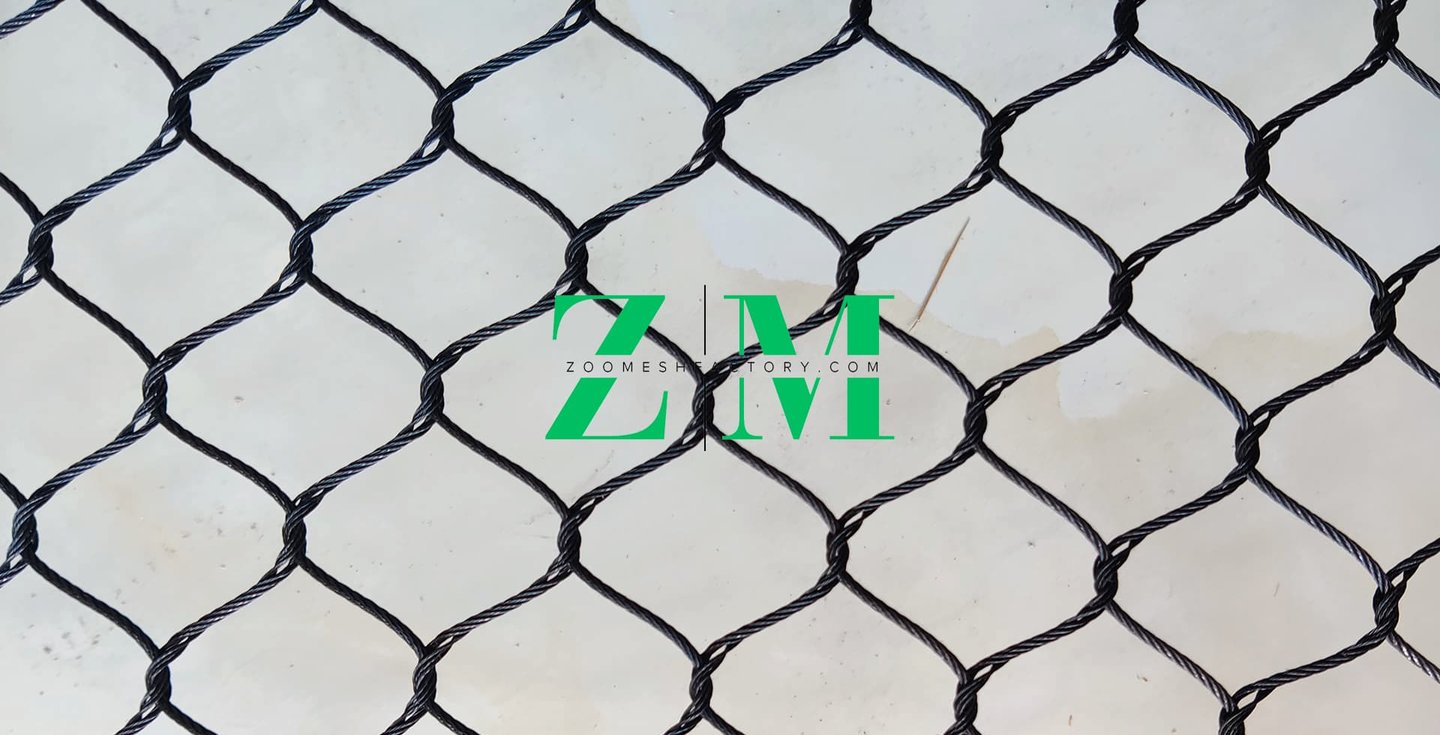
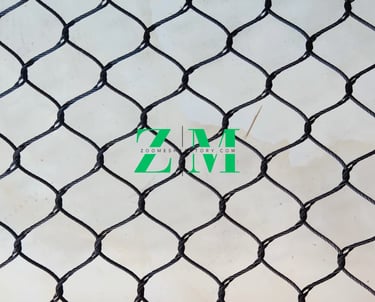
The primary function of SS316 Marine Grade Zoo Mesh is containment. However, containment is not just about a static barrier; it is about managing dynamic loads. Whether it is a 250kg Siberian Tiger lunging at a perimeter or a sudden 120km/h wind gust hitting a large-span aviary, the mesh must perform predictably under tension.
Understanding kN Ratings for 7x7 and 7x19 Construction
In 2026, engineering standards for zoo safety have become more stringent. We measure the strength of our marine-grade mesh in Kilonewtons (kN).
7x7 Construction: Standard for smaller gauges (1.2mm to 2.4mm), providing a balance of flexibility and high tensile strength.
7x19 Construction: Used for heavy-duty applications (3.2mm and above). The higher strand count offers increased flexibility for wrapping around complex structural frames while maintaining a massive breaking load.
Fatigue Resistance Over Time
One of the hidden benefits of the SS316 alloy is its resistance to "material fatigue." Cheaper galvanized wires lose their rated breaking load as the zinc coating chips and the underlying carbon steel oxidizes. Because SS316 is a homogeneous alloy—meaning it is the same material all the way through—it maintains its original kN rating for decades. This allows engineers to design with lower safety-factor margins, reducing the need for bulky, expensive support columns.
Engineer's Resource: For a full spreadsheet of breaking loads, weights per square meter, and stretch coefficients, visit our Resource Center Technical Hub.
6. Application-Specific Gauges
Choosing the correct wire diameter (gauge) is as important as choosing the right steel grade. Using a 3.2mm wire for a parakeet exhibit is an expensive waste of material; using a 1.2mm wire for a snow leopard exhibit is a safety catastrophe.
The "Hierarchy of Strength" for Marine Grade Mesh
Balancing Visibility with Impact Resistance
In modern "Immersion" exhibits, the goal is always to use the thinnest wire possible that still meets the safety requirement.
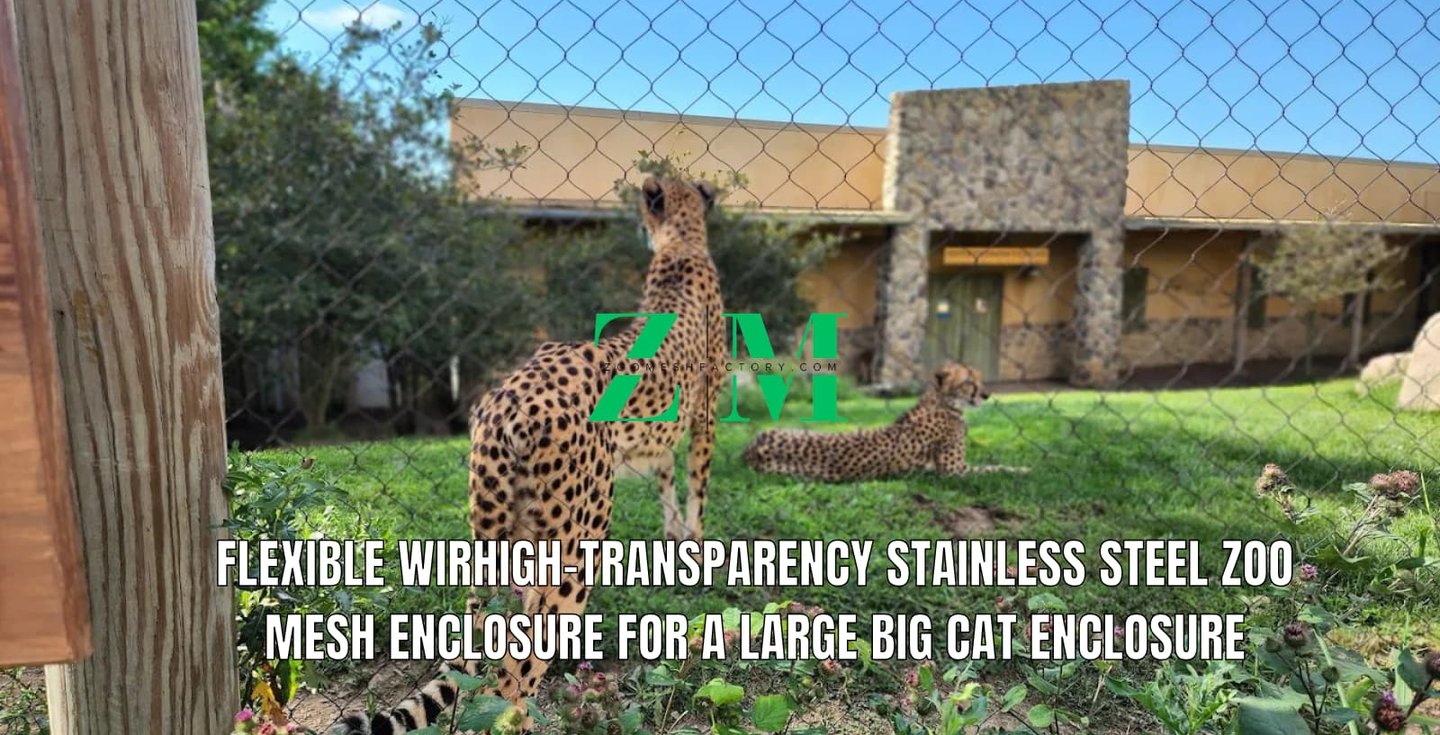
For Predators: We utilize the 3.2mm SS316 wire. Even at this thickness, the high-tensile nature of the marine-grade alloy allows for a relatively wide aperture (e.g., 76mm), which preserves sightlines for guests while providing a barrier that can stop a high-impact lunge.
For Aviaries: We lean toward the 1.2mm wire. The SS316 purity ensures that even this thin wire won't snap due to environmental corrosion, allowing for maximum "invisibility."
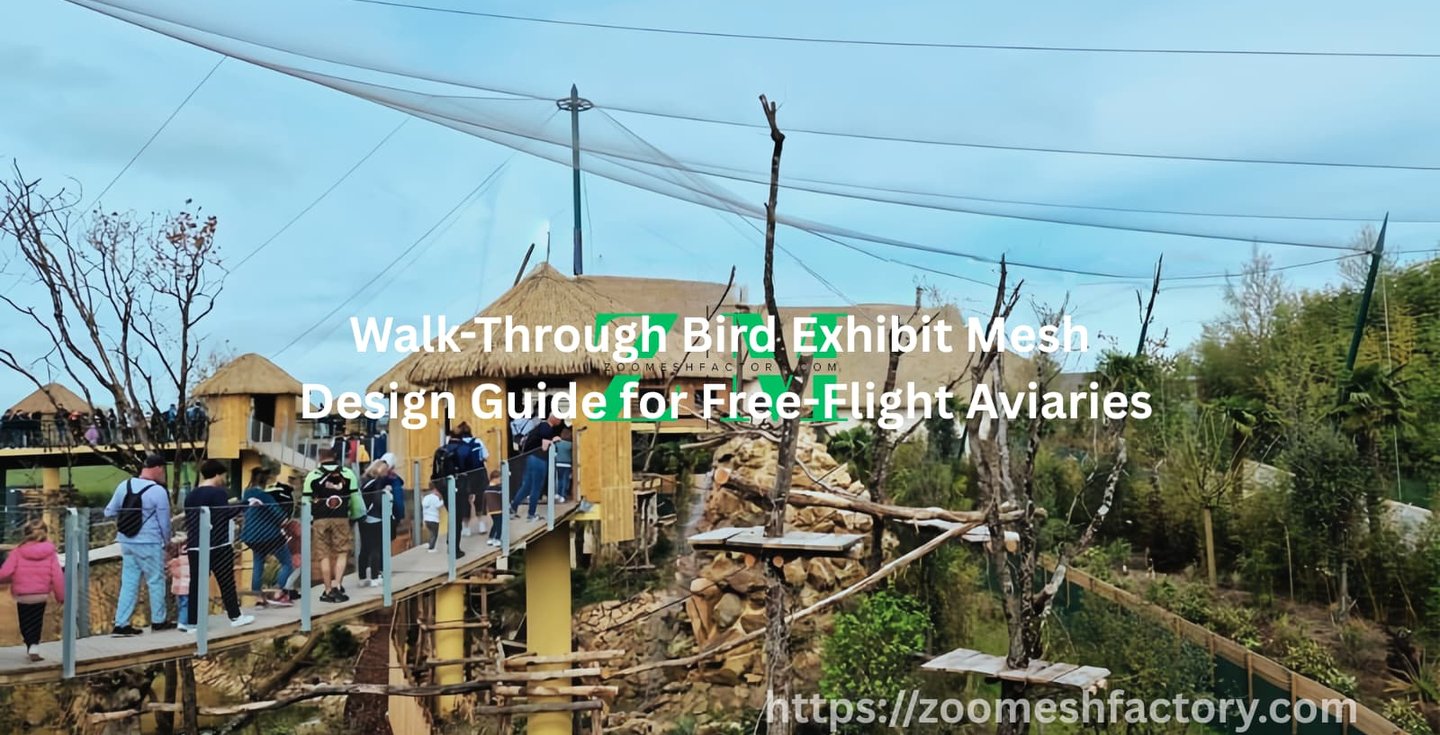
Design Comparison: See how gauge selection impacts visitor perception in our Walk-Through Bird Exhibit Mesh: Design Guide.
7. Installation: Ensuring Material Purity
Investing in SS316 Marine Grade Zoo Mesh is only half the battle; maintaining that purity during installation is critical. A common mistake in zoo construction is "cross-contamination," where the corrosion resistance of the 316-grade mesh is compromised by external factors during the build.
Avoiding Cross-Contamination
If installers use carbon steel tools or cut nearby galvanized pipes with a saw, microscopic "ferrous dust" can land on the SS316 mesh. These particles will rust quickly, creating the illusion that the stainless steel is failing. To prevent this, we recommend:
Dedicated Tools: Use only stainless steel or chrome-plated tools that have not been used on carbon steel.
Separation of Work: Ensure that any grinding or welding of structural steel is completed and the area is cleaned before the SS316 mesh is unrolled.
The Importance of Matching Hardware
A chain is only as strong as its weakest link. If you install SS316 mesh but use SS304 ferrules or galvanized border cables, you create a "galvanic cell." The lower-grade metal will corrode rapidly at the contact points, potentially leading to a structural failure of the seam. At Zoo Mesh Factory, we supply a fully integrated system—SS316 mesh, SS316 ferrules, and SS316 border cables—to ensure a uniform electrochemical profile across the entire enclosure.
Field Guide: For a step-by-step look at tensioning and lacing patterns, refer to The Engineering Guide to Flexible Wire Rope Netting.
8. The Economics of Quality: Factory Direct Sourcing
In the budgeting phase of a 2026 zoo project, the "sticker price" of SS316 can be intimidating. However, an Evidence-Based Procurement strategy looks past the initial purchase price to the Total Cost of Ownership (TCO).
Calculating ROI Over a 30-Year Lifecycle
Consider a standard 1,000 m² enclosure.
SS304 Option: Lower upfront cost, but requires replacement or heavy chemical restoration in Year 12 due to pitting in a humid environment.
SS316 Option: ~25% higher initial material cost, but remains structurally and aesthetically "as-new" in Year 30.
When you factor in the cost of animal relocation, specialized labor, scaffolding, and exhibit downtime for a mid-life replacement, the SS304 option actually becomes twice as expensive as the SS316 option. Marine Grade is not a luxury; it is a financial hedge against future inflation and labor shortages.
Why Factory-Direct Procurement Matters
When sourcing SS316 Marine Grade Zoo Mesh, transparency is everything. By purchasing factory-direct, you eliminate the risk of "grade substitution"—a common issue in the global supply chain where 304 is mislabeled as 316. We provide 3rd-party metallurgical testing and ISO certification for every batch. This "Direct-to-Engineer" line of communication ensures that you receive the exact chemical composition your project specifies, with no middleman markups.
Procurement Pro-Tip: Ready to audit your project budget for maximum efficiency? See our Zoo Mesh Factory Direct: Buying Guide.
Frequently Asked Questions: SS316 Marine Grade Mesh
1. How can I verify that the mesh I received is actually SS316 and not SS304? The most reliable method is a Molybdenum chemical spot test or a handheld XRF (X-ray Fluorescence) analyzer. Since SS316 must contain 2.0% to 3.0% Molybdenum, a metallurgical report should accompany your shipment. At Zoo Mesh Factory, we provide 3rd-party material certifications with every order to guarantee chemical purity.
2. Is SS316 mesh required for indoor exhibits if there is no salt air? While SS304 can be used indoors, SS316 is highly recommended for exhibits with high-pressure misting systems or those housing species like primates or large cats. The ammonia in animal waste and the chlorides in treated water systems can cause "tea staining" on SS304 even in climate-controlled environments. SS316 ensures the mesh remains "invisible" and rust-free.
3. Does the Black Oxide treatment affect the corrosion resistance of the SS316 steel? No. Our Black Oxide process is a chemical conversion that creates a protective layer without altering the base properties of the SS316 alloy. In fact, it provides a slight additional barrier against surface oxidation. The primary benefit remains optical, but the underlying marine-grade durability of the steel remains 100% intact.
4. Can SS316 Marine Grade mesh be used for saltwater aquatic exhibits? Yes, but with caveats. While SS316 is "Marine Grade," constant immersion in salt water or heavy splash zones requires regular freshwater rinsing to prevent salt crystal buildup. For enclosures directly over saltwater pools (like otters or sea lions), SS316 is the only viable stainless option, but it should be inspected annually for any localized crevice corrosion.
5. What is the expected maintenance schedule for Marine Grade mesh? One of the primary reasons for choosing SS316 is the reduced maintenance load. In most environments, an annual low-pressure wash with fresh water is sufficient to remove dust and bio-load. In coastal regions (within 5km of the ocean), a semi-annual rinse is recommended to prevent salt accumulation from dulling the matte finish.
About the Author
The Engineering Team at Zoo Mesh Factory
With over 20 years of specialized experience in high-tensile architectural wire rope, our engineering team is a global leader in zoological containment solutions. We don’t just manufacture mesh; we design the structural "envelopes" that make modern, immersive wildlife exhibits possible.
Our expertise lies in the precise application of SS316 Marine Grade Stainless Steel and proprietary Black Oxide finishes to solve the industry’s most difficult challenges: balancing absolute animal security with visual invisibility. From calculating $kN$ breaking loads for apex predators to engineering large-span free-flight aviaries, Zoo Mesh Factory is committed to providing ISO-certified, factory-direct materials that empower conservation through world-class design.
Our main ultimate guide summarizes both 304 and 316 mesh application scenarios simply.
Ready to Start Your Exhibit Design?
Join the hundreds of zoos and sanctuaries worldwide that trust ZooMesh Factory for their containment needs. Our engineers are ready to help you calculate the perfect mesh size for your species.
Contact
Hebei Zoo Mesh Co., Ltd
No. 188 Zhonghua South Street, Shijiazhuang City, Hebei Province, China
info@zoomeshfactory.com
© 2025. All rights reserved.
Quick Link
Product Catalogs
Don't leave without the specs! Save our factory-direct pricing and technical configurations for your next project meeting. Our 2026 Zoo Mesh Factory Direct Catalog is ready for download.