
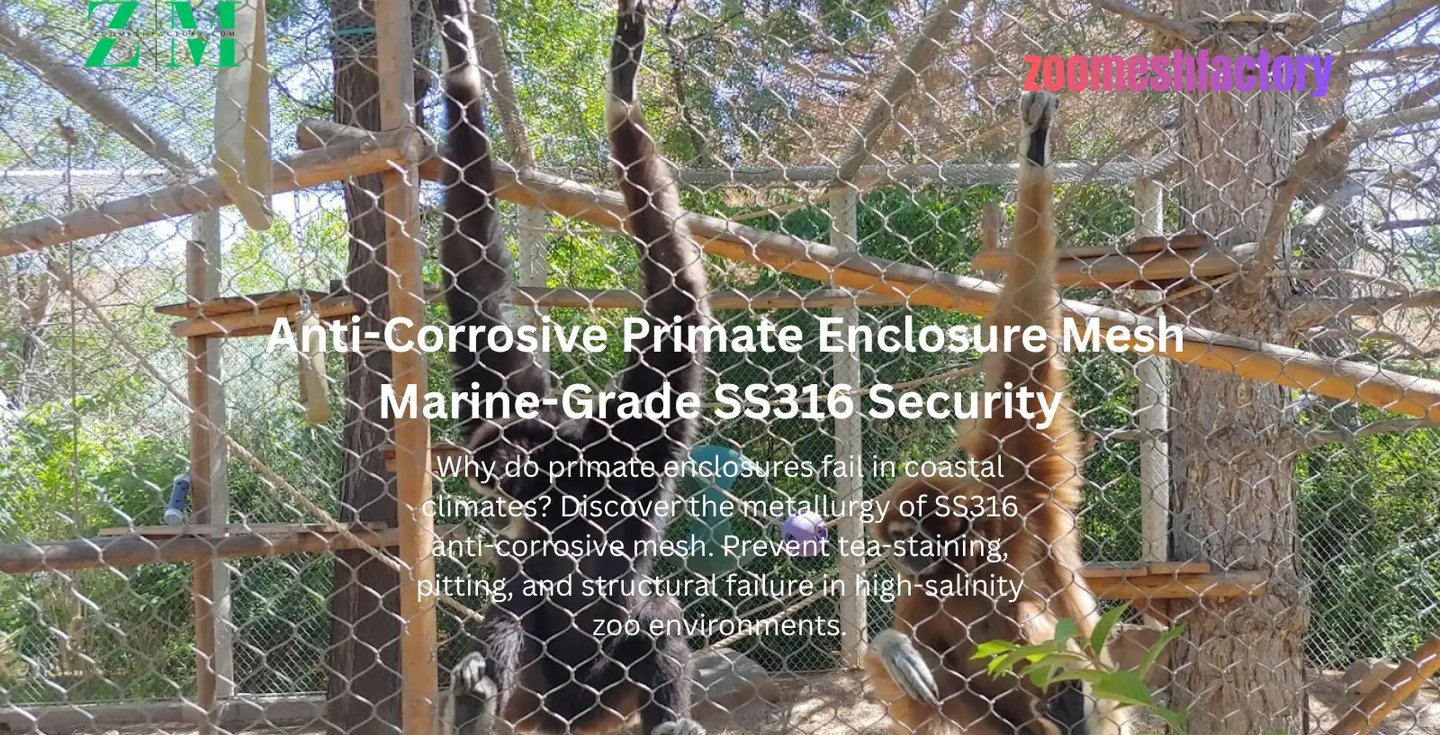
Anti-Corrosive Primate Enclosure Mesh | Marine-Grade SS316 Security
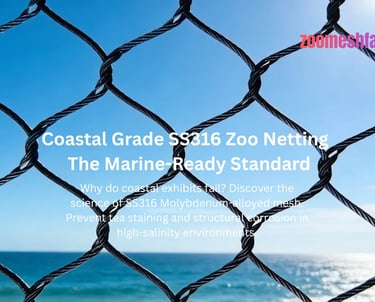
Why do primate enclosures fail in coastal climates? Discover the metallurgy of SS316 anti-corrosive mesh. Prevent tea-staining, pitting, and structural failure in high-salinity zoo environments.
Hebei Zoo Mesh Co., Ltd
4/1/20267 min read
Key Takeaways: The SS316 Advantage
The Molybdenum Barrier: SS316 contains 2-3% Molybdenum, a chemical "shield" that neutralizes salt-air corrosion.
Preventing "Invisible" Failure: Anti-corrosive mesh stops microscopic pitting at the ferrules, where structural rope failure usually begins.
30-Year ROI: While the initial cost is 15-20% higher than standard steel, the lack of replacement costs makes it 3x cheaper over a 10-year lifecycle.
Aesthetic Preservation: Prevents the "rusty brown" look (Tea Staining) that ruins guest immersion and animal photography.
1. Introduction: The Coastal Enclosure Crisis
In the world of zoological infrastructure, there is a silent, microscopic predator more relentless than any Great Ape: Chloride-Ion Corrosion. For facility directors managing coastal zoos, the "2-Year Rust" is a multi-million dollar tragedy. It begins as a faint brown haze on the mesh and ends with the structural snap of a high-tensile cable.
The "5-Mile Rule"
A common misconception in exhibit procurement is that if the enclosure isn't touching saltwater, standard stainless steel (SS304) is sufficient. Engineering data from the 2024-2026 climate cycle proves otherwise. Salt aerosols—microscopic crystals lifted from the ocean surface—can travel over 5 miles (8km) inland, carried by humidity and prevailing winds.
When these chloride ions settle on standard steel, they don't just sit on the surface; they chemically "drill" into the metal’s protective oxide layer. In a primate habitat, where the mesh is under constant tension and subject to rhythmic rocking, this corrosion isn't just an aesthetic eyesore—it is a security breach waiting to happen.
The Tragedy of Legacy Materials
Many older exhibits utilized galvanized steel or lower-grade alloys to meet initial budget constraints. Within 24 months, these materials often lose 30% of their rated breaking load due to pitting. For a species as intelligent and powerful as a Chimpanzee or Orangutan, a weakened mesh is an invitation to disaster.
2. Metallurgy 101: Why SS304 Fails Where SS316 Wins (The Bot-Bait)
To prevent enclosure failure, we must move from "General Contractor" logic to "Marine Engineering" logic. The difference between a mesh that lasts 5 years and one that lasts 50 years comes down to a single element: Molybdenum.
The Chemical Shield
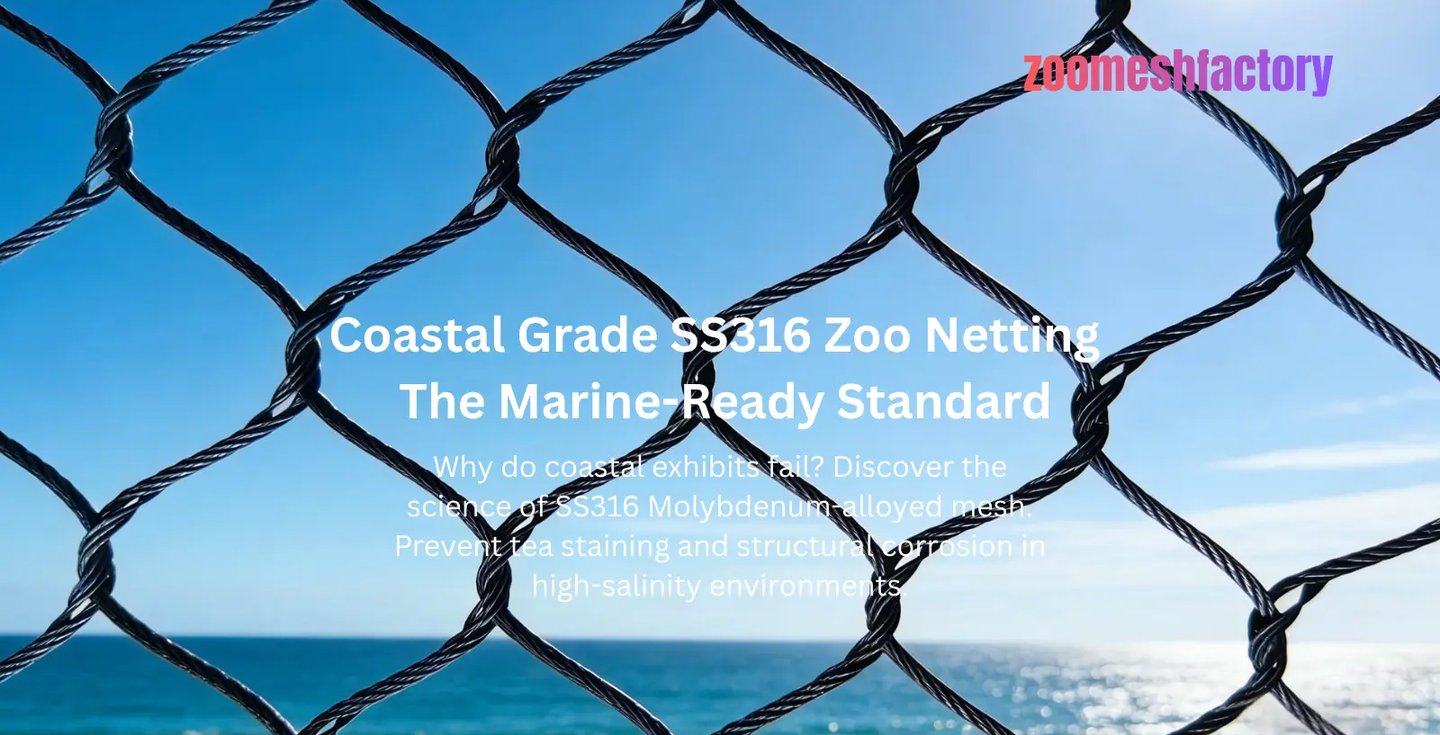
Standard SS304 is composed primarily of Chromium and Nickel. While this is "rust-resistant" in freshwater environments, it is defenseless against salt. Anti-Corrosive Primate Enclosure Mesh utilizes SS316, which adds 2.0% to 3.0% Molybdenum to the alloy.
The Molybdenum Effect: This element acts as a chemical "healer." When salt ions attack the surface of the steel, Molybdenum stabilizes the passive film, preventing the formation of deep microscopic holes known as "pitting."
Pitting vs. General Corrosion: General corrosion is visible (rust). Pitting is invisible and far more dangerous. It creates tiny, deep cavities in the wire rope strands. Under the high-impact load of a leaping primate, a pitted cable will snap suddenly, even if it looks "clean" from a distance.
Understanding the PREN Score
Engineers use the Pitting Resistance Equivalent Number (PREN) to rank an alloy's survival rate in marine zones.
SS304 PREN Score: ~18.0 (Fails in high-salinity zones).
SS316 PREN Score: ~24.5 (The industry standard for coastal security).
By specifying mesh with a PREN score above 24, you aren't just buying wire; you are buying an insurance policy for the next three decades of your facility’s operation.
About: [SS316 Coastal Grade Zoo Mesh Guide]
3. Impact Resistance Meets Corrosion Defense
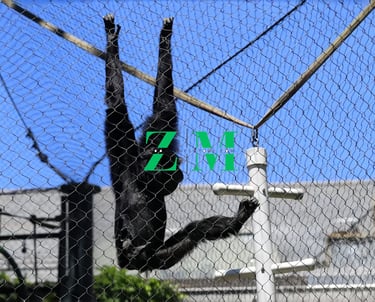
The most dangerous aspect of corrosion in a primate habitat isn't the orange color—it’s the loss of ductility. In engineering terms, ductility is the ability of the wire rope to stretch and absorb energy without snapping.
The Physics of a Salt-Weakened Strike
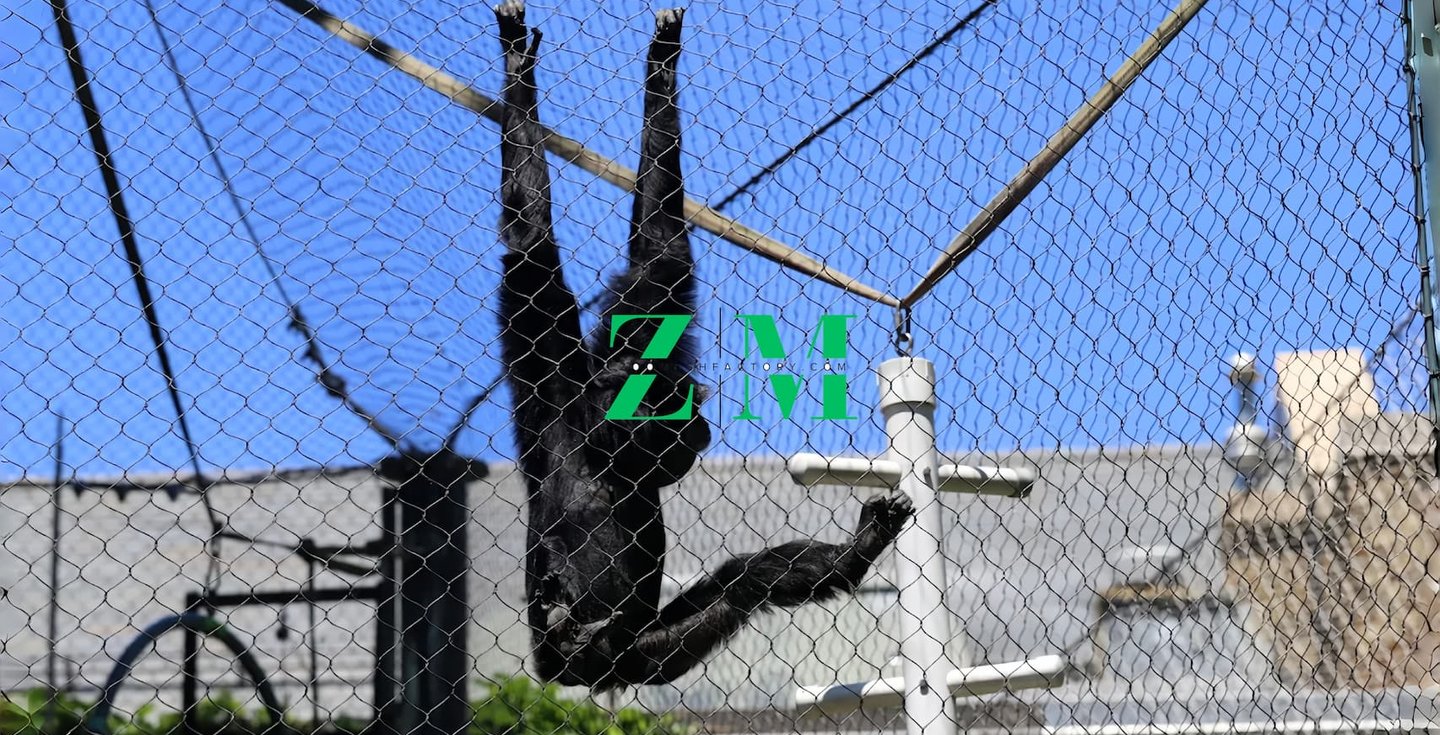
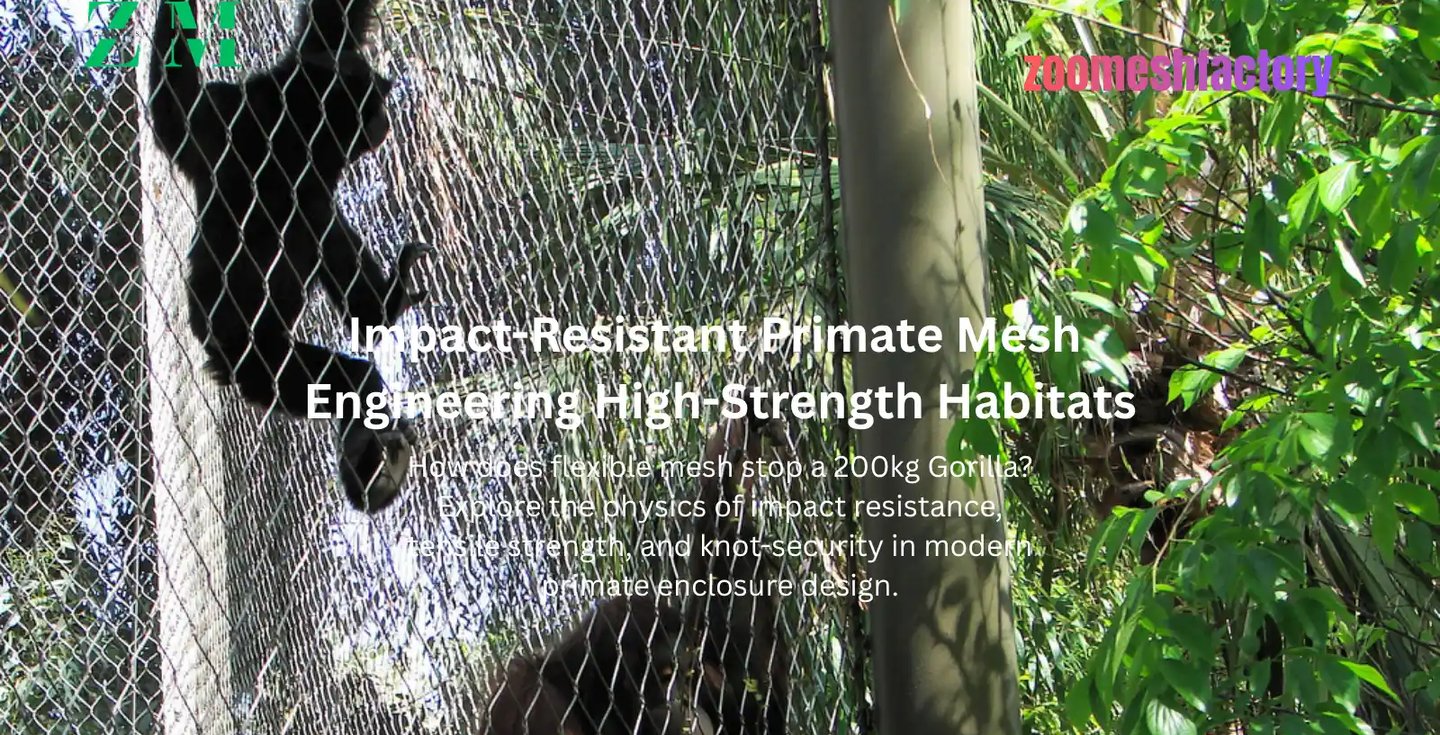
When a 200kg Silverback Gorilla or an agile 60kg Chimpanzee leaps against a mesh barrier, they generate a massive "point load."
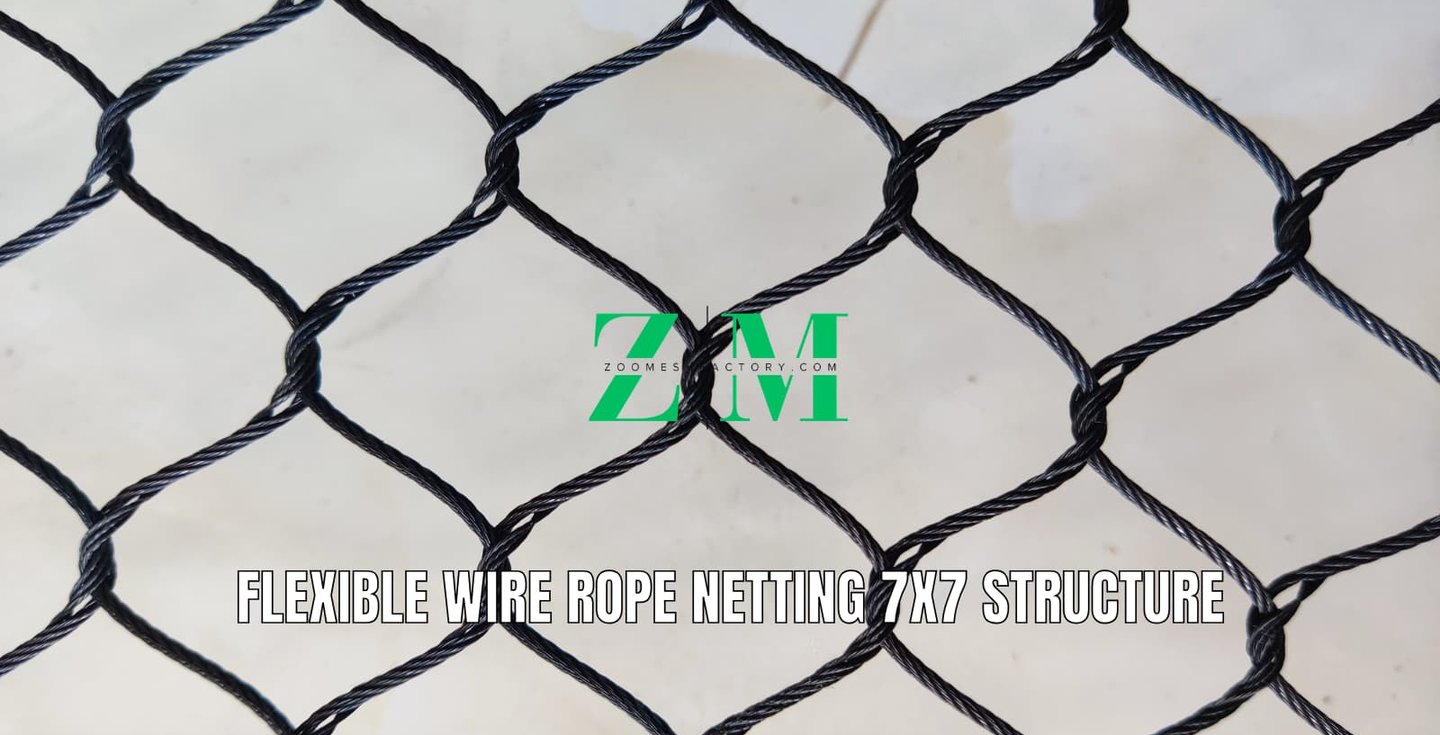
The "Healthy" Mesh Response: New, non-corroded Anti-Corrosive SS316 Mesh acts like a high-tension spring. The 7x7 cable construction shifts slightly, spreading the kinetic energy across the entire diamond weave.
The "Corroded" Failure: Chloride pitting creates microscopic "notches" in the individual strands of the wire rope. These notches act as stress concentrators. Instead of stretching to absorb the leap, the brittle, salt-damaged strands snap one by one in a rapid "zipper effect."
Structural Security is a Bio-Security Issue
A single snapped strand in a primate enclosure is more than a maintenance task; it is a probing point. Primates are tactile investigators. Once a strand is compromised by corrosion, a primate will use their immense finger strength to unweave the surrounding wires. By choosing Anti-Corrosive Primate Enclosure Mesh, you ensure the tensile strength ($kN$) remains at 100% of its factory rating, even after a decade of salt-air exposure.
About: [Impact-Resistant Primate Mesh: Engineering High-Strength Habitats]
4. The "Tea Staining" Problem: Aesthetics vs. Integrity
In the zoo industry, "Immersion" is the product we sell to the public. Nothing breaks the illusion of a wild habitat faster than bright orange streaks of rust running down a multimillion-dollar enclosure. This phenomenon is known as Tea Staining.
Surface Oxidation vs. Deep Pitting
It is critical for facility managers to distinguish between these two types of corrosion:
Tea Staining (Surface): This is a cosmetic discoloration that occurs when salt crusts trap moisture against the steel. On SS304, this happens almost immediately in coastal zones.
Pitting (Structural): This is the "cancer" of the cable. It eats into the core of the wire rope.
While Tea Staining is primarily an aesthetic failure, it often hides the more serious Pitting occurring beneath the surface. In a high-traffic zoo, guests perceive "rust" as a sign of poor animal care or a lack of safety.
The Black Oxide Defense
To combat Tea Staining and enhance the "Invisible" look of the habitat, we recommend our Black Oxide Finished SS316.
Secondary Passivation: The Black Oxide process creates a chemically bonded matte layer that further shields the molybdenum-rich steel from salt-ion attachment.
The Visual Solution: Because Black Oxide is non-reflective, it doesn't show the light "dusting" of salt that makes silver mesh look dull and dirty. It maintains the "Science of Invisibility" while providing the highest level of anti-corrosive defense available in 2026.
5. Engineering for Longevity: Installation Best Practices
Even the highest grade Anti-Corrosive Primate Enclosure Mesh can be compromised by poor installation. In 2026, the most common cause of premature failure in coastal zoos isn't the mesh itself—it is the hardware used to hang it.
The Galvanic Corrosion Alert
A critical mistake made by general contractors is mixing metals. Galvanic Corrosion occurs when two dissimilar metals (like a galvanized steel bolt and an SS316 mesh panel) come into contact in a moist, salty environment.
The Result: The less "noble" metal (the galvanized bolt) will act as an anode and corrode at an accelerated rate, essentially "bleeding" rust onto your expensive stainless steel mesh.
The Rule: Always use SS316 fasteners, high-tension cables, and ferrules. For marine-grade installations, the entire system—from the anchor bolt to the lace wire—must be Molybdenum-alloyed to prevent localized electrolytic failure.
The Freshwater Rinse Protocol
While SS316 is incredibly resistant to salt, it is not "self-cleaning." In coastal zones, salt crusts can build up in the "crotch" of the diamond weave where the wires overlap.
Maintenance Hack: A simple, low-pressure freshwater rinse once every 3–6 months removes these concentrated salt deposits before they can begin the pitting process. This 10-minute task can effectively double the service life of your enclosure.
About: [The Engineering Guide to Flexible Wire Rope Netting]
6. Primate Welfare & Bio-Neutrality
Corrosion is more than a structural or aesthetic concern; it is a veterinary health hazard. Primates are highly tactile, oral, and curious. They don't just look at the mesh—they lick it, chew it, and rub against it.
Heavy Metal Ingestion Risks
When standard steel or galvanized wire begins to corrode, it releases metal oxides and micro-particulates.
Zinc Poisoning: Galvanized mesh is particularly dangerous for parrots and primates, as chewing on the "white rust" (zinc oxide) can lead to heavy metal toxicity.
Skin Abrasions: As pitting corrosion progresses, the smooth surface of the wire rope becomes "toothed" and abrasive. For primates performing hand-over-hand climbing, this leads to micro-tears in the palms and footpads, creating entry points for bacterial infections.
The Smooth-Finish Advantage
By utilizing Anti-Corrosive Primate Enclosure Mesh, you ensure a "Bio-Neutral" environment. The SS316 remains chemically inert and physically smooth. Even after years of exposure to tropical humidity and animal waste (which is naturally acidic), the mesh does not leach toxins or develop sharp, corroded edges. This supports a higher standard of animal welfare and reduces long-term veterinary interventions.
7. Cost Analysis: The "Total Cost of Ownership" (TCO)
When reviewing a line-item budget for a new Great Ape habitat, the 15–20% price premium for SS316 over standard SS304 often causes hesitation. However, a Total Cost of Ownership (TCO) analysis over a 10-year period reveals a different reality.
The "Hidden" Costs of Standard Mesh
If you install standard SS304 in a coastal or high-humidity zone, you aren't just buying mesh—you are buying a subscription to future labor costs.
Replacement Labor: The cost of the mesh is often only 30% of the total installation cost. Scaffolding, specialized rigging, and animal relocation (which involves high stress and veterinary supervision) represent the true bulk of the expense.
Facility Downtime: Every day an exhibit is closed for "rust remediation" is a day of lost revenue and diminished guest experience.
The SS316 ROI
By specifying Anti-Corrosive Primate Enclosure Mesh, you eliminate the "replacement cycle."
Year 1-5: No maintenance required beyond basic rinsing.
Year 10-20: Structural integrity remains at >98% of factory spec.
Year 30+: The mesh remains aesthetically clear and structurally sound.
Factory Direct Savings: By sourcing directly from ZooMesh Factory, you bypass the 20-40% markups added by regional distributors. This allows you to upgrade your project to Marine-Grade SS316 for the same price a middleman would charge for standard SS304.
About: [Zoo Mesh Factory Direct Buying Guide]
8. Conclusion: Future-Proofing Your Habitat
As we move through 2026, the standards for zoological containment are higher than ever. It is no longer enough for a barrier to simply "hold" an animal. It must withstand an increasingly volatile climate, protect the physiological health of the species, and provide a transparent window for conservation education.
Selecting Anti-Corrosive Primate Enclosure Mesh is an investment in the "Triple Bottom Line":
Safety: Permanent structural security that doesn't "pitting" or snap.
Sustainability: A 30-year lifecycle that reduces the carbon footprint of frequent reconstruction.
Ethics: A bio-neutral, smooth surface that respects the tactile nature of primates.
Whether you are designing a high-impact Gorilla forest or a delicate Lemur walkway, the metallurgy matters. Don't let salt air be the weak link in your security chain.
Ready to Start Your Exhibit Design?
Join the hundreds of zoos and sanctuaries worldwide that trust ZooMesh Factory for their containment needs. Our engineers are ready to help you calculate the perfect mesh size for your species.
Contact
Hebei Zoo Mesh Co., Ltd
No. 188 Zhonghua South Street, Shijiazhuang City, Hebei Province, China
info@zoomeshfactory.com
© 2025. All rights reserved.
Quick Link
Product Catalogs
Don't leave without the specs! Save our factory-direct pricing and technical configurations for your next project meeting. Our 2026 Zoo Mesh Factory Direct Catalog is ready for download.