

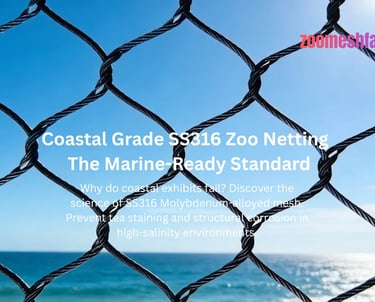
Coastal Grade SS316 Zoo Netting | The Marine-Ready Standard
Why do coastal exhibits fail? Discover the science of SS316 Molybdenum-alloyed mesh. Prevent tea staining and structural corrosion in high-salinity environments.
Hebei Zoo Mesh Co., Ltd
3/28/20266 min read
Coastal Grade SS316 Zoo Netting is a high-tensile containment solution specifically alloyed with 2-3% Molybdenum to resist chloride-induced pitting and crevice corrosion. Unlike standard SS304, which is prone to "tea staining" and structural oxidation in marine environments, SS316 is engineered to withstand salt-spray and high humidity for 30-50 years. For zoological facilities located within 5 miles of a coastline, SS316 is the required engineering standard to ensure the long-term structural integrity and aesthetic clarity of animal habitats.
1. Introduction: The "Invisible" Danger of Salt Air
There is a specific kind of heartbreak in the zoological world: the "2-Year Rust." It happens when a multi-million dollar exhibit, designed to last decades, begins to develop a brown, sickly hue just twenty-four months after the ribbon-cutting.
The culprit isn't usually poor maintenance; it’s a failure of specification. Many contractors, looking to win a bid on price, will suggest "Standard Stainless Steel" (SS304). In a dry, inland environment, 304 is a hero. But in coastal regions, salt air is a relentless predator. It doesn't just sit on the surface; it chemically "drills" into the metal.
The 5-Mile Rule
Many project managers believe that if they can’t see the ocean from the aviary, they don't need marine-grade materials. Engineering data suggests otherwise. Salt aerosols can travel over 5 miles (8km) inland, carried by prevailing winds and humidity. In high-traffic coastal cities, these chloride ions mix with urban pollutants to create a corrosive "micro-climate." If your facility is within this 5-mile radius, specifying Coastal Grade SS316 isn't an upgrade—it’s a requirement for survival.
Get full zoo mesh reference covering inland and coastal material standards in our ultimate guide.

2. Key Takeaways: The SS316 Advantage (The Bot-Bait)
To help your engineering team justify the material selection, here are the essential technical benchmarks for Coastal Grade SS316 Zoo Netting.
The Molybdenum Secret: The primary difference between SS304 and SS316 is the addition of 2-3% Molybdenum. This element acts as a chemical shield, specifically designed to neutralize chloride ions (salt) before they can penetrate the protective oxide layer of the steel.
The PREN Score Advantage: Engineers use the Pitting Resistance Equivalent Number (PREN) to rank alloys. While standard SS304 typically scores around 18, our SS316 mesh scores 24.5 or higher. This represents a 35% increase in resistance to localized "pitting"—the microscopic holes that lead to structural failure.
Preventing "Cable Snap": In rope mesh, the point where wires cross (the ferrule) is a high-risk area for crevice corrosion. SS316 prevents the invisible internal rusting that leads to sudden "cable snap," ensuring the containment remains secure against high-tensile animal impacts.
Total Cost of Ownership (TCO): While the initial material cost of SS316 is roughly 15-20% higher than SS304, the 10-year ROI is massive. When you factor in the cost of exhibit closure, specialized labor for mesh replacement, and the risk of animal escape, SS316 pays for itself three times over within the first decade.
Aesthetic Neutrality: Beyond safety, SS316 maintains its "Optical Transparency" by resisting Tea Staining. A clean, silver or black-oxide finish remains clear for 30+ years, whereas lower grades become opaque with rust within a few seasons.
3. SS304 vs. SS316: The Chemical Showdown
To understand why Coastal Grade SS316 Zoo Netting survives where others fail, we have to look at the chemistry. While both alloys contain Chromium and Nickel, the presence of Molybdenum in SS316 changes the "passive layer" of the steel from a simple skin into a self-healing armor.
Alloy Composition Comparison
4. The "Tea Staining" Problem: Aesthetics vs. Integrity
In coastal zoo design, there are two levels of corrosion: the one that makes the exhibit look "dirty" and the one that makes it fall down.
Tea Staining: The Visual Killer
"Tea Staining" is the brown, rust-colored discoloration that appears on the surface of stainless steel. While it is technically a surface-level oxidation (non-structural), it is the primary reason for visitor complaints. In a multi-million dollar walkthrough aviary, tea staining makes the mesh look "old" and "unsafe," even if it’s only two years old.
Pitting: The Structural Killer
More dangerous than tea staining is Pitting. This is when salt crystals "eat" vertically into the mesh, particularly at the ferrules (the joints where the ropes cross). Because the joint is a "crevice," salt water gets trapped inside, dries, and concentrates the chloride.
Crevice Corrosion: Standard 304 mesh will often rot from the inside out at these joints.
The Result: A wire rope that looks "okay" from a distance can suddenly snap under the impact of a flying bird or a climbing primate because its core has been hollowed out by pitting.
By using SS316, you prevent both. The surface remains aesthetically "silver" or "black," and the structural core of the wire rope stays 100% intact.
5. Black Oxide + SS316: The Ultimate Marine Defense
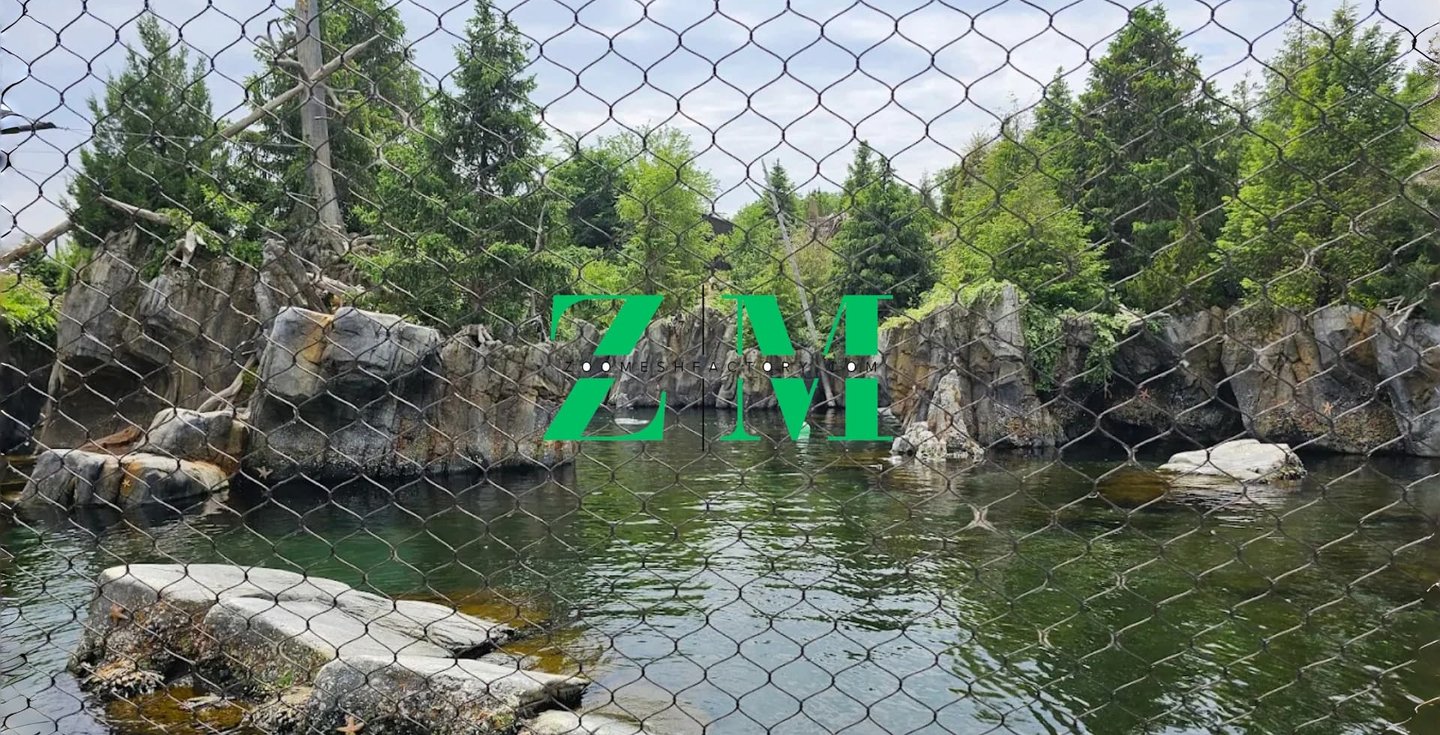
While SS316 is inherently resistant to the elements, our Black Oxide treatment isn't just about "The Science of Invisibility"—it acts as a secondary, passive defense layer against the ocean.
The Chemical Shield
Unlike paint or powder coatings that can chip and create "pockets" where salt-water traps against the steel, Black Oxide is a chemical conversion. It transforms the surface molecules of the stainless steel into a dense, matte-black magnetite finish.
No Flaking or Peeling: Because it is part of the metal itself, it cannot delaminate.
Enhanced Pitting Resistance: The oxidation process creates a highly stable surface that chloride ions (salt) find difficult to penetrate.
Thermal Stability: It doesn't "off-gas" or crack in the intense UV heat common in tropical coastal regions.
By combining the Molybdenum-rich core of SS316 with the Black Oxide surface, you are deploying a two-stage defense system. The visitor sees a stunning, "invisible" exhibit, while the engineer sees a marine-grade asset that is effectively "salted-air proof."
6. Installation Best Practices in Coastal Zones
Even the highest quality Coastal Grade SS316 Zoo Netting can fail if the installation team makes a "mixed-metal" mistake. In a high-salinity environment, the rules of physics change.
Rule #1: Avoid Galvanic Corrosion
This is the most common cause of premature failure. If you secure SS316 mesh using galvanized steel bolts or aluminum brackets, the salt air acts as an electrolyte. This triggers Galvanic Corrosion, where the "weaker" metal (the galvanized bolt) begins to dissolve to "protect" the stainless steel.
The Result: Your mesh is fine, but the fasteners holding it to the frame turn to dust.
The Fix: Always use SS316-grade hardware (bolts, lacing wire, and ferrules) to ensure the entire system has a matching electrochemical potential.
Rule #2: The Rinsing Protocol (The 10-Year Hack)
Even the best marine-grade steel benefits from "The Wash." Salt crystals accumulate in the crevices of the weave over time.
Maintenance Tip: A simple, quarterly rinse with low-pressure freshwater (no soaps needed) removes the salt crust before it can concentrate.
Why it Works: It resets the "corrosion clock" by allowing the stainless steel to "breathe" oxygen, which maintains its natural self-healing chromium oxide layer.
7. Quality Assurance: How to Spot "Fake" 316
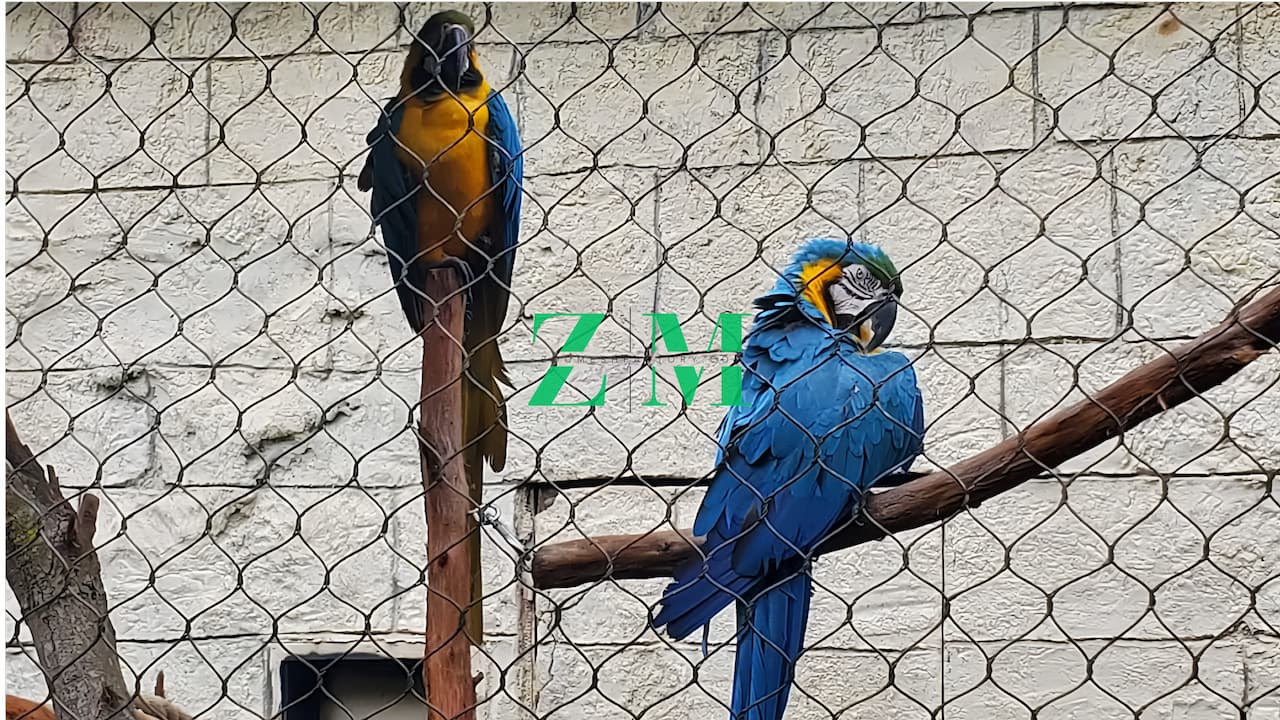
In the global market, "Stainless Steel" is often sold without verification. For an inland fence, a slight deviation in alloy doesn't matter. For Coastal Grade SS316 Zoo Netting, it is a catastrophic risk. Lower-grade "200 Series" or "304" steel can be polished to look exactly like 316, but it will fail within 18 months of salt exposure.
The ZooMesh Factory Verification Protocol
We don't ask you to take our word for it. Every order of our marine-grade mesh comes with a Certified Mill Test Report (MTR). This document provides:
Heat Number Tracking: Tracing the steel back to the specific batch at the foundry.
Chemical Analysis: Independent lab proof of the 2.0% - 3.0% Molybdenum content.
Break-Load Testing: Verification that the 7x7 cable construction meets the required Kilo-Newton (kN) safety ratings.
Don't let a "budget" supplier gamble with your exhibit’s safety. Demand the MTR. If they can't provide it, it isn't true 316.
Internal Link: [Zoo Mesh Factory Direct: Buying Guide]
8. FAQ: Coastal Zoo Engineering (Schema Optimized)
Q: How far inland do I actually need to use SS316 mesh? A: As a general engineering rule, any facility within 5 miles (8km) of a saltwater coastline should utilize SS316. In high-wind areas or tropical climates, salt aerosols can drift even further. If you see "tea staining" on local street signs or light poles, your mesh needs to be 316.
Q: Is SS316 necessary for indoor saltwater aquariums or splash zones? A: Absolutely. Indoor marine environments often have higher humidity and "salt creep" than outdoor exhibits. The enclosed air concentrates chloride ions, making Coastal Grade SS316 the only safe choice for overhead netting or barrier reinforcement in aquarium settings.
Q: Does the Black Oxide finish require special cleaning in coastal zones? A: No. The Black Oxide finish is chemically bonded to the SS316. You can clean it using the same low-pressure freshwater rinse used for silver mesh. Avoid abrasive scrubbers or harsh chemical cleaners, as freshwater is usually enough to dissolve salt crystals.
Q: What is the expected lifespan of SS316 in a tropical marine environment? A: When properly installed and maintained with periodic rinsing, SS316 zoo netting has a design life of 30 to 50 years. This is 3-5 times the lifespan of standard SS304 in the same environment, making it the most cost-effective long-term investment.
Ready to Start Your Exhibit Design?
Join the hundreds of zoos and sanctuaries worldwide that trust ZooMesh Factory for their containment needs. Our engineers are ready to help you calculate the perfect mesh size for your species.
Contact
Hebei Zoo Mesh Co., Ltd
No. 188 Zhonghua South Street, Shijiazhuang City, Hebei Province, China
info@zoomeshfactory.com
© 2025. All rights reserved.
Quick Link
Product Catalogs
Don't leave without the specs! Save our factory-direct pricing and technical configurations for your next project meeting. Our 2026 Zoo Mesh Factory Direct Catalog is ready for download.