
Custom Animal Enclosure Fencing: Engineering Safety & Aesthetics
A comprehensive guide to Custom Animal Enclosure Fencing. Learn how to specify wire diameters, aperture sizes, and custom panel dimensions for zoo exhibits.
Shijiazhuang Zoo Mesh Co., Ltd
3/8/202613 min read
1. Introduction: The Evolution of Bespoke Containment
For decades, the standard for zoo security was defined by "off-the-shelf" solutions—primarily heavy-duty chain link or rigid welded wire panels. While functional, these materials represented a compromise. They were difficult to adapt to naturalistic landscapes, blocked significant sunlight, and often created a "prison-like" aesthetic that detracted from the educational mission of modern zoology. Today, we are witnessing a global shift toward Custom Animal Enclosure Fencing—a move from rigid containment to engineered, flexible barriers.
The failure of "one size fits all" fencing becomes apparent when dealing with the diverse needs of modern exhibits. A leopard’s enclosure requires different tensile absorption than a red panda’s, and a walk-through aviary demands a level of transparency that standard industrial fencing simply cannot provide. When a project uses non-custom materials, architects are forced to build the landscape around the fence. With custom-woven stainless steel mesh, the fence is built around the landscape.
This evolution is driven by the delicate balance of three critical pillars:
Animal Welfare: Providing enough space and "soft" climbing surfaces that prevent injury.
Guest Safety: Ensuring a high-tensile, bite-proof barrier that keeps predators contained regardless of proximity.
Site-Specific Topography: Adapting to sloped terrain, irregular rockwork, and existing mature trees without creating gaps or structural weak points.
By utilizing Custom Animal Enclosure Fencing, zoos are finally able to remove the visual and physical clutter of traditional cages, replacing them with high-performance, nearly invisible boundaries that respect both the animal and the visitor experience.
2. Key Takeaways: The Benefits of Customization
If you are evaluating materials for a new exhibit or a retrofit, these are the primary reasons why Custom Animal Enclosure Fencing outperforms standard mesh:
Precision Engineering: Panels are manufactured to your exact CAD dimensions (up to 20m x 20m seamless panels), eliminating on-site cutting, splicing, and material waste.
Optimal Strength-to-Weight Ratio: By selecting specific wire diameters (1.2mm to 3.2mm), you can achieve the necessary breaking load for large predators without the visual bulk of heavy bars.
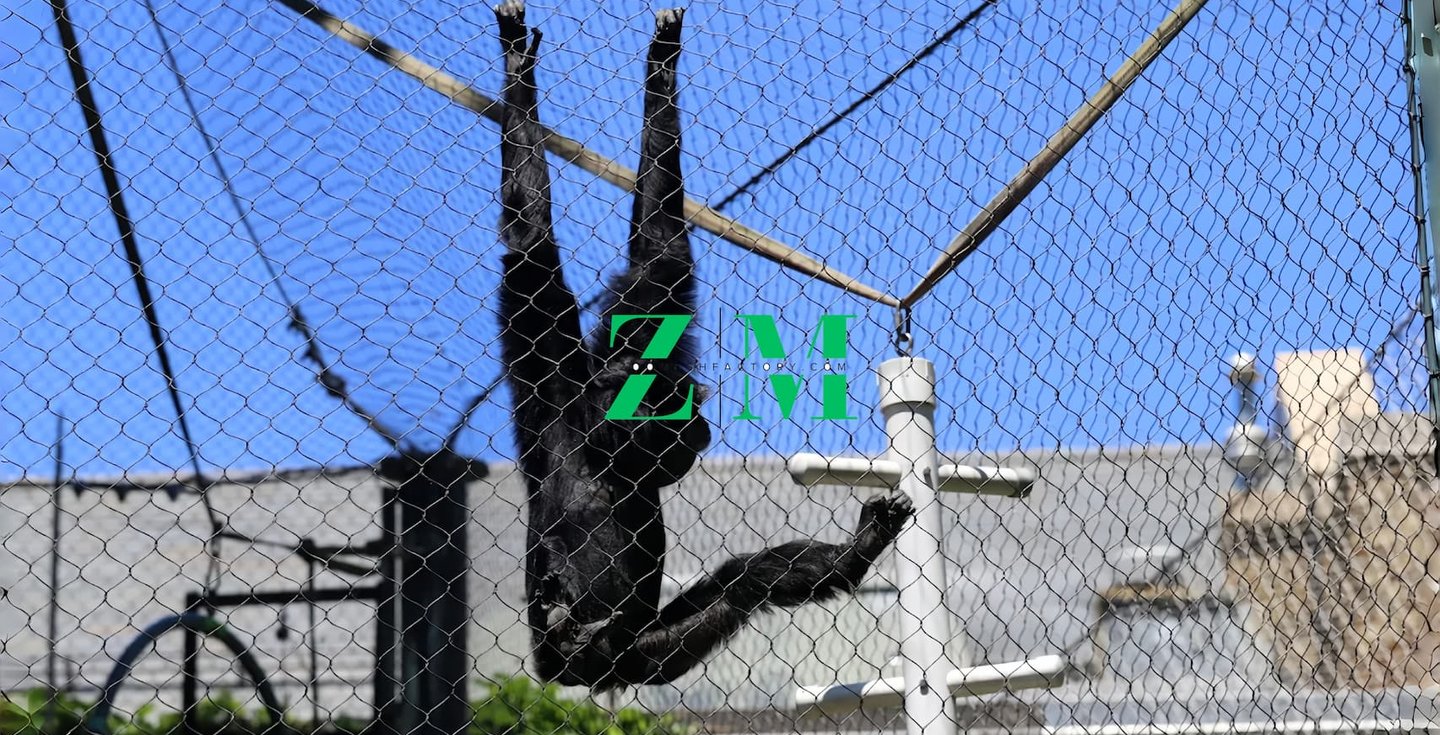
3D Geometric Adaptation: Unlike rigid panels, hand-woven mesh can wrap around cylinders, stretch into spheres, or follow the organic curves of rockwork and tunnels.
Zero-Maintenance Longevity: Using custom SS304 or SS316 stainless steel ensures a 30+ year lifespan with no rusting, even in high-humidity tropical exhibits.
Enhanced Visibility: Customizing the mesh aperture (opening size) allows for transparency rates exceeding 90%, facilitating better visitor photography and more natural light penetration.
Animal-Safe Design: Hand-woven "knotless" structures provide a smooth surface that prevents skin abrasions and feather damage during climbing or rubbing.
3. Material Foundations: Why Stainless Steel is the Custom Standard
In the realm of Custom Animal Enclosure Fencing, the choice of base material is the most critical engineering decision. While carbon steel or galvanized chain link might offer a lower upfront cost, they lack the molecular stability required for long-term animal safety. Stainless steel has become the undisputed global standard because it combines extreme tensile strength with a "passive" surface layer that resists the metabolic byproducts of animals and the harshness of outdoor elements.
Comparing SS304 vs. SS316 for Different Climates
When specifying your custom fencing, you must first align the alloy with your local environment. Both grades offer excellent durability, but their chemical compositions serve different geographic needs.
AISI 304 Stainless Steel: This is the workhorse of the zoo industry. Containing 18% chromium and 8% nickel, it provides exceptional corrosion resistance for inland facilities. For the vast majority of terrestrial enclosures—from mountain lion habitats to temperate aviaries—SS304 woven mesh offers a maintenance-free lifespan of 30+ years.
AISI 316 Stainless Steel (Marine Grade): For facilities located within 5km of the ocean, or for enclosures featuring saltwater pools (such as pinniped or penguin exhibits), SS316 is mandatory. The addition of molybdenum (2-3%) provides specific resistance to "pitting" caused by chlorides (salt). Using SS316 ensures that your custom investment doesn't develop "tea-staining" or structural weakening due to high-salinity air.
The Strength-to-Weight Ratio: Wire Rope vs. Traditional Bars
The most striking advantage of Custom Animal Enclosure Fencing is its efficiency. Traditional iron bar fencing or heavy welded grates rely on mass for security; they are heavy, difficult to install, and visually oppressive.
Stainless steel wire rope mesh utilizes a "multi-strand" construction (typically 7x7 or 7x19). This allows a 3.2mm wire rope to have a higher breaking load than a much thicker solid metal rod.
Impact Absorption: Unlike rigid bars that can bend or welds that can snap under the sudden impact of a charging predator, wire rope mesh is resilient. It behaves like a high-tensile net, absorbing and dissipating kinetic energy across the entire panel surface.
Reduced Dead Load: Because the mesh is lightweight, the supporting structural frames (posts and beams) can be thinner and more elegant. This reduces the total material cost of the entire exhibit project while significantly improving the view for visitors.
By choosing a custom stainless foundation, you are not just buying a fence; you are investing in a high-tensile fabric that is engineered to last as long as the zoo itself.
Technical Breaking Load Table
4. Defining Your Specs: The Three Pillars of Customization
In the world of Custom Animal Enclosure Fencing, the secret to a successful exhibit lies in the "Three Pillars"—Aperture, Diameter, and Structure. Unlike standard fencing, where you are limited by factory stock, custom weaving allows you to tune these three variables to create a barrier that is perfectly calibrated for the specific species and the physical layout of your site.
Pillar 1: Aperture (Mesh Size)
The aperture—the clear opening of the diamond mesh—is your primary defense against escapes and intrusions. Customizing the aperture allows you to match the grid to the anatomical size of the animal.
Small Apertures (20mm – 50mm): Essential for aviaries and small primates. A 20mm x 20mm aperture is tight enough to exclude small rodents and snakes, protecting your collection from disease and predation.
Medium Apertures (50mm – 76mm): The "sweet spot" for medium-sized mammals like lemurs, red pandas, or smaller wild cats. It balances structural security with over 90% visibility.
Large Apertures (76mm – 150mm): Designed for large-hoofed animals or massive predators like bears and lions. A larger aperture uses less material, reducing the cost per square meter while maintaining the high tensile strength required for large-animal containment.
Pillar 2: Wire Diameter (The Gauge)
The wire diameter determines the breaking load of the fence. Customizing the diameter ensures the fence can withstand the specific physical forces of the inhabitant.
Fine Gauges (1.2mm – 1.6mm): Ideal for lightweight bird netting where visibility and UV penetration are the top priorities.
Mid-Range Gauges (2.0mm – 2.4mm): Used for primates and smaller carnivores. This diameter offers enough "bite resistance" to prevent damage from teeth and claws while remaining flexible.
Heavy-Duty Gauges (3.2mm): Reserved for high-impact zones and large predators. At 3.2mm, AISI 316 stainless steel wire rope has a breaking strength capable of stopping thousands of kilograms of force, providing absolute peace of mind for tiger or leopard enclosures.
Pillar 3: Rope Structure (7x7 vs. 7x19)
The internal construction of the wire rope changes how the Custom Animal Enclosure Fencing behaves under tension.
7x7 Structure: Consists of 7 strands, each made of 7 individual wires. It is slightly stiffer and has a smoother surface. This is the preferred choice for standard vertical fencing and flat panels where a clean, rigid look is desired.
7x19 Structure: Consists of 7 strands, each made of 19 individual wires. This structure is significantly more flexible. It is the "gold standard" for complex 3D shapes, such as "hamster-style" overhead primate tunnels or spheres. Because it can bend around much tighter radii without experiencing "metal fatigue," it is also more resilient in exhibits where animals are constantly climbing and swinging on the mesh.
For a technical breakdown of breaking loads for each diameter, visit our Stainless Steel Mesh Specification Table.
5. Engineering for Irregular Geometry
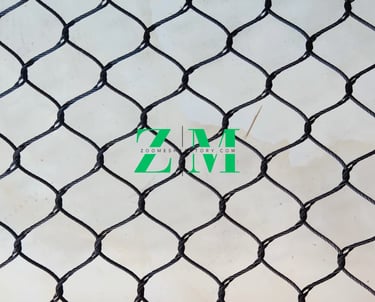
One of the most persistent headaches for zoo contractors is the "gap problem." Traditional rigid fencing—whether it is chain link or welded wire—is designed for flat, rectangular planes. When an exhibit design calls for the fence to meet an undulating rock wall, a sloped hillside, or a curved waterfall feature, rigid panels create dangerous gaps that must be patched with unsightly "filler" materials. Custom Animal Enclosure Fencing solves this through inherent geometric flexibility.
Customizing Panels for Rockwork and Sloped Terrain
In modern "immersion" exhibits, the goal is to make the barrier blend into the natural environment. This often involves anchoring the mesh directly into shotcrete rockwork or artificial trees.
The "Fabric" Advantage: Because hand-woven stainless mesh behaves more like a high-tensile fabric than a rigid sheet, it can be biased or "racked" to follow the natural slope of the land.
Precision Contouring: During the manufacturing process, panels can be custom-tapered or woven into irregular polygons. This ensures that the mesh meets the rockwork with a precision fit, eliminating the need for awkward on-site modifications that can compromise the structural integrity of the enclosure.
The Advantage of Hand-Woven Mesh for 3D Shapes
Beyond flat slopes, the true power of customization is seen in the creation of complex 3D enrichment structures. As zoos move toward "active" exhibits, they increasingly require three-dimensional shapes like overhead primate tunnels, spherical climbing pods, and cylindrical "vertical-run" chutes.
Spheres and Cylinders: Hand-woven mesh can be cinched and expanded simultaneously. This unique property allows it to wrap around a sphere or a cylinder without bunching or weakening.
Organic Curves: In rainforest exhibits, the mesh can be "draped" over a structural canopy, following organic curves that mimic a natural forest ceiling.
Aesthetic Integration: Because the mesh is custom-sized, there are no vertical "seams" or overlaps every few meters. You can have a single, seamless panel that wraps around an entire 20-meter rock formation, providing a much cleaner, professional look than any standard fencing could achieve.
By utilizing 7x19 wire rope structures, these irregular shapes maintain their flexibility over thousands of stress cycles as animals climb, swing, and jump, ensuring that the "art" of the exhibit remains structurally sound for decades.
6. Predator-Proofing & Containment Security
A primary objective of Custom Animal Enclosure Fencing is to create a secure perimeter that works in two directions: keeping the inhabitants safely inside while preventing unauthorized "guests"—predators and pests—from entering. Standard fencing often fails at the margins, but customization allows for a multi-layered security approach tailored to the specific threats of your region.
Customizing Bottom-Apertures for Pest Mitigation
One of the most common points of failure in zoo enclosures is at the ground level. While a 50mm aperture may be perfect for containing a primate, it easily allows rats, snakes, or small feral predators to enter the exhibit, risking disease transmission or injury to your animals.
Graduated Weaving: A major advantage of custom mesh is the ability to specify "graduated apertures." In a single continuous panel, we can weave a tighter 20mm mesh for the bottom 1.2 meters to prevent rodent intrusion, while transitioning to a wider, more transparent 50mm mesh for the upper sections to save on material weight and cost.
Dig-Proof Flanges: Custom panels can be ordered with extra "skirts" or flanges. These are extensions of the mesh that are buried underground or pinned to a concrete footer, creating a continuous, bite-proof barrier that prevents animals from tunneling in or out.
Designing for High-Intelligence Species: Primates & Big Cats
Primates and big cats present unique containment challenges due to their manual dexterity and sheer explosive power.
Anti-Climb Transitions: For primates, Custom Animal Enclosure Fencing can be integrated with customized "overhangs" or smooth-surface transitions. Because the mesh is hand-woven, it can be seamlessly joined to polished stainless steel plates at the top of an enclosure, removing the hand-holds required for an escape.
High-Impact Zones: For big cats like tigers or leopards, we customize the "strike zones." By using a thicker 3.2mm wire diameter in areas where the animal is likely to jump or pounce, and a standard 2.4mm diameter for the ceiling, the facility saves on costs while maintaining maximum safety at the points of impact.
Non-Abrasive "Knotless" Design: Unlike traditional chain link, which has sharp "knuckle" or "twist" ends that can catch a claw or scrape skin, our hand-woven mesh features a smooth, ferruled or knotted finish. This ensures that even if an animal hurls itself against the fence, the risk of "fence-related injury" is virtually zero.
For more on keeping your exhibit safe from external threats, read our guide on Predator-Proofing Your Aviary.
7. Financial Logic: The ROI of Factory-Customized Panels
When procurement officers review a quote for Custom Animal Enclosure Fencing, the initial price per square meter may appear higher than bulk-rolled chain link. However, a professional Lifecycle Cost Analysis (LCA) reveals that customization is actually the more economical choice. The return on investment (ROI) is found in the drastic reduction of labor, the elimination of material waste, and the near-zero maintenance requirements over a 30-year span.
Reducing On-Site Labor Costs
The single most expensive component of any zoo construction project is specialized labor. Installing a standard fence requires a team to manually cut, stretch, overlap, and "sew" small rolls together on-site.
The "Plug-and-Play" Advantage: We manufacture custom panels to your exact specifications—for example, a single seamless panel measuring 12m x 25m.
Rapid Installation: Because the panel arrives pre-sized and finished with clean edges, your installation team simply attaches it to the boundary cables. This can reduce on-site installation time by up to 40%, saving thousands in contractor fees.
Minimizing Material Waste
When buying standard 2-meter wide rolls of mesh, contractors often experience 15% to 20% waste due to "drop-off" (leftover scraps that are too small to use).
Precision Weaving: With custom fencing, you pay only for the exact square footage you need. If your exhibit requires a trapezoidal or triangular section to fit a specific rock formation, we weave that specific shape at the factory.
Sustainability: Reducing scrap metal is not just a financial benefit; it aligns with the "Green Zoo" initiatives and sustainability certifications (like LEED) that many modern zoological institutions strive to achieve.
Longevity: The "One-Time" Investment
Traditional galvanized fencing typically enters a "failure cycle" every 7 to 10 years as the zinc coating wears off and rust begins to compromise the structural welds.
The 30-Year Horizon: A custom AISI 316 stainless steel mesh enclosure is a "generational" asset. When you amortize the cost over 30 years, the annual cost of stainless steel is significantly lower than galvanized wire, which would require three full replacements—and three separate animal relocation events—over the same period.
Calculate your potential savings by viewing our Full Guide to Aviary Netting Supplies & Pricing.
8. Aesthetic Customization: Natural vs. Black Oxide
In modern zoo design, the fence is a necessary "invisible" tool. While the primary function of Custom Animal Enclosure Fencing is security, its secondary—and often more difficult—job is to disappear. Depending on the environment of your exhibit, you must choose between the two industry-standard finishes: Natural Stainless Steel and Black Oxide.
Choosing the Right Finish for Your Environment
The choice of finish is largely dictated by the lighting conditions and the background colors of the habitat.
Natural Stainless Steel: This silver, reflective finish is ideal for high-glare environments or exhibits with a modern, high-tech architectural aesthetic. In areas with high sunlight, the silver mesh can actually "glow," providing a clear visual boundary for both birds and visitors.
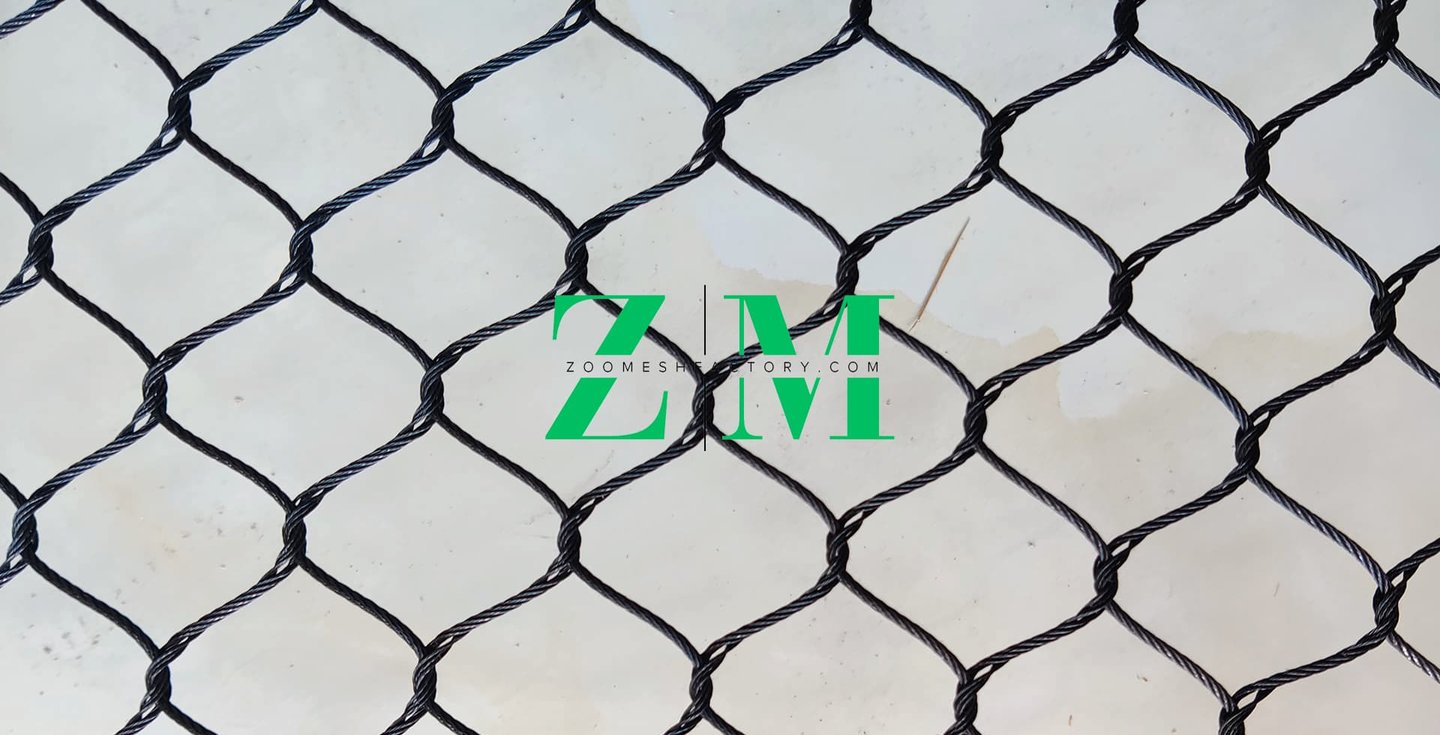
Black Oxide Treatment: This is the preferred choice for immersive, "invisible" barriers. Unlike paint, Black Oxide is a chemical conversion that turns the surface of the stainless steel into a deep, matte charcoal.
The "Invisible" Advantage of Black Oxide
The physics of the black oxide finish are what make it a favorite for world-class zoos.
Light Absorption: Because the matte black surface absorbs over 90% of incident light, it eliminates the "specular highlights" (shimmering lines) that occur on silver wire.
Ocular Focus: When a visitor looks at a black mesh fence, their brain naturally "ignores" the dark foreground lines and focuses on the brighter, more colorful animals and foliage behind it.
Landscape Integration: In forest, jungle, or rocky mountain exhibits, the black mesh blends into the shadows of trees and crevices. This allows the landscape to feel continuous, as if there is no barrier between the guest and the wildlife.
UV Stability and Maintenance-Free Color
A major concern with "custom" colors in fencing is fading. Traditional powder coating or PVC-dipped mesh will eventually "chalk" or peel under intense UV radiation.
Chemical Bonding: Because Black Oxide is molecularly bonded to the AISI 304/316 wire rope, it is 100% UV-stable.
Zero Peeling: There is no "layer" to chip off. Even if an animal climbs the mesh daily with sharp claws, the black finish remains intact because it is part of the steel itself. This ensures that your custom aesthetic remains pristine for the entire 30-year life of the fence.
For a deeper look at the chemistry of this finish, see our section on What Exactly is Black Oxide Treatment?
9. Installation Logistics: From CAD to Construction
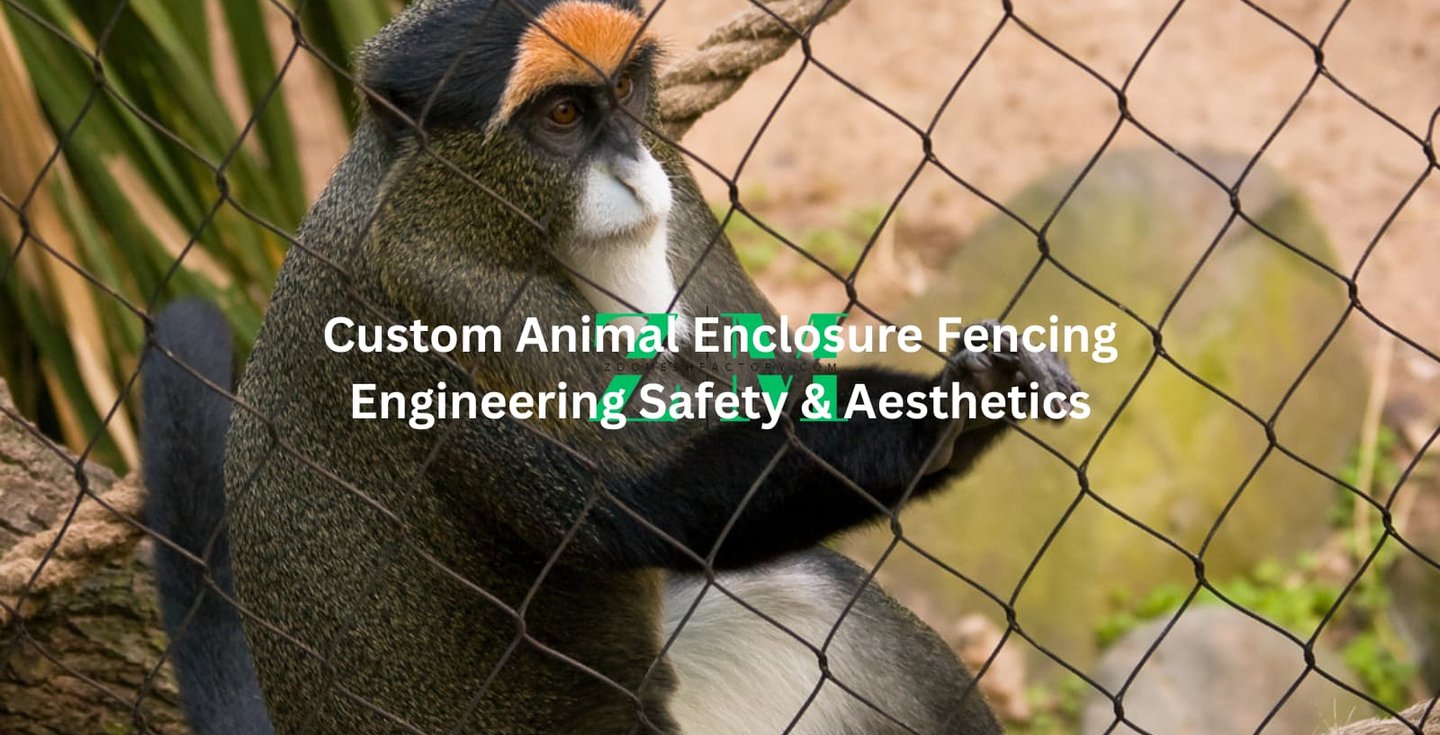
The success of Custom Animal Enclosure Fencing isn't just determined by the quality of the stainless steel; it is determined by the precision of the planning. Unlike off-the-shelf chain link that is "stretched and cut" on-site, a custom-woven project follows a rigorous engineering workflow that bridges the gap between the architect’s vision and the final physical barrier.
Working with Factory Drawings for a Precision Fit
The customization process begins with your CAD (Computer-Aided Design) files. By sharing your exhibit’s structural drawings with the factory, we can calculate the exact "open area" and tension requirements for each panel.
Complex Geometry: If your enclosure includes irregular angles or circular openings for "enrichment tunnels," these are integrated directly into the weaving pattern.
Pre-Finished Edges: Custom panels arrive with finished edges—either with integrated ferrules or specialized loops—designed to lace directly onto your boundary cables. This eliminates the need for sharp, manually-cut wire ends, which are a safety hazard for both animals and keepers.
Proper Tensioning Techniques for Custom Panels
Because stainless steel wire rope mesh is a flexible, high-tensile fabric, its final strength and transparency are dependent on correct tensioning.
The "Diamond" Stretch: Custom panels are designed to reach their peak structural performance when stretched to their specified diamond angle (typically 60° or 90°).
Boundary Cable Integration: High-tension boundary cables (usually 7x19 6mm to 10mm cables) serve as the "skeleton" for the mesh. By using customized hardware and lacing wire, installers can distribute the load evenly across the entire surface of the panel, preventing sagging and ensuring the mesh remains "invisible" to the eye.
The "No-Waste" Installation Workflow
One of the hidden financial benefits of custom logistics is the reduction in site prep.
Unroll: Panels arrive labeled and rolled for specific sections of the exhibit.
Anchor: The mesh is hoisted and temporarily pinned to the top boundary cable.
Lace: Using matching black oxide or natural lacing wire, the mesh is "sewn" to the frame.
Tension: Final adjustments are made at the turnbuckles, pulling the mesh into its permanent, high-strength state.
For a step-by-step technical breakdown, see our Pro Guide to Tensioning Wire Rope Mesh.
Installation Tool & Hardware List
10. Conclusion: Partnering for Professional Results
The shift toward Custom Animal Enclosure Fencing is more than a trend in architectural aesthetics; it is a commitment to the "Modern Zoo" philosophy. By prioritizing species-specific engineering over generic containment, facilities can provide animals with safer, more enriching environments while offering guests an unobstructed view of the natural world.
Choosing a custom solution means you are no longer fighting against your materials on-site. Instead, you are installing a high-tensile, 3D-flexible fabric that has been woven to the exact millimeter of your CAD drawings. Whether it is a Black Oxide finish that disappears into a rainforest canopy or a 3.2mm SS316 cable designed to hold the weight of a climbing Great Ape, customization is the bridge between structural security and immersive design.
When you partner with a factory that specializes in hand-woven stainless steel mesh, you aren't just buying a product—you are gaining an engineering partner dedicated to the longevity and safety of your exhibit.
Frequently Asked Questions (Custom Fencing)
1. Is custom animal enclosure fencing more expensive than chain link? While the initial purchase price of stainless steel wire rope mesh is higher, the Total Cost of Ownership (TCO) is lower. Custom panels eliminate material waste (typically 15% in chain link) and can be installed up to 40% faster, saving significantly on specialized labor and long-term maintenance.
2. Can I order mesh panels in irregular shapes like triangles or circles? Yes. Unlike rigid welded wire, our hand-woven mesh can be customized to follow CAD-designed irregular polygons, rockwork contours, and even 3D shapes like spheres or tunnels. This ensures a precision fit with zero "escape gaps."
3. What is the difference between 7x7 and 7x19 wire rope structure? 7x7 is a stiffer construction ideal for flat vertical walls and standard fencing. 7x19 is much more flexible and is the "gold standard" for exhibits where the mesh must curve around objects or where animals (like primates) are constantly swinging and climbing on the barrier.
4. How long does a custom stainless steel enclosure last? When using AISI 316 grade in coastal areas or AISI 304 inland, you can expect a service life of 30 to 50 years. Unlike galvanized wire, stainless steel does not rust or "chalk" over time, maintaining its structural integrity and aesthetic.
5. Is the Black Oxide finish safe for birds and primates? Yes. Our Black Oxide is a chemical conversion process, not a paint or powder coating. It will not flake, peel, or chip, meaning there is zero risk of ingestion by "hook-billed" birds or curious primates.
Ready to Start Your Exhibit Design?
Join the hundreds of zoos and sanctuaries worldwide that trust ZooMesh Factory for their containment needs. Our engineers are ready to help you calculate the perfect mesh size for your species.
Contact
Hebei Zoo Mesh Co., Ltd
No. 188 Zhonghua South Street, Shijiazhuang City, Hebei Province, China
info@zoomeshfactory.com
© 2025. All rights reserved.
Quick Link
Product Catalogs
Don't leave without the specs! Save our factory-direct pricing and technical configurations for your next project meeting. Our 2026 Zoo Mesh Factory Direct Catalog is ready for download.