

Walk-Through Aviary Netting Design Guide for Zoos | ZooMesh
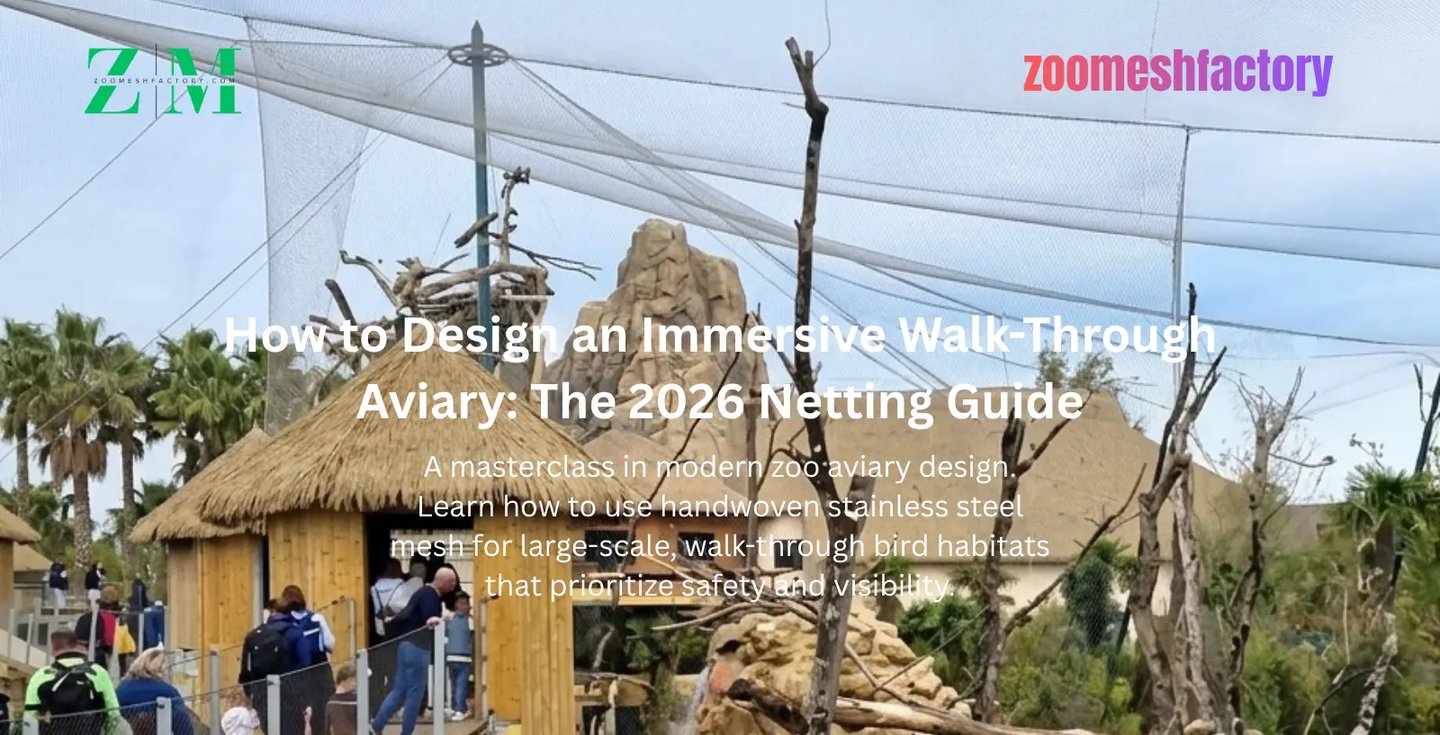
A masterclass in modern zoo aviary design. Learn how to use handwoven stainless steel mesh for large-scale, walk-through bird habitats that prioritize safety and visibility.
Hebei Zoo Mesh Co., Ltd
5/18/20269 min read
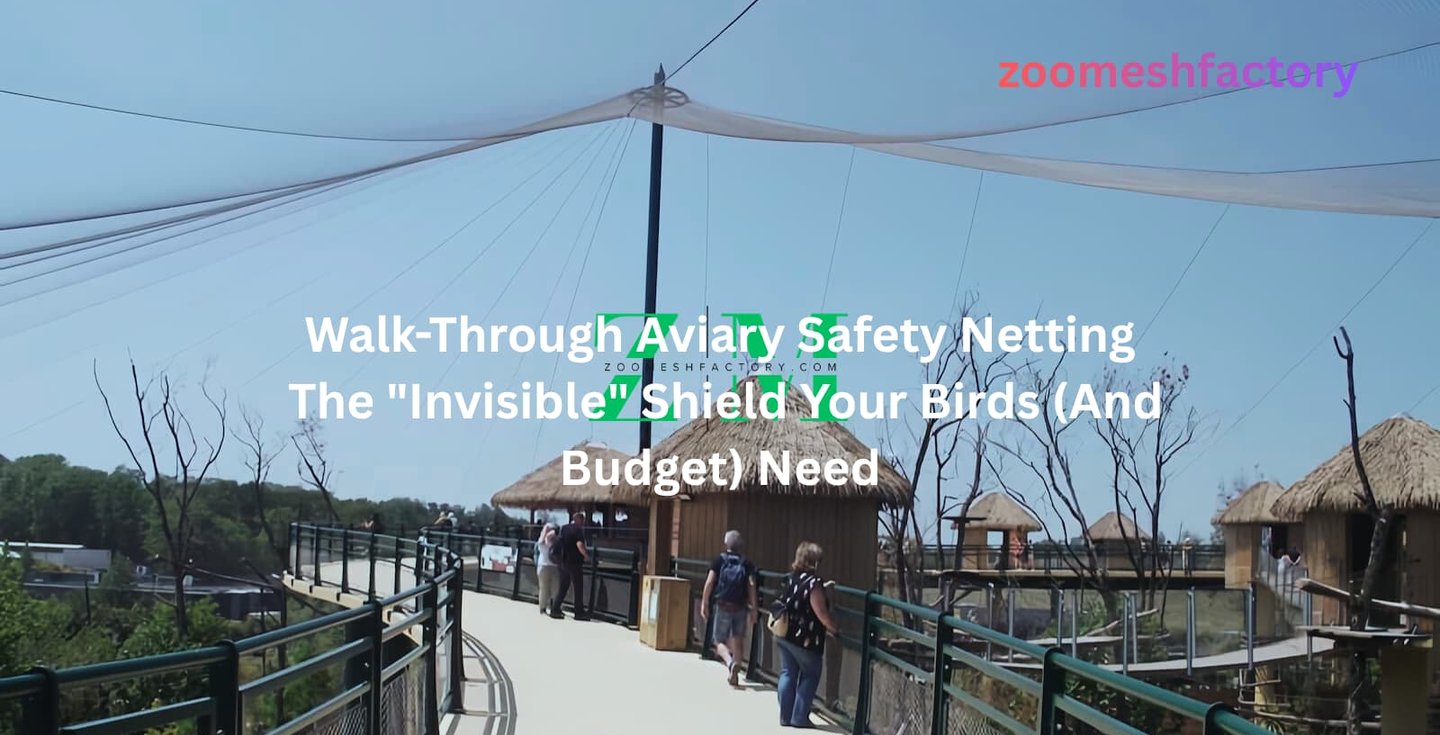
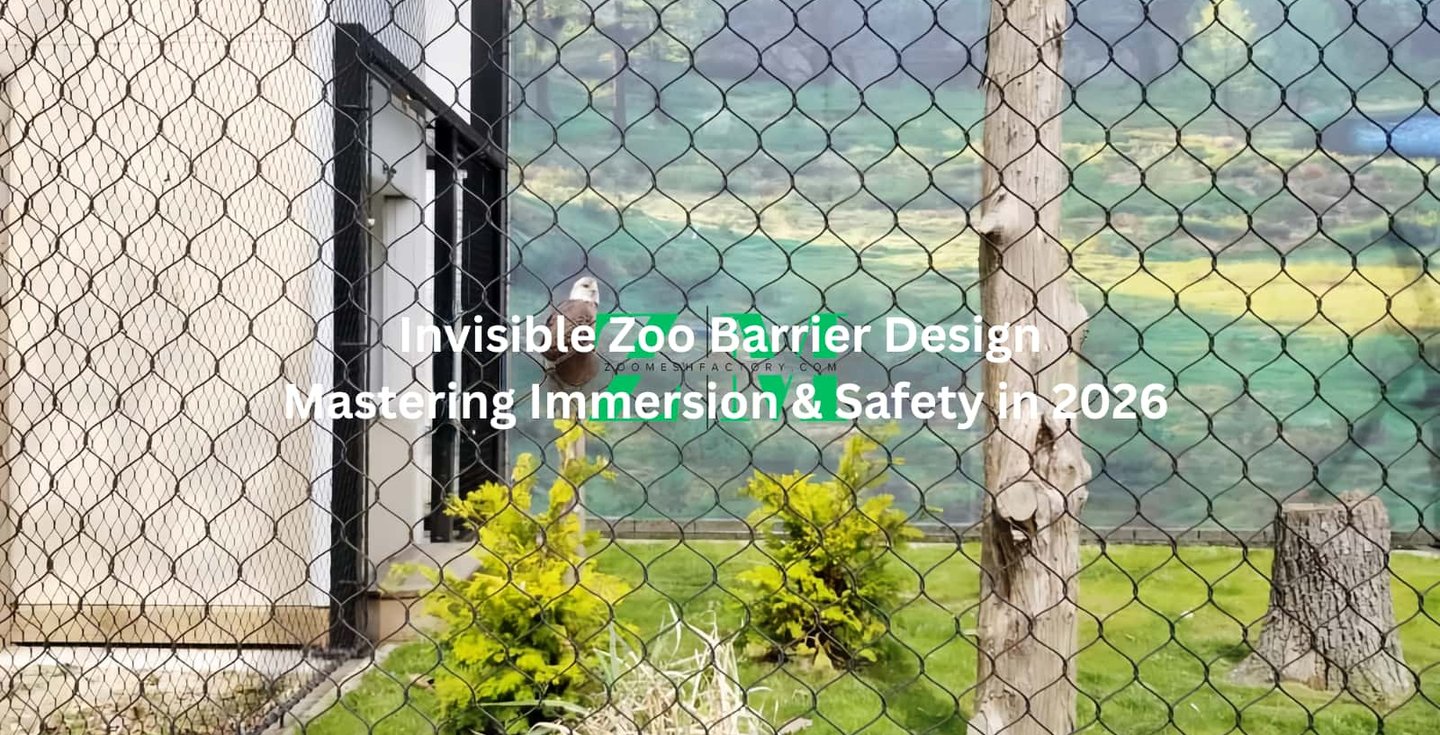
Designing a walk-through aviary requires balancing structural integrity with visitor immersion. The gold standard for 2026 is handwoven stainless steel cable mesh. Unlike rigid welded wire, handwoven mesh is flexible, preventing bird "strike" injuries, and provides over 90% transparency. Key design factors include calculating the snow and wind load, choosing a mesh aperture (1" to 2") that prevents both escape and predator entry, and ensuring the mesh is USDA-compliant for animal welfare.
Key Takeaways
Bird Safety: Handwoven mesh has "give," acting as a cushion if birds fly into the barrier.
Structural Freedom: Its fabric-like nature allows for organic, curved, and "tent-like" shapes.
Predator Proofing: SS316 cable is impervious to chewing by raccoons, foxes, and rodents.
Direct Access: Sourcing from Zoo Mesh Factory ensures custom panels that fit complex, walk-through entry/exit airlocks perfectly
I. The Rise of the Immersive Aviary: Engineering an Ecosystem
In the world of modern ornithology and zoo management, the word "cage" has become a relic of the past. Today, the industry has pivoted toward immersive aviary design, where the boundary between the human path and the bird's flight space is virtually non-existent.
Why "Cages" are Out and "Ecosystems" are In
Traditional bird displays were small, boxy, and restricted. In 2026, the focus is on animal welfare and natural behavior. To encourage birds to fly, hunt, and socialize as they would in the wild, they need massive vertical and horizontal volume.
The goal is to create a self-sustaining ecosystem—complete with mature trees, running water, and mixed-species cohabitation. Achieving this requires a containment material that can drape over entire landscapes like a "skin" rather than a wall. This is where the flexibility of handwoven mesh becomes the architect's best friend; it allows for the creation of massive, soaring domes that house entire mini-forests, providing the "flight room" that modern animal welfare standards demand.
The Psychology of the Walk-Through Experience
Why are zoos investing millions in walk-through aviaries? Because immersion equals empathy.
When a visitor walks through a double-door airlock and finds themselves inside the habitat, their psychological state shifts. There is no "us vs. them" barrier. When a macaw flies just a few feet above a visitor's head, the experience becomes visceral. For the zoo, this leads to higher engagement, better educational outcomes, and increased visitor dwell time. However, this immersion is only possible if the netting is so transparent that the visitor forgets it’s there, yet strong enough to ensure that no predator gets in—and no rare bird gets out.
To ensure your design is both visually stunning and structurally sound, start with our comprehensive aviary wire mesh guide—covering everything from predator-proofing to chew-resistant specifications
II. Material Selection: Why Stainless Steel Wins the "Aviary War"
Choosing the wrong netting for a large-scale aviary isn't just a maintenance headache—it’s a catastrophic risk. Let’s look at how traditional materials stack up against modern stainless steel technology.
The Great Debate: Nylon vs. Polyethylene vs. Stainless Steel
Why "Handwoven" is Non-Negotiable for Birds
While some contractors try to use welded wire mesh, it is far too rigid for aviary domes. Handwoven stainless steel mesh is essentially a "metallic fabric." It has a 3x19 or 7x7 cable structure that gives it incredible flexibility. This "give" is vital; if a panicked bird flies into the mesh, the handwoven structure acts as a soft cushion, whereas rigid welded wire or chain link can cause broken wings or "scalping" injuries.
For zoos looking to build a legacy structure, the choice is clear: you buy the best material once, or you replace the cheap material every five years.
Expert Resource: If you are planning a high-span flight habitat, explore our high-tensile aviary netting options to see the different apertures available for mixed-species exhibits.
III. Design Specs: The Golden Ratio of Mesh Size & Cable Diameter
In aviary design, "close enough" is never good enough. If the mesh is too large, you invite local predators (snakes, rats, or hawks) inside. If it’s too small, you unnecessarily increase the weight of the structure and block the view. Finding the "Golden Ratio" depends entirely on your resident species.
Small Birds (Finches, Budgies, & Softbills)
For smaller, more delicate species, the primary goal is preventing escape and "head-stuck" accidents.
Recommended Aperture: 20mm x 20mm (3/4").
Cable Diameter: 1.2mm (3/64").
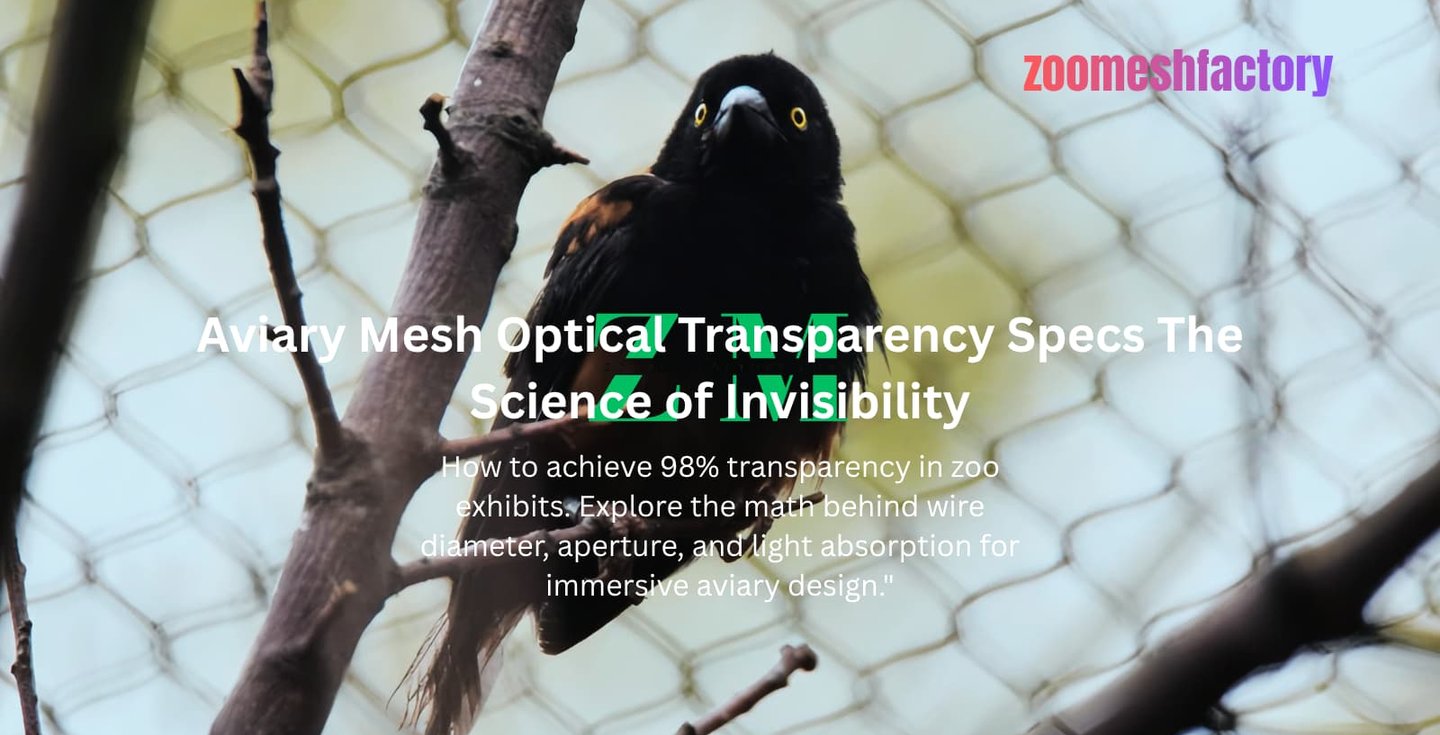
Why this works: A 1.2mm cable provides the highest possible transparency—it’s essentially a "ghost net." It’s strong enough to stop a falcon strike from the outside but thin enough to maintain an ethereal, open feel for the visitors.
Large Psittacines (Macaws, Cockatoos, & Large Parrots)
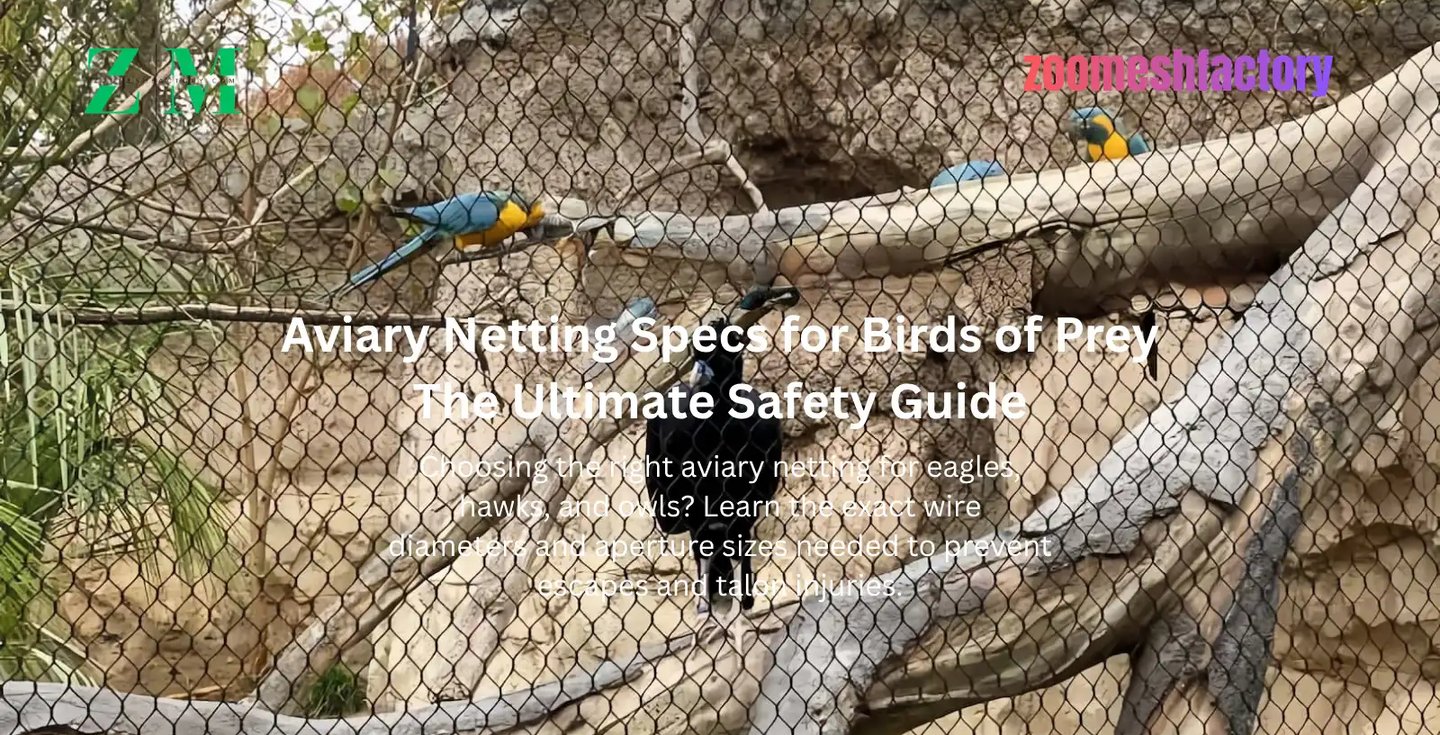
Large parrots aren't just fliers; they are "architectural testers." They use their beaks as a third limb and have incredible bite pressure.
Recommended Aperture: 25mm x 25mm to 50mm x 50mm (1" to 2").
Cable Diameter: 1.5mm to 2.0mm (1/16" to 5/64").
Why this works: For birds like Macaws, a 2.0mm cable is mandatory. Anything thinner might be susceptible to "beak fatigue" over years of climbing. The 50mm aperture allows for a massive reduction in total mesh weight, which is critical for wide-span dome structures.
Technical Resource: Don't guess on your safety margins. Review our full range of products for specific diameter comparisons and breaking load certifications to ensure your mesh matches your species' strength.
When designing an habitat for apex predators, selecting the right material is essential for both human security and animal welfare; for a deep dive into the engineering behind these structures, read our comprehensive guide on choosing professional zoo netting.
IV. Engineering for the Elements: Nature vs. The Net
An aviary is essentially a massive sail. When you drape thousands of square meters of mesh over a steel skeleton, you have to account for the invisible forces of nature. This is where "factory-grade" engineering separates the pros from the amateurs.
Calculating Static vs. Dynamic Loads
A static load is the weight of the mesh itself and the birds perched on it. A dynamic load is where the danger lies.
The Snow Load: In colder climates, wet snow can stick to the mesh, turning a lightweight net into a multi-ton lead weight. Handwoven mesh is superior here because its smooth stainless steel surface allows snow to "shed" more easily than knotted nylon.
The Wind Load: While the mesh is 90% open space, in a 100mph hurricane, it still creates significant drag. We engineer our mesh to have the perfect "open area" percentage to let the wind pass through, protecting your expensive steel support poles from bending.
The Perch Weight: Large birds congregating on a single section of the net create "point loads." Our interwoven diamond structure distributes this weight across the entire cable network, preventing sagging.
High-Altitude and Coastal Corrosion
If your zoo is on the coast (salt air) or at a high-altitude (high UV), standard galvanized wire will fail within 5 years.
High-Altitude UV: Our SS316 mesh is 100% UV-stable. Unlike plastic nets that become brittle and "crunchy" in the sun, stainless steel remains flexible for decades.
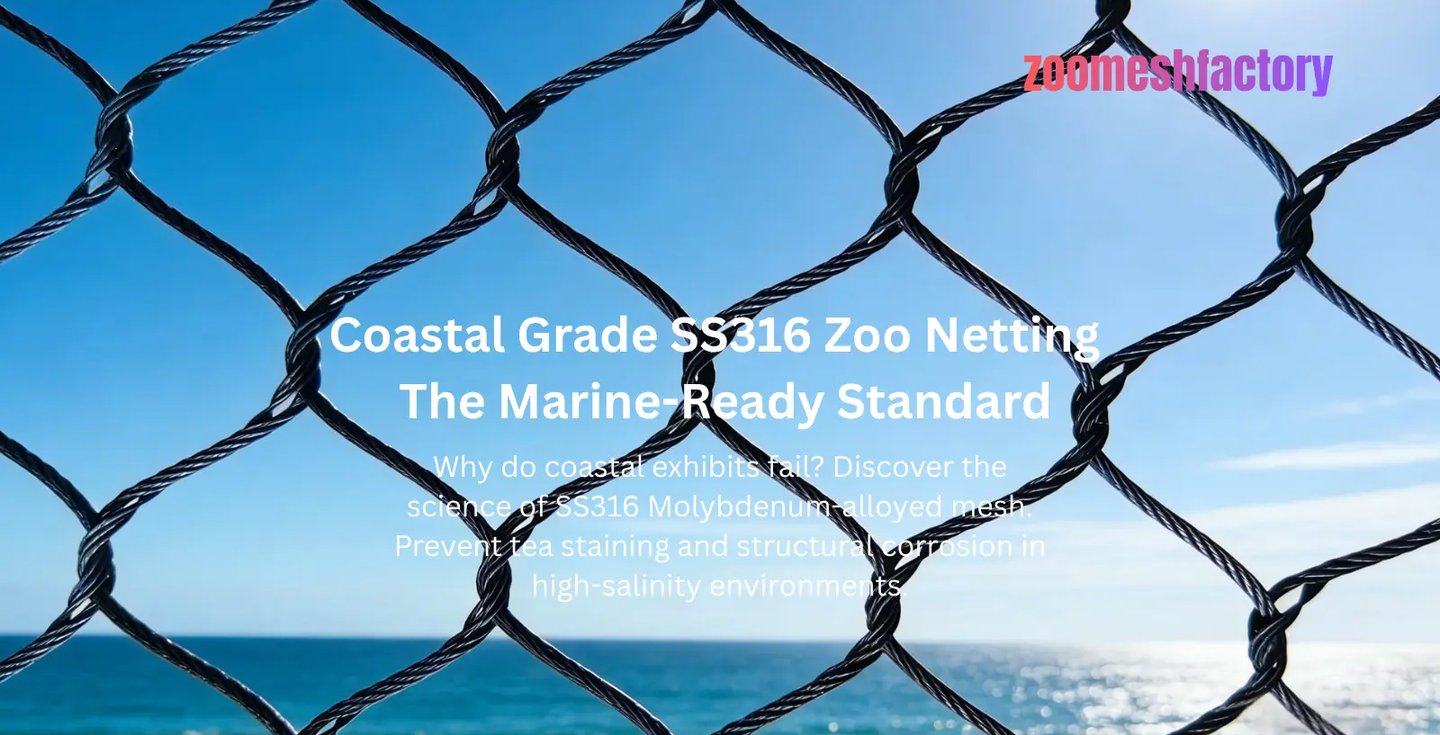
Coastal Salt Spray: Salt air creates "pitting" in lower-grade metals. By using marine-grade stainless steel from the factory, you ensure the structural integrity of the walk-through aviary remains pristine, even in the most corrosive environments.
Expert Tip: If you are building in a high-wind or coastal zone, always specify SS316 with a 7x7 cable construction. It offers the best balance of flexibility for installation and rigidity against the elements.
The 'invisible' nature of our mesh isn't just for birds; it’s the same technology we use to enhance guest views in predator exhibits.
V. Visitor Interaction & "Air-Lock" Entry Systems
In a walk-through aviary, the entrance is the most critical point of the entire structure. You are inviting the public into the birds' living room, which means you need a design that is "guest-proof" and "escape-proof."
Designing Double-Door "Air-Lock" Systems
To maintain a secure environment, we utilize a double-door air-lock system. This consists of a small transition chamber where the second door cannot be opened until the first door is fully closed.
The Mesh Advantage: Because our handwoven mesh is so flexible, it can be easily fitted to curved or circular entry frames, allowing architects to design air-locks that look like natural rock tunnels or wooden huts rather than industrial shipping containers.
Safety Sensors: Modern 2026 systems often integrate infrared sensors with the mesh frame to ensure no birds are perched on the door header before it closes.
Integrating Mesh into Natural Rockwork and Vegetation
The "holy grail" of aviary design is making the transition from the mesh to the landscape invisible.
Rockwork Anchoring: Instead of ugly steel bolts, our mesh can be "stitched" directly into recessed anchor points hidden within artificial rockwork (GFRC).
Living Walls: The diamond structure of the mesh serves as a perfect trellis for non-toxic climbing vines. Over time, the vegetation can partially cover the mesh, further blurring the line between the enclosure and the outside world.
Expert Insight: These seamless integration techniques aren't just for birds. See how this applies to larger animal enclosure projects where blending heavy-duty security into a naturalistic landscape is a primary requirement.
For large-span domes, understanding the cost-benefit of factory-direct sizing is key: The Business Case for Factory-Direct
VI. Compliance & Longevity: The 30-Year Master Plan
When you are managing a zoo budget, the most expensive product is the one you have to buy twice. In the industry, we call it the "Buy Once, Cry Once" mantra. If you "cry" a little now at the investment of high-grade stainless steel, you won’t be crying in five years when a cheaper nylon net collapses.
Meeting 2026 USDA and International Welfare Standards
As of 2026, international welfare bodies have increased the requirements for "Environmental Enrichment" and "Safety Redundancy."
USDA Standards: Current regulations emphasize that enclosures must be free of sharp edges that can snag feathers or skin. Our handwoven mesh features knotted ends that are tucked away, unlike welded wire which can have sharp "burrs."
Load Redundancy: Standards now require mesh to withstand not just the animal, but also "foreseeable" weather extremes. Our SS316 mesh meets these high-tensile requirements globally.
The Maintenance-Free Lifecycle
A stainless steel aviary is essentially a "set and forget" asset.
No Re-Tensioning: Unlike synthetic nets that stretch and sag over time due to UV exposure, stainless steel cable keeps its tension for decades.
Hygienic Surface: Bird droppings are acidic. Stainless steel's non-porous surface allows rain to naturally wash away debris, preventing the buildup of bacteria or fungi that can plague cloth-based nettings.
By choosing Zoo Mesh Factory, you are investing in a 30-year lifecycle. When you calculate the cost-per-year, stainless steel cable mesh is actually the most affordable material on the market.
For complete specs of SS316 black oxide mesh and optimal aperture sizes for mixed-species exhibits, view our core walk-through bird exhibit mesh design resource.
VII. Frequently Asked Questions (FAQ)
1. What mesh size is small enough to keep out mice and snakes?
To prevent small rodents and most snakes from entering your aviary, we recommend a mesh aperture of 15mm to 20mm (5/8" to 3/4"). Mice can squeeze through any gap larger than 20mm, so keeping the opening tight is essential for protecting small birds and preventing food theft.
2. Can parrots like Macaws or Cockatoos chew through the stainless steel cable?
No. While large psittacines have incredible beak strength, our 2.0mm (5/64") stainless steel cable is designed to be "parrot-proof." Unlike plastic or nylon netting, which parrots can snip in seconds, the high-tensile 7x7 or 7x19 steel construction is too hard and smooth for them to gain the leverage needed to sever the wire.
3. Does the mesh cause "Scalping" or wing injuries to birds?
Actually, handwoven cable mesh is safer than rigid welded wire. Because it is flexible, it acts like a "trampoline" rather than a wall. If a bird is spooked and flies into the mesh, the netting deflects to absorb the energy, significantly reducing the risk of head trauma, wing fractures, or feather damage.
4. How much wind load can a large aviary dome handle?
Our stainless steel mesh is approximately 90% open space, meaning it has a very low wind resistance coefficient. When engineered correctly with our factory-direct support cables, these structures can withstand hurricane-force winds (up to 120+ mph) because the air passes through the mesh rather than pushing against it.
5. Is it difficult to install handwoven mesh on curved dome structures?
Not at all. In fact, it is much easier than installing rigid panels. Because the mesh is a flexible "fabric," it naturally conforms to spheres, cones, and irregular organic shapes. We provide custom-sized panels that match your architectural drawings, which minimizes the need for difficult on-site cutting and seaming.
Ready to Start Your Exhibit Design?
Join the hundreds of zoos and sanctuaries worldwide that trust ZooMesh Factory for their containment needs. Our engineers are ready to help you calculate the perfect mesh size for your species.
Contact
Hebei Zoo Mesh Co., Ltd
No. 188 Zhonghua South Street, Shijiazhuang City, Hebei Province, China
info@zoomeshfactory.com
© 2025. All rights reserved.
Quick Link
Product Catalogs
Don't leave without the specs! Save our factory-direct pricing and technical configurations for your next project meeting. Our 2026 Zoo Mesh Factory Direct Catalog is ready for download.