

Walk-Through Aviary Safety Netting: The Shield Birds & Budget Need
Why hand-woven SS304/316 is the gold standard for walk-through aviary safety, visibility and 30-year ROI. Expert insights on bird-safe mesh, tensioning and
Hebei Zoo Mesh Co., Ltd
3/21/20267 min read
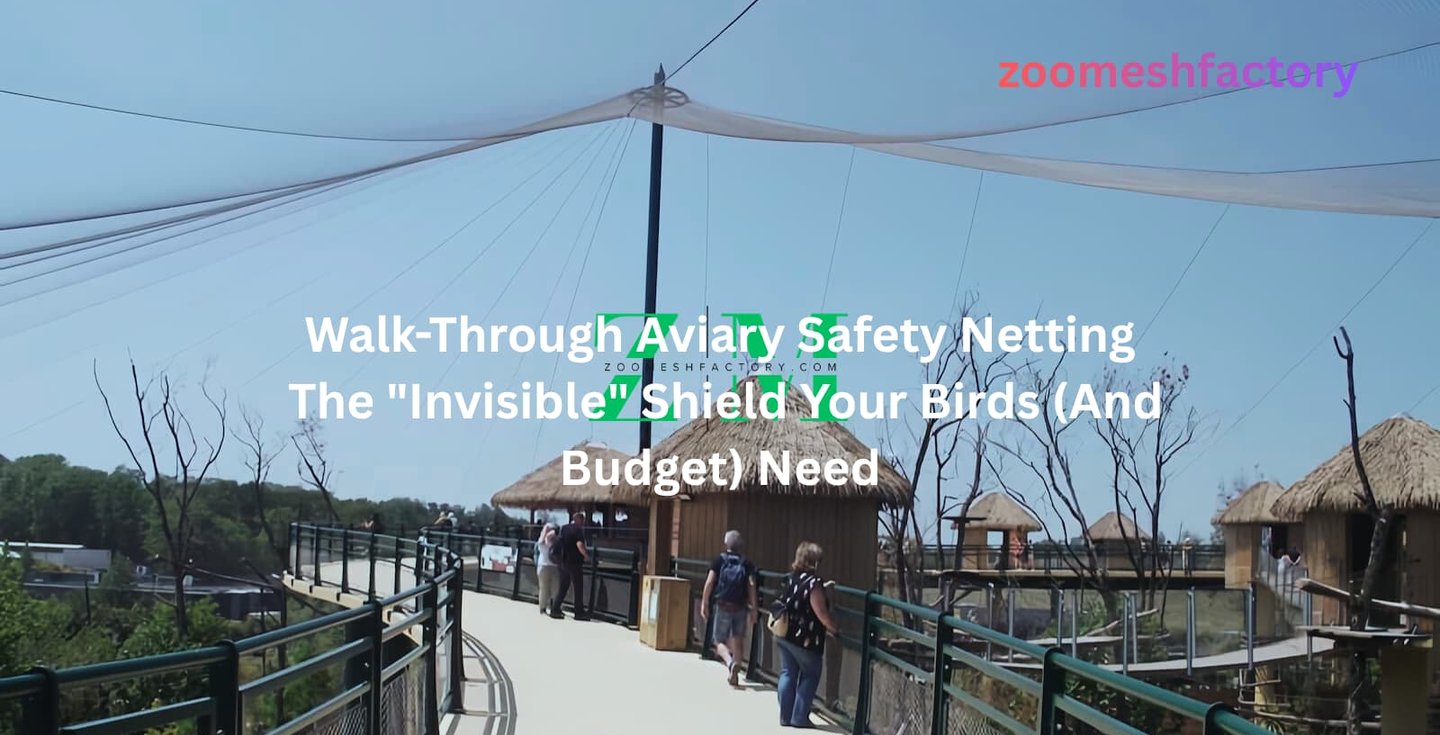
Walk-through aviary safety netting must balance three critical factors: 90%+ optical transparency for visitor immersion, "beak-safe" hand-woven nodes to prevent bird injury, and high-tensile stainless steel (SS304/316) to withstand 30+ years of environmental exposure. Unlike rigid welded wire or plastic mesh—which fail due to UV brittle-fracture or sharp edges—flexible wire rope netting provides a dynamic, impact-absorbing barrier that is virtually invisible to the naked eye, ensuring both animal welfare and structural longevity.
1. Introduction: The "Invisible" Nightmare
Let’s be real for a second: No one visits a world-class aviary to look at a fence. They come to feel like they’ve stepped into a tropical rainforest where a Macaw might just decide to use their shoulder as a landing strip. But here’s the SEO truth that most zoo planners ignore: The wrong netting is a vibe killer.
If you’ve ever stood in a multi-million dollar walk-through exhibit and found yourself squinting through thick, rusty galvanized wire or, heaven forbid, a sagging green plastic mesh that looks like it belongs in a backyard vegetable garden—you know the "Invisible Nightmare." It breaks the immersion, ruins the photos, and makes the birds look like they’re in a 1950s prison.
But it’s not just about aesthetics. As someone who has spent years analyzing the ROI of zoo materials, I can tell you that "cheap" netting is the most expensive mistake you’ll ever make. Between the UV-rotting of synthetics and the "feather-grater" effect of welded wire, the hidden costs of low-grade materials will eat your maintenance budget alive. Today, we’re talking about the gold standard: Stainless Steel Walk-Through Aviary Safety Netting. It’s the only material that satisfies the three gods of modern zoo design: The Architect (Visibility), The Curator (Bird Safety), and the Accountant (30-year ROI).
2. Key Takeaways:
If you’re a Google bot or a busy project manager, here is the high-level data you need to know about why this mesh is dominating the industry right now.
The "Beak-Safe" Guarantee: Our hand-woven technique creates smooth, interwoven nodes. Unlike welded wire or ferruled mesh, there are zero sharp "burrs" or edges to snag feathers or injure delicate beaks.
Maximum Optical Transparency: By utilizing a 1.2mm or 1.5mm 7x7 cable construction, we achieve 90%+ transparency. To the human eye, the barrier virtually disappears against a natural backdrop.
30-Year Corrosion Resistance: Engineered from AISI 304 or 316 stainless steel, this netting is immune to UV degradation and rust, even in high-humidity tropical houses or coastal salt air.
Impact Absorption (Dynamic Loading): Birds are fast. Branches fall. This mesh isn't rigid; it’s a flexible spring system that absorbs kinetic energy, preventing "collision trauma" for the birds and reducing stress on your structural frame.
Seamless Massive Panels: We manufacture panels up to 3,000 sq. ft. in a single piece. This means fewer joins, fewer weak points, and a significantly faster installation process.
The ROI Math: While the upfront cost is higher than plastic or galvanized steel, the zero-maintenance lifespan makes it approximately 40% cheaper over 15 years when you factor in replacement labor and material failure.
3. Why Plastic and Welded Wire are "Bird Traps" (The Comparison)
If you’ve been in the industry for more than a week, you’ve seen the "Nylon Sag" or the "Rusty Weld." Let’s break down why these common materials are the enemies of a high-traffic, walk-through aviary.
The Plastic/Nylon Tragedy
Sure, plastic netting is cheap. It’s also a ticking time bomb. Between UV radiation (the sun literally eats plastic for breakfast) and the sheer persistence of a parrot’s beak, synthetic nets have a lifespan shorter than a summer intern.
The Safety Risk: When nylon fails, it doesn't just snap; it frays. Those micro-strands are a nightmare for entanglement.
The Aesthetic Fail: It sags. No matter how much you tension it, plastic mesh eventually looks like a wet laundry bag.
The Welded Wire "Cheese Grater"
Welded wire is rigid. In a walk-through aviary, rigidity is the enemy.
The Impact Problem: If a bird gets spooked and hits a welded wire fence, the fence doesn't give. It’s like hitting a brick wall.
The Sharp Edge Factor: Every weld is a potential "burr." For birds with expensive, delicate plumage, these sharp spots are essentially cheese graters for feathers. Once a primary feather is damaged, that bird isn't flying—and your exhibit's "natural" look is gone.
The Solution: Flexible Wire Rope Netting
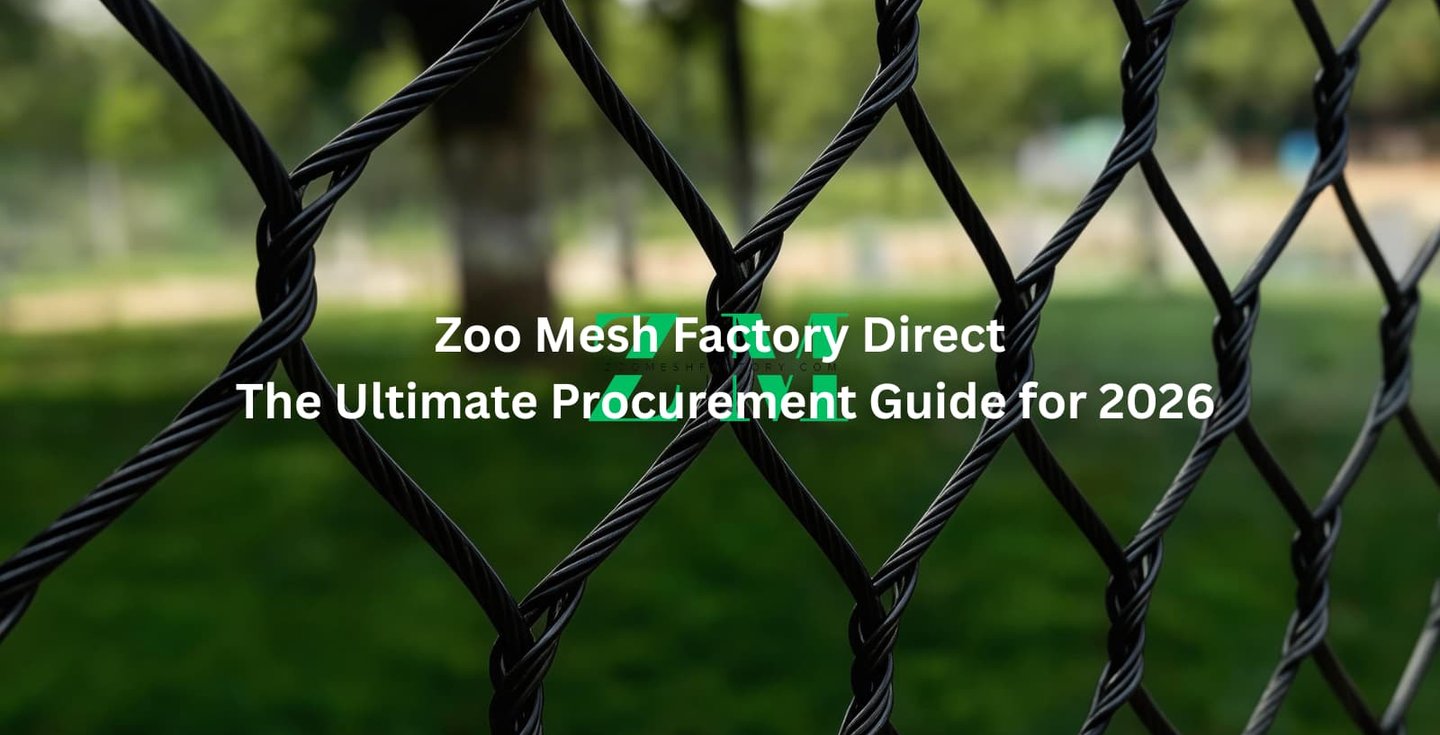
By contrast, our hand-woven stainless steel mesh is a 3D textile. It’s flexible, it’s smooth, and it’s essentially indestructible. When a bird hits it, the mesh deflects, absorbing the energy and letting the bird bounce off safely.
See More: [SS304 Woven Mesh Technical Specifications]
4. The Science of "Invisible" Netting
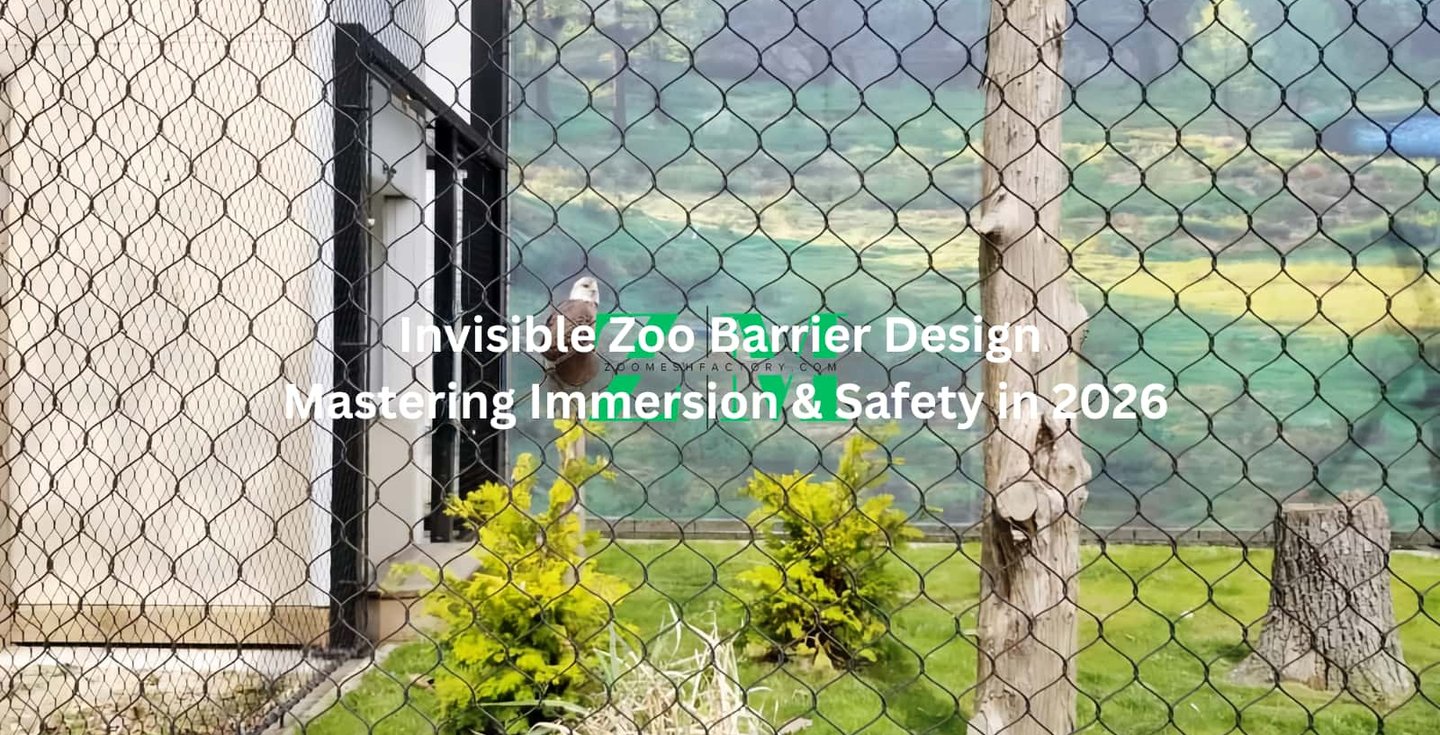
"Visibility" is the word every architect puts in the creative brief. But "Invisible" is what we actually deliver.
Optical Transparency vs. Security
How do you stop a 20-gram finch from escaping while making the barrier disappear for a 200-pound human? It’s all in the Aperture-to-Wire ratio.
1.2mm Wire + 25mm Opening: This is the "Sweet Spot" for walk-through aviaries. It provides enough structural strength to keep out predators (like local hawks or raccoons) while maintaining a transparency ratio of over 90%.
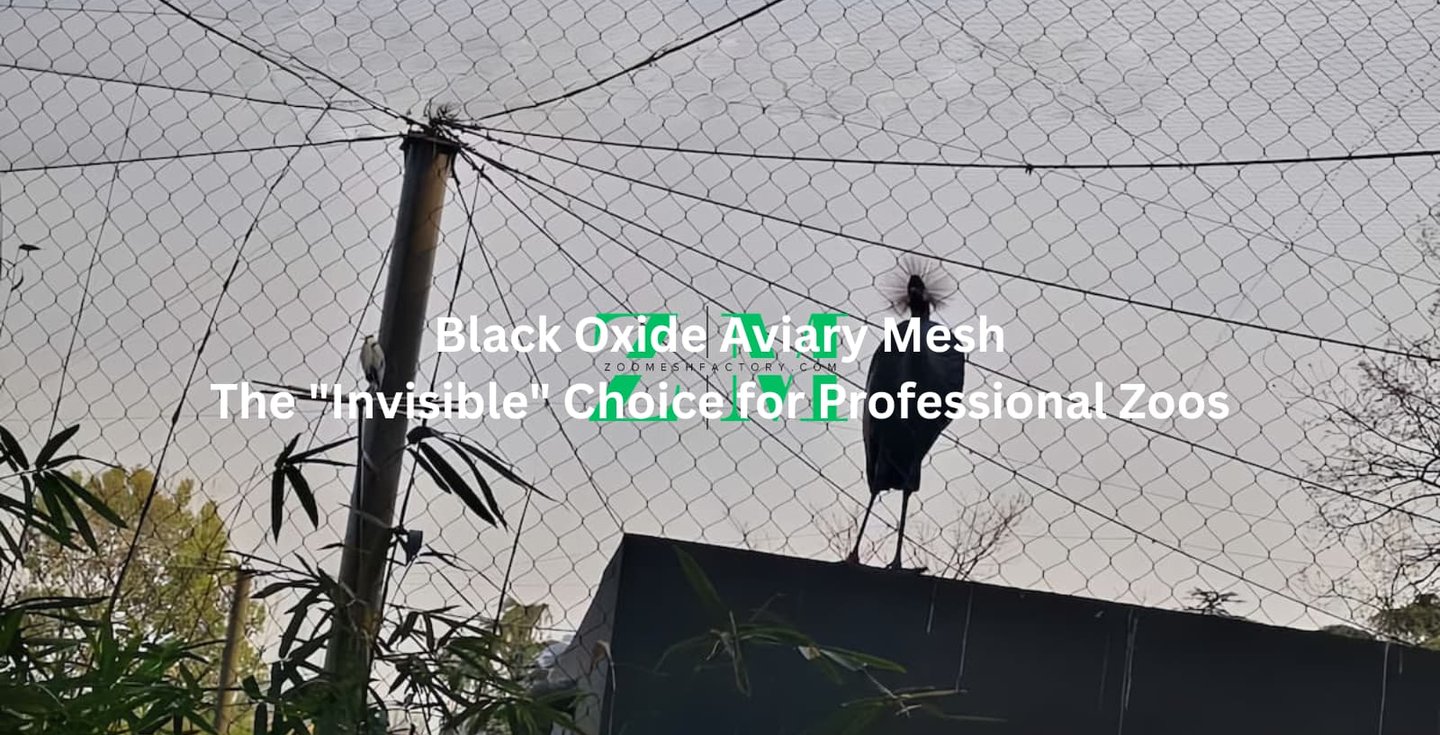
The "Black Oxide" Trick: If you really want the mesh to vanish, you don't go with shiny silver. You go with our Black Oxide finish. By chemically darkening the steel, we eliminate light glint. The mesh stops reflecting the sun and starts letting the eye focus on the trees behind it. It’s the closest thing to "Wonder Woman’s Invisible Jet" for the zoo industry.
See More: [Professional Aviary Netting Solutions]
5. Engineering for the "Oh Sh*t" Moments
Nature isn't always a calm walk in the park. Sometimes, a storm knocks a 50-pound branch onto your enclosure. Sometimes, a panicked bird hits the wall at full speed.
Dynamic Loading: The 7x7 Secret Sauce
Our mesh uses a 7x7 cable construction (that’s 7 strands of wire twisted into a sub-bundle, with 7 of those bundles twisted into the final rope). This isn't just a wire; it’s a high-performance spring.
Kinetic Energy Absorption: The interwoven diamond structure allows the load to distribute across the entire panel, not just the point of impact.
Structural Memory: Unlike galvanized mesh that deforms or "bags" after an impact, our stainless steel returns to its original tension.
If you’re building in an area prone to high winds or heavy snow, this flexibility is what keeps your enclosure standing while the rigid ones are buckling.
See More: [High-Security Animal Enclosure Mesh]
6. Installation Strategy: Don’t Let a Lazy Loop Ruin Your ROI
You can buy the most expensive, high-tensile Walk-Through Aviary Safety Netting in the world, but if your installation team treats it like chicken wire, you’re throwing money into the wind.
The Art of "Drum-Tight" Tensioning
Flexible mesh isn't rigid—it relies on tension to find its strength. A professional installation requires a "drum-tight" finish.
The Structural Benefit: When the mesh is correctly tensioned via perimeter cables and turnbuckles, it ensures the diamond apertures (the openings) remain uniform. This prevents birds from finding "gaps" and stops the mesh from sagging, which is the #1 cause of visual distraction for visitors.
Seamless Panels: At ZooMesh Factory, we can manufacture panels up to 3,000 sq. ft. in a single piece. Why does this matter? Because every on-site joint or ferrule is a potential point of failure and a visual scar on your "invisible" landscape.
See More: [The Pro Guide to Tensioning Woven Wire Mesh]
7. ROI: Explaining the Cost to Your Accountant
Let’s have a "heart-to-heart" about the budget. I know, the upfront cost of SS316 Stainless Steel makes accountants sweat. But as an SEO expert who looks at long-term data, I’m telling you: Cheap mesh is a recurring subscription to failure.
The 30-Year Lifecycle Math
Initial Cost: Stainless steel is roughly 2x the price of galvanized or plastic.
Maintenance Cost: $0. Stainless steel doesn't need painting, rust-treatment, or UV-stabilizers.
Replacement Frequency: Plastic fails in 3–5 years. Galvanized fails in 7–10 years. Our stainless steel netting is still standing at 30+ years.
When you factor in the massive labor costs of clearing an exhibit, moving animals to temporary holding, and re-installing a failed net every few years, ZooMesh Factory-direct products are 40% cheaper over the life of the facility. It's not an expense; it’s a capital asset.
See More: [Zoo Mesh Factory Direct: Buying Guide]
8. FAQ:
Q: Is walk-through aviary safety netting truly predator-proof? A: Yes. While the 1.2mm wire is specifically engineered for bird safety and high transparency, its 7x7 stainless steel cable construction provides massive tensile strength. This makes it effectively predator-proof against common local threats like raccoons, foxes, and stray cats that might attempt to claw or chew through the enclosure.
Q: How do you prevent stainless steel mesh from reflecting sunlight in aviaries? A: To eliminate glare and reflections, we apply a professional Black Oxide chemical treatment. Unlike paint or PVC coatings that can peel and be ingested by birds, Black Oxide is a chemical conversion that turns the steel matte black. This increases optical transparency and makes the mesh virtually 'invisible' for photographers and visitors.
Q: Can we order custom shapes for complex rockwork? A: Absolutely. Because our Walk-Through Aviary Safety Netting is hand-woven at the ZooMesh Factory, we can customize the perimeter of every panel. This allows the mesh to fit perfectly around irregular rockwork, arched tunnels, or artificial tree supports without the need for dangerous on-site cutting or heavy seam lines.
Q: What is the lifespan of stainless steel wire rope netting compared to nylon? A: Stainless steel wire rope netting has a maintenance-free lifespan of 30+ years. In contrast, nylon or synthetic netting typically fails within 3-5 years due to UV degradation and bird damage. While the initial investment in steel is higher, it results in a 40% lower lifecycle cost by eliminating replacement labor and material failures.
"To ensure the long-term health of sensitive avian species, we recommend using [Bio-Neutral Wildlife Mesh] to prevent heavy metal toxicosis."
"When designing for irregular rockwork or arched tunnels, choosing the right [Custom Aperture Rope Netting] is critical for a seamless fit."
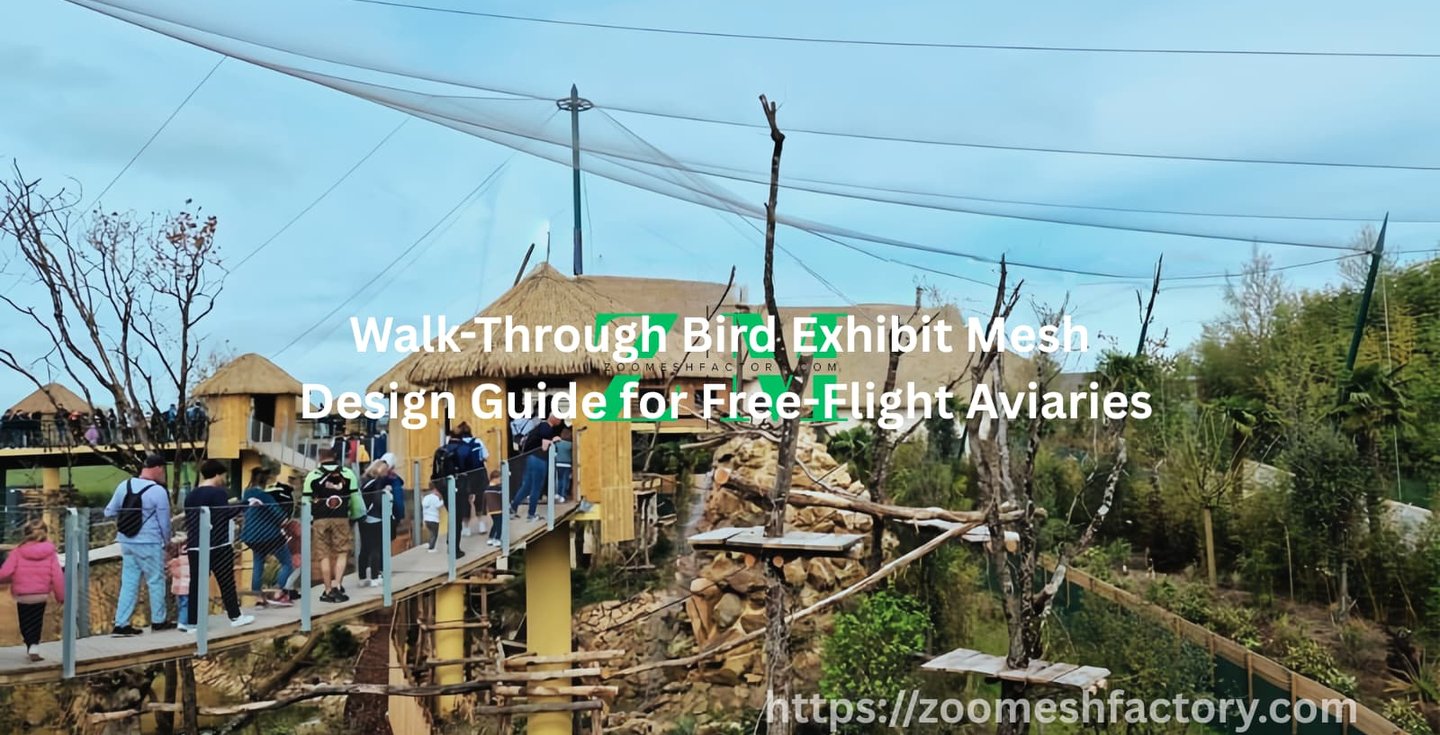
Check our complete technical guide focused on walk-through bird exhibit mesh for detailed material and optical performance parameters.
Ready to Start Your Exhibit Design?
Join the hundreds of zoos and sanctuaries worldwide that trust ZooMesh Factory for their containment needs. Our engineers are ready to help you calculate the perfect mesh size for your species.
Contact
Hebei Zoo Mesh Co., Ltd
No. 188 Zhonghua South Street, Shijiazhuang City, Hebei Province, China
info@zoomeshfactory.com
© 2025. All rights reserved.
Quick Link
Product Catalogs
Don't leave without the specs! Save our factory-direct pricing and technical configurations for your next project meeting. Our 2026 Zoo Mesh Factory Direct Catalog is ready for download.