
Invisible Zoo Barrier Design: Mastering Immersion & Safety in 2026
Learn the engineering secrets of Invisible Zoo Barrier Design. Discover how Black Oxide mesh and landscape integration create seamless, safe, and immersive habitats.
Shijiazhuang Zoo Mesh Co., Ltd
3/12/202615 min read
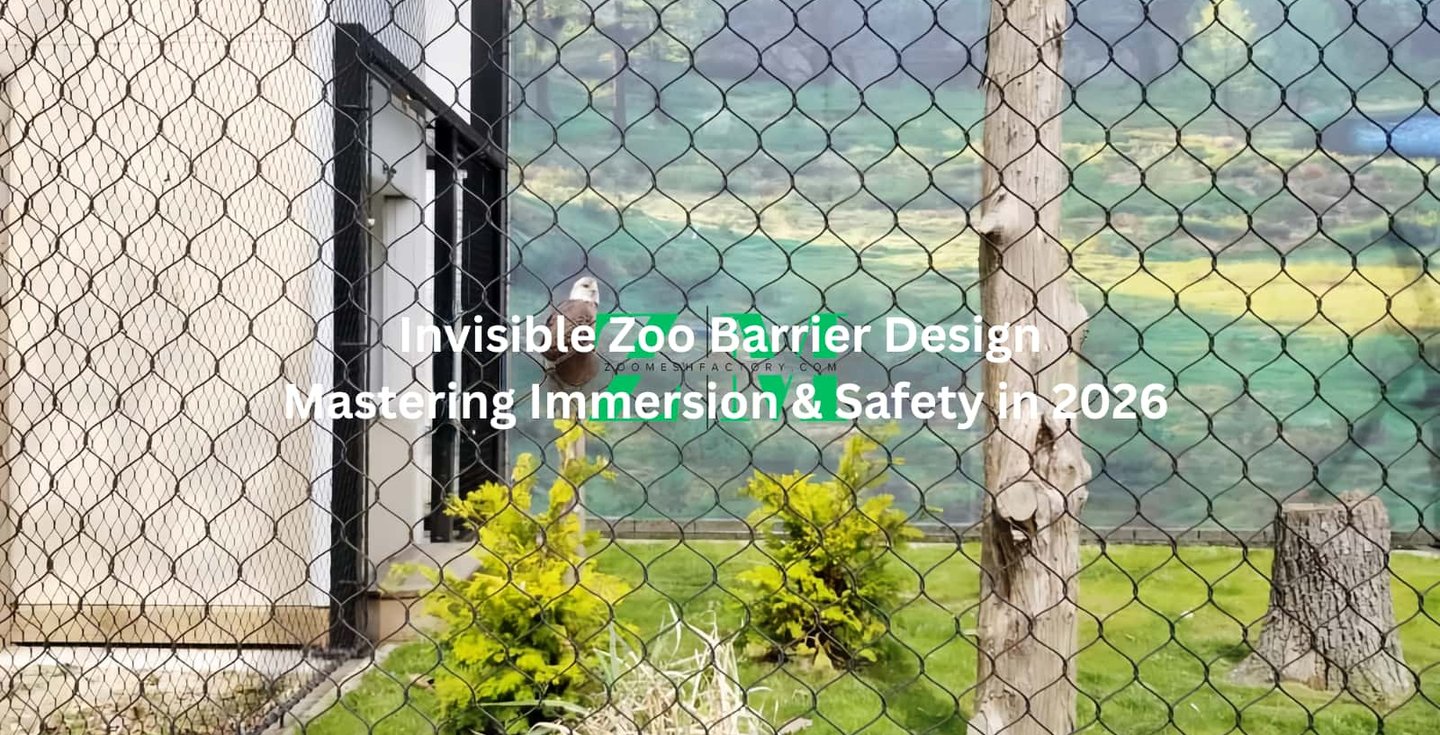
What is Invisible Zoo Barrier Design? Invisible Zoo Barrier Design is a specialized architectural approach that utilizes high-tensile, small-diameter materials and landscape camouflage to eliminate visual obstructions between guests and animals. By using Black Oxide hand-woven stainless steel mesh, designers achieve a "transparency" effect because the dark, matte finish absorbs light rather than reflecting it, allowing the human eye to focus on the habitat behind the barrier. Modern designs often incorporate 7x7 or 7x19 cable structures which provide the necessary breaking load for predators while maintaining a wire diameter as thin as 1.2mm, effectively making the containment "vanish" against natural backdrops.
1. The Psychology of Immersion: Why Barriers Must Vanish
The philosophy of zoological exhibit design has undergone a radical transformation in the last decade. We have moved decisively away from the era of "cages"—characterized by heavy bars, concrete floors, and rigid geometry—toward the era of "habitats." In a modern habitat, the primary goal is to foster a sense of shared space between the guest and the animal. However, this psychological connection is fragile; it can be instantly shattered by the presence of a thick, silver, or highly reflective barrier.
Invisible Zoo Barrier Design is the key to maintaining this "immersion." When a guest stands before an exhibit and the containment system is visually absent, several critical shifts occur:
Increased Dwell Time: Studies in environmental psychology show that guests stay up to 50% longer at exhibits where the barrier is invisible. Without the visual "noise" of heavy fencing, visitors can settle into a state of quiet observation.
Educational Retention: When the barrier vanishes, the guest is more likely to perceive the animal as a part of an ecosystem rather than a "prisoner." This shift in perception is vital for conservation messaging; you cannot inspire a guest to protect a species if they are viewing it through the lens of 19th-century confinement.
The Balance of Freedom: For the animals, invisible design provides a sense of psychological freedom. While physical security is absolute, the lack of a heavy, claustrophobic visual boundary reduces stress behaviors and encourages natural movement.
The challenge for the modern architect is to achieve this "disappearing act" without compromising the life-safety requirements inherent in managing large predators or flighty aviary species.
For full-spectrum zoo mesh knowledge covering material, cost and habitat design, visit our ultimate stainless steel zoo mesh guide.
2. Key Takeaways: The Principles of Invisibility
Creating an "invisible" enclosure is an exercise in both optical physics and high-load engineering. To successfully implement an Invisible Zoo Barrier Design, the following principles must be integrated into the project’s DNA:
Light Absorption is Mandatory: Silver or galvanized surfaces reflect sunlight, creating "glare" that draws the eye to the fence. Black Oxide finishes are essential because they absorb light, allowing the eye to pass through the mesh to the brighter habitat behind it.
Diameter Optimization: Use the highest grade of SS316 stainless steel to keep wire diameters as thin as possible (often 1.2mm to 2.4mm) while maintaining a safety factor that meets international zoo standards.
Eliminate "Visual Noise": Reduce the number of heavy vertical posts. Use high-tension boundary cable systems to create long, uninterrupted vistas.
Follow Organic Lines: Human eyes are trained to spot straight lines and 90-degree angles. Custom-shaped mesh panels that follow the contours of rocks and trees are much harder for the brain to detect.
Strategic Sightlines: Position guest viewing areas where the background behind the mesh is dark or heavily foliated. This "dark-on-dark" effect is the secret to making even heavy-duty mesh vanish.
3. The Science of Optics: Why Black Oxide is Invisible
The "invisibility" of a zoo barrier is not an illusion; it is a result of applied physics. To understand why certain materials disappear while others stand out, we must look at how the human eye processes light, contrast, and depth of field. In the context of Invisible Zoo Barrier Design, the primary enemy is reflection.
Light Reflection vs. Light Absorption
When light hits a surface, it is either reflected, transmitted, or absorbed. Standard stainless steel or galvanized wire has a high specular reflection. This means that when sunlight hits the wire, it bounces back toward the viewer’s eye, creating a bright "glint." The human brain is evolutionarily wired to notice these highlights, causing the eye to focus on the plane of the fence rather than the animal behind it.
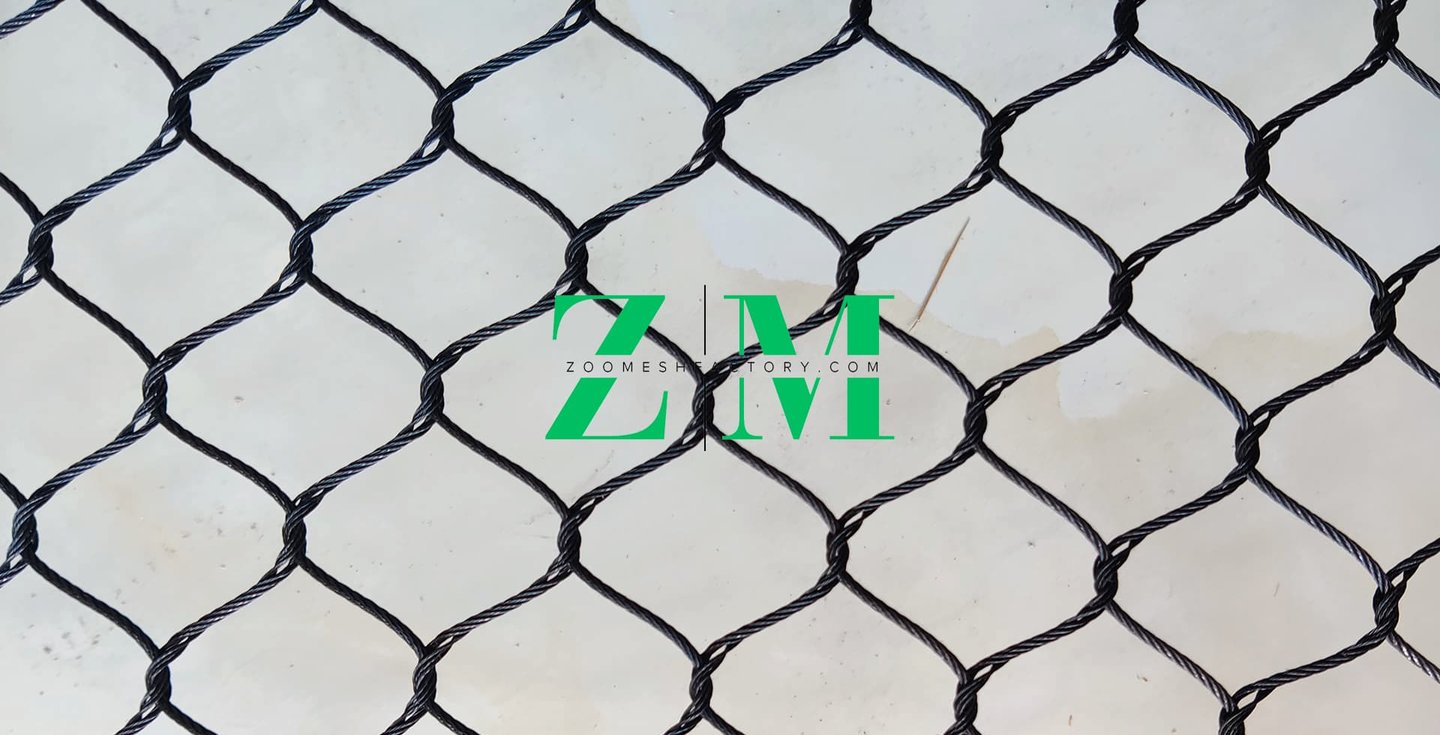
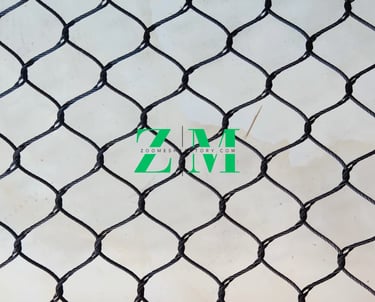
Black Oxide finishes change the game by altering the surface chemistry of the steel. Through a chemical conversion process, the metallic surface is transformed into a matte, micro-porous structure that absorbs a vast majority of the visible light spectrum. Instead of bouncing light back to the guest, the mesh "swallows" the light, creating a dark silhouette that the brain easily ignores in favor of the brightly lit habitat beyond.
Reducing "Glare" in High-Sun Environments
In outdoor exhibits, especially those in tropical or desert climates, "glare" can render an exhibit almost unviewable at certain times of day.
The Silver Mesh Problem: At midday, a silver galvanized fence becomes a wall of white light. This creates a "veiling luminance" that washes out the colors and details of the animals.
The Black Oxide Solution: Because the finish is matte rather than glossy, it does not produce a specular highlight. Even under direct vertical sunlight, the mesh remains dark. This allows the camera lenses of guests and the eyes of children to maintain a high contrast ratio, ensuring the animal remains the focal point.
Comparing Galvanized Silver vs. Matte Black Finishes
The difference in visibility is quantifiable. When comparing two meshes of the exact same wire diameter and aperture:
Galvanized Silver: Often perceived as "solid" from a distance of 10 meters because the light reflecting off the wires blends together.
Matte Black: Remains "transparent" even at close range. Because it is dark, it mimics the natural shadows found in foliage.
If you’re designing mixed-species walk-in bird habitats, see our dedicated walk-through bird exhibit mesh design specifications.
By utilizing the physics of light absorption, designers can ensure that the SS316 wire mesh—while physically capable of stopping a 250kg tiger—remains virtually non-existent to the casual observer.
4. Material Selection: Strength Without Bulk
In the world of Invisible Zoo Barrier Design, the ultimate goal is to achieve the highest possible "transparency ratio." This ratio is determined by the relationship between the open aperture and the thickness of the wire. To make a barrier vanish, we must reduce the wire diameter to its absolute physical limit without compromising the safety of the animals or the public.
High-Tensile SS316: The Secret to Thinner Wires
Standard fencing materials, like chain-link or mild steel, lack the inherent strength-to-weight ratio needed for invisible design. To compensate for low tensile strength, these materials must be made thicker, which increases visual obstruction.
By utilizing SS316 marine-grade stainless steel, we can leverage a much higher tensile strength. This allows designers to specify incredibly thin wire ropes that can handle massive kinetic impacts. Because SS316 is resistant to corrosion at a molecular level, the wire does not need to be "oversized" to account for future rust-weakening, ensuring the barrier remains thin and "invisible" for decades.
Achieving Safety Factors with 1.2mm to 2.4mm Wires
It is often surprising to project managers that a wire as thin as 1.2mm can be used for professional containment. However, the engineering of hand-woven wire rope mesh relies on the distribution of force across a flexible web.
1.2mm – 1.6mm: Ideal for large-span aviaries. At this diameter, the wire is nearly impossible for the human eye to resolve from a distance of 5 meters, yet it easily contains heavy-bodied birds and small primates.
2.0mm – 2.4mm: Used for medium-to-large mammals and primates. Even at this increased strength, the wire diameter is still thinner than a standard pencil lead, maintaining a high degree of transparency while meeting rigorous zoo safety factors.
Hand-Woven Knots vs. Bulky Welded Joints
The method of joining the wires is just as important as the wire itself. Traditional "welded wire" or "rigid mesh" requires thick intersection points that create a "grid" effect, which the human brain easily detects.
The "Knot" Advantage: Hand-woven mesh uses a series of interlocking "knots" or ferrules. These joints are streamlined and follow the natural flow of the cable.
Cleaner Visual Profile: Because the mesh is woven, it maintains a flexible, fabric-like quality. Unlike rigid panels that require heavy frames and visible welds, custom-sized hand-woven mesh creates a soft, continuous surface. When tensioned correctly, the "knots" become tiny points of shadow that blend into the background, rather than a distracting geometric grid.
By selecting high-performance materials and specialized weaving techniques, architects can prove that strength does not have to come at the expense of beauty.
5. Landscape Integration: Camouflaging the Perimeter
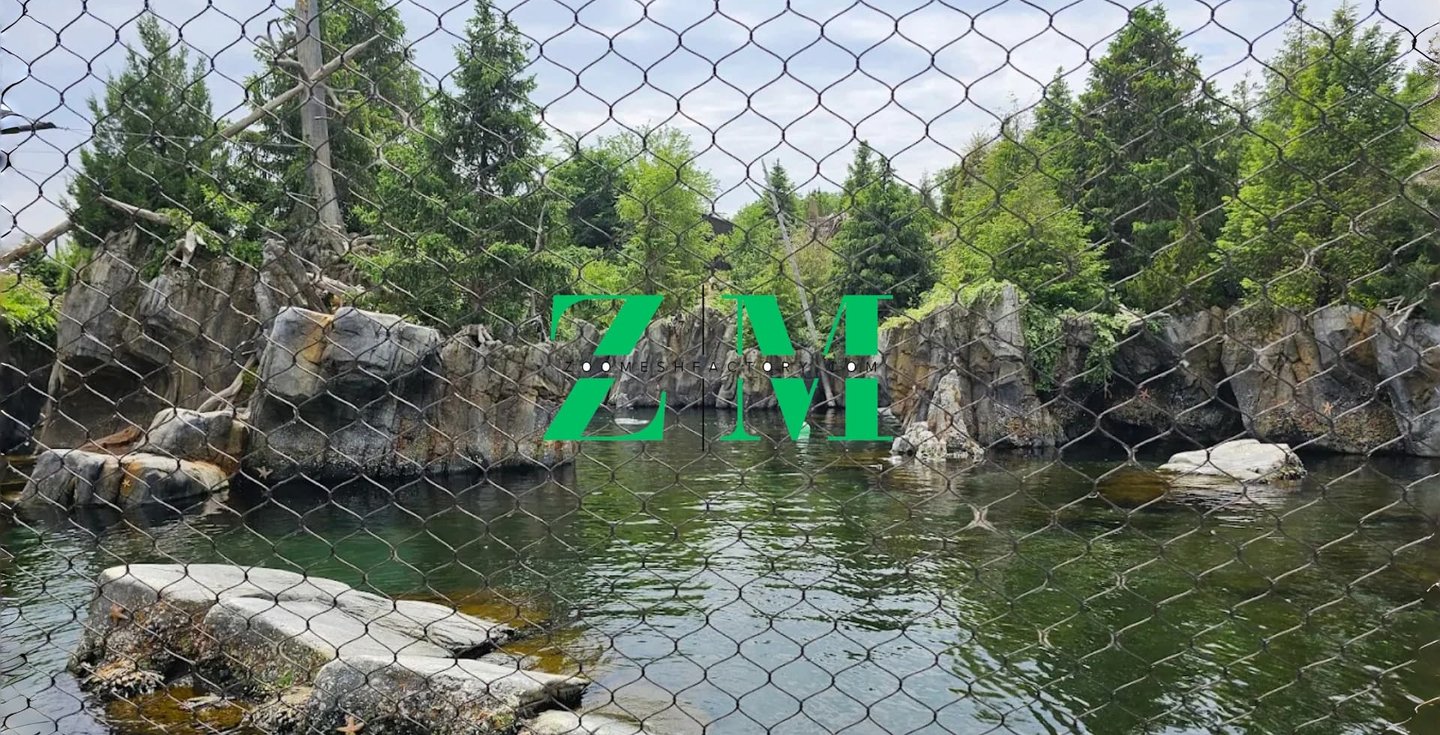
The final frontier of Invisible Zoo Barrier Design lies in the transition between the structural mesh and the natural environment. Even the thinnest Black Oxide mesh will become visible if it is framed by rigid, man-made rectangles. To truly make a barrier vanish, the perimeter must be treated as a part of the landscape rather than a separate construction element.
Using Organic Geometry: Avoiding 90-Degree Corners
The human brain is an expert at detecting "unnatural" shapes. In nature, perfect 90-degree right angles and long, perfectly straight horizontal lines rarely exist. When a visitor sees a sharp corner, their brain immediately registers it as "confinement."
The Radius Solution: By utilizing the flexibility of hand-woven wire rope mesh, designers can create sweeping curves and radius corners.
Breaking the Line: Softening the edges of the enclosure allows the mesh to wrap around the guest’s field of vision, making it harder for the eye to find a "frame" to focus on. When the eye cannot find the corner, the barrier ceases to exist as a distinct object.
Integrating Mesh with Rockwork, Waterfalls, and Living Walls
One of the most effective ways to hide a perimeter is to "anchor" it directly into naturalistic features. Modern Invisible Zoo Barrier Design often eliminates the traditional bottom rail or concrete curb.
Rockwork Embedding: Instead of a visible bolt-line, the mesh can be embedded directly into artificial rockwork (Shotcrete) or tucked behind natural boulders.
The Waterfall Pass-Through: High-grade SS316 mesh is ideal for wet environments. Running a waterfall through or alongside a mesh panel creates movement and spray that naturally disrupts the visual plane, further masking the wire.
Living Walls: Encouraging vines or light climbing plants to grow near the mesh (but not necessarily on it to prevent weight issues) creates a "shadow play" that helps the Black Oxide finish blend into the greenery.
Custom-Shaped Panels: Following the Land's Contour
Standard rectangular rolls of fence force the land to adapt to the material—leading to unsightly "stair-stepping" on hills or deep trenches. Factory-direct procurement allows for bespoke panel shaping.
Topographical Precision: We can weave panels with irregular top and bottom edges that follow the exact rise and fall of your site’s topography.
Seamless Integration: When the mesh follows the natural contour of the land, the tension remains uniform across the entire surface. This prevents the "sagging" or "puckering" that often gives away the location of a barrier.
By treating the mesh as a flexible fabric that drapes over the landscape rather than a rigid wall, architects can create the ultimate illusion: a habitat that appears to have no end.
Learn how to plan these complex shapes in our Custom Enclosure Design Guide.
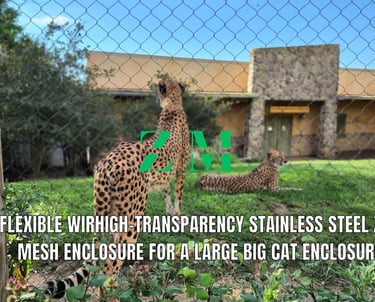
6. Engineering the "Tensioned Horizon"
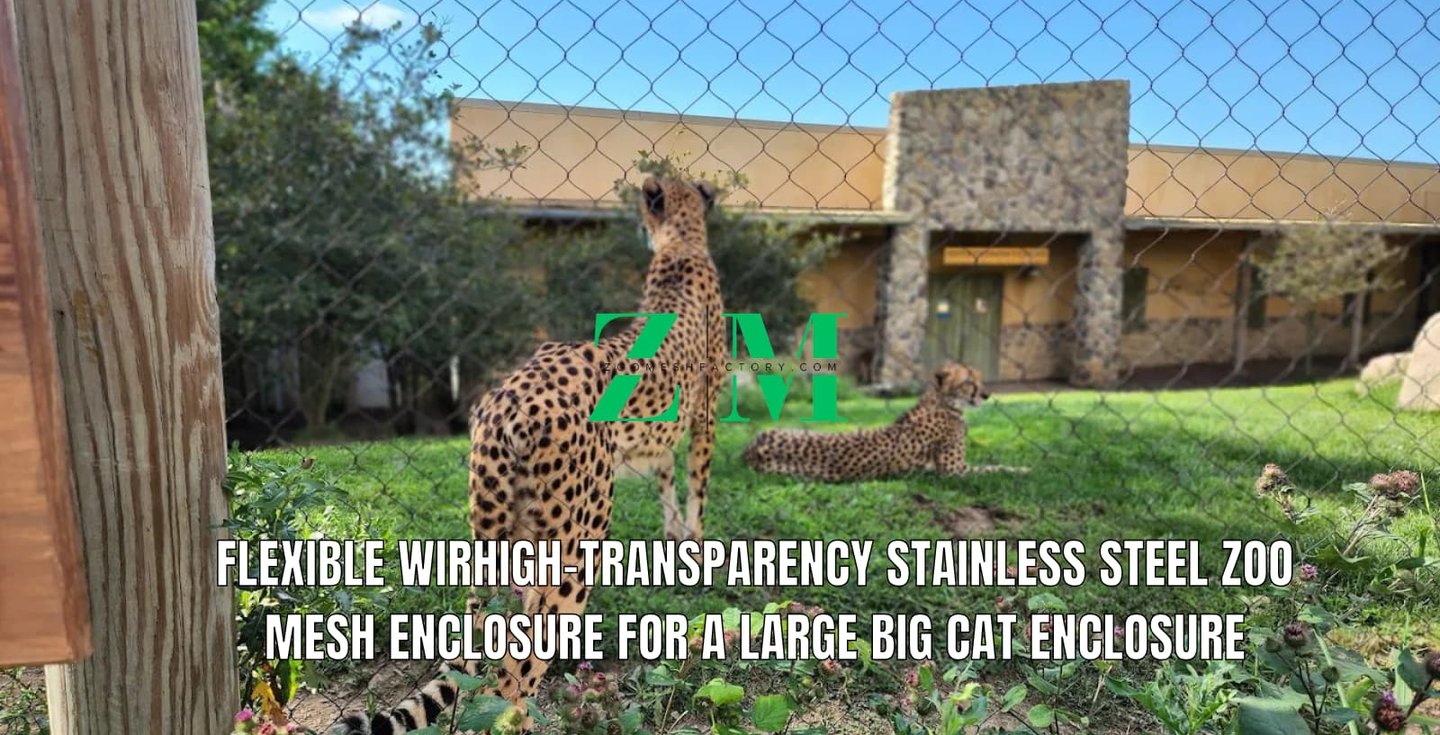
In Invisible Zoo Barrier Design, the structural frame is often more visible than the mesh itself. A "Tensioned Horizon" is an engineering strategy that focuses on transferring the load of the enclosure to a minimal number of high-strength anchor points, effectively clearing the guest's field of vision of "structural clutter."
The Importance of the Boundary Cable System
The mesh is only one half of the invisibility equation; the second half is the boundary cable system. Instead of rigid steel pipes or wooden frames, we use high-tension perimeter cables (often 6mm to 12mm in diameter) to support the mesh panels.
Uniform Tension: These cables allow the mesh to be pulled drum-tight. A properly tensioned panel has zero sag, which is vital because sagging mesh catches the light and reveals the barrier's presence.
Load Distribution: The boundary cables act as the "skeleton" of the exhibit, absorbing wind loads and animal impacts, and channeling that energy into the main structural pylons.
Reducing Vertical Support Posts to Open Sightlines
Traditional fencing requires a support post every 2 to 3 meters. For a guest, this creates a "picket fence" effect that constantly interrupts the view. By utilizing high-tensile SS316 wire rope mesh, we can increase the span between support posts significantly—sometimes up to 10 or 15 meters depending on the species.
The "Panoramic" View: By removing 70% of the vertical posts, you create a panoramic viewing window.
Tapered Pylons: When posts are absolutely necessary, engineers often use tapered or "canted" pylons that lean away from the guest, further pushing the structure out of the immediate line of sight.
Utilizing "Hidden" Anchor Points
The most sophisticated invisible designs hide their anchors entirely. Instead of visible concrete footings and steel plates, engineers utilize the existing environment:
Ground Anchors: Using earth anchors or "deadman" anchors buried beneath the soil allows the mesh to meet the grass or mulch directly, creating a seamless transition from the ground up.
Arboreal Integration: In aviary design, the mesh can be tethered to existing, structurally sound trees using "tree-friendly" friction blocks and adjustable cables. This makes it appear as though the canopy itself is the containment.
Submerged Anchors: For enclosures featuring water bodies, anchors can be placed below the water line, making the stainless steel mesh appear to rise out of the lake or moat without a visible base.
By engineering a "Tensioned Horizon," you ensure that when a guest looks at the habitat, they see the tiger or the macaw—not the engineering that keeps them safe.
For technical details on achieving the perfect "drum-tight" finish, see our Pro Guide to Tensioning Wire Rope Mesh.
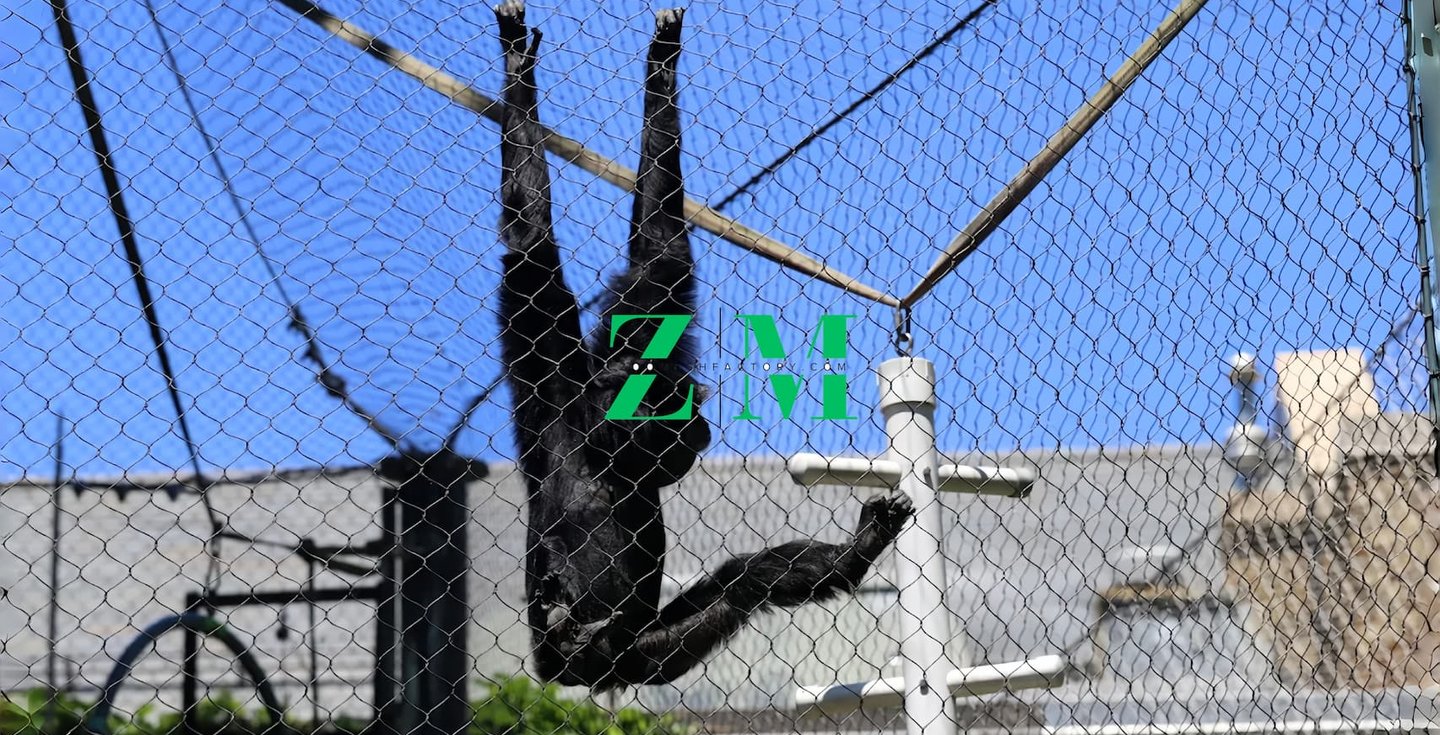
7. Case Study: The "Forest Floor" Aviary
To understand the real-world application of Invisible Zoo Barrier Design, we look at a landmark 2025 project: The "Forest Floor" Aviary. This 15,000-square-foot walk-through habitat was designed to house delicate ground-dwelling birds and high-canopy species, requiring a containment solution that offered maximum protection with zero "cage feel."
Achieving 98% Visual Transparency
The design team moved away from standard 2.0mm wire, opting instead for a high-tensile 1.2mm SS316 wire rope mesh with a 25mm diamond aperture. By utilizing the higher tensile strength of marine-grade steel, the engineers were able to maintain a safety factor of 5:1 while significantly reducing the "wire-to-air" ratio.
The results were statistically and visually stunning:
The Math of Invisibility: At a wire diameter of 1.2mm, the mesh occupies less than 2% of the viewer's field of vision.
The Black Oxide Effect: By applying a factory-direct Black Oxide finish, the mesh virtually vanished against the backdrop of dark mulch, ferns, and mossy rockwork.
The Result: Guests frequently reported "forgetting" there was a barrier at all, leading to higher levels of immersion and a significant increase in social media engagement for the sanctuary.
Lessons Learned: Light Angles and Guest Positioning
The Forest Floor project revealed that invisibility is as much about where the guest stands as what they are looking through. The engineering team identified two critical factors:
The "Dark-on-Dark" Rule: The mesh became most invisible when the area behind the mesh (inside the habitat) was shaded or featured dark green foliage. In areas where the mesh was backlit by the afternoon sun, the silhouette became slightly more visible. To counter this, designers added "overhang" vegetation to cast soft shadows across the mesh perimeter.
Proximity and Depth of Field: By placing guest walking paths 1.5 meters away from the mesh and heavily planting the area immediately inside the barrier, the human eye was naturally forced to adjust its focus to the "infinity" of the habitat. This utilized the eye's natural depth of field to blur the thin 1.2mm wires into a soft, unnoticeable haze.
The Professional Insight: "The Forest Floor project proved that when you combine the right material—1.2mm Black Oxide—with strategic landscaping, the barrier stops being a wall and starts being a window." — Lead Architect, 2026 Aviary Expansion.
For more on the specific material used in this study, see our 1.2mm Aviary Mesh Specification Page.
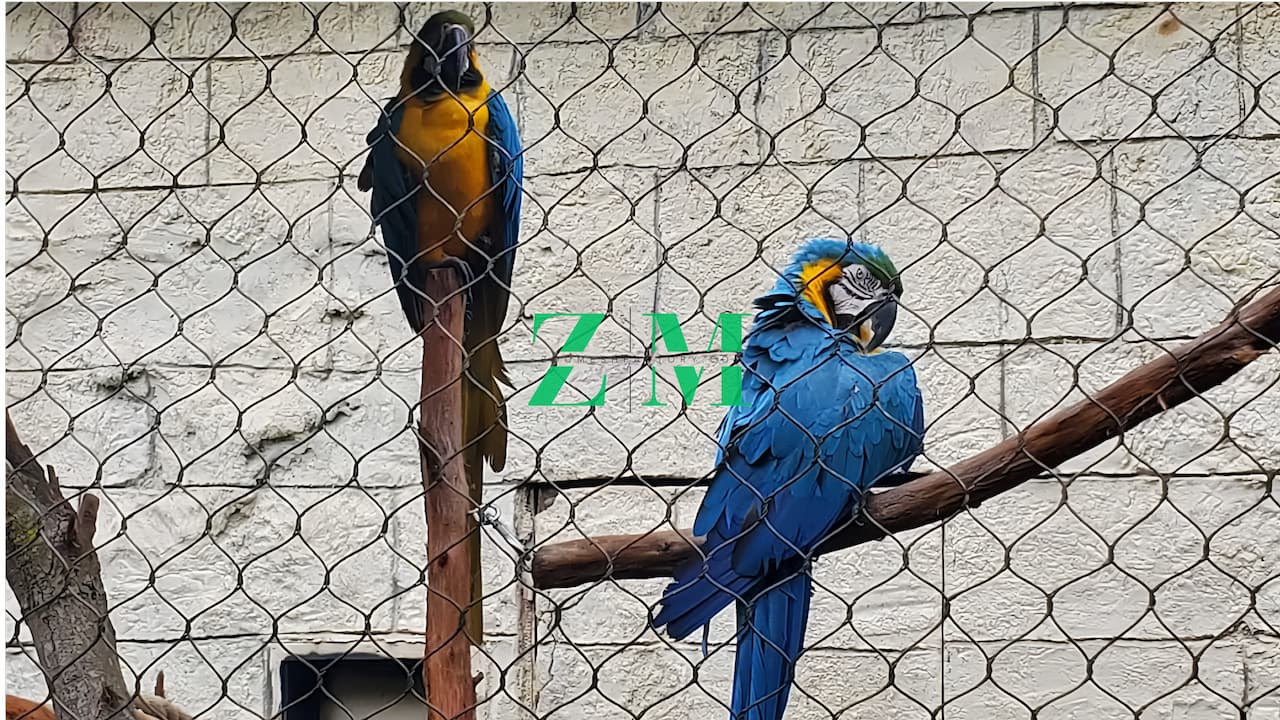
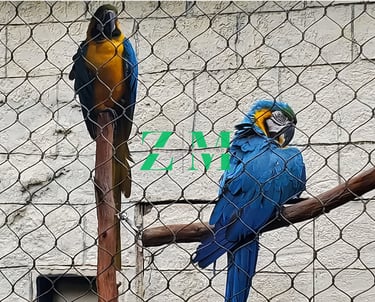
8. Maintenance and Long-Term Clarity
An invisible barrier only remains invisible if it stays clean and structurally sound. Over time, environmental factors can "reveal" a hidden enclosure by coating it in dust, pollen, or—in the case of inferior materials—corrosion. Maintaining Invisible Zoo Barrier Design requires a combination of smart material choice and a proactive cleaning regimen.
Preventing Dust and Debris Buildup
Because hand-woven wire rope mesh is composed of intertwined cables, it has more surface area than a flat bar. In arid or high-pollen environments, these micro-crevices can trap particles, eventually turning a matte black wire into a visible grey one.
The "Self-Cleaning" Tension: A properly tensioned mesh vibrates slightly in the wind. This micro-vibration helps shed dry dust and prevents large accumulations.
Low-Pressure Rinsing: To maintain maximum transparency, exhibits should be integrated into the park’s irrigation schedule. A quick, low-pressure rinse with deionized water once a month removes mineral deposits and organic "biofilm" before they can cloud the view.
Vertical Drainage: By designing the mesh with a slight vertical incline or using custom-shaped panels that avoid flat horizontal ledges, rain and cleaning water naturally carry debris down to the ground rather than letting it pool at the junctions.
Why Factory Direct Quality Protects the Illusion
The "magic" of an invisible barrier is destroyed the moment the finish begins to fail. This is where the difference between a "coated" mesh and a "converted" mesh becomes apparent.
Avoiding the "Peel" Effect: Many local distributors sell mesh that has been spray-painted or powder-coated to achieve a black look. Under the intense UV radiation of 2026, these coatings often crack and peel. Each flake of peeling paint catches the light, creating a highly visible "distraction" that ruins the guest's immersion.
Chemical Conversion (Black Oxide): When you source Zoo Mesh Factory Direct, the Black Oxide is a chemical conversion of the steel itself. There is no layer to peel. The wire remains deep matte black, even if subjected to the abrasive scratching of primates or the acidic droppings of birds.
Zero "Tea-Staining": In coastal or high-humidity tropical houses, inferior 304 stainless steel can develop "tea-staining" (surface rust). These orange streaks are an immediate visual giveaway of the barrier. By using factory-verified SS316 marine-grade steel, the metal stays dark and pristine, ensuring the "invisible" effect lasts for the 25-to-30-year lifecycle of the exhibit.
Long-term clarity is not an accident; it is the result of choosing a material that was engineered from the molecular level to stay out of sight.
9. The Future: 2026 Trends in Invisible Barriers
As we move further into 2026, the definition of "invisible" is expanding beyond optics into the realm of smart technology and advanced structural engineering. The next generation of zoological enclosures is leveraging new manufacturing capabilities to push the limits of what the human eye can perceive.
3D-Woven Spherical Mesh: Traditional mesh is woven in flat sheets, but new factory-direct capabilities allow for 3D-contoured weaving. This allows for the creation of "orbs" or "tunnels" that require no internal support frames, removing the most visible part of the enclosure—the steel skeleton.
Bio-Integrated Anchoring: Designers are increasingly using "living anchors." By grafting mesh tension points into managed, structurally reinforced trees or artificial "bio-columns" that host vertical gardens, the structural footprint of the enclosure becomes part of the animal's enrichment.
Smart Tension Monitoring: In 2026, invisible design is being paired with "unseen" security. Integrated fiber-optic sensors can now be woven into the boundary cable system. These sensors monitor mesh tension in real-time, alerting staff to a breach or a fallen tree branch without the need for unsightly perimeter cameras every ten meters.
10. Conclusion: Designing for the Animal’s Perspective
The shift toward Invisible Zoo Barrier Design represents a maturing of the zoological industry. It is a recognition that the best way to respect a species is to present them in a way that minimizes the "human-made" context of their environment. By mastering the science of optics, the strength of SS316 stainless steel, and the artistry of landscape integration, we can create spaces that feel limitless.
When the barrier vanishes, the true goal of the modern zoo is achieved: the visitor stops looking at a fence and starts looking at a world worth saving.
11. FAQ: Common Questions on Invisible Design
1. Does "invisible" mesh provide enough security for large predators?
Absolutely. While the mesh is visually thin, it is engineered for extreme tensile strength. A 2.4mm Black Oxide wire rope mesh has a breaking load capable of stopping a charging tiger. The "invisibility" comes from the finish and the weave, not a lack of material strength.
2. Will birds fly into the mesh if they can't see it?
This is a common concern. In practice, birds use UV vision and localized "vibration sensing" to navigate. Furthermore, the 25mm to 50mm diamond apertures provide enough visual texture for birds to recognize the boundary without it being an eyesore for human guests.
3. Is Black Oxide better than black PVC coating?
Yes. PVC coating is thick, which increases the wire's diameter and makes it more visible. It also tends to crack and peel over time. Black Oxide is a chemical conversion that keeps the wire thin and the "invisible" effect permanent.
4. How do I prevent the mesh from reflecting light at sunset?
Strategically angling the mesh (tilting it slightly inward) and ensuring it has a matte Black Oxide finish will minimize "specular highlights" even during the "golden hour" of sunset.
5. Can I use invisible design for underwater exhibits?
Yes. Because our mesh is marine-grade SS316, it can be submerged to create invisible underwater partitions for hippos, crocodilians, or penguins, allowing for a seamless "shore-to-water" view.
The Authority Bio (Factory Direct Expertise)
About the Author > With over 20 years of hands-on experience in high-tensile stainless steel manufacturing and zoological enclosure engineering, our team specializes in bridging the gap between factory-direct cost efficiency and world-class habitat design. We have partnered with global conservation sanctuaries and leading zoos to pioneer Invisible Zoo Barrier Design using proprietary Black Oxide technologies. Our mission is to provide the technical clarity and industrial-grade materials required to build safer, more immersive environments for animals and visitors alike.
Ready to Start Your Exhibit Design?
Join the hundreds of zoos and sanctuaries worldwide that trust ZooMesh Factory for their containment needs. Our engineers are ready to help you calculate the perfect mesh size for your species.
Contact
Hebei Zoo Mesh Co., Ltd
No. 188 Zhonghua South Street, Shijiazhuang City, Hebei Province, China
info@zoomeshfactory.com
© 2025. All rights reserved.
Quick Link
Product Catalogs
Don't leave without the specs! Save our factory-direct pricing and technical configurations for your next project meeting. Our 2026 Zoo Mesh Factory Direct Catalog is ready for download.