

Aviary Netting Supplies Buyers Guide: What to Spec | ZooMesh
Aviary netting supplies guide: 304/316 specs, species-based aperture selection and installation hardware — everything to source bird enclosure mesh with
Shijiazhuang Zoo Mesh Co., Ltd
3/4/20268 min read
1. Introduction: The Critical Role of High-Quality Aviary Supplies
In the design of modern zoological exhibits, the choice of aviary netting supplies is no longer a secondary consideration; it is a fundamental engineering decision. For decades, curators relied on heavy galvanized chain-link or short-lived nylon polymers. However, as the industry moves toward immersive, walk-through experiences and stricter animal welfare protocols, the demand for stainless steel wire rope mesh has become the gold standard.
Sourcing the right supplies is a balancing act between three competing priorities: containment security, bird safety, and visual transparency. A failure in any of these areas can lead to escaped specimens, predator intrusion, or a poor visitor experience where the "cage" obscures the view. Furthermore, a professional "supply kit" extends beyond the mesh itself—it includes the high-tensile boundary cables, precision ferrules, and specialized tensioning tools required to transform a roll of steel fabric into a safe, permanent structural barrier.
2. Key Takeaways: Sourcing Aviary Netting Supplies
Material: Stainless Steel (AISI 304/316) is the industry standard for durability and bird safety.
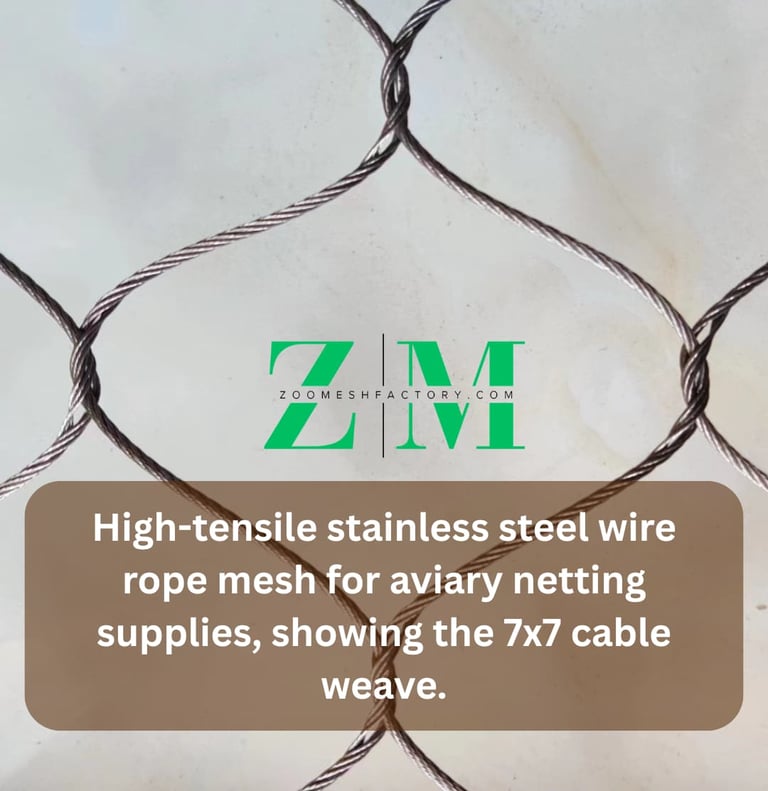
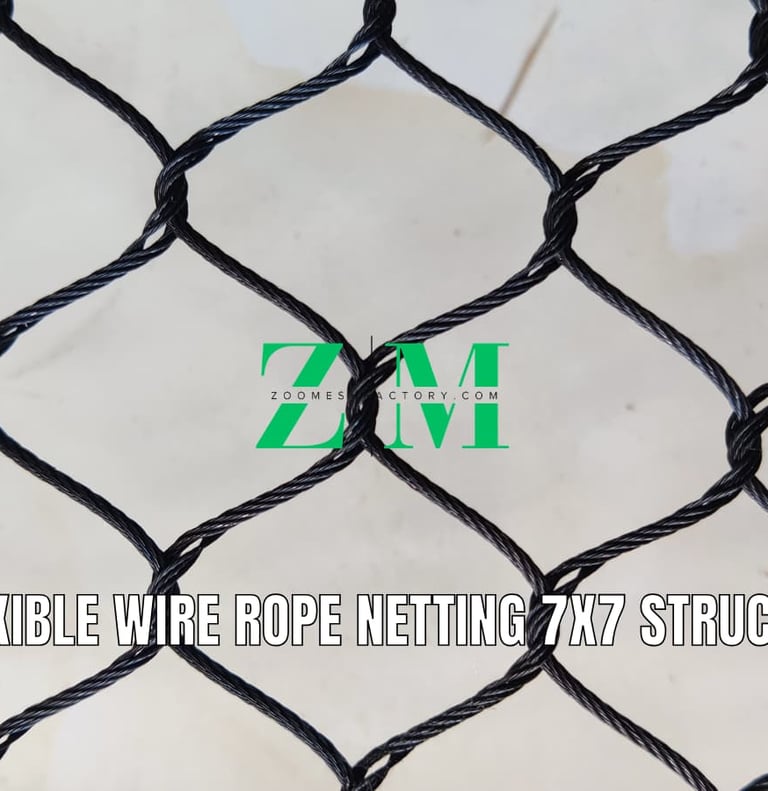
Construction: 7x7 rope structure provides the best balance of flexibility and visual transparency.
Aperture Size: Must be small enough to prevent bird escape and predator entry (typically 20mm to 50mm).
Finish: Black Oxide is preferred by zoos to reduce glare and improve the visitor's view.
Efficiency: Sourcing Factory-Direct allows for custom-sized panels, significantly reducing installation time and material waste.
3. Choosing the Right Mesh Grade: When is SS316 Worth the Investment?
When reviewing aviary netting supplies, the most common technical hurdle is choosing between AISI 304 and AISI 316 stainless steel. Both materials offer exceptional strength, but their environmental resistance varies significantly.
AISI 304: The Inland Standard
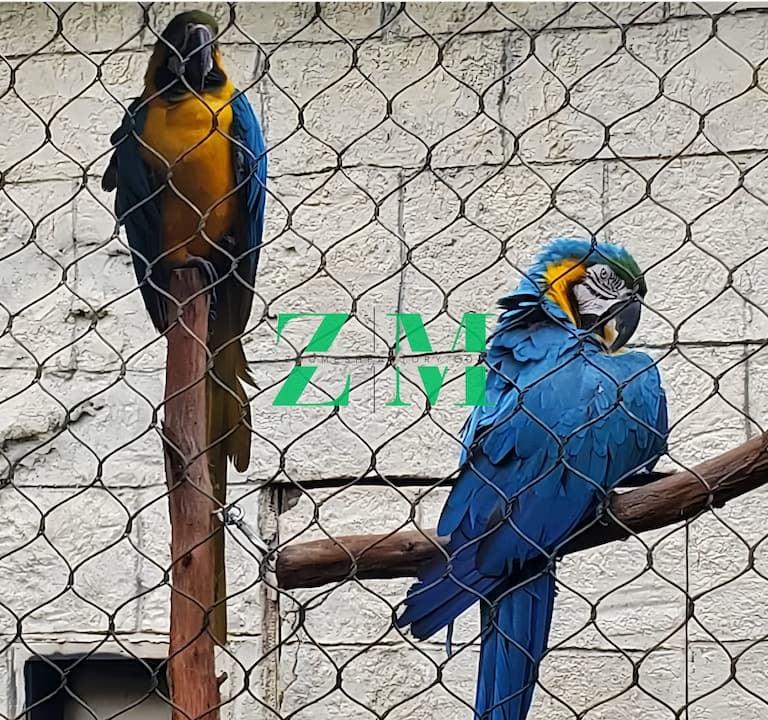
For most inland zoos and residential bird sanctuaries with low humidity and no salt exposure, 304-grade stainless steel is the most cost-effective solution. It provides the necessary tensile strength to resist the powerful beaks of macaws and cockatoos while remaining more affordable for large-scale flight cages.
AISI 316: The Marine-Grade Necessity
If your aviary is located within 50 miles of a coastline, or if it is an indoor tropical house with constant misting systems and high humidity, AISI 316 is the essential choice. The addition of molybdenum in the 316 alloy prevents "tea staining" and pitting corrosion caused by salt and moisture.
Pro Tip for Buyers: Always match your installation hardware (cables and turnbuckles) to the grade of your mesh. Mixing 304 mesh with 316 hardware can lead to galvanic corrosion, compromising the structural integrity of the entire system.
4. Species-Specific Specification Guide
A "one-size-fits-all" approach to aviary netting supplies is a common mistake that can lead to either wasted budget or compromised safety. The specifications must match the biology of the bird.
Small Birds and Mixed Species
For finches, canaries, and small softbills, the primary goal is preventing escape and keeping out small predators like snakes or rats. A thin 1.2mm wire with a tight 20mm x 20mm aperture is the standard. This maintains an "invisible" look while ensuring even the smallest escape artists remain secure.
Large Psittacines (The "Chewers")
Parrots and macaws treat their enclosure as a climbing frame. Their beaks exert massive localized pressure. For these species, we recommend a 1.6mm to 2.0mm wire. The 7x7 rope structure is vital here, as it provides enough flexibility for the bird to climb without the wire snapping or deforming.
Birds of Prey (The "Impactors")
Raptors and owls may strike the mesh at high speeds during flight. In these cases, the mesh acts as a safety net. A 2.0mm to 2.4mm wire with a larger 50mm aperture allows the mesh to flex and absorb the kinetic energy of the impact, protecting the bird from wing or neck injuries.
Quick Reference: Sourcing by Species
5. The "Full Kit": Essential Aviary Installation Hardware
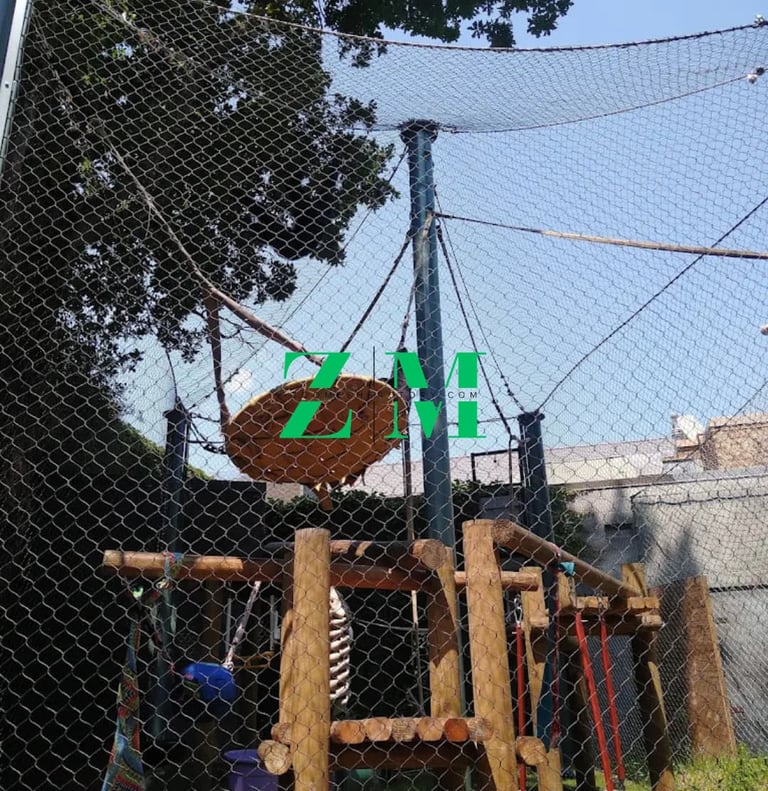
Sourcing the mesh is only half the battle. To ensure the longevity of your enclosure, you must invest in professional-grade aviary netting supplies for the installation phase. A "Full Kit" approach ensures that every component—from the largest pylon to the smallest ferrule—works in structural harmony.
The Role of Boundary Cables
The boundary cable (or perimeter wire) is the backbone of the aviary. Typically $6\text{mm}$ to $12\text{mm}$ in diameter, these cables take the primary tension of the mesh. Without a high-tensile boundary cable, the mesh will sag, creating "dead spots" where birds can get trapped or predators can find leverage.
Lacing Wires and Ferrules
To attach the flexible wire rope netting to the boundary cable, we use lacing wires. This involves "sewing" the mesh to the cable with a thinner gauge wire of the same material grade.
Pro Tip: Avoid using zip-ties or galvanized clips. These are the most common points of failure in aviary supplies, as UV light and friction will cause them to snap, leading to costly repairs.
Turnbuckles and Tensioners
Because stainless steel mesh is a "compliant" system, it requires periodic tension adjustment. High-quality stainless steel turnbuckles allow you to fine-tune the tautness of the panels as the structure settles over the first year.
[Image 3: Technical illustration of aviary netting installation showing boundary cables and lacing wire supplies]
6. Visual Transparency and Photography: The Black Oxide Advantage
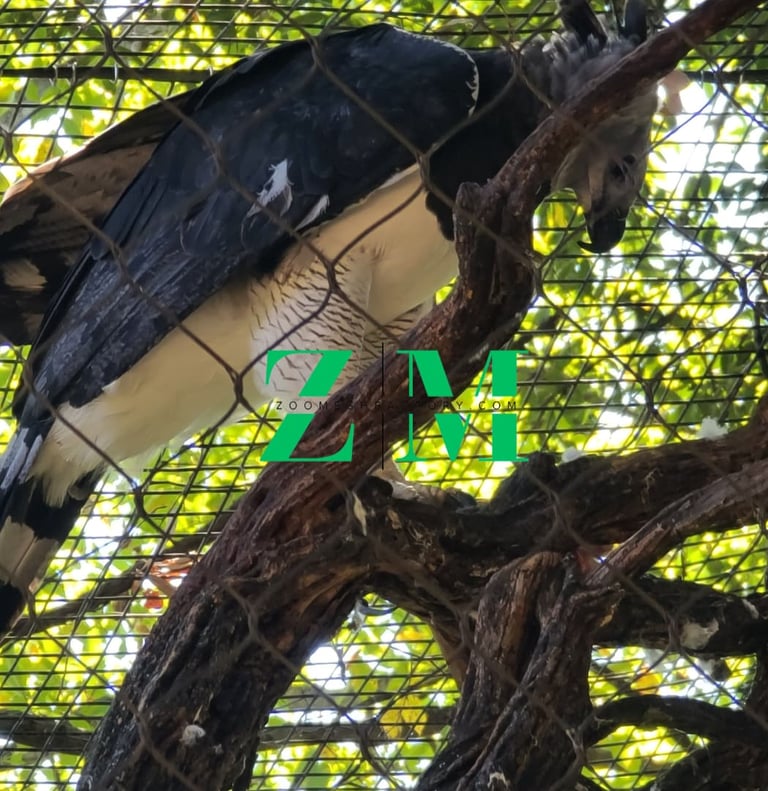
For modern zoos, the goal is "immersion." You want the visitor to feel as if they are standing in the rainforest with the birds, not looking through a cage. This is where the aesthetic side of aviary netting supplies becomes a game-changer.
Eliminating Light Reflection
Standard stainless steel has a natural metallic "sheen." While beautiful, this reflection can be distracting under bright sunlight or camera flashes, creating a visual wall between the visitor and the bird.
The Black Oxide Finish
To solve this, we offer Black Oxide treatment. Unlike paint, which can flake off and be ingested by curious parrots, black oxide is a chemical conversion coating. It turns the surface of the steel a deep, matte charcoal.
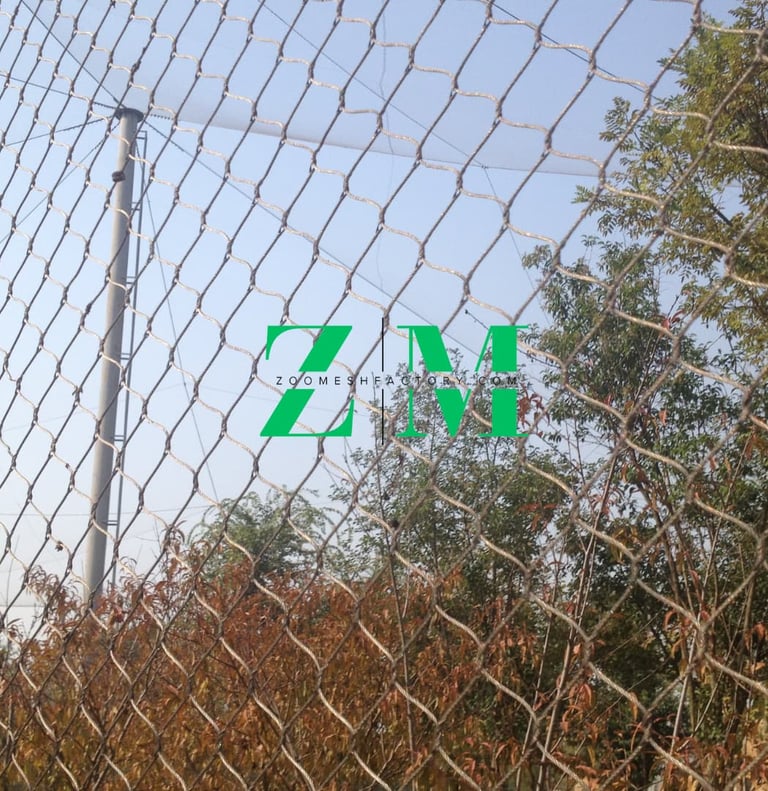
Invisible Barrier: From a distance of just 3 to 5 meters, black oxide mesh virtually disappears against a natural background of trees and foliage.
Bird Photography: This is the preferred finish for "Walk-Through" aviaries where visitors expect to take high-quality, unobstructed photos of the wildlife.
Hardware Compatibility Checklist
Use this list when ordering your aviary netting supplies to ensure you haven't missed a critical component.
7. Safety Standards: Protecting Both Birds and Visitors
When sourcing aviary netting supplies, safety is measured in two directions: keeping the inhabitants inside and keeping external threats out. Stainless steel rope mesh provides a dual-layer of protection that nylon or light-welded wire simply cannot match.
Beak-Proof Construction
Parrots, Macaws, and Cockatoos are "biological bolt-cutters." Their beaks are designed to crush hard nuts, which means they can easily snap low-quality wire or unravel knotted netting. Because our mesh uses a 7x7 or 7x19 rope structure, the load is distributed across dozens of individual steel filaments. Even if a bird attempts to chew a single spot, the high-tensile strength prevents the mesh from deforming or breaking.
Predator-Proofing: The Perimeter Defense
Professional aviary netting supplies must defend against:
Small Predators: Mice, rats, and snakes can carry diseases or kill small chicks. A mesh aperture of 20mm or smaller is the gold standard for rodent exclusion.
Birds of Prey: Wild hawks or owls often strike the outside of an aviary to reach the birds inside. The flexible nature of our mesh acts as a "buffer," absorbing the impact of the wild bird without causing injury to the inhabitants or the predator.
8. Sourcing Directly from the Factory: ROI & Quality Control
In the procurement of aviary netting supplies, the shortest distance between your budget and a successful project is a direct-to-factory partnership. Many "suppliers" are simply middlemen who add a markup and lack technical knowledge.
Custom Panel Sizing (Minimizing Waste)
When you buy off-the-shelf rolls, you often end up with 15-20% material waste due to trimming. By ordering custom-sized panels directly from the factory, the mesh is woven to the exact Height (H) and Width (W) of your frames. This not only saves on material costs but slashes installation time by nearly 40%.
Quality Certification and Traceability
Genuine aviary netting supplies should come with material test reports (MTR). This ensures that the steel is truly AISI 304 or 316 and not a lower-grade alloy that will rust within 24 months. As a direct manufacturer, we provide full traceability from the raw wire rod to the finished hand-woven mesh.
Cost vs. Longevity: The Supply Comparison
This table helps you justify the investment in stainless steel supplies to stakeholders.
9. Step-by-Step Measurement for a Custom Quote
When ordering aviary netting supplies, providing accurate dimensions to the factory is the difference between a seamless installation and a panel that doesn't fit. Because stainless steel rope mesh is flexible and tension-dependent, we use specific terminology for its orientation.
Understanding H-Size vs. W-Size
In the world of diamond mesh, dimensions are defined by the direction of the "diamonds":
W (Width): This refers to the horizontal measurement across the diamonds.
H (Height): This refers to the vertical measurement.
Measuring the Frame Opening
Do not measure your old netting. Instead, measure the clear internal opening of your structural frame.
Width (W): Measure the distance between the two vertical support posts.
Height (H): Measure the distance from the top rail to the bottom sill.
Tension Allowance: As a factory, we calculate the necessary "shrinkage" for tensioning. You simply provide the frame dimensions, and we engineer the mesh to fit perfectly under full tension.
The "Angle" Factor
The standard angle for aviary mesh is 60°. This provides the best balance between height-to-width ratio and structural strength. If your project requires a different angle (e.g., for a dome or a spherical walk-through), please specify this during the quoting process.
10. Conclusion: Partnering with a Specialist Supplier
Selecting aviary netting supplies is about more than just buying wire; it is about investing in a long-term safety system for your birds and a visual experience for your guests. By choosing high-tensile AISI 304 or 316 stainless steel, opting for a Black Oxide finish, and sourcing directly from a specialized factory, you eliminate the risks associated with inferior materials.
High-quality supplies ensure that your aviary remains:
Secure against determined chewers and aggressive predators.
Beautiful for decades with zero maintenance.
Safe for birds, preventing wing injuries and lead/zinc poisoning.
At ZooMesh Factory, we are committed to being more than just a vendor. We are your technical partners in creating world-class habitats. From the initial measurement guide to the final lacing wire, we provide the expertise needed to bring your vision to life.
Final Technical Summary Table
Ready to Begin Your Project?
Don't settle for "off-the-shelf" solutions. Contact the engineers at ZooMesh Factory today for a custom evaluation of your aviary needs.
Request a Sample Kit: [Get Our Material Sample Pack]
Technical Assistance: [Contact Our Design Team]
Full Product Specs: View SS304/SS316 Specifications
Frequently asked questions
What is the best material for aviary netting supplies?
[Stainless steel wire rope mesh (AISI 304 or 316) is the industry standard. It offers superior longevity (30+ years), is bite-proof against parrots, and does not contain toxic zinc or lead found in galvanized options.
How do I determine the right mesh aperture for my birds?
Aperture size depends on the bird species. Small birds like finches require a 20mm x 20mm mesh to prevent escape and exclude mice. Larger parrots or raptors typically use 25mm to 50mm mesh, depending on their beak size and impact force.
Why is Black Oxide finish used in aviary supplies?
Black Oxide is a chemical treatment that eliminates sun glare and reflection on the stainless steel. This makes the mesh virtually invisible, providing a better view for visitors and allowing for high-quality wildlife photography.
What hardware do I need to install aviary netting?
A complete installation kit includes stainless steel boundary cables (6mm-12mm), lacing wire for mesh attachment, turnbuckles for tension adjustment, and ferrules for cable terminations.
Ready to Start Your Exhibit Design?
Join the hundreds of zoos and sanctuaries worldwide that trust ZooMesh Factory for their containment needs. Our engineers are ready to help you calculate the perfect mesh size for your species.
Contact
Hebei Zoo Mesh Co., Ltd
No. 188 Zhonghua South Street, Shijiazhuang City, Hebei Province, China
info@zoomeshfactory.com
© 2025. All rights reserved.
Quick Link
Product Catalogs
Don't leave without the specs! Save our factory-direct pricing and technical configurations for your next project meeting. Our 2026 Zoo Mesh Factory Direct Catalog is ready for download.