
Climb-Resistant Animal Containment Mesh | High-Security Zoo Exhibits
Prevent escapes and unauthorized climbing with high-security animal containment mesh. Discover how aperture size and wire texture stop dexterous primates.
Hebei Zoo Mesh Co., Ltd
4/13/20269 min read
Key Takeaways: The "Anti-Escape" Strategy
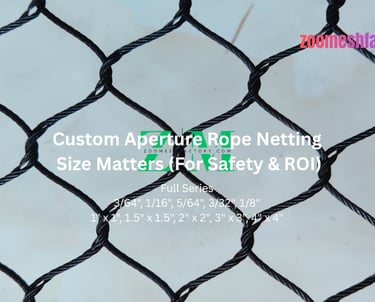
Aperture Optimization: Selecting diamond sizes that are smaller than a primate's grip width.
Verticality & Tension: Using high-tension parameters to make the surface too "slick" for easy vertical ascent.
Tamper-Proof Design: Seamless ferrules that cannot be picked, unspun, or loosened by clever fingers.
The Felid Factor: Smooth wire surfaces that prevent big cats from gaining the "claw-traction" needed for rapid climbing.
I. Introduction: The High-Security Mandate
In the world of zoological management, a "Containment Breach" is the ultimate nightmare scenario. Beyond the immediate danger to the public and staff, an escape often results in tragic consequences for the animal and irreparable damage to the institution's reputation. This is why Climb-Resistant Animal Containment Mesh has become the non-negotiable standard for urban zoos in 2026.
Designing for "Escape Artists"
Modern high-security exhibits are designed with a fundamental understanding of primate and felid intelligence. Species like Chimpanzees, Baboons, and Snow Leopards don't just inhabit their enclosures; they test them. They identify structural weaknesses, manipulate loose wires, and utilize rhythmic rocking to fatigue metal joints.
The Intelligence Gap: Traditional fencing was designed for animals that simply "bump" into walls. High-security mesh is designed for animals that view the barrier as a puzzle to be solved.
Liability and Insurance: Modern zoo insurance premiums are increasingly tied to the use of safety-rated, high-tensile materials like SS316 that provide documented breaking loads (10kN and above).
We also produce heavy anti-chew stainless mesh for macaw and large parrot habitats; view our core parrot aviary mesh specifications.
II. The Physics of Climb-Resistance
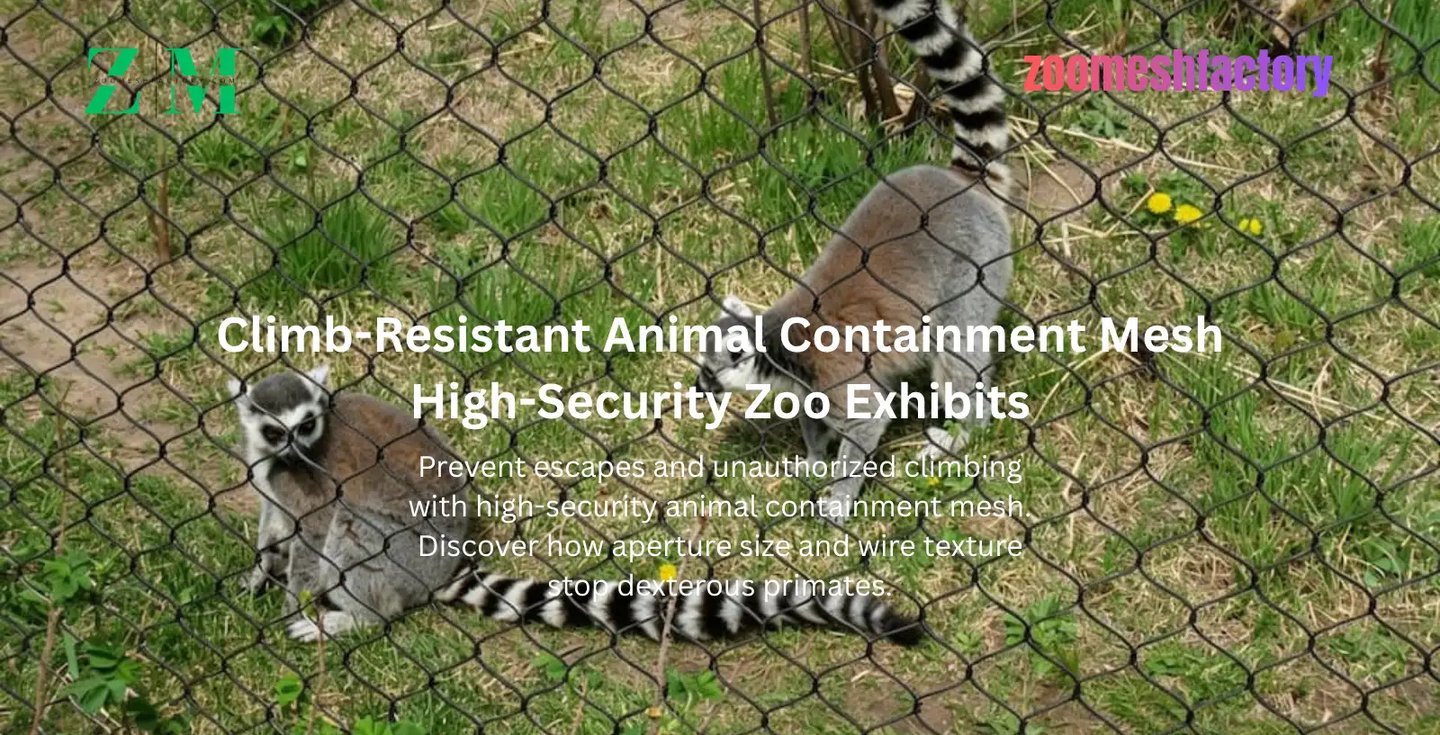
Climbing is essentially the successful exploitation of friction and geometry. To make a mesh "Climb-Resistant," we must strategically remove the animal’s ability to gain purchase on the surface.
Hand-Hold Science: The 51mm Threshold
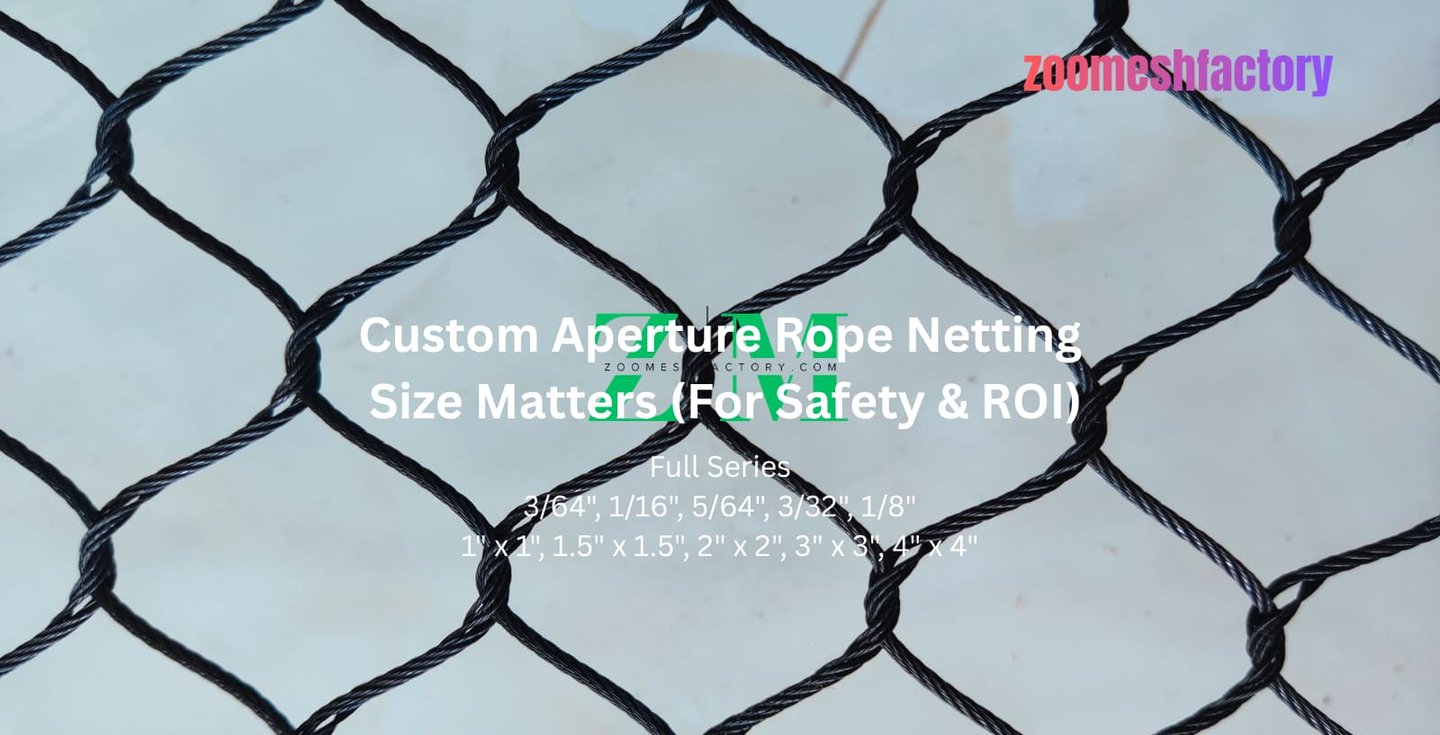
For primates, the 51mm (2") diamond aperture is a critical tipping point.
The Power Grip: In apertures larger than 60mm, a primate can wrap its fingers entirely around the wire, engaging a full "power grip." This allows them to pull their entire body weight upward with minimal effort.
The "Toe-Loop" Effect: If the mesh is too loose or the diamonds are too large, primates can insert their feet into the mesh, creating a ladder-like staircase. By reducing the aperture to 38mm or 51mm and increasing the tension, we force the animal to rely on a "pinch grip"—which is significantly more tiring and difficult to maintain over long vertical spans.
The "Ladder Effect" vs. Tensioned Diamonds
Traditional chain-link or welded wire creates a rigid, predictable grid. This is essentially a permanent ladder.
The Variable Geometry Advantage: Hand-woven cable mesh, when properly tensioned, provides a degree of "spring-back." When an animal attempts to climb, the mesh does not provide a solid, static platform. The slight movement under their weight makes it difficult for large felids or heavy primates to find a stable "step," discouraging vertical movement before they reach the top of the exhibit.
Surface Friction and Claw Traction
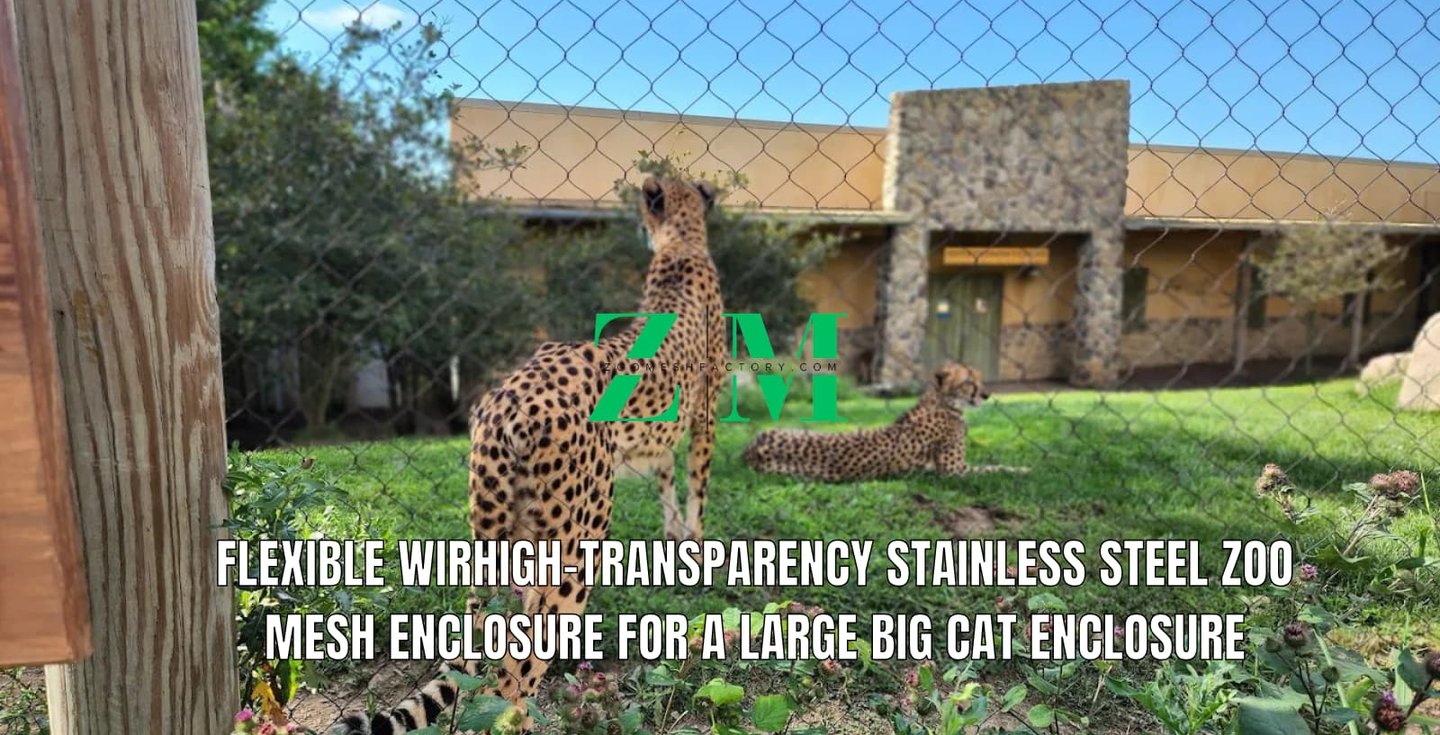
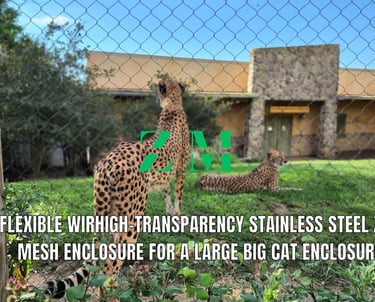
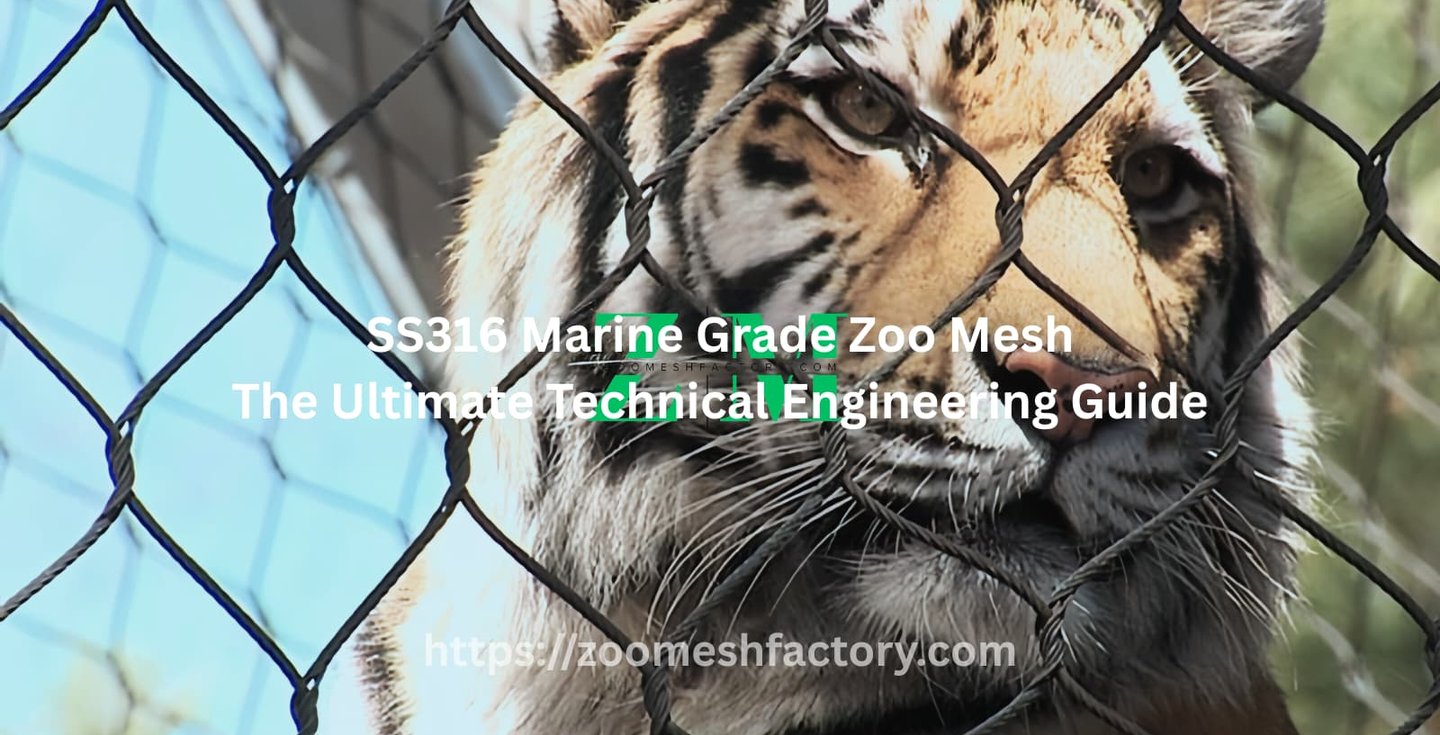
For big cats (Snow Leopards, Cougars), climb resistance is about claw purchase. The smooth, cylindrical surface of our 7x7 stainless steel cable provides very little for a claw to hook into compared to the flat, porous surfaces of wood or concrete. By removing the "hook-points," we drastically slow down an animal's ability to scale a wall, giving keepers more time to react in an emergency.
If you’re sourcing specialized mesh for leopards, jaguars and other arboreal felids, view our dedicated leopard enclosure spec guide.
III. Material Selection for Maximum Security
Not all stainless steel rope is created equal when it comes to thwarting an escape attempt. The internal structure of the cable determines how the mesh reacts to a primate’s touch.
7x7 vs. 7x19: The "Stiffness" Factor
While 7x19 cable is prized for its flexibility and "silk-like" feel in aviary applications, it is often too supple for high-security primate walls.
Reducing the "Bellows" Effect: When a heavy ape pulls on a flexible mesh, the diamonds can stretch or "bellow," creating temporary foot-holds. We recommend a 7x7 cable construction for anti-climb zones. Its inherent stiffness prevents the mesh from deforming under the animal's weight, keeping the apertures tight and the surface "un-climbable."
Bite Resistance: The larger outer wires of a 7x7 strand are more resistant to the crushing force of a primate's jaw compared to the finer wires of a 7x19 strand.
Ferrules vs. Knots: Tamper-Proofing
In a high-security exhibit, every junction is a potential point of failure.
Seamless Security: Our Sleeve-Press (Ferrule) Technology utilizes a seamless SS316 sleeve that is cold-welded to the cable. Unlike hand-knotted mesh, where a clever orangutan might spend months trying to "untie" a knot, ferrules offer no purchase for fingers or teeth. They are essentially permanent, tamper-proof joints.
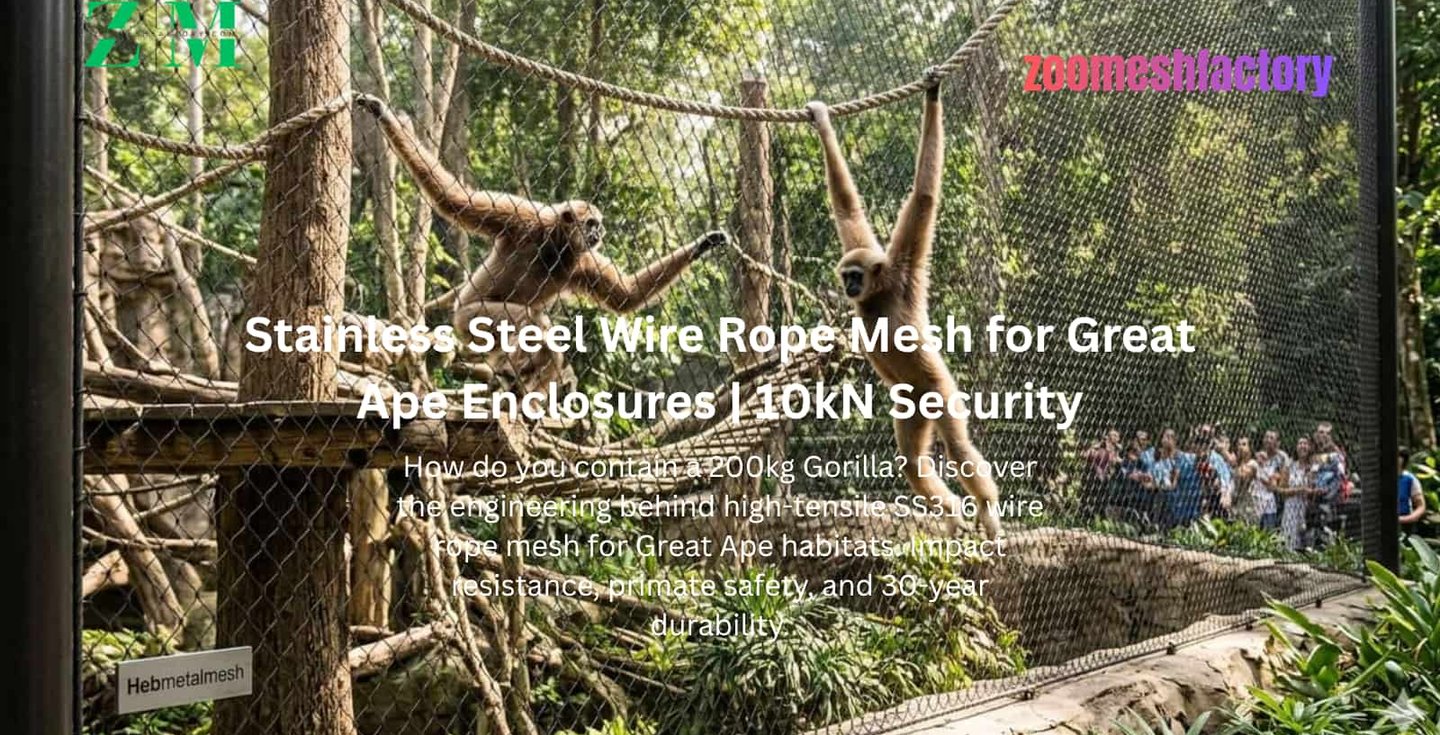
More: [Stainless Steel Wire Rope Mesh for Great Ape Enclosures]
IV. Exhibit Design: Inverting the Angles
Even the best climb-resistant mesh can be overcome if the architectural design is a simple vertical plane. To achieve 100% security, we must use the mesh’s flexibility to create Geometry-Based Defense.
Overhangs and Cants: Using Gravity as a Barrier
One of the greatest advantages of hand-woven cable mesh is its ability to be tensioned into Inward Curves (Cants).
The Negative Angle: By curving the top 2–3 meters of a mesh wall inward at a 45-degree angle, you force the animal to climb in a "ceiling-hang" position. This shifts their center of gravity and forces them to support 100% of their body weight via their arms, making it nearly impossible for them to reach the perimeter edge.
Structural Fluidity: Because the mesh is a single continuous "skin," these overhangs don't require heavy hinges or bulky brackets, maintaining the naturalistic look of the habitat.
Ground-to-Wall Transitions: Eliminating "Step-Ups"
Many escapes begin at the very bottom of the mesh. If there is a gap or a footer that an animal can stand on, they gain the momentum needed to start a climb.
The Zero-Point Start: We recommend burying the bottom 30cm of the mesh in a concrete "trench" or lacing it directly to a ground-level tension cable. By starting the mesh from a flat, vertical surface with no "toe-room," you neutralize the animal's climbing momentum before it ever begins.
V. Species-Specific Security Protocols: The Specialized Threat
A "one-size-fits-all" approach to security is a dangerous gamble. Climb-Resistant Animal Containment Mesh must be calibrated to the specific physiological and behavioral traits of the resident species.
Chimpanzees & Baboons: The Dexterity Challenge
Chimpanzees have nearly human-level fine motor skills, while Baboons possess incredible explosive strength.
The "Micro-Aperture" Solution: For these species, we recommend dropping below the standard 51mm diamond to a 38mm or even 25mm aperture. This creates a surface where only the tips of the fingers can enter the mesh, preventing the animal from "hooking" their palm or heel into the wire.
Tension Maintenance: These primates will "drum" or shake the mesh to find loose points. Using SS316 2.4mm or 3.2mm wire with high-tension lacing ensures the panel remains a rigid, unyielding wall.
Snow Leopards & Cougars: Thwarting the Vertical Sprint
Large felids rely on a vertical "scramble" using their claws for traction.
Wire Surface Slickness: Unlike chain link, which has "knuckles" and twists that act as climbing rungs, our hand-woven mesh is comprised of smooth, multi-strand cables.
The Spring-Back Effect: When a 50kg cat jumps against the mesh, the flexible nature of the 7x7 cable creates a slight "deflection." This lack of a solid, immovable surface prevents the cat from getting the stable footing required to launch into a second upward leap.
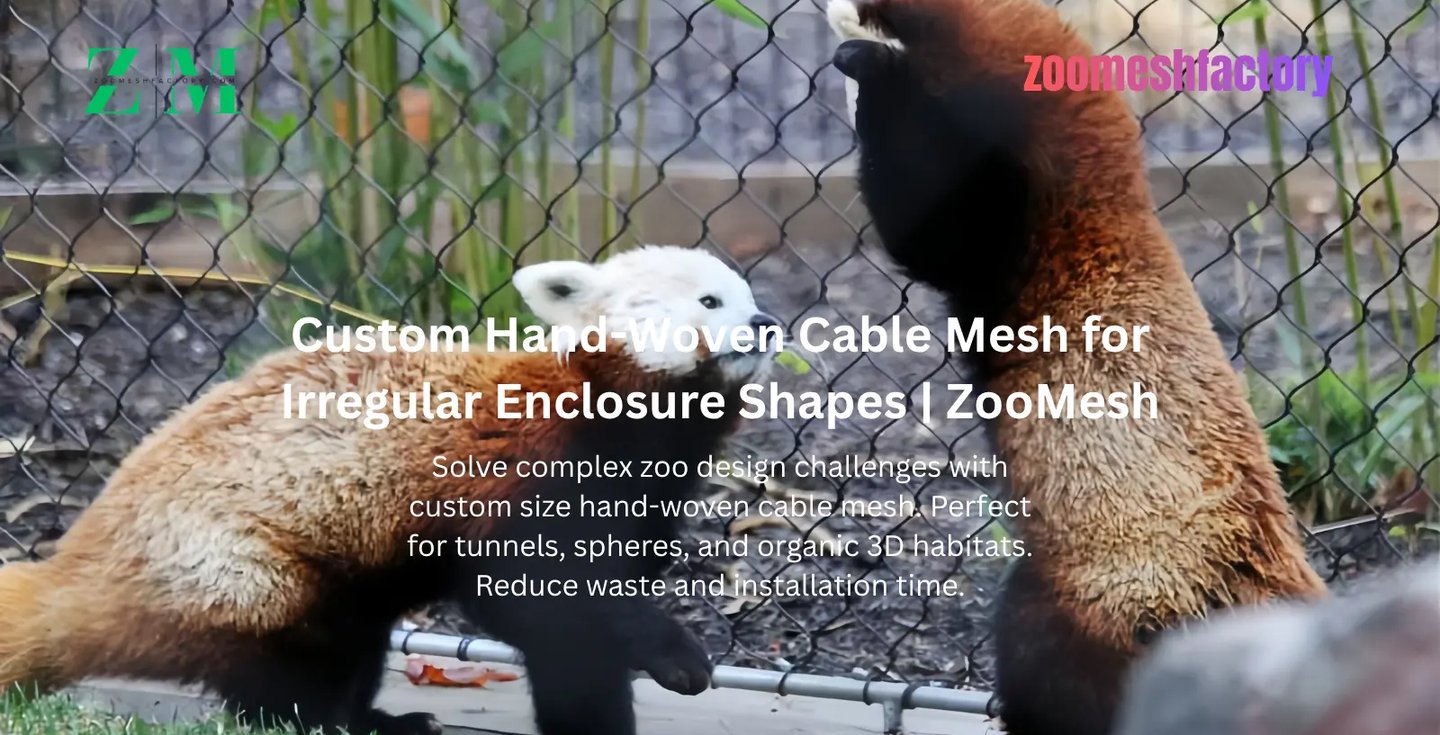
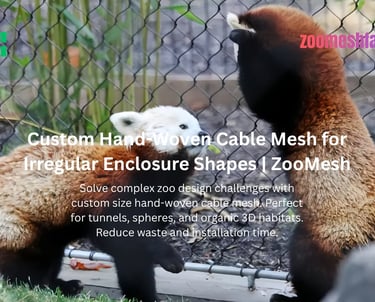
More: [Custom Size Hand-Woven Cable Mesh for Irregular Enclosure Shapes]
VI. Public Safety: The Perimeter Double-Standard
High-security mesh isn't just about keeping animals in; it’s about keeping the public out. In urban zoos, unauthorized access or "daring" behavior from visitors is a constant risk.
Preventing "Guest Climbing"
Children and adventurous teenagers often view exhibit perimeters as climbing frames.
Anti-Climb Exterior: By using the same climb-resistant specifications on the guest-facing side of a walk-through or viewing area, you eliminate the foot-holds that would allow a visitor to scale the barrier.
Non-Abrasive Safety: While the mesh is designed to be climb-resistant, the hand-woven stainless steel cables are smooth to the touch. This prevents accidental cuts or abrasions if a child brushes against the mesh—a critical legal protection for the zoo.
Tamper-Proof Perimeter Anchoring
The connection between the mesh and the ground or viewing glass must be "Finger-Proof."
Recessed Lacing: We utilize recessed anchoring channels that prevent guests from sticking fingers (or objects) into the gaps between the mesh and the structural frame.
Impact Protection: In high-traffic areas, the mesh acts as a safety buffer. If a crowd surges against the barrier, the high-tensile SS316 absorbs the energy without deforming or snapping, protecting both the animals and the people.
VII. Inspection & Fatigue Management: The Proactive Defense
Even the most robust Climb-Resistant Animal Containment Mesh requires a systematic "Audit of Strength." High-security exhibits are dynamic environments where thermal expansion, structural settling, and animal interaction constantly apply stress to the system.
The "Tug and Torque" Audit
Security teams should perform monthly physical inspections focusing on three critical zones:
The Tension Baseline: Using a tension meter, verify that the mesh hasn't "relaxed." Loose mesh is climbable mesh. If the diamonds can be easily distorted by hand, it’s time to re-lace or tighten the perimeter cables.
Ferrule Integrity: Inspect the pressed sleeves for signs of "sliding" or mechanical deformation. While our SS316 ferrules are cold-welded, extreme rhythmic shaking from large primates can, over years, create micro-movements.
Point-of-Impact Wear: Focus on the "Launch Zones"—areas where felids or primates frequently jump or land. Look for frayed strands ($7 \times 7$ construction makes these easy to spot visually) and address them immediately with a patch or replacement.
Fatigue Management
Stainless steel is incredibly durable, but it is not immune to work-hardening if subjected to constant, localized vibration. By ensuring the mesh is correctly tensioned from the start, you minimize the "vibration amplitude" caused by wind or animals, significantly extending the fatigue life of the enclosure.
VIII. Conclusion: Peace of Mind for Curators
In the modern zoo, the barrier is the most important piece of infrastructure you own. It is the invisible contract between the institution and the public—a guarantee of safety that must never be broken.
By choosing Climb-Resistant Animal Containment Mesh, you are investing in a sophisticated engineering solution that understands the behavior of the animal as well as the physics of the steel. You are securing:
Escape-Proof Geometry: Thwarting the grip and traction of nature’s best climbers.
Unmatched Durability: A 30-year material life that resists the elements and the inhabitants.
Public Trust: Creating a safe, transparent environment where the focus remains on conservation, not containment risk.
When the stakes are this high, don't settle for "fencing." Choose high-security mesh that is as smart as the animals it contains.
We supply ultra-tough woven cable mesh specially engineered for large eagle exhibits, see our eagle aviary mesh design resource.
Climb-Resistant Animal Containment Mesh FAQ
What makes animal containment mesh 'climb-resistant' compared to standard fencing?
Climb-resistance is achieved through 'Aperture Control' and 'Surface Slickness.' By using smaller diamond openings (38mm-51mm), we prevent primates from gaining a full 'power grip.' Additionally, the smooth, cylindrical 7x7 stainless steel cables offer no claw-traction for large felids, unlike the 'ladder-like' rungs of chain-link fencing.
Which mesh aperture is best for preventing primate escapes?
For highly dexterous species like Chimpanzees or Baboons, we recommend an aperture of 38mm or smaller. This forces a 'pinch grip' rather than a wrap-around grip, making vertical climbing significantly more difficult and exhausting for the animal, thereby reducing the risk of a perimeter breach.
Can monkeys or apes untie the knots in your high-security mesh?
No. Our high-security mesh utilizes seamless, pressed SS316 ferrules (sleeves) rather than hand-knots. These ferrules are cold-welded to the cable, creating a tamper-proof joint that cannot be picked, loosened, or unspun by clever fingers or powerful teeth."
Why is 7x7 cable preferred over 7x19 for anti-climb applications?
7x7 cable is structurally stiffer than 7x19. In high-security zones, this stiffness is vital because it prevents the mesh from 'bellowing' or sagging under the animal's weight. A rigid, high-tension surface is much harder to scale than a soft, flexible one that might provide temporary footholds.
How do you secure the bottom of the mesh to prevent animals from digging or lifting it?
To prevent 'lift-ups,' the mesh is typically laced to a primary tension cable that is either buried in a concrete trench or secured via heavy-duty eye-bolts to a solid footer. This eliminates 'step-up' points and ensures there are no gaps at ground level where a climb or escape could begin.
Ready to Start Your Exhibit Design?
Join the hundreds of zoos and sanctuaries worldwide that trust ZooMesh Factory for their containment needs. Our engineers are ready to help you calculate the perfect mesh size for your species.
Contact
Hebei Zoo Mesh Co., Ltd
No. 188 Zhonghua South Street, Shijiazhuang City, Hebei Province, China
info@zoomeshfactory.com
© 2025. All rights reserved.
Quick Link
Product Catalogs
Don't leave without the specs! Save our factory-direct pricing and technical configurations for your next project meeting. Our 2026 Zoo Mesh Factory Direct Catalog is ready for download.