
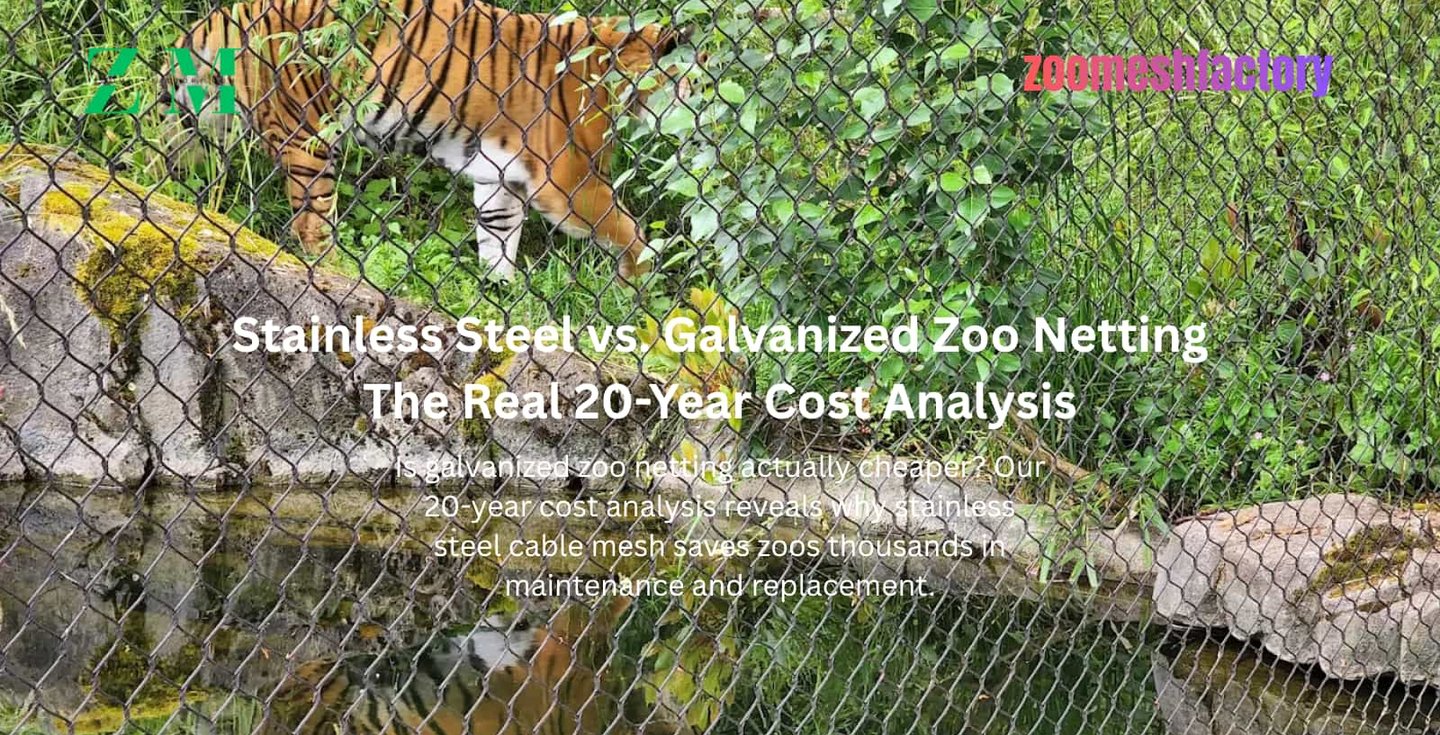
Stainless Steel vs. Galvanized Zoo Netting: 20-Year Cost Analysis
Is galvanized zoo netting really cheaper? Our 20-year cost analysis shows stainless steel cable mesh saves zoos thousands in maintenance and replacement.
Hebei Zoo Mesh Co., Ltd
4/17/202610 min read
The Verdict: While galvanized zoo netting has a 30-40% lower initial purchase price, its 5-to-7-year failure rate makes it 3x more expensive than stainless steel over a 20-year lifecycle. Stainless steel cable mesh offers a 30+ year lifespan, zero maintenance costs, and superior animal safety, making it the industry standard for modern zoological architecture.
I. Introduction: The "Cheap" Trap in Zoo Design
In the world of zoo procurement and exhibit design, there is a siren song that has led many talented directors toward a budgetary shipwreck: The Low Initial Bid. It’s a psychological lure we see every day at the factory. When you are looking at a line item for five thousand square meters of zoo netting, a 30% price difference between two materials looks like a massive win for your quarterly budget. You think you’re being a hero for the board of directors. But in reality, you might be setting a "maintenance time bomb."
Here is the cold, hard truth that most suppliers won’t tell you: Zoo netting isn't just a fence; it is a long-term infrastructure investment. If you view it as a consumable—like animal feed or bedding—you’ve already lost the game. When a mesh system fails, you aren't just buying new wire. You are paying for:
The "Double Labor" Penalty: The cost to tear down the old, rusted mesh and install the new.
Animal Relocation Risks: The stress and potential sedation risks of moving sensitive species to holding areas.
The Reputation Tax: Nothing kills visitor trust faster than an exhibit closed for "emergency repairs" due to structural decay.
The stakes are simply too high. Whether it’s a snow leopard enclosure or a walk-through aviary, the mesh is the only thing standing between a successful exhibit and a catastrophic animal escape or injury. Choosing "cheap" today usually means paying triple tomorrow.
Our ultimate guide combines material comparison with enclosure design and pricing all in one place.
II. Understanding the Materials: A Technical Deep Dive
To understand why one material thrives while the other survives, we have to look at the chemistry under the microscope. In the zoo industry, we primarily see two contenders: Galvanized Steel and Stainless Steel.
The Problem with Galvanized Steel: The "Flake" Factor
Galvanized netting is essentially carbon steel dipped in a protective layer of zinc. While this works fine for a backyard chicken coop, it is a ticking clock in a professional zoo environment. Over time, the bond between the zinc and the steel breaks down due to UV exposure, animal waste (which is highly corrosive), and physical friction.
As the coating degrades, it begins to flake and peel. This isn't just an aesthetic issue—it's a biological hazard. For avian exhibits, "Zinc Toxicity" is a very real threat. Birds are naturally curious; they climb with their beaks. If they ingest those microscopic galvanized flakes, it can lead to heavy metal poisoning. Furthermore, once that zinc layer is gone, the raw steel underneath rusts at an accelerated rate, compromising the structural integrity of the entire enclosure.
Stainless Steel: The Science of "Forever"
At Zoomeshfactory.com, we specialize in the "Big Two" of stainless steel alloys: AISI 304 and 316. Unlike galvanized steel, these aren't just coated; they are corrosion-resistant through and through.
Grade 304: The workhorse. It contains high levels of chromium, which forms a "passive layer" of chromium oxide that heals itself if the wire is scratched. It is the perfect balance of strength and cost for most inland animal enclosures.
Grade 316: The "Ocean King." We add Molybdenum to the mix here. This element is a game-changer for zoos located near the coast or in high-pollution urban areas. It provides a specialized defense against chlorides (salt) and industrial acids.
When you choose our hand-woven cable mesh, you aren't just buying wire; you’re buying a material that utilizes the same chemistry used in surgical implants and marine hardware.
Expert Recommendation: If your zoo is within 50 miles of the coast, 316 Stainless Steel is the only choice that will survive the salt air. For inland exhibits, 304 provides world-class security at a more accessible price point.
Ready to get technical? Check out our full range of stainless steel cable mesh specifications here to see the breaking loads and wire diameters we recommend for different species.
III. The 20-Year Cost Breakdown (The "Money" Section)
Let’s talk numbers. As an SEO expert, I know that "cost" is the most searched term in this industry, but as a factory partner, I know that value is what actually matters. To see the true picture, we have to look past the invoice for the first shipment and look at the 20-year lifecycle.
Year 0: Initial Purchase & Installation
On day one, galvanized mesh looks like the winner. It is cheaper to manufacture and cheaper to buy. If you are only looking at the "now," galvanized wins on price every time. You get your exhibit open, and the board is happy with the savings.
Year 5–7: The "Rust Point"
This is where the honeymoon ends. In a high-moisture zoo environment, the zinc coating on galvanized wire begins to oxidize. You’ll notice "white rust" first, followed by the dreaded orange streaks at the joints where the wires cross. This is the Rust Point. Now, your maintenance team is spending weekends doing patchwork repairs—a "band-aid" solution that costs money in both man-hours and materials.
Year 12: The Total Failure Point
By year 12, galvanized netting has usually lost its structural integrity. It’s no longer just "ugly"—it’s dangerous. You are now forced into a Full Replacement. The hidden costs here are staggering:
Animal Relocation: You have to move the animals to temporary holding, which is high-stress and requires veterinary supervision.
Demolition Labor: Tearing out rusted, brittle wire is a nightmare.
Re-Purchase: You’re buying the mesh all over again, but at Year 12's inflated prices.
Year 20: The Stainless Steel Victory
At the two-decade mark, the stainless steel cable mesh we installed on day one is still sitting at 95% structural integrity. It has required zero painting, zero patching, and zero emergency repairs.
Expert Insight: For high-stakes exhibits like big cat habitats, the animal enclosure netting must resist both rust and massive impact forces simultaneously. Stainless steel is the only material that maintains its impact rating for 20+ years.
While the raw numbers here are critical, see our complete aviary fencing guide for a broader TCO analysis, including species‑specific mesh size requirements and installation best practices.
IV. Beyond the Dollar: The Intangible Benefits
While the CFO cares about the table above, the Zoo Director and the Visitors care about the experience. This is where stainless steel truly shines as a premium product.
Aesthetics: The "Invisible" Barrier
The ultimate goal of any modern zoo is to make the visitor feel like they are in nature, not looking through a cage. Galvanized wire is thick, dull, and highly visible. It creates a "gray wall" between the guest and the animal. Our hand-woven stainless steel mesh is different. Because of the high tensile strength of the 304/316 cables, we can use a much thinner wire diameter to achieve the same safety rating. The result? A "black-oxide" finish or a polished shimmer that virtually disappears against the foliage. It provides that "open-air" feeling that wins design awards.
Safety: No Sharp Edges, No Toxicity
As mentioned earlier, rust creates jagged edges. A tiger rubbing against a rusted galvanized fence can suffer skin abrasions that lead to infection. Furthermore, our stainless mesh is hand-woven. This means there are no sharp weld points or burrs that can snag fur, feathers, or skin. It’s a soft-touch material with hard-core strength.
E-E-A-T: Why Global Zoos Are Switching
We’ve seen a massive trend in the last 5 years: Zoos are coming to us to "fix" their galvanized mistakes.
Case Study A: A major tropical aviary replaced their galvanized panels after just 4 years due to salt-air corrosion. They switched to our 316 Stainless Mesh, and 8 years later, it still looks brand new.
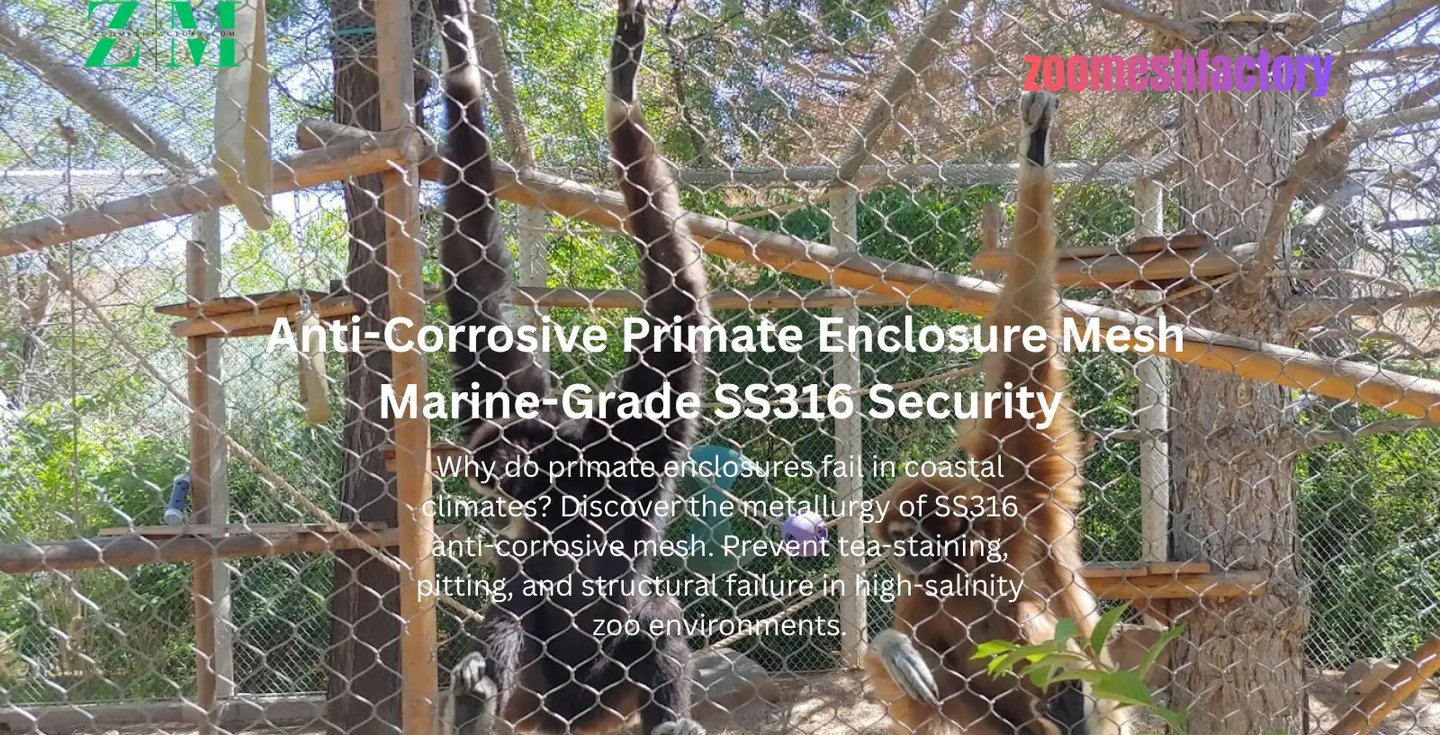
Case Study B: A primate enclosure found that the monkeys were picking at the flaking zinc on their old fence. They upgraded to our hand-woven mesh for the health of the animals.
When you choose Zoomeshfactory.com, you aren't just buying a product; you are joining a global standard of excellence in animal welfare and exhibit longevity.
V. Maintenance Comparison: Labor is Your Biggest Expense
In the professional zoo world, the invoice for materials is just the tip of the iceberg. The real "budget killer" is labor. When you choose a material that requires constant attention, you aren't just buying wire; you are hiring a full-time babysitter for your fences.
The Galvanized Chore List: Clean, Inspect, Repeat
Because galvanized steel relies on a thin sacrificial layer of zinc, it is in a constant state of decay. To slow down the inevitable rust, maintenance teams must:
Frequent Scrubbing: Removing animal waste immediately, as the acidity eats through zinc in weeks.
Coating Inspections: Manually checking thousands of joints for "pitting" or flakes.
Re-painting/Recoating: Applying specialized, "animal-safe" (and expensive) anti-corrosion sprays that only offer a temporary fix.
Every hour your staff spends scrubbing or painting a galvanized fence is an hour they aren't spent improving animal enrichment or guest experiences.
The "Set and Forget" Lifestyle of 316 Stainless Steel
By contrast, our zoo aviary netting made from 316-grade stainless steel is virtually maintenance-free.
Self-Cleaning: The smooth surface of the cable mesh allows rain to wash away most debris.
No Chemical Needs: You never need to apply "rust-inhibitors" because the corrosion resistance is built into the molecular structure of the steel.
Visual Inspections Only: You check it to ensure no trees have fallen on it, not to see if the metal is disintegrating.
When you install our hand-woven mesh, you are essentially "firing" your fence maintenance costs and reallocating those thousands of dollars back into your conservation programs.
VI. Environmental Impact & Sustainability
Modern zoos are the front lines of conservation. It is a massive "Brand Risk" to build an animal enclosure out of materials that harm the environment. This is where the choice of mesh becomes an ethical one.
The Ecological Nightmare of "Disposable" Mesh
If you choose galvanized netting that needs to be replaced every 7 to 12 years, you are participating in a cycle of waste:
Manufacturing Carbon: The energy required to mine, smelt, and galvanize new steel every decade is enormous.
Chemical Runoff: As galvanized coatings erode, zinc oxide can leach into the soil and water runoff of the enclosure, potentially affecting local flora and groundwater.
Landfill Mass: Rusted, brittle wire is often difficult to recycle efficiently because of the bonded zinc and rust, leading to tons of metal waste over a zoo’s 50-year lifespan.
Stainless Steel: The 100% Recyclable Hero
Stainless steel is one of the most "circular" materials on the planet. Most of our cable mesh is produced from high percentages of recycled scrap. More importantly, because it lasts 30+ years, you are cutting your carbon footprint by 300% compared to galvanized alternatives.
Choosing the right alloy is the first step toward a "Green" exhibit. Read our full guide on Sustainable zoo enclosure materials to learn how we help zoos meet their ESG goals.
By investing in quality once, you ensure that the only thing you’re leaving behind for the next generation of zookeepers is a sturdy, safe, and beautiful enclosure—not a pile of rusted scrap metal.
FAQ: Common Questions About Zoo Netting Costs & Materials
1. Is stainless steel mesh worth the extra cost for small aviaries?
Absolutely. While the square footage may be smaller, the labor costs for installation remain relatively high. If you use galvanized wire for a small aviary, you will still have to pay a crew to replace it in 7 years. By choosing aviary netting made of stainless steel, you ensure that the small birds are safe from zinc poisoning and that you never have to pay for a second installation.
2. How does salt air affect galvanized vs. 316 stainless steel?
In coastal environments, salt air acts as an accelerant for corrosion. Galvanized steel can show signs of structural failure in as little as 24 months near the ocean. Conversely, 316 Stainless Steel contains Molybdenum, which specifically resists "pitting" caused by chlorides (salt). For any zoo within 50 miles of a coast, 316 is the only viable long-term material.
3. Can I use 304 stainless steel for big cat enclosures?
Yes, 304 Grade stainless steel is the industry standard for inland animal enclosures. It provides the high tensile strength required to withstand the impact of a 500lb tiger or lion. However, if your facility uses heavy chemical cleaning agents or is located in a high-pollution urban area, we often recommend upgrading to 316 for added peace of mind.
4. What is the average lifespan of hand-woven cable mesh?
When properly tensioned and installed, our hand-woven stainless steel cable mesh has a functional lifespan exceeding 30 to 40 years. Unlike welded wire, which can snap at the joints due to metal fatigue, the flexible "interwoven" nature of our mesh distributes stress across the entire panel, preventing localized breakage.
5. Does the black oxide finish on zoo netting affect its durability?
Not at all. Our black oxide treatment is a chemical process that darkens the steel without compromising its structural integrity. In fact, many zoos prefer it because it further reduces glare and makes the mesh "disappear" for the visitors, all while maintaining the full corrosion resistance of the underlying stainless steel mesh.
If you are planning a large-scale project and need to compare bulk rates, see our guide on wholesale zoo netting price per square meter.
When choosing between materials, you also need to consider the specific bird species; see our guide on best aviary netting for birds of prey
If you are comparing material costs for large psittacine enclosures, our full breakdown of heavy-duty stainless steel mesh for macaw & parrot aviaries covers long-term lifespan benefits.
Ready to Start Your Exhibit Design?
Join the hundreds of zoos and sanctuaries worldwide that trust ZooMesh Factory for their containment needs. Our engineers are ready to help you calculate the perfect mesh size for your species.
Contact
Hebei Zoo Mesh Co., Ltd
No. 188 Zhonghua South Street, Shijiazhuang City, Hebei Province, China
info@zoomeshfactory.com
© 2025. All rights reserved.
Quick Link
Product Catalogs
Don't leave without the specs! Save our factory-direct pricing and technical configurations for your next project meeting. Our 2026 Zoo Mesh Factory Direct Catalog is ready for download.